Types of Chicken Coops: Which Style Fits Your Flock
A plain guide to the main coop styles, from small wooden hutches to walk-in houses and mobile tractors, and how each one fits a backyard flock.


On this page
Top picks at a glance
As an Amazon Associate I earn from qualifying purchases.
- 1
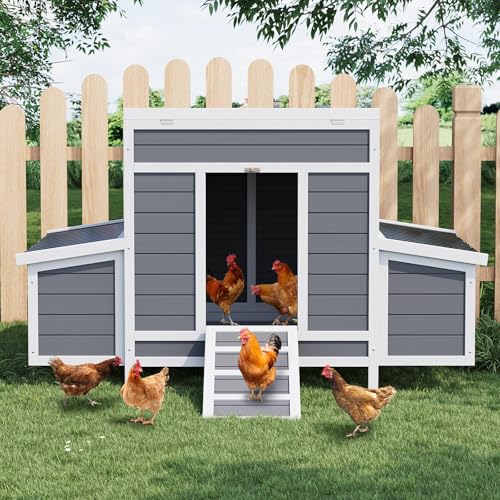 GarveeLife Wooden Chicken CoopView on Amazon
- 2
 Sweet PDZ Chicken Coop RefresherView on Amazon
- 3
 Automatic Chicken Coop Door Solar Powered with Timer & LightView on Amazon
- 4
 Chicken Coop Heater for Winter with Smart APP ControlView on Amazon
- 5
 Chicken Coop Heater Inside Coop with Remote ControlView on Amazon
- 6
 PETNF Chicken Coop Heater 140 Watts Radiant Heat ChickenView on Amazon
Morning chores tell you a lot about a coop. If the door sticks, the bedding stays damp and the hens crowd the roost, the shape of the house is working against you. The types of chicken coops a keeper can choose from fall into a few clear styles: small wooden hutches, walk-in houses, mobile tractors, covered runs and daytime tunnels, and each style suits a different flock, yard and routine.
Other options for the coop
 GarveeLife Wooden Chicken CoopCheck price on Amazon
 Sweet PDZ Chicken Coop RefresherCheck price on Amazon
 Automatic Chicken Coop Door Solar Powered with Timer & LightCheck price on Amazon
 Chicken Coop Heater for Winter with Smart APP ControlCheck price on Amazon
 Chicken Coop Heater Inside Coop with Remote ControlCheck price on Amazon
 PETNF Chicken Coop Heater 140 Watts Radiant Heat ChickenCheck price on Amazon
CoopKeeperHQ earns a commission if you buy through our links, at no added cost to you. Affiliate disclosure.
The main types of chicken coops
Every coop in this guide fits one of the styles below: a hutch for a small flock, a walk-in house the keeper can stand inside, a tractor that moves around the yard, a covered run for roaming under a roof, and a tunnel that gives birds a path to fresh grass during the day.
Small wooden hutches
A wooden hutch suits a small flock and a small yard. The AECOJOY listing describes a coop 68 inches long, 31 inches wide and 53 inches high, with 4 nesting boxes and 2 separate roosting areas, and states room for 6-8 chickens. The GarveeLife listing describes a wooden coop with 6 nesting boxes and states room for 4 to 6 chickens, with a pull-out tray for cleaning. The TANGJEAMER listing describes a house 52.8 inches long, 27.6 inches wide and 24.36 inches high, with 2 wide nest boxes, and states room for 2-4 chickens.
Hutches like these keep the sleeping area and the nest boxes close together. Look for a slanted waterproof roof, mesh windows for air and a latch on each door.
Walk-in coops and houses
A walk-in coop suits a larger flock and a keeper who wants to step inside to clean and collect eggs. The COZIWOW listing describes an extra-large house with a 54 sq ft enclosure, 2 elevated roosting bars and 4 nesting boxes, and states room for 10-15 chickens. The front door stands 55.5 inches tall, and 2 side openings give access for egg collection and cleaning.
Walk-in houses suit a yard with room for a fixed structure. The waterproof cover keeps rain off the birds, and the maker states that the cover can come off on sunny days to let in a breeze. See the large chicken coop guide and the walk-in chicken coop guide for houses in this size class.
Chicken tractors and mobile coops
A chicken tractor is a coop on the move. The house and run travel together, so the flock gets fresh ground and the keeper avoids a bare patch of yard. Tractors suit keepers who can move the house often. Look for a frame light enough to shift by hand and mesh that keeps the birds in while the house sits in its new spot.
Walk-in runs and covered pens
A covered run gives the flock room to roam in the open air without leaving the pen. The HERBAN listing describes a walk-in run 9.8 ft wide at the front, 13.1 ft deep and 6.4 ft high at the peak, with a galvanized steel frame and PVC-coated wire mesh. The roof cover measures 6.6 ft by 10.9 ft, and 20 bungee balls hold it in place. The kit lists 328 ft of stainless steel wire, 200 cable ties and 7 ground stakes, with 2 lockable front latches and 1 rear lockable latch.
Runs like this suit a flock that spends the day outside. The low 0.5-inch ground gap helps close the space at the base, and the maker states the frame poles are 0.95-inch diameter, 22-gauge galvanized steel. See the chicken run guide and the guide to coops with a large enclosed run for more on this style.
Chicken tunnels and daytime pens
A chicken tunnel is a daytime pen, not a night house. The JYRYSUM listing describes a 6-section tunnel 146 inches long, 24 inches wide and 24 inches high, built from 60 powder-coated steel tubes with PVC-coated chicken wire. The kit lists 200 zip ties, ground stakes and 2 locks, and the maker states the frame can come apart and move to a new spot in the yard.
Tunnels suit keepers who want the birds on fresh grass during the day and back in the coop at night. The maker states the tunnel is not a fully enclosed wooden coop and not 100% predator-proof, so it fits supervised daytime use. See the chicken tunnel versus chicken run comparison.
Wood or metal: what changes
Wood and metal change how a coop feels and how it ages. The AECOJOY listing describes a timber frame, and the AECOJOY and TANGJEAMER listings describe fir wood. The TANGJEAMER listing describes a slanted waterproof roof, and the AECOJOY listing describes a slanted roof. A metal run reads as a pen, and the HERBAN listing describes a galvanized steel frame with PVC-coated mesh and a PE roof cover rated at 180 GSM. Read the metal chicken coop versus wood comparison and the cedar versus plywood comparison for the full side-by-side.
A simple checklist before you choose
- Match the coop to the flock you plan to keep, using the hen counts the listings state
- Measure the spot in the yard and check the coop fits with room to walk around it
- Check the roof, the latches and the mesh before the birds move in
- Plan where feed, water and bedding will sit
- Make sure the run has shade and a dry patch of ground
- Ask about local rules for flock size and roosters before you build or buy
Birds, breed size, run time and climate in; coop floor, run space, roost length and nesting boxes out.
Wash your hands after handling birds, eggs or equipment, supervise children around the flock, and check local rules on flock size and roosters before you buy. For sick birds, call a poultry veterinarian or your state extension office. See CDC backyard poultry guidance. Read our Safety Disclaimer.
FAQ for the flock
What type of chicken coop is best for beginners?
A small wooden hutch is a kind place to start. The AECOJOY listing states room for 6-8 chickens with 4 nesting boxes, and the GarveeLife listing states room for 4 to 6 chickens with 6 nesting boxes, so a new keeper can match the house to a small flock.
How many chickens fit in a small coop?
It depends on the listing. The TANGJEAMER listing states room for 2-4 chickens, the GarveeLife listing states room for 4 to 6 chickens, and the AECOJOY listing states room for 6-8 chickens. Always use the hen count the maker states for that coop.
What is the difference between a chicken tractor and a fixed coop?
A tractor moves around the yard so the flock gets fresh ground, while a fixed coop stays in one spot. A tractor suits a keeper who can move the house often, while a fixed coop suits a keeper who wants a set cleaning routine.
Do chickens need a run as well as a coop?
A run gives the flock room to roam, scratch and stretch during the day, and a covered run keeps rain and sun off the birds. The HERBAN listing describes a walk-in run 9.8 ft wide at the front, 13.1 ft deep and 6.4 ft high at the peak.
What size coop do 10 chickens need?
Look for a house that states room for 10 or more birds. The COZIWOW listing states room for 10-15 chickens in a 54 sq ft enclosure with 4 nesting boxes and 2 elevated roosting bars.
More coop guides
- Metal Chicken Coop vs Wood: Which One Should You Buy?
- 8×8 vs 8×12 Chicken Coop: Which One Should You Buy?
- Garden Shed vs Chicken Coop: Which One Should You Buy?
- Brooder Box vs Chicken Coop: Which One Should You Buy?
- 4×8 vs 8×8 Chicken Coop: Which One Should You Buy?
- Cedar vs Plywood Chicken Coop: Which One Should You Buy?
- 6×8 vs 8×8 Chicken Coop: Which One Should You Buy?
- Chicken Coop Windows vs Vents: Which One Should You Buy?
See the extra large chicken coop with run guide and the chicken coop for 7 chickens guide for more on housing a flock.