Are Brooder Plates Safe for Chicks
A heat plate warms chicks from below without a glowing bulb, and a careful setup keeps the brooder safe.

On this page
Top picks at a glance
As an Amazon Associate I earn from qualifying purchases.
- 1
 Brinsea Ecoglow Safety 600 Chick or Duckling Brooder9.7/10View on Amazon
- 2
 K&H Heating Pad9.7/10View on Amazon
- 3
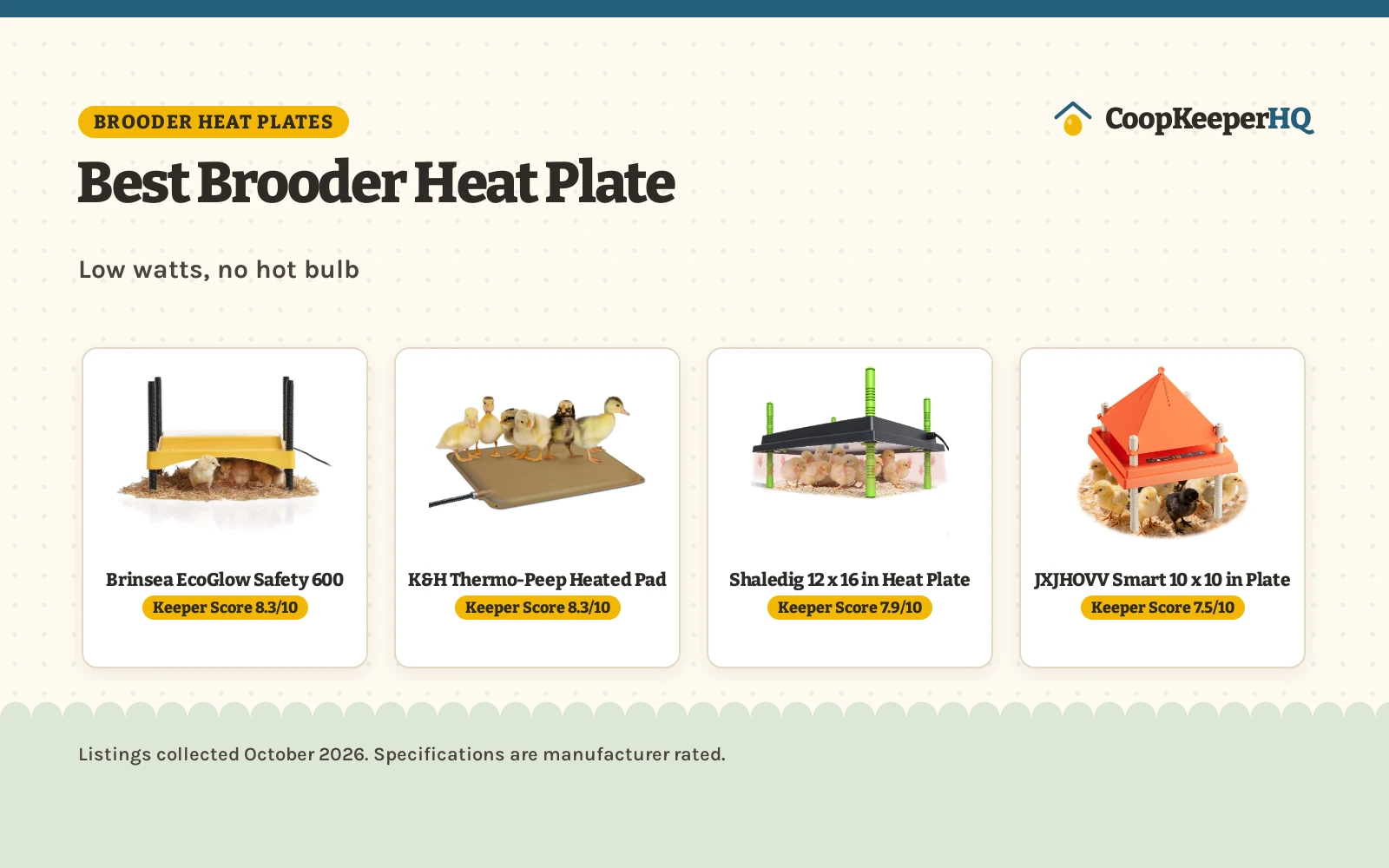
 12" x 16" Chick Brooder Heater Plate for 40 Baby Chicks Ducks9.6/10View on Amazon
The brooder lamp hums in the corner of the garage, and a cluster of new chicks sleeps in a tight pile under the glow. Any keeper who has watched that scene has wondered whether there is a calmer way to keep chicks warm. Are brooder plates safe? Yes, a heat plate is a safe way to warm chicks when it is set up with room to move, kept clear of bedding and water, and checked each day.
CoopKeeperHQ earns a commission if you buy through our links, at no added cost to you. Affiliate disclosure.
Are brooder plates safe? How a heat plate warms chicks
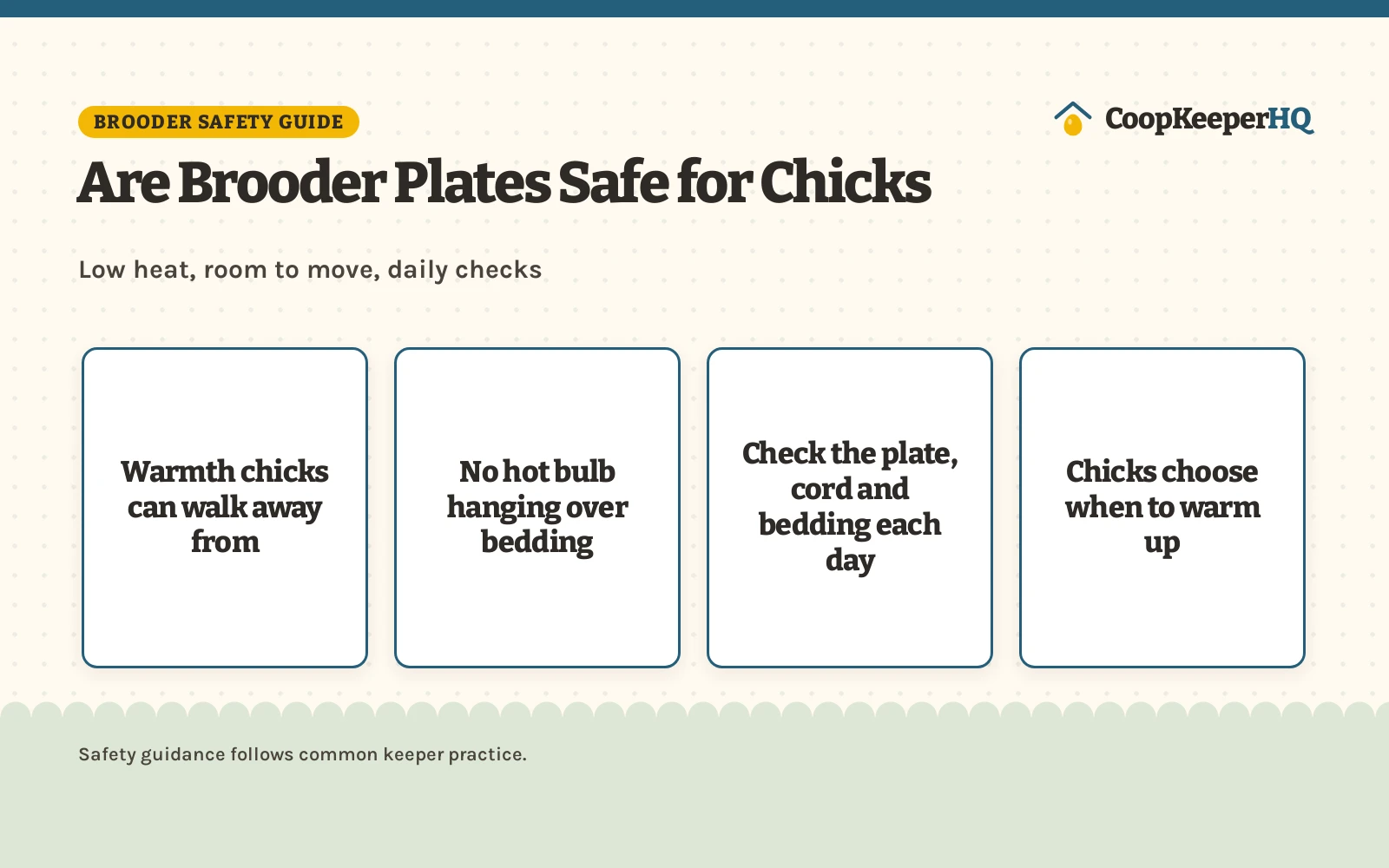
A brooder plate is a flat, low panel that hangs or stands above the chicks. Its underside gives off gentle warmth, and chicks duck underneath it the way they would settle under a hen. When a chick feels warm enough, it steps out to eat, drink and scratch, then returns when it feels cool. That freedom to move away from the heat is what makes the plate different from a lamp that fills the whole brooder with light and warmth. The plate warms the space beneath it and leaves the rest of the brooder cooler, so chicks can choose the spot that suits them.
Chicks learn the routine fast: they spill out toward the feeder in the morning and drift back under the plate to sleep. Chicks that move freely between the plate and the feeder are comfortable, while chicks that never leave the plate or never go near it are worth a closer look.
Why plates are safer than heat lamps
A heat lamp hangs a hot bulb over dry bedding, and a bump, a slipped clamp or a worn cord can drop that bulb where it does not belong. Coop fires linked to heat lamps are a familiar warning among keepers, and the risk stays as long as the lamp stays lit. A plate has no bulb to shatter and no glowing surface hanging above the bedding. Its warmth stays low and close to the chicks, and the top of the plate stays much cooler than a lamp bulb.
That lower profile also removes the bright light a lamp shines through the night, so the brooder keeps a natural rhythm of light and dark. For a closer look, the heat plate vs heat lamp comparison walks through the fire risk and the day-to-day differences.
Set the plate up so chicks can move away
A plate only works when chicks can leave it. Set the plate at a height that lets the smallest chick walk under it without crouching, and leave open floor on every side so chicks can step out to the feeder and waterer. Keep the plate away from the waterer so splashes never reach the cord or the plug, and keep bedding from piling against the plate legs. Run the cord where chicks cannot peck at it and where it cannot snag on the brooder wall, and plug it into a GFCI outlet.
If the plate legs move up and down, raise them as the chicks grow so the plate stays above their backs. A plate that sits too low traps warmth and crowds the chicks, while a plate that sits too high leaves them searching for warmth. For help choosing a plate, the brooder heat plate guide compares the plates sold for backyard flocks.
Daily checks that keep the plate safe
A plate needs little attention, and a short daily check covers it. Look at the cord and plug for chew marks or wear, and feel the underside of the plate for warmth. Lift the plate and look underneath for damp bedding or droppings that have built up, then clear them away. Watch the chicks as they settle: chicks that rest calmly under the plate and wander out to eat are comfortable, while chicks that pile in a tight heap under the plate or huddle in a far corner are telling you the setup needs a change.
Keep the brooder dry, and change bedding that has turned damp. A temperature controller can cycle the plate as the brooder warms and cools, for steadier warmth. Check the outlet as well: a GFCI outlet that has tripped cuts power to the plate, so a quick look at the outlet belongs in the daily round.
Keep the rest of the brooder in shape
A plate cannot fix a damp brooder or a cold draft. Set the brooder where wind cannot blow across the chicks, and keep the waterer on a dry patch of floor away from the plate. Give chicks dry bedding that stays loose underfoot, and clear out wet patches before they turn sour. Chicks that can eat, drink and rest without crossing a wet floor stay warmer and calmer through the day. For starter setups, the chick brooder kits guide shows how the plate, feeder and waterer fit together.
Plates for ducklings and other chicks
Brooder plates suit ducklings as well as chicks, and the same rules hold: room to move away, dry bedding under the plate, and a cord kept clear of water. Ducklings splash far more than chicks, so the waterer needs a wider dry patch around it and the plate needs a wider gap from the water. Wet bedding under a plate is a problem for any young bird, and ducklings create it faster than chicks do. The duck brooder guide covers bedding and water placement for ducklings in more detail.
A simple brooder plate checklist
- Plate sits low enough for chicks to duck under, with open floor on every side
- Cord runs clear of beaks and bedding, into a GFCI outlet
- Bedding under the plate is dry and clear of droppings
- Waterer sits away from the plate and the cord
- Chicks rest calmly under the plate and wander out to eat and drink
- Plate height rises as the chicks grow
Birds, breed size, run time and climate in; coop floor, run space, roost length and nesting boxes out.
Heat lamps are a common cause of coop and barn fires. If you use one, secure it with more than the clamp (a chain or wire to a fixed point), keep it well away from bedding, walls and cardboard, and plug it into an outlet or a cord rated for the load. Radiant heat plates run cooler and remove most of that risk. Check chicks often in the first days: huddling under the heat means too cold, spreading to the edges means too warm. Read our Safety Disclaimer.
FAQ for the flock
Are brooder plates safer than heat lamps?
Yes. A plate has no hot bulb hanging over dry bedding, so there is nothing to fall into the litter and start a fire. A lamp keeps a glowing bulb lit above the chicks, and that bulb is the fire risk. A plate warms chicks from below and leaves the rest of the brooder cooler and dark.
Can a chick get burned on a brooder plate?
A plate made for chicks gives off gentle warmth from its underside, and chicks step away when they feel warm enough. Burns are unlikely when the plate is set at the right height and chicks have open floor to move away. If the top of the plate feels hot to the hand, unplug it and ask the maker about it before using it again.
Can a brooder plate stay on through the night?
Yes, a plate can stay on through the night so chicks can warm up whenever they feel cool. The plate gives off warmth without light, so chicks sleep in the dark and wake to eat and drink. Check the cord and the bedding under the plate each morning as part of the daily routine.
Do chicks still need a plate when the room feels warm?
Chicks still need a warm spot to return to, even when the room feels warm to a keeper. A chick loses warmth faster than an adult bird, and a plate gives it a place to warm up between meals. If they spend their time away from the plate, the setup is warm enough as it stands.
When can chicks come off the heat plate?
Chicks can come off the plate when they are fully feathered and spend their time roaming the brooder instead of crowding under the plate. Fully feathered chicks hold their own warmth and no longer need a warm spot to return to. If the room turns cool at night, keep the plate in place until the chicks show no interest in it.
More coop guides
- Heat Plate vs Heat Lamp for Chicks: Which Is Safer?
- Best Brooder Heat Plate: Safer Heat for Chicks
- Chick Brooders for Backyard: 5 Starter Kits Compared (2026)
- How to Keep Duck Brooder Dry
- Temperature Controller With Timer for Incubators and Brooders
- Best Chicken Coop Heater: Safer Panels for Winter
- How to Keep Chickens Warm in Winter Without Overheating the Coop
- Best Heated Chicken Waterer: Picks That Will Not Freeze
See the brooder guides and the coop supply guides.