Chicken Coop for Beginners: Sizing, Setup, and Daily Care
Essential coop sizing, run space guidelines, roost setup, and predator protection for keeping your starting backyard flock safe and comfortable.

On this page
Top picks at a glance
As an Amazon Associate I earn from qualifying purchases.
- 1
 Aivituvin Extra Large Chicken Coop for 8-12 ChickensView on Amazon
- 2
 Aivituvin Large Chicken Coop 137" L Hen House Duck Cage forView on Amazon
- 3
 Sweet PDZ Chicken Coop RefresherView on Amazon
- 4
 Automatic Chicken Coop Door Solar Powered with Timer & LightView on Amazon
- 5
 Chicken Coop Heater for Winter with Smart APP ControlView on Amazon
- 6
 Chicken Coop Heater Inside Coop with Remote ControlView on Amazon
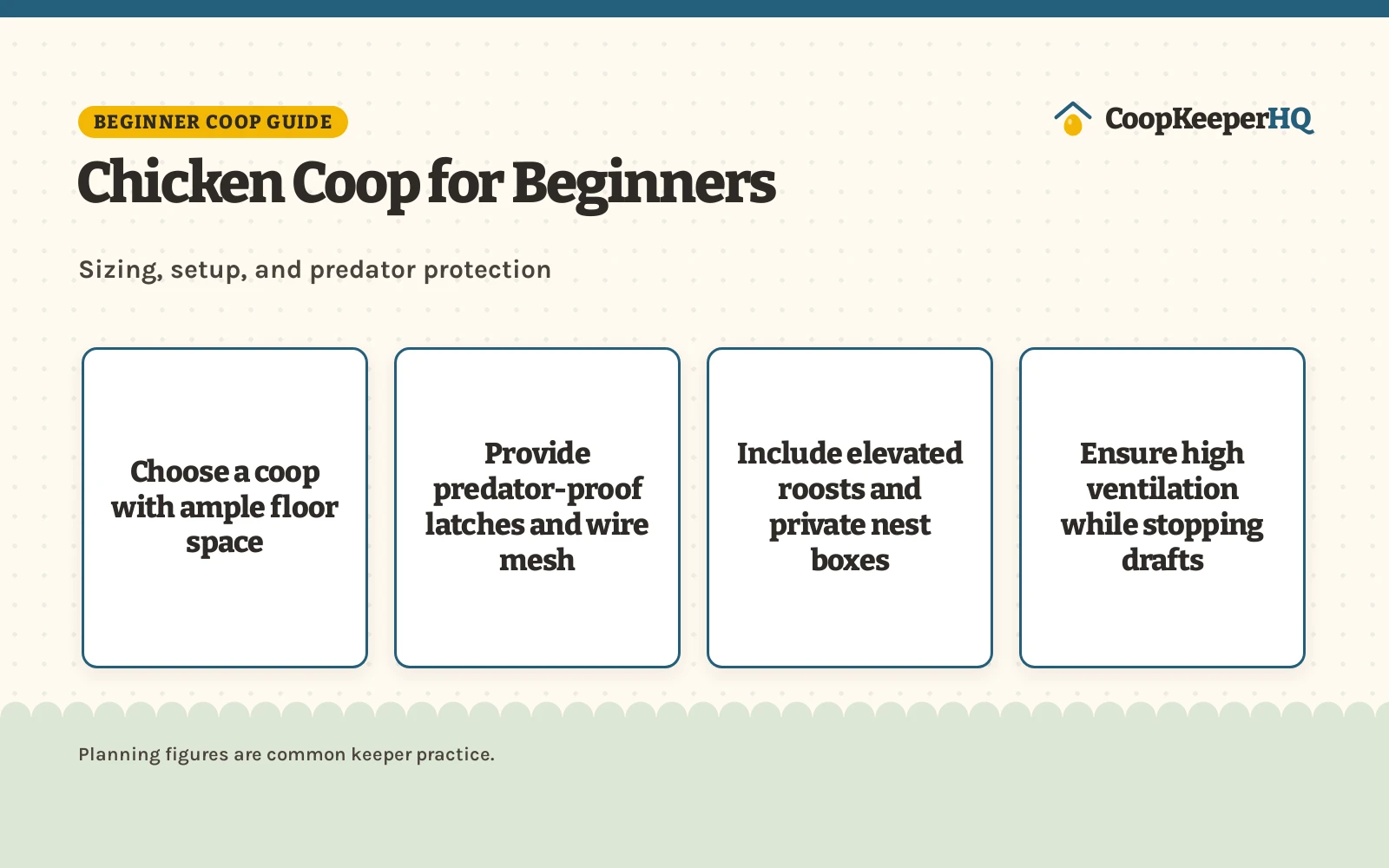
A chicken coop for beginners must provide solid predator defense, adequate interior roosting and nesting space, continuous draft-free ventilation, and a sheltered outdoor run. New flock keepers benefit from an easy-to-clean layout with convenient doors and accessible service panels so daily flock chores remain simple and manageable. Starting with the right shelter prevents crowding, keeps eggs clean, and protects your birds through every season.
Other options for the coop
 Aivituvin Extra Large Chicken Coop for 8-12 ChickensCheck price on Amazon
 Aivituvin Large Chicken Coop 137" L Hen House Duck Cage forCheck price on Amazon
 Sweet PDZ Chicken Coop RefresherCheck price on Amazon
 Automatic Chicken Coop Door Solar Powered with Timer & LightCheck price on Amazon
 Chicken Coop Heater for Winter with Smart APP ControlCheck price on Amazon
 Chicken Coop Heater Inside Coop with Remote ControlCheck price on Amazon
CoopKeeperHQ earns a commission if you buy through our links, at no added cost to you. Affiliate disclosure.
Chicken coop for beginners: essential shelter and space
Setting up your starting hen house means understanding how chickens live throughout the day and night. Chickens use their coop primarily for sleeping on elevated perches, laying eggs in secluded nest boxes, and taking shelter from severe weather. During daylight hours, hens prefer to be active outdoors, scratching in the dirt, foraging, and dust bathing in the run. Beginners often find that commercial flock ratings count the total ground footprint, including the attached outdoor run, rather than the enclosed sleeping quarters alone.
Before purchasing any model, verify the actual floor dimensions of the raised hen house separately from the outdoor pen. When birds are confined to cramped quarters during prolonged rain or snowstorms, crowding leads to stress and damp bedding. Our guide on how big a chicken coop should be explains why adequate interior floor area is vital for flock harmony.
Evaluating coop size and manufacturer capacity ratings
Commercial listings frequently rate coops based on total exterior footprint rather than usable interior floor space. Aivituvin, for example, publishes 55 square feet of total space for 8 to 10 chickens on its 137-inch coop, but that measurement includes the sleeping house, nesting boxes, and the attached run together. On its 134.5-inch wooden hen house with run, Aivituvin rates the combined layout for 8 to 12 chickens, providing 6 nesting boxes and 5 access doors. When evaluating coops with attached runs, beginners must check the actual dimensions of the enclosed hen house separately from the outdoor pen.
Other designs offer different shelter configurations. GUTINNEEN publishes 21.1 square feet of living space for 8 to 12 chickens on its 68.1-inch mobile hen house, which includes 4 nesting boxes and 4 perches. PawHut lists nearly 56 square feet of space for 8 to 12 chickens in its 110.2-inch walk-in run, which includes four nesting compartments, a perch, and the option to connect to an enclosed wooden coop. For expansive yards, Pawbuilt provides 190.6 inches of total length, dual nesting boxes with 6 total laying compartments, and 10 doors across two connected coop sections for 8 to 12 chickens. For smaller backyards, Aivituvin offers a mobile coop measuring 73.4 inches long by 27.9 inches wide by 43.2 inches high with two wheels, two round perches, and a 2-section nesting box rated for 2 to 4 chickens.
Predator protection: wire mesh and sturdy latches
Predator defense is the most critical feature of any backyard coop. Raccoons, foxes, coyotes, dogs, and rodents will routinely investigate a coop looking for vulnerable openings. Standard chicken wire is designed only to contain chickens; raccoons can easily reach through wide hexagonal gaps or tear light wire apart. Beginners should look for coops built with heavy-duty galvanized wire mesh or install welded wire cloth over every open window, vent, and run panel.
Mesh openings must be narrow enough to stop reaching paws and burrowing rodents. PawHut, for example, specifies a 0.5-inch gap size on the galvanized wire of its walk-in run. Upgrading your run perimeter with our recommended hardware cloth for chicken coops creates an unyielding predator barrier. Door latches must be equally solid: choose dual-action spring latches, carabiner-locked hasps, or padlocks on all main doors, egg collection lids, and cleanout panels so dexterous raccoon paws cannot open them.
Roosting bars and private nesting boxes
Chickens possess a natural instinct to sleep above ground level to stay safe from nighttime predators. Roosting bars should be elevated off the coop floor and positioned higher than the nesting boxes so hens do not sleep inside their laying nests. Wide wooden perches allow hens to sit comfortably on their feet, covering their toes with warm breast feathers during chilly nights.
Makers incorporate dedicated roosts inside the sleeping quarters and the attached run. Aivituvin provides 4 raised perches inside the sleeping house and 2 perches in the run area on its 137-inch hen house, while GUTINNEEN includes 4 polished perches on its mobile model. Ensure there is enough perch length so all your hens can roost side by side without bickering.
Nesting boxes provide dark, peaceful cubbies where hens can lay their daily eggs without disturbance. COZIWOW incorporates 4 nesting boxes in its 54-square-foot walk-in enclosure for a flock of laying hens. Adding clean nest pads helps prevent broken eggs, and our guide to the best chicken nesting boxes covers designs that make egg gathering effortless.
Ventilation without direct drafts
Proper ventilation is one of the most overlooked requirements in beginner coop planning. Chickens exhale substantial moisture overnight, and their droppings release ammonia fumes. In an unventilated coop, trapped dampness settles on feathers and combs, creating respiratory irritation and increasing the danger of frostbite during cold weather. Fresh air must enter and carry humid air away continuously.
The key to good ventilation is airflow placement. Vents and screened windows should be positioned high on the coop walls, well above the level of the sleeping perches. This allows warm, humid air and ammonia to rise and escape out the roofline without creating a chilly breeze across roosting hens. All ventilation openings must be backed with heavy galvanized wire mesh to keep rodents and predators from slipping inside.
Run space and outdoor weather protection
Backyard chickens need space to stretch their wings, scratch the soil, and enjoy fresh air every day. While a compact coop provides nighttime shelter, an attached run gives your flock outdoor access while shielding them from hawks and neighborhood dogs. Walk-in metal pens offer expansive room and overhead weather shielding for backyards where free-ranging is impractical.
Metal walk-in runs come in multiple footprint sizes for expanding flocks. Amopatio lists 87 square feet of ground area in its 10 by 13 foot galvanized steel run, with configurations accommodating 6 to 8 chickens up to 20 to 30 chickens. Benass specifies a 1-inch galvanized steel frame and 2 roof covers for its walk-in pen sized for 10 to 20 chickens. For long farm setups, Sannwsg provides a 10 by 26 foot metal walk-in pen with galvanized steel pipe framing and multiple weather covers. Explore our collection of covered chicken run ideas for ways to shelter your outdoor space from rain and overhead raptors.
Daily maintenance and easy-cleaning features
Coop maintenance should take only a few minutes each day when the coop is designed thoughtfully. If cleaning out droppings requires crawling into a tiny opening, coop care quickly becomes a dreaded chore. Look for coops equipped with convenient doors or multiple access panels, and removable pull-out dropping trays underneath the roosting perches.
Metal trays make routine manure removal straightforward. GUTINNEEN equips its mobile hen house with 2 pull-out metal trays, while Aivituvin includes sliding trays and 5 access doors so keepers can reach every corner from the outside. Pair these trays with clean, absorbent bedding. Wood shavings and chopped hemp absorb droppings and neutralize moisture; see our review of the best chicken coop bedding to compare the cleanest options. If you notice any bird behaving abnormally, consult a licensed poultry veterinarian or your state university extension office.
Essential beginner accessories: feeders, waterers, and doors
Furnishing your coop with reliable accessories keeps flock care smooth and prevents feed spoilage. Open feed dishes get kicked full of dirt or bedding within minutes. Elevating your equipment or mounting feeders to the run wire keeps grain clean and dry. A quality feeder design prevents rodents from raiding the flock food; explore our top outdoor chicken feeders for weather-tight feed hoppers.
Clean water is critical for hen hydration and steady egg laying. Chickens drink frequently throughout the day, and dirty water pans harbor bacteria. Enclosed drinkers with automatic drinker cups or horizontal nipples prevent dirt and debris contamination; our roundup of the best chicken coop waterers showcases the most sanitary designs. An automated pop door eliminates the worry of rushing home at sunset to lock your birds inside; our guide to the best automatic chicken coop doors covers dependable motorized units that fit standard coop openings.
A beginner coop setup checklist
Before welcoming your starting flock home, run through this essential setup checklist to ensure your coop is ready:
- Enclosed hen house provides sheltered roosting perches elevated off the floor
- Clean nesting boxes are lined with soft, dry bedding and kept dark
- Ventilation cutouts high on the walls remain open to exhaust damp air without drafts
- All windows, vents, and run panels are covered with sturdy galvanized wire mesh
- Doors and egg lids are fitted with predator-proof spring latches or padlocks
- Attached outdoor run offers a dry, covered scratching area protected from raptors
- Clean waterer and rodent-resistant feeder are elevated off the ground
For detailed advice on planning total flock space, explore our complete guide on how big a chicken coop should be before making your final purchase.
Birds, breed size, run time and climate in; coop floor, run space, roost length and nesting boxes out.
Wash your hands after handling birds, eggs or equipment, supervise children around the flock, and check local rules on flock size and roosters before you buy. For sick birds, call a poultry veterinarian or your state extension office. See CDC backyard poultry guidance. Read our Safety Disclaimer.
FAQ for the flock
What size chicken coop does a beginner need?
Coop size depends on your planned flock count, breed size, and how much daily run access your birds enjoy. Beginners should always compare the manufacturer advertised capacity against the actual interior sleeping floor dimensions, as published figures often bundle the outdoor wire run into the total footprint. For comprehensive space guidelines per bird, consult our coop sizing guide.
Should a beginner choose a wooden coop or a metal walk-in run?
Wooden coops provide enclosed sleeping quarters, elevated roosting bars, and private nesting boxes that protect hens from wind and cold. Metal walk-in runs provide tall, spacious outdoor enclosures where chickens can scratch safely during the day. Many beginners place a compact wooden hen house inside an enclosed metal walk-in run to combine sheltered roosting with predator-proof outdoor space.
Where should a beginner place a chicken coop in the backyard?
Select elevated, well-draining ground so heavy rainfall does not collect inside the run or soak the coop floor. Position the coop where it catches morning sun to help dry overnight moisture, while taking advantage of afternoon tree shade to prevent overheating during hot summer months. Keeping the coop within clear sight of your house makes daily checks and predator observation much easier.
How do beginners protect a chicken coop from predators?
Cover every ventilation opening, window, and run panel with heavy galvanized wire mesh or hardware cloth rather than lightweight chicken wire. Fit all access doors, cleanout panels, and nesting box lids with dual-action spring latches or padlocks that raccoons cannot manipulate. Close and latch the pop door at night, or install an automatic chicken coop door to ensure your flock is safely enclosed before dusk.
Do chicken coops need bedding?
Yes, clean bedding is essential for absorbing droppings, neutralizing moisture, and cushioning eggs in the nesting boxes. Medium pine wood shavings or chopped hemp bedding work well because they dry quickly and keep odor minimal. Scoop out damp patches regularly and replenish bedding as needed to maintain a clean, dry floor.
More coop guides
- How Big Should a Chicken Coop Be? Space per Bird Explained
- Best Chicken Coop for 6 Chickens: Picks Checked for Real Floor Space
- Best Hardware Cloth for Chicken Coop Runs and Aprons
See the chicken coop picks and the coop supply guides.