Chicken Coop on Wheels Plans: Mobile Tractor Sizing and Build Guide
Practical layouts, wheel placement, balanced framing and ventilation details for building a mobile backyard chicken tractor.

On this page
Top picks at a glance
As an Amazon Associate I earn from qualifying purchases.
- 1
 Chicken Coop Wheels Kit9.6/10View on Amazon
- 2
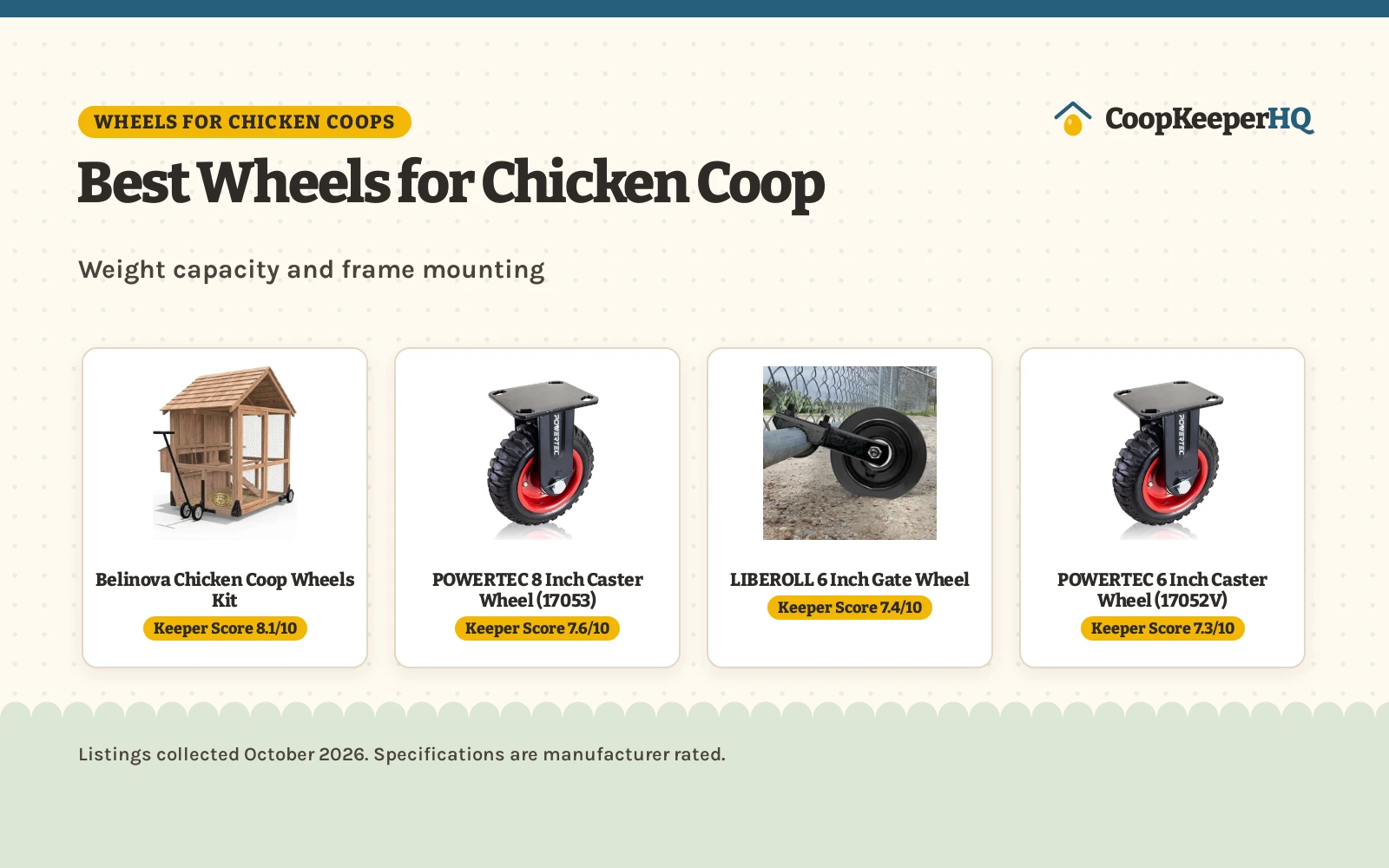
 POWERTEC 8 Inch Caster Wheels9.6/10View on Amazon
- 3
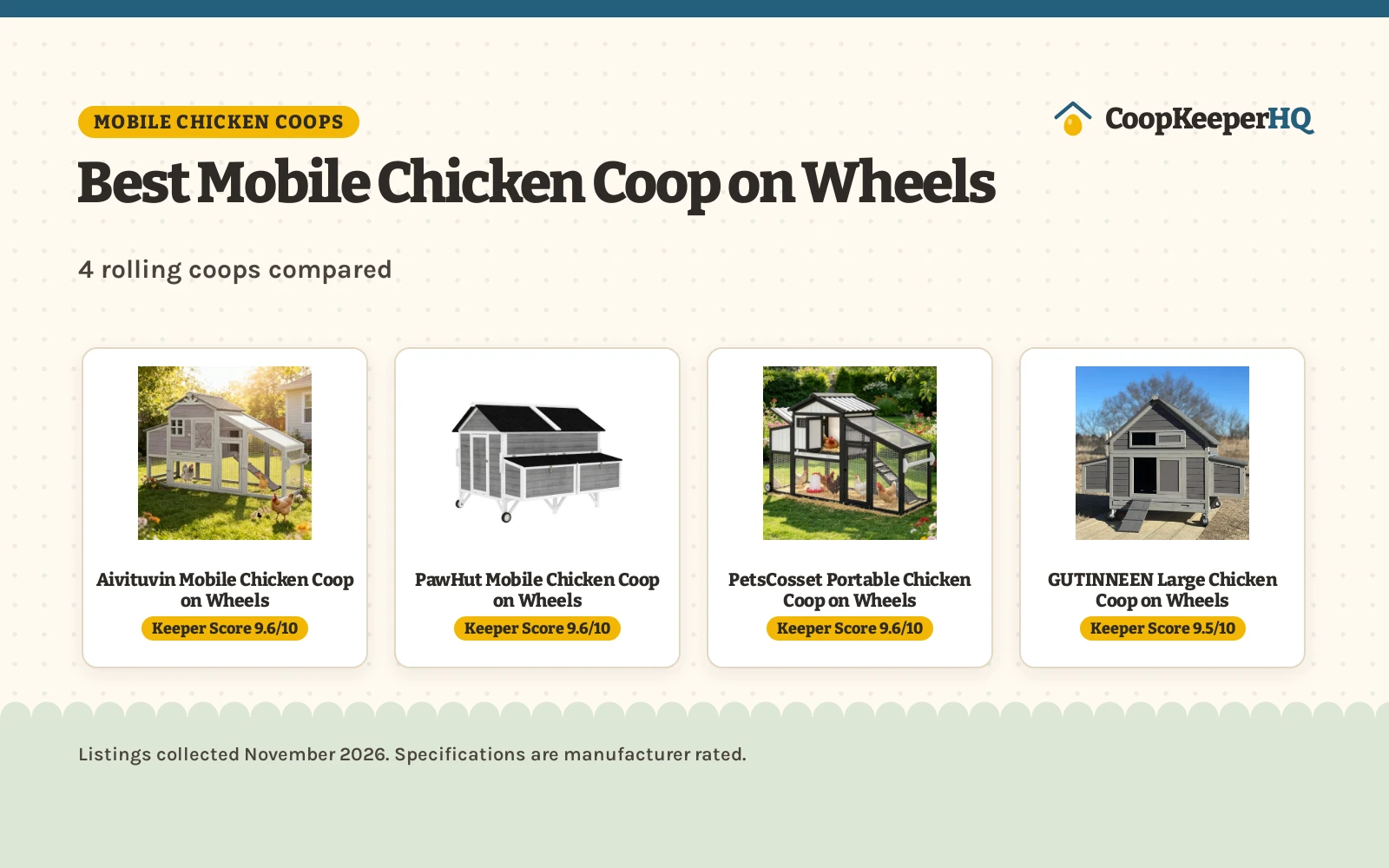
 Aivituvin Chicken Coop Mobile Chicken House on Wheels with9.6/10View on Amazon
- 4
 Outdoor Chicken CoopView on Amazon
- 5
 Mobile Chicken Coop with RunView on Amazon
- 6
 Mobile Chicken Coop with Wheels for 4-6 ChickensView on Amazon
- 7
 Extra Large Mobile Chicken Coop with RunView on Amazon
- 8
 Mobile Chicken Coop with WheelsView on Amazon
- 9
 Aivituvin Mobile Chicken Coop with WheelsView on Amazon
Chicken coop on wheels plans detail how to build a mobile chicken tractor that combines an enclosed roosting shelter and an attached foraging run on a wheeled chassis. These plans focus on lightweight framing, balanced axle placement, predator-proof wire mesh and smooth rolling mobility so keepers can rotate their flock across fresh pasture. By moving the shelter regularly, your chickens enjoy clean ground and green forage while keeping backyard soil healthy and reducing coop odors.
Other options for the coop
 Outdoor Chicken CoopCheck price on Amazon
 Mobile Chicken Coop with RunCheck price on Amazon
 Mobile Chicken Coop with Wheels for 4-6 ChickensCheck price on Amazon
 Extra Large Mobile Chicken Coop with RunCheck price on Amazon
 Mobile Chicken Coop with WheelsCheck price on Amazon
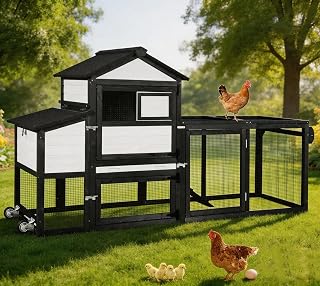 Aivituvin Mobile Chicken Coop with WheelsCheck price on Amazon
CoopKeeperHQ earns a commission if you buy through our links, at no added cost to you. Affiliate disclosure.
Chicken coop on wheels plans: core layout and mobility
A mobile chicken coop, often called a chicken tractor, solves one of the biggest challenges in backyard poultry keeping: ground wear. Stationary chicken coops concentrate manure in a single spot, turning runs into bare dirt and mud. Quality chicken coop on wheels plans combine a secure nighttime shelter with an integrated open-bottom run that rests directly on the grass. When you lift the handles and pull the coop forward, your birds gain immediate access to fresh pasture, insects and clover.
The overall layout must balance interior roosting comfort with total structure weight. Commercial designs demonstrate how dimensions scale for backyard flocks. The Aivituvin chicken coop (on Amazon) measures 73.4 inches long by 27.9 inches wide by 43.2 inches high, with the maker rating it for 2 to 4 chickens. For slightly larger flocks, the PHONDIKO mobile hen house measures 80.75 inches long by 26 inches wide by 44.5 inches high, while the Lovinhut mobile (on Amazon) tractor measures 81.5 inches long by 25.6 inches wide by 44.1 inches high with a maker rating of 4 standard chickens or up to 6 bantams. Comparing these dimensions helps you map out cutting lists and floor space before assembling your own build.
Weight distribution and axle placement
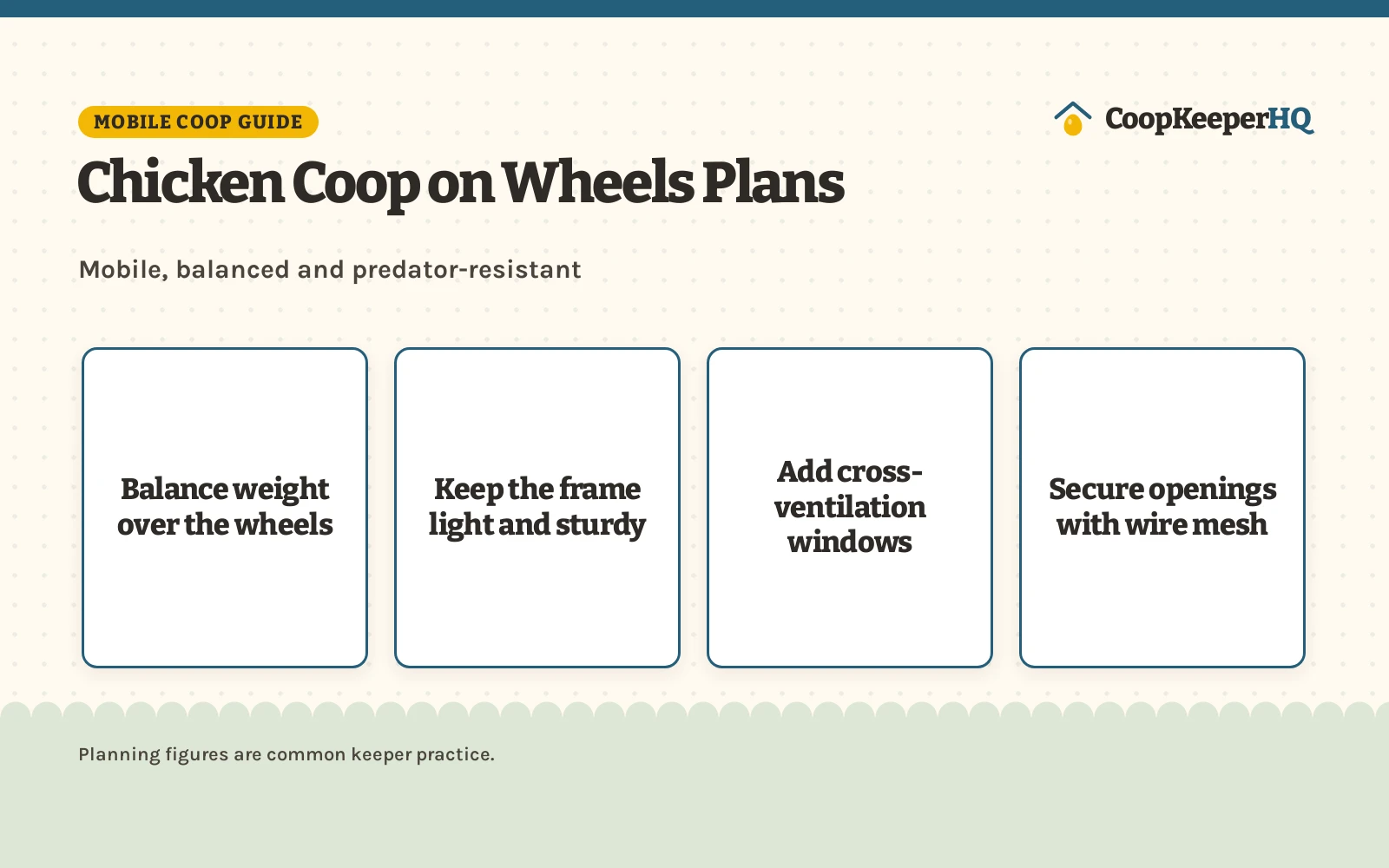
Mobility depends heavily on chassis balance and how the wheels interact with the ground. In a wheelbarrow-style design, mounting the wheels at the rear allows the bottom frame to sit flat on the turf when parked. When you lift the front handles, the skids rise off the ground, transferring the load onto the wheels for transport. Placing the axle slightly forward from the rear edge reduces lifting weight at the handles, but placing it too close to the center can cause the structure to rock on uneven ground.
Wheel diameter and tire design dictate how smoothly the shelter travels across turf. Narrow wheels can sink into soft lawn soil or bind against garden debris, while wider wheels and solid rubber tires roll over bumps with less resistance. For larger or heavier coops, builders often incorporate a mechanical wheel lift kit. The GRIND MODE chicken tractor wheel lift kit uses 6-inch lifting wheels and is rated by the maker for a 500-pound maximum load capacity, allowing keepers to raise the frame onto wheels for moving and lower it flat to the turf when parked.
Framing materials and structural weight
Every pound added to the frame is weight you must move across the lawn. Using excessively heavy timber throughout the entire build can result in a tractor that is cumbersome to move on schedule. Practical mobile coop plans use sturdy dimensional lumber for base skids and corner posts, with lighter framing strips for upper rafters and run walls.
Commercial models provide clear weight benchmarks for mobile shelters. The Pawpuler wooden coop (on Amazon) listing shows a weight of 42 pounds, offering a lightweight reference for single-person moving. The PetsCosset mobile chicken coop lists a weight of 55 pounds, while the PHONDIKO coop listing states 60 pounds and the FunXplore hen house lists 64.2 pounds. When a structure expands significantly, mobility changes: the Pawbuilt double coop lists a weight of 198.2 pounds across its extended frame, with the maker noting that the fully connected setup is best used as a more fixed backyard installation rather than a daily mover. Keeping total build weight manageable ensures you can relocate the tractor without excessive strain.
Run space, nesting boxes and roosting bars
Even though a tractor moves regularly, interior proportions must meet basic flock needs. Chickens require dedicated space for roosting overnight, private compartments for egg laying, and daytime foraging room. When planning flock capacity, review our guide on how big should a chicken coop be to match your intended bird count with realistic floor dimensions.
Published manufacturer specifications show how interior space divides across functional zones. The Pawpuler mobile tractor features a 12.38 sq ft run and a 6.22 sq ft resting area with two nesting boxes, which the maker lists for about 4 standard-size chickens or up to 6 smaller breeds. The Aivituvin coop includes a 2-section nesting box with two roosting perches above a pull-out tray. For keepers managing larger flocks, the Pawbuilt double coop (on Amazon) measures 190.6 inches long by 31.5 inches wide by 44.9 inches high, incorporating 6 laying compartments across two connected hen houses with a manufacturer rating of 8 to 12 hens. For custom builds, incorporate a sturdy chicken nesting box with exterior access lids so you can collect clean eggs without stepping inside the run.
Ventilation and weather protection
Moisture and ammonia buildup create a damp, unhealthy coop environment much faster than cool outdoor temperatures. Good mobile coop plans include cross-ventilation openings placed high on the walls, well above roost height. This allows humid air and odors to escape continuously without creating chilly drafts across sleeping hens. The FunXplore coop utilizes enlarged ventilation windows alongside side vents, while the Lovinhut tractor features dual side ventilation windows to maintain constant airflow.
Roofs must withstand wind, rain and direct sunlight while moving around the yard. Asphalt shingles or corrugated asphalt panels provide durable weather protection without adding excessive weight. The Aivituvin listing pairs a waterproof asphalt roof over the sleeping quarters with UV-resistant panels over the run, while the Lovinhut model features fir wood construction and asphalt roofing designed to shield birds from rain, snow and direct sun. Ensure all roof overhangs shed water away from nesting boxes and access doors.
Predator protection and secure latches
A mobile coop presents unique predator challenges because it lacks a deep underground predator trench. Raccoons, foxes, dogs and rodents will attempt to dig under the base frame or reach through open wire. Cover all run walls and open windows with heavy-duty galvanized wire mesh rather than thin poultry netting. Our review of hardware cloth for chicken coop runs details wire gauges and predator barriers that prevent pests from tearing into your enclosure.
Latching hardware must withstand determined paws. Simple sliding bolts can often be worked open by clever predators like raccoons. Equip all exterior doors and nest box lids with spring-loaded latches or dual-action locks, as discussed in our door latch guide. The Lovinhut listing specifies spring latches and a 1.38-inch reinforced frame, while the PetsCosset listing notes reinforced locks to deter predators. If you want automated morning release, install an automatic chicken coop door designed to seal tightly against predators at dusk.
Pasture rotation and yard terrain
A major advantage of building a chicken tractor is pasture rotation. Moving the tractor regularly prevents grass from being scratched down to bare dirt while spreading valuable manure evenly across your lawn or garden beds. Chickens naturally forage for fresh greens and insects, which enriches their diet and reduces feed waste.
Before building, assess your backyard terrain. Smooth, level lawns allow a mobile coop to roll cleanly and rest flush against the turf when set down. If your property features slopes, tall grass or bumpy ground, builders often design the frame with higher ground clearance during transport and attach drop-down skirts or wire aprons when parked. Rotating through garden plots between growing seasons also allows hens to scratch soil, consume weed seeds, and deposit manure directly where you plan to plant next.
Handles, lifting levers and wheel kits
Ergonomics make the difference between an enjoyable backyard routine and a chore that strains your back. Secure, comfortable pull handles mounted at waist height provide leverage when pulling the coop. The Aivituvin model includes an integrated pull handle with two wheels, while listings from PetsCosset and FunXplore feature pull handles paired with wide or durable wheels to assist with rolling on grass.
On larger builds, consider mechanical lifting levers. Wheel lift kits allow you to engage the wheels only when moving, lowering the entire wooden frame flush against the ground once parked. This design eliminates gaps beneath the skids where predators could enter or chickens could squeeze out. Hardware components from kits like the GRIND MODE wheel lift set feature puncture-proof solid rubber tires and alloy steel brackets that handle rough surfaces like gravel and tall grass without tire maintenance.
Daily management and cleaning routine
A well-planned mobile coop streamlines daily chores. Because droppings fall directly onto pasture through the open-bottom run, you spend far less time shoveling bedding than in a traditional stationary coop. In the raised sleeping compartment, removable droppings trays make routine cleaning simple. The Aivituvin, PHONDIKO, Garvee, Lovinhut and PetsCosset coops all incorporate slide-out trays that catch nighttime droppings beneath the roosts.
Multiple access points allow you to inspect birds, replenish water and collect eggs without disturbing the flock. The Lovinhut model features 5 access doors, and the PetsCosset design provides 5 access points for convenient reach. Keep your daily routine consistent: check water levels in the morning, gather fresh eggs from exterior nesting box lids in the afternoon, and ensure all latches are secured when birds roost at dusk.
A simple mobile coop checklist
- Chassis is balanced over the axle to keep tongue weight manageable
- Frame is built from rot-resistant lumber and securely braced
- All exterior openings and run walls are covered in welded wire mesh
- Access doors and nest box lids feature predator-proof locking latches
- Ventilation windows provide airflow above roosting height
- Wheels turn smoothly across uneven backyard turf
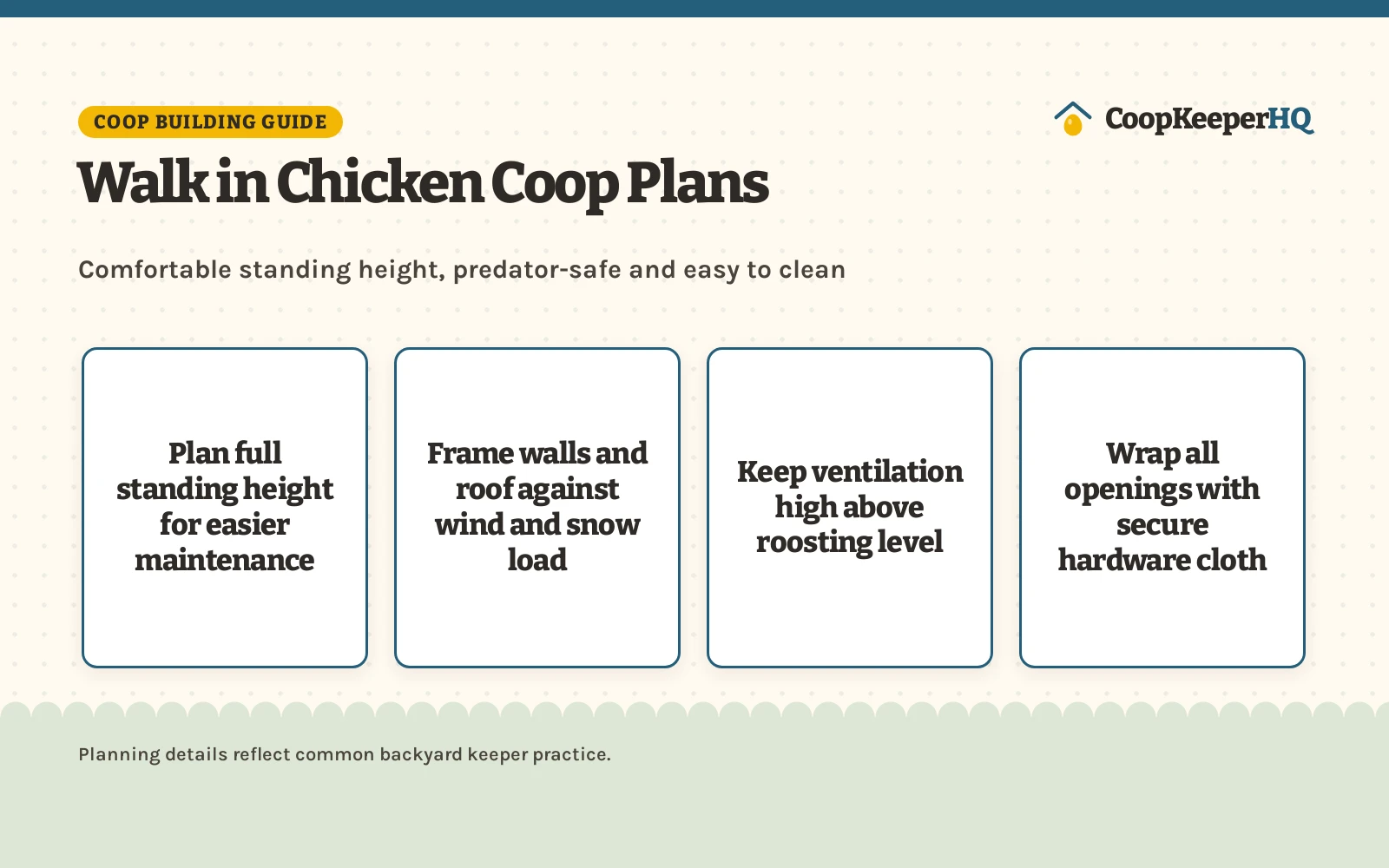
For more shelter styles and build layouts, see our walk-in chicken coop plans and our guide to how big should a chicken coop be.
Birds, breed size, run time and climate in; coop floor, run space, roost length and nesting boxes out.
Wash your hands after handling birds, eggs or equipment, supervise children around the flock, and check local rules on flock size and roosters before you buy. For sick birds, call a poultry veterinarian or your state extension office. See CDC backyard poultry guidance. Read our Safety Disclaimer.
FAQ for the flock
How often should you move a chicken coop on wheels?
Most keepers move their mobile coop daily or every few days depending on flock size and pasture growth. Moving regularly prevents chickens from scratching turf down to bare soil and distributes manure evenly across your lawn.
Can a chicken coop on wheels stay outside in winter?
Yes, mobile coops can remain outdoors through winter if built with weatherproof roofing, solid siding, and drafts sealed at roost height. Maintain high ventilation openings to remove moisture, and shelter the tractor against prevailing winds.
How do you predator-proof the bottom of a mobile chicken coop?
Ensure the base frame rests flush against level ground when parked. Keepers can attach a perimeter wire skirt or hardware cloth apron that folds down along the grass, preventing burrowing predators from digging beneath the skids.
What is the difference between a chicken coop on wheels and a chicken tractor?
The terms are used interchangeably in backyard keeping. Both describe a movable shelter with an integrated run built on wheels or skids, designed to rotate across fresh pasture while keeping your flock contained and protected.
Do chickens need extra run space with a mobile coop?
While mobile coops provide continuous access to fresh grass, birds benefit from additional roaming area whenever possible. Adding portable electric poultry fencing around your mobile tractor gives hens extra foraging range while keeping them safe.
More coop guides
- Best Chicken Tractor: Mobile Coops Compared by Real Space
- Wheels for Chicken Coop: 5 Heavy-Duty Picks for Mobile Tractors (2026)
- Walk in Chicken Coop Plans: Complete Backyard Guide
See the chicken coop picks and the chicken tractor guides.