Cost of Egg Cartons: Guide for Backyard Flocks
A practical guide to egg carton costs, comparing pack sizes from 24 to 250 count, materials, styles, and bulk savings for backyard chicken flocks.

On this page
Top picks at a glance
As an Amazon Associate I earn from qualifying purchases.
- 1
 EVANCENT 100 Pack Large Egg Cartons9.7/10View on Amazon
- 2
 40 Pack Half Dozen Egg Cartons Bulk 6 Count9.6/10View on Amazon
- 3
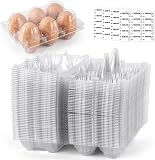 60 PCS Plastic Egg Cartons Bulk with Date Labels9.6/10View on Amazon
- 4
 MT Products Blank Natural Pulp Egg Cartons BulkView on Amazon
- 5
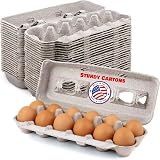 MT Products Blank Natural Pulp Egg Cartons Holds Up to TwelveView on Amazon
- 6
 Egg Cartons- Adorable Printed Design for Farm Fresh EggsView on Amazon
- 7
 250 Egg Cartons- Bulk Value Bundle- Adorable Printed DesignView on Amazon
- 8
 Printed Farm Fresh Egg CartonsView on Amazon
- 9
 MT Products Printed Empty Egg Cartons Holds 12 EggsView on Amazon
Walking back from the coop with an egg basket full of fresh eggs is a daily highlight for backyard flock owners, until you notice your stack of empty cartons disappearing faster than your hens can lay. The cost of egg cartons depends primarily on the pack quantity you order, the material you select, and whether you purchase blank cartons or pre-printed containers. While buying small bundles creates a noticeably higher per-carton packaging expense, ordering bulk cases or gathering reusable cartons from neighbors lowers your ongoing expenses substantially.
Other options for the coop
 MT Products Blank Natural Pulp Egg Cartons BulkCheck price on Amazon
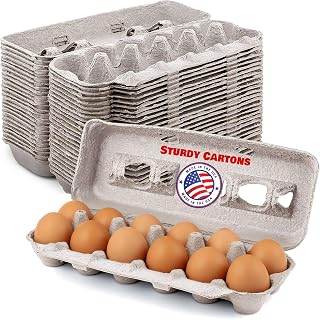 MT Products Blank Natural Pulp Egg Cartons Holds Up to TwelveCheck price on Amazon
 Egg Cartons- Adorable Printed Design for Farm Fresh EggsCheck price on Amazon
 250 Egg Cartons- Bulk Value Bundle- Adorable Printed DesignCheck price on Amazon
 Printed Farm Fresh Egg CartonsCheck price on Amazon
 MT Products Printed Empty Egg Cartons Holds 12 EggsCheck price on Amazon
CoopKeeperHQ earns a commission if you buy through our links, at no added cost to you. Affiliate disclosure.
Cost of egg cartons: pack sizes, materials, and bulk savings
When you start collecting eggs, packaging shifts from an afterthought into a steady coop expense. Calculating the true cost of egg cartons requires looking beyond checkout totals to evaluate the unit expense per container. Suppliers structure pricing around volume, meaning the cost per carton drops sharply as bundle counts rise. Beyond quantity, sturdy molded paper pulp absorbs moisture and cushions shells during storage and transport, though it cannot be washed if an egg breaks inside. Choosing the right bundle size, construction, and labeling keeps flock packaging economical.
Pack size and bulk volume savings
Pack quantity is the primary driver of carton pricing. Small bundles carry the highest unit expense because handling and shipping are spread over few pieces. For example, Cackle Hatchery lists a 24 pack of vented paper pulp cartons holding 1 dozen eggs, suited for family use but carrying a higher unit cost.
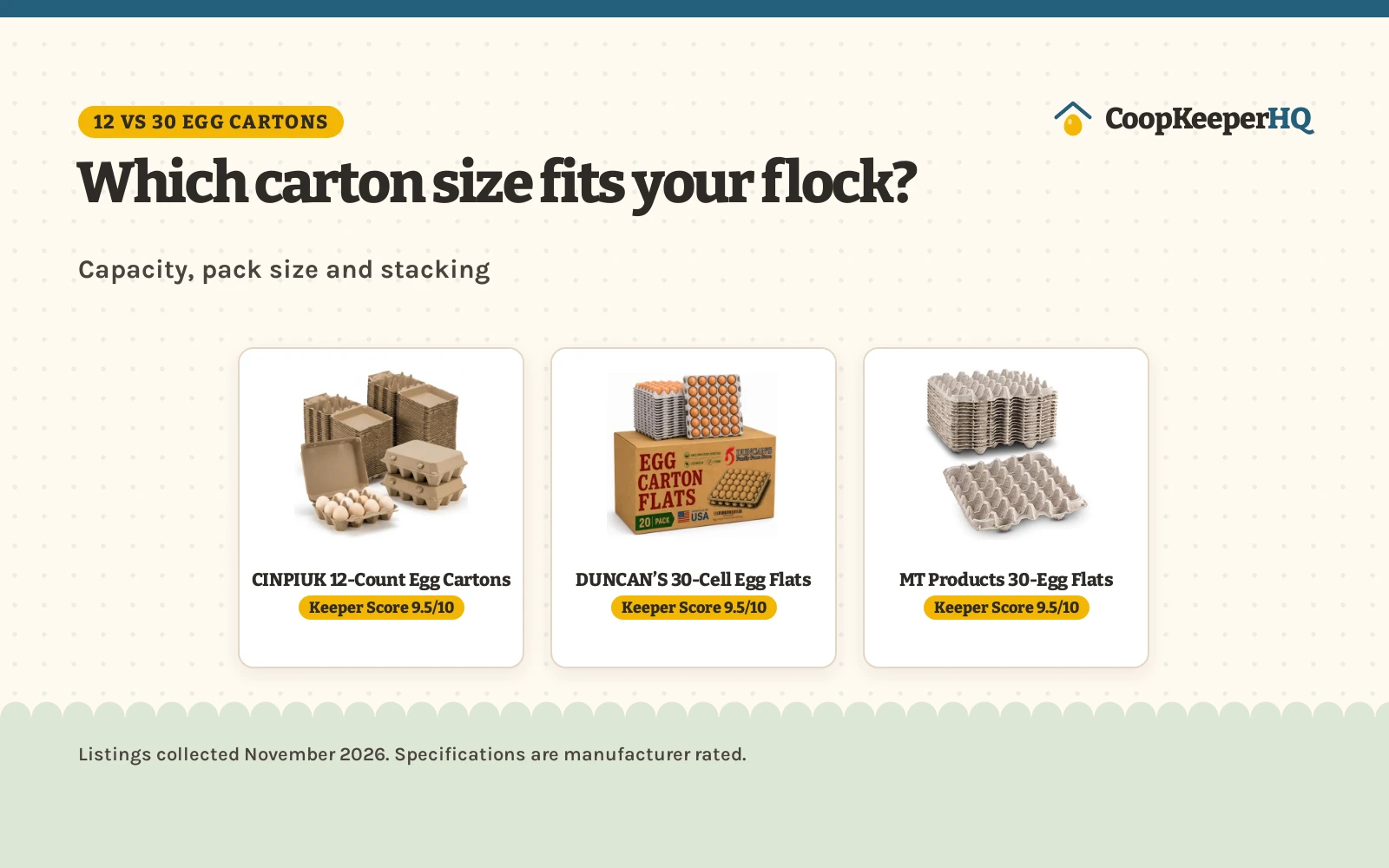
Stepping up to medium bundles lowers expenses immediately. LayHyand and ACXFOND list 30 pack options holding 12 eggs, while Zhanmai, SEUNMUK, and CINPIUK offer 50 pack bundles that spread costs across more units. For farm stands, commercial supplier Stromberg’s lists a 100 pack of blank flat top cartons and a 250 pack of printed cartons. Storing bulk cases in a dry pantry or barn reduces packaging costs to a fraction of small retail bundles. For further comparisons, see our cheap egg cartons guide.
Molded paper pulp vs alternative materials
Carton materials influence pricing and durability. Recycled paper pulp remains the industry standard across common brands like Cackle Hatchery, LayHyand, Zhanmai, SEUNMUK, and CINPIUK. Paper pulp absorbs ambient humidity to keep shells dry and is biodegradable, recyclable, and compostable.
Clear plastic and foam cartons are commercial alternatives. Plastic displays eggs but traps moisture against shells, encouraging condensation. Foam resists crushing but does not absorb moisture and is rarely recyclable. For balanced protection and low packaging expenses, recycled paper pulp remains practical. For countertop storage instead of disposable cartons, browse our egg skelter guide or explore our egg carton alternative comparison.
Carton configuration: 3×4 square vs traditional elongated styles
Backyard cartons arrive in traditional elongated rectangular layouts and square 3×4 arrangements, each holding 12 eggs.
Elongated cartons, like Cackle Hatchery’s 24 pack measuring 12 inches long by 4.25 inches wide by 2.75 inches high, slide easily onto refrigerator shelves and fit standard grocery bags. Vintage square 3×4 cartons offer a compact farm stand display. LayHyand lists a 3×4 square dozen measuring 7.5 by 6.3 by 2.6 inches. Zhanmai lists a 3×4 carton measuring 7.87 by 6.3 by 2.36 inches (20 by 16 by 6 cm), SEUNMUK lists a 12 cell carton measuring 7.5 by 6.7 by 2.7 inches, and ACXFOND provides a 3×4 carton measuring 7.5 by 6 by 2.7 inches. Many square cartons from LayHyand, Zhanmai, and SEUNMUK feature clamshell lids with buckle clasps that stack securely on flat shelves.
Blank cartons versus pre-printed lids
Blank flat top cartons, like Stromberg’s 100 pack, allow keepers to stamp farm names, logos, or dates. ACXFOND includes a roll of stickers with its 30 pack for quick labeling. Blank cartons cost less initially, but keepers must account for stamping supplies, as covered in our egg stamps for chicken eggs guide.
Pre-printed cartons, such as Stromberg’s 250 pack of Grade A large cartons with transparent windows, include USDA safe handling instructions and nutritional panels. They save labeling labor, though large cases require higher upfront investment and leave less room for custom farm branding.
Sizing for chicken eggs, duck eggs, and quail eggs
Standard cartons fit medium to large chicken eggs, with Cackle Hatchery listing capacity up to extra large. CINPIUK specifies its 50 pack of 3×4 pulp trays holds 12 large eggs with cups fitting eggs up to 2 inches in diameter.
For mixed flocks, LayHyand and ACXFOND note their 3×4 cartons hold small, medium, and large chicken eggs, and suggest use for smaller duck eggs or large quail eggs. However, standard duck eggs and jumbo chicken eggs require deeper cells to prevent cracked shells. See our guides on egg cartons for large eggs and egg cartons for duck eggs to match pocket depth.
Reusing cartons safely to lower expenses
Exchanging clean cartons with regular customers is an effective way to lower expenses. Sturdy paper pulp cartons withstand repeated refills when kept clean and dry. However, paper pulp cannot be sanitized; discard any carton that becomes stained or soiled. Keep nest boxes clean so eggs stay pristine before packing. For handling advice, see our guides on how to clean fresh eggs and how long fresh eggs keep, and check local retail packaging regulations.
Shipping bulk cartons and storage logistics
Cartons are bulky, so shipping charges on a 24 pack or 30 pack represent a high portion of the total cost. Bulk orders of 100 pack or 250 pack cartons lower freight costs per unit. Store pulp cartons away from damp ground or coop humidity in sealed bins or elevated shelves inside a dry home or barn. For sales advice, read our best egg cartons for selling eggs guide.
Daily egg packing routine
Gather eggs with a wire or wicker egg basket to avoid shell cracks. Pack clean eggs pointed end down into cartons to protect the blunt-end air cell. Mark collection dates on the lid before placing cartons in cold storage.
A simple egg carton budget checklist
- Assess monthly yield to pick a 24 pack, 50 pack, or 250 pack
- Order 100 pack or 250 pack bulk cases to minimize unit costs
- Select molded paper pulp for moisture absorption and compostability
- Choose elongated rows or square 3×4 configurations for your shelving
- Factor in stamp or label costs when buying blank cartons
- Inspect returned cartons and discard soiled packaging
- Store cases in a dry, elevated, rodent-free area
What a dozen of your own eggs really costs, with and without startup costs, against the store price.
Wash your hands after handling birds, eggs or equipment, supervise children around the flock, and check local rules on flock size and roosters before you buy. For sick birds, call a poultry veterinarian or your state extension office. See CDC backyard poultry guidance. Read our Safety Disclaimer.
FAQ for the flock
How much do egg cartons affect the cost of selling eggs?
Packaging is a recurring expense. Buying small bundles raises per-carton costs, whereas buying wholesale quantities or collecting clean cartons back from customers keeps expenses minimal.
Is it cheaper to buy egg cartons in bulk?
Yes. Bulk cases like Stromberg’s 100 pack and 250 pack offer much lower unit costs than a 24 pack or 30 pack, saving money if you have dry storage.
Are blank egg cartons cheaper than printed cartons?
Blank cartons cost less upfront than cartons pre-printed with USDA safe handling panels, but keepers must account for separate stamp or label expenses.
Can backyard keepers reuse paper pulp egg cartons to save money?
Yes. Reusing clean, dry cartons saves money, but soiled cartons cannot be sanitized and must be discarded. Check local rules regarding carton reuse for egg sales.
Are square 3×4 cartons cheaper than standard cartons?
Pricing is comparable for similar counts. Brands like LayHyand, Zhanmai, and ACXFOND offer 3×4 cartons in 30 pack and 50 pack bundles that stack neatly on flat shelves.
More coop guides
- Cheap Egg Cartons: 5 Budget Picks for Fresh Eggs (2026)
- Best Egg Cartons for Selling Eggs at a Farm Stand
- Egg Cartons for Large Eggs: 5 Top Picks for Backyard Flocks (2026)
See the egg handling picks and the coop supplies guides.