How to Clean Fresh Eggs Without Washing Away the Bloom
A practical guide to cleaning fresh backyard eggs safely, preserving the natural bloom, and choosing between dry cleaning and washing.

On this page
Top picks at a glance
As an Amazon Associate I earn from qualifying purchases.
- 1
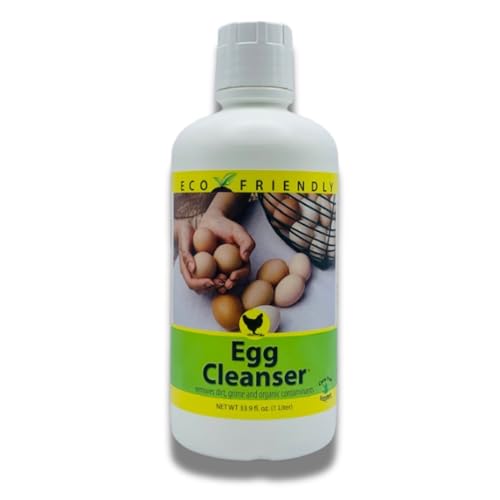 CareFree Enzymes Egg Washer and Egg Cleaner9.6/10View on Amazon
- 2
 Chicken Egg Basket for Gathering Fresh Eggs9.5/10View on Amazon
- 3
 GoodEgg The Original Egg Brush9.5/10View on Amazon
- 4
 Manna Pro Egg Cleanser Natural Enzyme Wash for Fresh EggsView on Amazon
- 5
 Egg Cartons- Adorable Printed Design for Farm Fresh EggsView on Amazon
- 6
 250 Egg Cartons- Bulk Value Bundle- Adorable Printed DesignView on Amazon
- 7
 Printed Farm Fresh Egg CartonsView on Amazon
- 8
 Billy Buckskin Chicken Dust BathView on Amazon
Clean fresh eggs only when necessary, starting with dry brushing to preserve the protective bloom that naturally seals the shell. When an egg has heavy dirt or manure, wash it under warm running water that feels distinctly warmer than the egg, dry the shell completely, and store washed eggs in the refrigerator. Unwashed and dry-brushed eggs can remain at cool room temperature or go into the fridge for longer storage.
Other options for the coop
 Manna Pro Egg Cleanser Natural Enzyme Wash for Fresh EggsCheck price on Amazon
 Egg Cartons- Adorable Printed Design for Farm Fresh EggsCheck price on Amazon
 250 Egg Cartons- Bulk Value Bundle- Adorable Printed DesignCheck price on Amazon
 Printed Farm Fresh Egg CartonsCheck price on Amazon
 Billy Buckskin Chicken Dust BathCheck price on Amazon
CoopKeeperHQ earns a commission if you buy through our links, at no added cost to you. Affiliate disclosure.
How to clean fresh eggs: start with the bloom
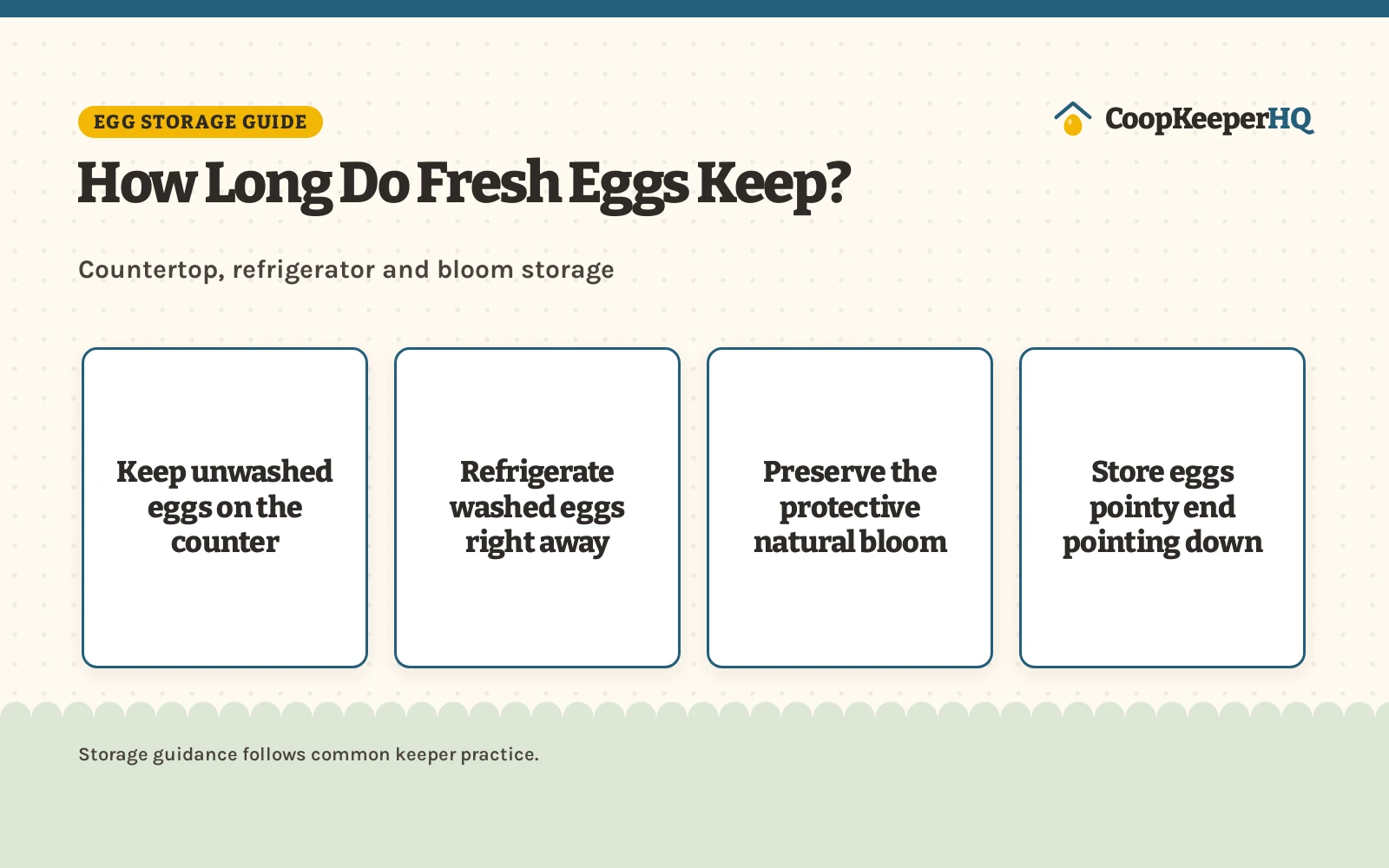
Hens deposit a thin protective coating called the bloom, or cuticle, over the shell just before laying. This natural barrier seals the microscopic pores on the eggshell, blocking bacteria and moisture loss. When an egg remains unwashed with its bloom intact, it can safely stay at cool room temperature on a kitchen counter, though refrigerating unwashed eggs is also common practice and preserves freshness longer. Washing removes this natural defense, exposing the porous shell to air and outside contaminants. For that reason, the basic principle of egg handling is simple: do not wash an egg unless it is genuinely dirty.
Keep nest boxes clean to prevent dirty shells
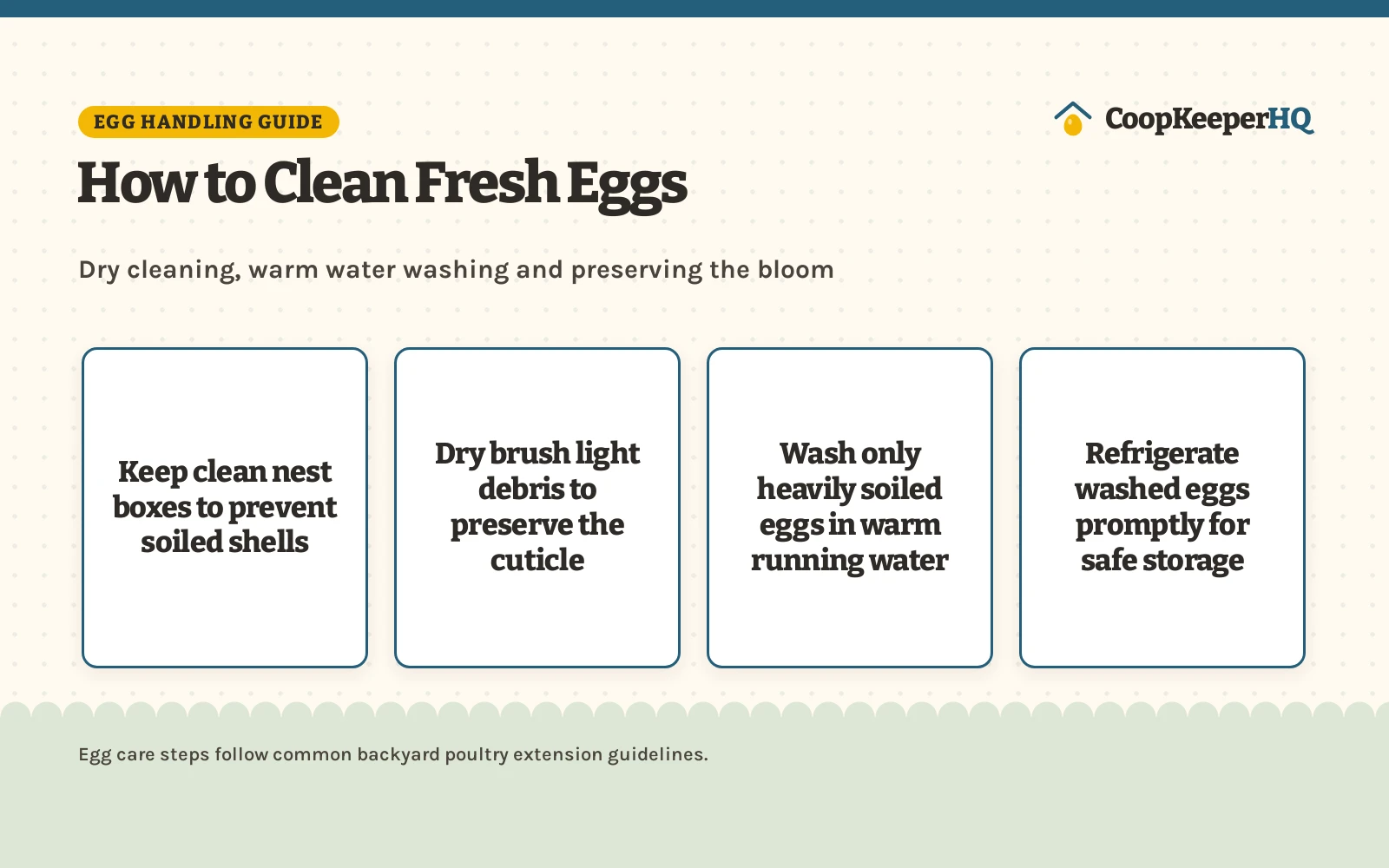
The easiest way to clean fresh eggs is to keep them from getting dirty in the nest box. Chickens prefer laying in quiet, dark boxes filled with clean bedding. If bedding becomes soiled with droppings or broken yolk, fresh eggs quickly pick up stains. Replace damp or dusty litter regularly, and consider roll-away designs that guide eggs into a sheltered tray. Our nesting box guide compares styles that help keep shells spotless, and our review of nesting box bedding shows which materials absorb moisture best. Gathering eggs frequently throughout the day also prevents hens from stepping on them or tracking mud into the box.
Dry clean light dirt without water
When an egg has a speck of dirt, dried bedding, or light dust, reach for a dry abrasive tool rather than the faucet. Dry cleaning removes surface debris while leaving the surrounding bloom intact. A gentle sanding sponge, a piece of fine sandpaper, a stiff-bristled brush, or a dry loofah works well. Rub the soiled spot lightly using small circular motions until the mark lifts away. Avoid scrubbing the clean areas of the shell so you do not rub off the protective cuticle unnecessarily. Once brushed clean, the egg remains safe for countertop storage in a basket or rack. For collecting your morning harvest without cracking shells, see our guide to egg baskets for fresh eggs.
Wash heavily soiled eggs under warm running water
Some eggs gather stuck-on manure, mud, or broken yolk that dry brushing cannot remove. These soiled eggs require washing, but water temperature is critical. Always wash eggs under warm running water that feels distinctly warmer than the egg itself. Warm water causes the contents of the egg to expand slightly, pushing pressure outward through the shell pores and keeping wash water from entering. Cold water does the opposite: it causes the egg contents to shrink, creating a vacuum that pulls dirty water and bacteria straight through the shell. Hold the egg under the warm stream and rub the dirty spots gently with your fingers or a soft sponge. Never use soap, detergents, or harsh chemical cleaners that can penetrate the shell.
Never soak eggs in water
Submerging eggs in a bowl or sink of standing water is a common mistake that ruins fresh eggs. Even warm standing water quickly collects dissolved bacteria from dirty shells. Because eggshells are naturally porous, soaking allows bacteria to seep directly into the egg white. Always wash eggs individually under continuous running water so that dirty rinse water flows directly down the drain. Wash only the eggs that need it, and wash them right before drying rather than letting wet shells sit on a counter.
Dry thoroughly before storing
Moisture on an eggshell invites bacterial growth. After rinsing an egg, pat the shell dry immediately using a clean paper towel or a dedicated clean cloth. Do not leave wet eggs to air dry on a towel, as moisture trapped against the bottom of the shell can draw contaminants inward. Use a fresh section of the towel for each egg so you do not transfer moisture between shells. Make sure the shell is completely dry to the touch before placing it into storage.
Countertop versus refrigerator storage
How an egg is handled shapes your storage choices. Unwashed and dry-brushed eggs that retain their natural bloom can sit at cool room temperature on your kitchen counter, or they can go into the refrigerator for extended storage. In contrast, washed eggs must go straight into the refrigerator because washing strips away the protective cuticle, leaving pores exposed. On the counter, storage capacities vary across individual dispensers: the OBVIS spiral rack (on Amazon) listing states it holds 22 eggs on a compact footprint, while the Toplife spiral dispenser listing states it holds 3 dozen eggs. For keepers who prefer wooden crates, the YOUEON stackable (on Amazon) set includes 2 crates with 12 slots each to hold 24 eggs. A countertop skelter keeps eggs visible and organized so older eggs get used before newer arrivals. Our review of the egg skelter and our explainer on what an egg skelter is detail how spiral dispensers rotate your daily harvest. In the refrigerator, covered bins prevent porous shells from absorbing food odors, with capacities that also vary by product: the Utopia Home tray listing states 14 slots per tray, the MEUPMEOP container (on Amazon) lists 16 dedicated slots across its 3-tier build, and the ShuNuac auto-rolling container (on Amazon) listing states it holds 14 eggs per tier for 28 eggs across 2 tiers. For sharing extra eggs with neighbors, see our guide to egg cartons.
What cleaning supplies to avoid
Keep your egg cleaning routine simple and free of harsh chemicals. Bleach, vinegar, dishwashing detergent, and sanitizing wipes should never touch fresh eggs. Eggshells contain microscopic pores that readily absorb chemical residues and scents, which taint the flavor of the yolk and white. Chemical washes can also erode the mineral structure of the shell, making it brittle. Plain warm water or dry friction with a clean sanding sponge is all that backyard eggs require. If an egg is cracked, leaking, or coated in stubborn filth that will not rinse away with warm water, discard it rather than attempting to rescue it with strong cleaning agents.
Daily routine for collecting and sorting
A steady daily habit keeps dirty eggs to a minimum and saves time at the sink. Visit the coop regularly to collect fresh eggs before hens crowd the nests. Bring a padded basket lined with straw or clean cloth to prevent cracks during transport. As you gather, sort eggs into clean shells and soiled shells right in the coop. Clean eggs with intact bloom can go straight to your countertop holder or into the refrigerator. Eggs with minor dust can receive a quick dry brushing at the kitchen counter. Set aside heavily soiled eggs to wash under warm water, dry thoroughly, and place immediately in the refrigerator. If you notice persistent dirt on shells, check the coop for wet litter or cracked eggs and refresh the bedding promptly.
A simple egg cleaning checklist
- Nest box bedding is clean and dry to keep shells spotless
- Clean eggs with intact bloom are left unwashed
- Light dust and minor debris are removed with dry brushing
- Heavily soiled eggs are washed only under warm running water
- Eggs are never soaked in bowls or standing water
- Washed eggs are dried immediately and stored in the refrigerator
For clean nesting areas that reduce dirty shells, see our nesting box guide and our review of nesting box bedding.
What a dozen of your own eggs really costs, with and without startup costs, against the store price.
Wash your hands after handling birds, eggs or equipment, supervise children around the flock, and check local rules on flock size and roosters before you buy. For sick birds, call a poultry veterinarian or your state extension office. See CDC backyard poultry guidance. Read our Safety Disclaimer.
FAQ for the flock
Should you wash fresh eggs right after collecting them?
Generally, no. Clean eggs do not need washing because leaving them unwashed preserves the natural bloom, which protects the shell from bacteria and moisture loss. If an egg has stuck-on dirt or manure, wash it under warm running water, dry it thoroughly, and store it in the refrigerator, or set it aside to wash just before use.
Why must you use warm water instead of cold water to wash eggs?
Warm water makes the contents of the egg expand, pushing outward against the shell and preventing wash water from entering. Cold water causes the contents to contract, creating a suction that pulls dirty water and bacteria through the porous shell.
Can you use soap or bleach to clean fresh eggs?
Do not use soap, bleach, or chemical sanitizers on fresh eggs. Eggshells are porous and absorb chemical odors and residues, which can spoil the taste and quality of the egg. Warm running water and gentle friction are sufficient.
How do you dry clean fresh eggs?
Use a dry abrasive tool such as a fine sanding sponge, a stiff brush, or a dry loofah. Gently buff away spots of dirt or dried bedding using circular motions, keeping the abrasion focused only on the dirty spot to leave the surrounding bloom intact.
Do washed fresh eggs need to be refrigerated?
Yes. Washing removes the protective bloom, leaving the pores of the shell open to air and bacteria. Washed eggs must be dried completely and placed in the refrigerator to stay fresh.
More coop guides
- Egg Baskets for Fresh Eggs: 5 Top Picks for Backyard Flocks (2026)
- Best Egg Skelter: Countertop Egg Holders for Fresh Eggs
- Best Chicken Nesting Box Bedding: 5 Clean Pads and Herbs
See the egg handling picks and the coop supply guides.