Do Ducks Need a Pool? Backyard Flock Water Guide
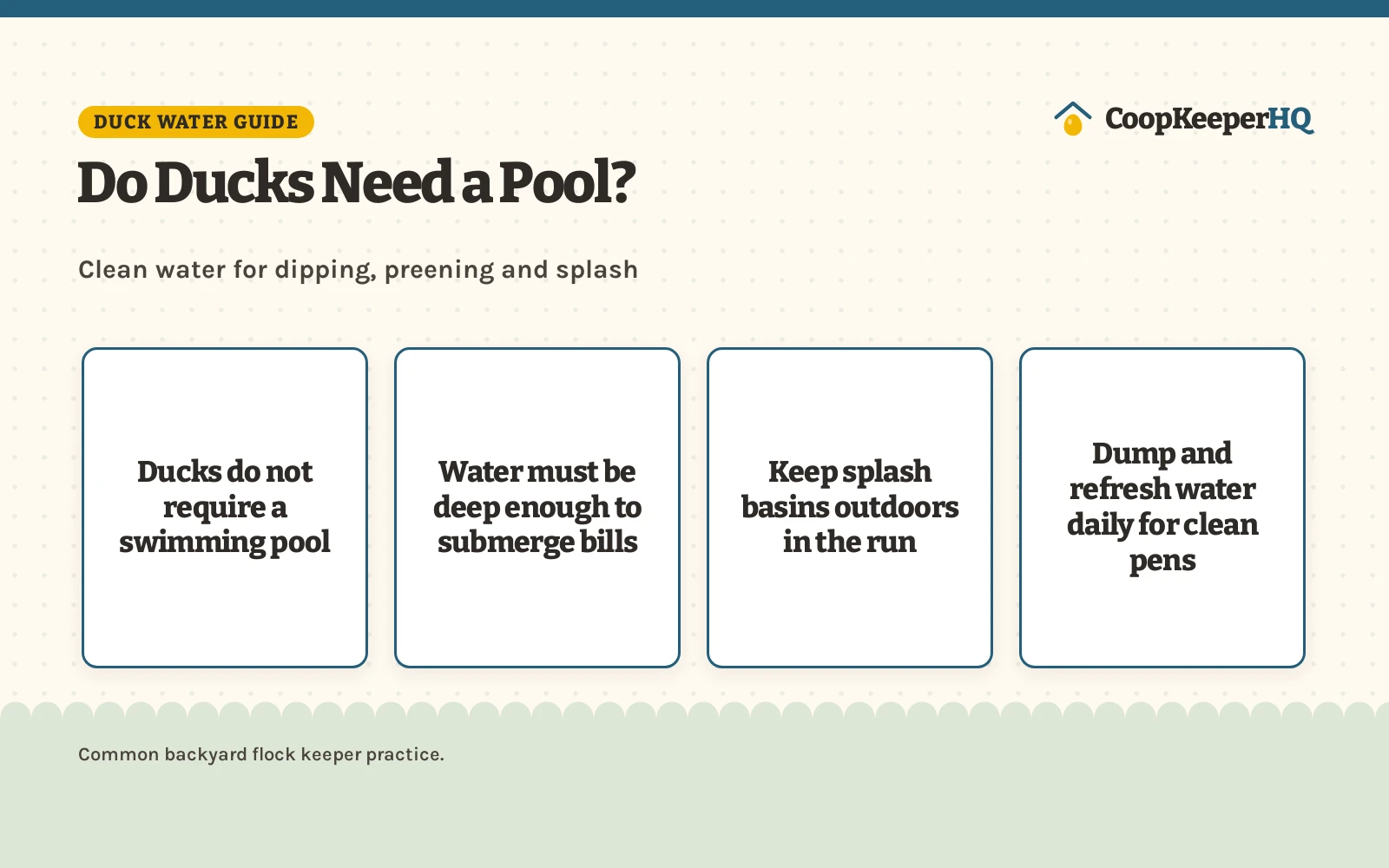
Backyard ducks do not require a swimming pool, but they need clean water deep enough to submerge their heads, clear their bills and preen their feathers.

On this page
Top picks at a glance
As an Amazon Associate I earn from qualifying purchases.
- 1
 Peteast Foldable Hard Plastic Pet Pool9.6/10View on Amazon
- 2
 Jasonwell Foldable Collapsible Pet Pool9.6/10View on Amazon
- 3
 Peteast 64 in Foldable Pet Pool with Side and Bottom Drains9.6/10View on Amazon
- 4
 Foldable Duck PoolView on Amazon
- 5
 Duck Pond Pool InflateView on Amazon
Stepping out to the run each morning with a fresh bucket of water is familiar territory for anyone keeping poultry. When setting up a backyard flock, new keepers often watch their birds dabble in puddles and ask: do ducks need a pool? The direct answer is no: backyard ducks do not need a swimming pool, pond or deep body of water to thrive and stay comfortable. What ducks strictly require is clean water deep enough to submerge their entire head and bill, allowing them to rinse their eyes, clear their nostrils and condition their feathers.
Other options for the coop
 Foldable Duck PoolCheck price on Amazon
 Duck Pond Pool InflateCheck price on Amazon
CoopKeeperHQ earns a commission if you buy through our links, at no added cost to you. Affiliate disclosure.
Do ducks need a pool: understanding essential water access
Ducks are waterfowl, so people naturally picture them gliding across open ponds. In a residential yard, maintaining an inground pond or large pool is expensive, messy and labor-intensive. Backyard ducks do not need to sleep or float on open water. In a domestic setup, they sleep on dry bedding inside a predator-proof house and spend their waking hours foraging across the run. Functional water access matters far more than swimming space.
Providing functional water means choosing basins that match duck anatomy rather than installing a full swimming setup. Chickens drink from shallow cups and nipples without issue, but ducks shovel feed into their mouths and need deep water to swallow smoothly. A simple basin or bucket that lets them immerse their heads meets every daily physical requirement. Our duck pool guide reviews manageable basins that keepers set up in typical suburban runs.
Why ducks need deep water instead of a pool
The primary reason ducks need deep water is nasal maintenance. Ducks breathe through nostrils, called nares, positioned along the top of their bill. As ducks drill into soil, grass and dry mash, mud and feed paste pack into these nasal openings. Ducks clear their nares by dipping their entire bill into water and snorting outward to expel debris. Without water deep enough for head submergence, these passages remain clogged.
Eye washing is equally vital. Ducks regularly plunge their heads underwater and blink to flush away dust, bedding chaff and feed particles from their eyes. Containers that only wet the tip of the bill leave debris around the eyelids. A container deep enough to submerge the eyes and bill keeps them clean without requiring a swimming pool.
Feather condition and preening
Backyard ducks dedicate significant daily effort to grooming their plumage. Near the base of the tail sits the preen gland, which produces protective oils. When ducks splash water over their backs, the moisture triggers an instinctive preening routine. The duck rubs its bill across the gland and meticulously distributes oil across every contour feather, locking barbs together to repel rain and retain body warmth.
A duck does not need deep swimming water to perform this grooming ritual. Dipping and splashing from a shallow tub or heavy bucket provides ample moisture to begin preening. Once dampened, ducks step onto dry ground and spend hours working oil through their feathers. Ducks kept without washing water develop ragged, dirty plumage that loses insulation and becomes waterlogged in rainy weather.
Managing mud and splash in the run
The real challenge with duck water is managing the mess. Ducks dabble constantly, drilling wet bills into nearby soil and transforming dry ground into thick mud. Because dampness creates odors and spoils bedding, never put open water tubs or splash pools inside the duck house. Keep all open water in the outdoor run where drainage can be managed properly.
Placing water basins over a well-drained station keeps the run cleaner. Dig a shallow base filled with coarse gravel or river rock so splashed water percolates downward. Setting a wooden duck board or wire-topped frame over the gravel gives webbed feet a clean perch while excess water drains out of reach. Surrounding the drainage station with pavers or gravel keeps walkways firm and mud-free. Our duck coop bedding guide compares dry bedding options that keep the sleeping house clean and separated from outdoor run moisture.
Choosing the right tub or pool size
When you want to give your flock room to splash beyond a basic bucket, select rigid materials that withstand duck claws. Inflatable pools tear quickly under claws, whereas heavy plastic tubs, galvanized pans and collapsible pools resist punctures much better. For small spaces, Enochainchin lists a foldable basin measuring 19.7 inches wide and 3.9 inches high, providing an accessible wading height that allows easy entry for small birds. For larger setups, Hdnbsp lists a foldable pool measuring 31.5 inches by 31.5 inches with a wall height of 7.87 inches, featuring an upgraded drainage valve that empties water without heavy lifting.
Basins of these dimensions offer room for ducks to dip, splash and cool off on warm afternoons without holding unmanageable quantities of water. This gives a backyard flock space to rinse their plumage without flooding the run. If you prefer permanent drainage that connects to a garden hose, our duck pool with bottom drain guide compares tubs built for quick emptying.
Safety and easy exits for ducklings and adults
Water safety requires careful attention in backyard setups. Adult ducks swim well, but smooth plastic pool walls offer no traction. An exhausted bird unable to climb out can become chilled and drown. Always place textured pavers, bricks or non-slip ramps inside and outside any bathing tub so birds can step out effortlessly.
Ducklings require special safeguards around water. Ducklings in backyard brooders lack maternal preen oil and do not produce their own waterproof oil until their juvenile feathers develop. Their baby down absorbs water rapidly, so if ducklings tumble into deep tubs, they chill quickly and struggle to stay afloat. Provide ducklings with shallow waterers that allow bill dipping without body immersion. If you are brooding young waterfowl, our guide on keeping a duck brooder clean covers dry, safe watering setups.
Keeping water unfrozen in winter
Cold weather complicates water chores because shallow pans freeze quickly. Ducks tolerate cold air well thanks to dense down and foot circulation, but they cannot go without liquid water. Ducks must drink while eating dry grain to avoid choking, and they need unfrozen water to rinse their nostrils daily.
Heavy rubber livestock tubs work well in freezing conditions because keepers can pop ice blocks out without cracking the container. For sustained freezing temperatures, electric de-icers keep water accessible. Always plug outdoor heating gear into a GFCI outlet and run cords through protective conduit away from curious bills. Our duck pool heater guide compares submerged de-icers designed for backyard flocks.
Daily water chore rhythm
A manageable water routine keeps duck chores enjoyable. Each morning, dump dirty water away from high-traffic run areas, directing the nutrient-rich runoff toward garden beds or compost piles. Scrub container walls with a stiff brush to remove algae and slime, then refill with fresh water. Ducks splash enthusiastically when fresh water arrives, so enjoy watching their morning ritual.
Check water levels again before dusk, especially in summer heat when ducks drink heavily. Top up containers so birds have water available until lock-up time. Adult ducks do not require water inside the shelter overnight once evening feed is removed, which keeps bedding completely dry until morning. At night, secure the flock inside a dry predator-proof shelter. For guidelines on coop dimensions and nighttime ventilation, review our duck coop size guide. If you notice a duck wheezing, showing nasal discharge or acting lethargic, consult a poultry vet or state extension specialist for advice.
A simple duck water checklist
- Water containers are deep enough for ducks to immerse their entire bill and eyes
- Bathing tubs and splash pools remain outdoors in the run, never inside the coop
- Tubs include non-slip ramps or exit steps inside and outside the rim
- Water stations are dumped and refilled daily to maintain clean conditions
- A gravel or slatted drainage base sits beneath drinkers to minimize mud
- Winter de-icers run on GFCI outlets with power cords shielded from beaks
For advice on setting up secure housing and outdoor space, explore our guide to the best duck coop setup.
Birds, breed size, run time and climate in; coop floor, run space, roost length and nesting boxes out.
Wash your hands after handling birds, eggs or equipment, supervise children around the flock, and check local rules on flock size and roosters before you buy. For sick birds, call a poultry veterinarian or your state extension office. See CDC backyard poultry guidance. Read our Safety Disclaimer.
FAQ for the flock
Do ducks need a pool to survive?
No. Ducks do not require a swimming pool or large body of water to live. Their core requirement is clean water deep enough to immerse their bills and heads completely. This allows them to flush feed dust from their nares, rinse their eyes and preen their plumage. While a pool provides fun enrichment, a deep bucket or heavy trough meets all essential needs.
Can ducks drown in a deep pool?
Adult ducks swim naturally, but birds can drown if they tire and cannot climb past steep, slick plastic walls. Ducklings are especially vulnerable because their down lacks waterproofing oils and becomes soaked quickly. Always place textured ramps, bricks or stepping stones inside and outside any deep tub so birds can exit easily.
How deep does water need to be for backyard ducks?
Water must be deep enough for ducks to plunge their entire bill and head underwater. Ducks rely on this depth to snort out feed dust from their nostrils and rinse debris from their eyes. Shallow watering dishes that only wet the tip of the bill lead to clogged nostrils and eye irritation, but swimming depth is not required.
Can backyard ducks share water with chickens?
Ducks and chickens can share run space, but ducks quickly foul shared open water containers. Ducks shovel mud and feed into water, turning clean drinkers murky within minutes. Chickens dislike dirty water, so keepers typically provide separate raised nipple waterers for hens alongside a dedicated deep bucket or open pan for ducks.
How often should a duck pool be emptied and cleaned?
Duck pools and splash tubs should be emptied and refilled daily. Ducks deposit droppings, dirt and feed into standing water very quickly. In warm weather, standing duck water turns stagnant and creates foul odors. Dumping the water daily onto garden soil or into a gravel drainage trench keeps the run fresh and clean.
More coop guides
- Best Duck Pool: Easy-Drain Pools and Pond Alternatives
- Duck Pool with Bottom Drain (2026): 5 Top Picks Compared
- Duck Pool Heater for Winter: 4 Top De-Icers Compared (2026)
See the ducks, quail and turkeys category and the feeders and waterers guides.