Duck Coop Size: Floor Space, Ventilation, and Setup Guide
Floor space requirements, ventilation needs, door sizing and nighttime predator protection for keeping backyard ducks safe and dry.

On this page
Top picks at a glance
As an Amazon Associate I earn from qualifying purchases.
- 1
 KFY Resin Duck Coop with Elevated Floor9.5/10View on Amazon
- 2
 PETNF 140W Radiant Chicken Coop Heater9.6/10View on Amazon
- 3
 CHNB 8PCS Chicken Toys for Coop Accessories with Swing9.6/10View on Amazon
- 4
 VIXZEN Chicken CoopView on Amazon
- 5
 GDLF Duck Coop for OutsideView on Amazon
- 6
 Aivituvin Chicken Coop for 4-6 Chickens/DucksView on Amazon
- 7
 Aivituvin Extra Large Chicken Coop 137" L Hen House Duck CageView on Amazon
- 8
 Aivituvin Chicken Coop Double Folding Fir Wood Chicken HouseView on Amazon
- 9
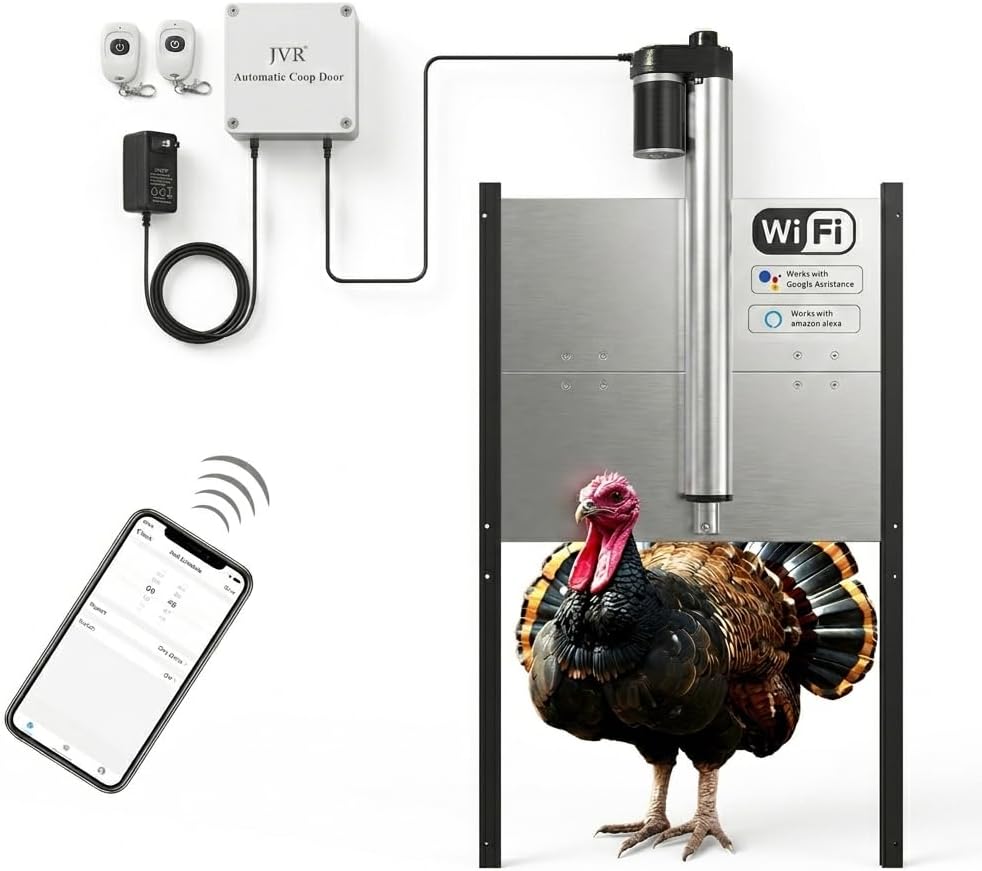 JVR WiFi Automatic Turkey Coop DoorView on Amazon
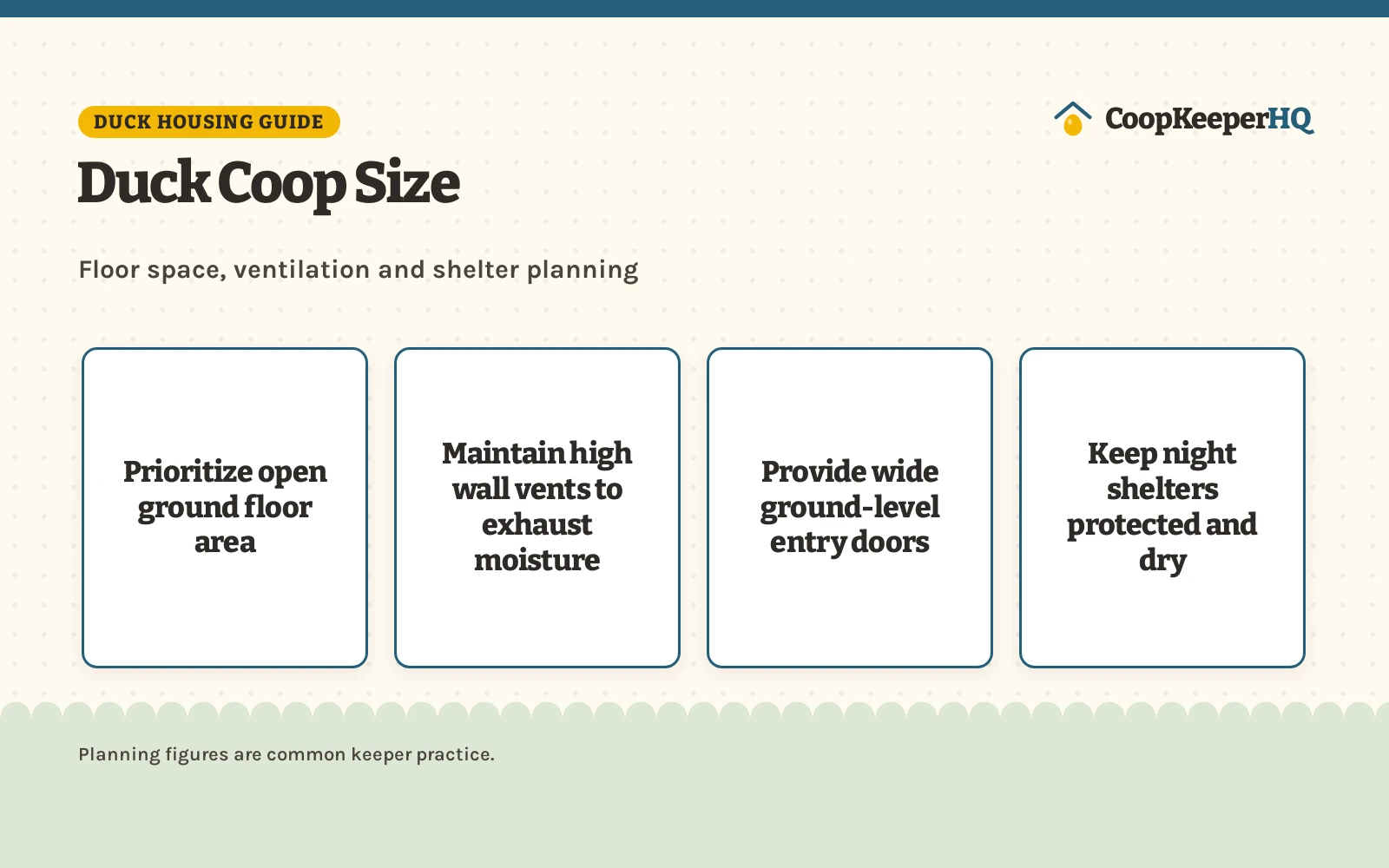
Duck coop size depends on whether your birds use the structure strictly as a nighttime sleeping shelter or spend extended daytime hours enclosed, but housing for ground-dwelling waterfowl should prioritize unobstructed floor area. Because standard domestic ducks sleep on the floor and produce significant moisture, they require generous floor dimensions, high wall vents to clear humidity without creating floor drafts, and wide ground-level entryways. Sizing a duck shelter properly ensures your flock stays dry, calm, and protected from night predators.
Other options for the coop
 VIXZEN Chicken CoopCheck price on Amazon
 GDLF Duck Coop for OutsideCheck price on Amazon
 Aivituvin Chicken Coop for 4-6 Chickens/DucksCheck price on Amazon
 Aivituvin Extra Large Chicken Coop 137" L Hen House Duck CageCheck price on Amazon
 Aivituvin Chicken Coop Double Folding Fir Wood Chicken HouseCheck price on Amazon
 JVR WiFi Automatic Turkey Coop DoorCheck price on Amazon
CoopKeeperHQ earns a commission if you buy through our links, at no added cost to you. Affiliate disclosure.
Duck coop size: how much floor space do ducks need?
Commercial poultry housing listings provide concrete measurements, but keepers must evaluate manufacturer capacity claims critically. PawHut lists a wooden duck house measuring 24.8 inches wide by 32.3 inches deep by 29.9 inches high (also described in its title as 25 by 32 by 30 inches), which PawHut rates for 2 to 4 ducks. However, treating that stated capacity as a universal rule risks severe crowding; while 2 smaller ducks may fit for nighttime sleeping if they have all-day run access, 4 adult ducks in that floor footprint quickly soil the bedding. For larger floor areas, Vixzen manufactures an outdoor duck house measuring 42.87 inches long by 32.95 inches wide by 31.61 inches high, alongside a compact model measuring 32.21 inches long by 25.12 inches wide by 24.13 inches high. GDLF offers a plastic night shelter measuring 39 by 32 by 27.7 inches and weighing 28 pounds, designed specifically for nighttime sleeping.
When comparing these dimensions to chicken coops, remember that ducks utilize every square inch of the floor rather than perching vertically. If your flock has access to a protected outdoor run from sunrise to dusk, a shelter matching these dimensions serves well for sleeping. Read our duck house vs chicken coop comparison, and see our best duck house picks for top outdoor models.
Why ducks require open ground floor space
Most popular backyard duck breeds, including Pekins, Runners, and Campbells, are heavy ground dwellers that sleep clustered on the floor rather than on elevated roosts. Because these waterfowl have flat webbed feet without the gripping mechanism of chickens, they cannot balance comfortably on narrow perches. Forcing heavy ducks to climb or leap from elevated structures can lead to foot bruises and joint strain.
A duck shelter needs flat, continuous floor area where birds can settle together without trampling one another. Narrow corridors, tight corners, and interior partitions create bottlenecks where nervous birds can crowd and damage feathers. If converting a standard hen house, remove elevated perches and ladders to maximize floor space. Read more about poultry calculations in our guide on how big should a chicken coop be.
Ventilation and moisture control in duck shelters
Ducks release remarkable amounts of water vapor through respiration and droppings overnight. A sealed coop traps this humidity, creating damp bedding, stale air, and strong ammonia vapors. Proper duck housing requires constant air exchange without blowing cold drafts directly across resting birds along the floor.
Vents positioned high on the walls allow warm, humid air to escape while the floor area remains draft-free. PawHut incorporates 6 ventilation holes into its wooden duck coop, while Vixzen features perimeter ventilation louvers around its outdoor shelter. Plastic and resin shelters, such as models from Vixzen and GDLF, resist moisture absorption and prevent wood rot. Pair effective airflow with clean, absorbent shavings, which we evaluate in our best duck coop bedding guide.
Door opening size and ramp design for ducks
Standard chicken pop doors are frequently too narrow and elevated for ducks. Ducks possess broad bodies, wide paddling gaits, and a tendency to move through openings in a tight cluster. A doorway that forces birds through single file causes hesitation, crowding, and scraped wings.
Ground-level entry doors provide the safest passage for waterfowl. When a coop floor is elevated, the access ramp must be significantly wider than a chicken ladder and slope at a very gentle incline. Ducks lack gripping claws, so steep ramps cause slipping and sprained legs. PawHut addresses this by building a front door that doubles as a ramp alongside 2 doors for owner access, while Vixzen provides a top cover supported by gas struts for easy cleaning access. For entryway guidelines, check our chicken coop door opening size guide, and consider an automatic coop door for dependable morning release.
Keep open water stations outside the sleeping coop
Water is essential for ducks to clear their nostrils, lubricate their eyes, and swallow feed, but ducks are messy drinkers. They splash, dabble, and scoop water with their bills, quickly saturating dry coop bedding. Placing an open drinker inside an enclosed coop will soak the floor overnight, destroying insulation and creating foul odors.
Experienced keepers place water troughs and feeders outside in the run rather than inside the night shelter. Provided adult ducks are fed and watered fully during the day, they do not require feed or open water inside the coop overnight, preventing soaked bedding. Never offer dry feed inside the coop without water, because ducks require water to swallow. When birds must remain locked inside during storms, place drinkers over a wire catch tray or use spill-resistant drinkers. Our best water feeder for ducks guide and our duck feeder for outside review compare clean outdoor options.
Sizing outdoor runs and daytime exercise pens
A compact night shelter works successfully only when paired with a roomy, predator-safe outdoor run. Ducks spend their waking hours foraging, flapping their wings, and walking. Providing an expansive run prevents boredom, stops feather picking, and keeps the night coop clean because birds drop most manure outdoors.
Manufactured walk-in metal runs provide spacious footprints for daytime activity. Xbrigh offers an extra large metal poultry run measuring 20 by 10 feet (with dimensions of 236.5 inches long by 120.1 inches wide by 76.9 inches high) with a 210D Oxford fabric roof cover. EOXNYZR manufactures a walk-in cage measuring 9.84 by 19.68 by 6.6 feet (117.6 by 236.2 by 76.8 inches) weighing 84 pounds, which EOXNYZR lists for housing 10 to 20 birds. For smaller yards, VIXZEN manufactures a shelter measuring 38.62 by 36.26 by 38.07 inches with an elevated base. To explore protective fencing and roof setups, see our covered chicken run ideas and browse our chicken runs and fencing recommendations.
Cold weather shelter planning and winter safety
Backyard ducks handle cold weather with surprising resilience. Their thick layer of down feathers and dense, waterproof plumage provide superior natural insulation against freezing temperatures. A dry, draft-free shelter with deep straw bedding is usually all adult waterfowl need to thrive through winter.
Avoid using overhead heat lamps inside a duck coop. Heat lamps pose severe fire hazards in coops filled with dry straw or shavings, and panicked ducks can knock over hanging fixtures. If supplemental heat is necessary during extreme winter conditions, choose a thermostatically controlled radiant heat panel installed on a GFCI protected circuit. Compare options in our heater for duck coop guide. If any duck appears lethargic or displays unusual behavior during cold weather, contact a qualified poultry vet or your state extension office for guidance.
Predator protection for ground-nesting waterfowl
Because ducks sleep on the floor and cannot fly to elevated perches to escape danger, nighttime predator protection must be uncompromising. Raccoons, foxes, weasels, and neighborhood dogs can exploit weak latches, thin wire, or loose floorboards.
Protect all ventilation openings, windows, and run perimeters with welded wire mesh rather than flimsy chicken wire. Raccoons easily reach through wide wire gaps, so durable mesh keeps predators at bay. Cover openings with sturdy wire cloth, which we evaluate in our hardware cloth guide. Ensure all doors feature predator-proof latches, such as two-step barrel bolts or locking carabiners, and inspect our recommendations for the best predator proof chicken coop door.
Daily routine and duck shelter maintenance
A consistent morning and evening routine keeps your duck coop clean and your flock safe. Open the coop at dawn to release ducks into their outdoor run where fresh water and food await them. Collect eggs promptly from clean floor bedding or corner ground nests, as ducks tend to lay eggs in the early morning hours.
During the day, inspect the bedding for wet spots around the entrance and scoop out damp clumps. Add a clean top layer of dry straw or pine shavings to maintain deep bedding. At dusk, ducks herd easily into their shelter with gentle encouragement. Latch the predator-proof doors tightly, verify that high wall vents remain open for air circulation, and check local, HOA and state rules regarding flock numbers and property setback boundaries.
A simple duck coop size checklist
- Floor space is completely open, level, and free of elevated roosting perches
- Shelter dimensions accommodate birds sleeping clustered on the floor without crowding
- High wall ventilation louvers or holes stay open to remove moisture without creating floor drafts
- Entry doors and ramps are wide, low to the ground, and built with gentle slopes
- Feed and open water containers remain outdoors in the daytime run
- Exterior walls, windows, and vents are covered with welded wire mesh and predator-proof latches
- Bedding remains deep, clean, and dry with wet spots removed daily
Birds, breed size, run time and climate in; coop floor, run space, roost length and nesting boxes out.
Wash your hands after handling birds, eggs or equipment, supervise children around the flock, and check local rules on flock size and roosters before you buy. For sick birds, call a poultry veterinarian or your state extension office. See CDC backyard poultry guidance. Read our Safety Disclaimer.
FAQ for the flock
How much floor space does a duck need in a coop?
A duck coop requires generous continuous floor area because ducks sleep clustered on the ground. Commercial duck houses offer concrete measurements: PawHut provides a wooden shelter measuring 24.8 by 32.3 by 29.9 inches rated for 2 to 4 ducks, while Vixzen offers a resin duck house measuring 42.87 by 32.95 by 31.61 inches. Keepers should note that manufacturer ratings often represent maximum capacity; heavier breeds require more space per bird to prevent damp bedding. Flocks with all-day run access need less interior space than birds confined during bad weather.
Do ducks need roosting bars or ramps in their coop?
Common domestic ducks do not use roosting bars. Unlike chickens, ground-dwelling duck breeds have flat webbed feet and lack the gripping reflex required to perch safely. Forcing ducks to jump from heights can lead to foot damage and leg injuries. Keep the duck coop layout completely flat at floor level with clean, deep bedding across the floor.
Can ducks and chickens share the same coop?
Sharing an enclosed coop is challenging. Ducks produce substantially more moisture in their droppings, splash water constantly, and sleep on the ground, dampening bedding. Chickens require high roosts and dry conditions. While both species can share an outdoor daytime run, separate nighttime shelters keep each flock healthier and drier.
Should water be kept inside a duck coop at night?
Keep open water stations outside the sleeping coop. Ducks splash in standing water, quickly turning dry bedding into soggy mud. Adult ducks rest safely through the night without water if fed and watered fully before dusk and released into the run at dawn. During severe confinement, use specialized spill-resistant drinkers and check bedding frequently.
How big should a duck coop door be?
Duck coop doors must be wider and lower than chicken pop doors. Ducks have broad bodies, wide paddling gaits, and move together in clusters. A wide ground-level opening allows birds to exit without crowding or scraping wings. For elevated thresholds, build an extra-wide walkway with a gentle incline and sturdy nonslip cleats.
More coop guides
- Best Duck House: Picks for Backyard Ducks
- Duck House vs Chicken Coop: Which One Should You Buy?
- Best Duck Coop Bedding: 5 Picks for a Clean, Dry Coop (2026)
See the ducks, quail and turkeys category and our chicken coops guides.