Best Duck Coop Setup (2026)
Floor-level sleeping space, deep dry bedding, wide low ramps, sheltered ventilation and an attached predator-safe run for keeping backyard ducks safe and dry.

On this page
Top picks at a glance
As an Amazon Associate I earn from qualifying purchases.
- 1
 KFY Resin Duck Coop with Elevated Floor9.5/10View on Amazon
- 2
 PETNF 140W Radiant Chicken Coop Heater9.6/10View on Amazon
- 3
 CHNB 8PCS Chicken Toys for Coop Accessories with Swing9.6/10View on Amazon
Every duck keeper recognizes the daily routine of caring for waterfowl: damp ground, enthusiastic splashing, and a flock that happily rests on wet mud if given the chance. Setting up the best duck coop setup means pairing a sturdy, well-ventilated shelter with an attached predator-safe run, keeping open water outside the sleeping quarters to manage moisture. Unlike chickens that roost high on wooden bars, common backyard ducks sleep on the floor and release heavy moisture overnight, so their house requires deep dry bedding, wide doorways, and sheltered upper ventilation rather than roosting perches or elevated nesting boxes.
CoopKeeperHQ earns a commission if you buy through our links, at no added cost to you. Affiliate disclosure.
Best duck coop setup: start with floor-level sleeping space
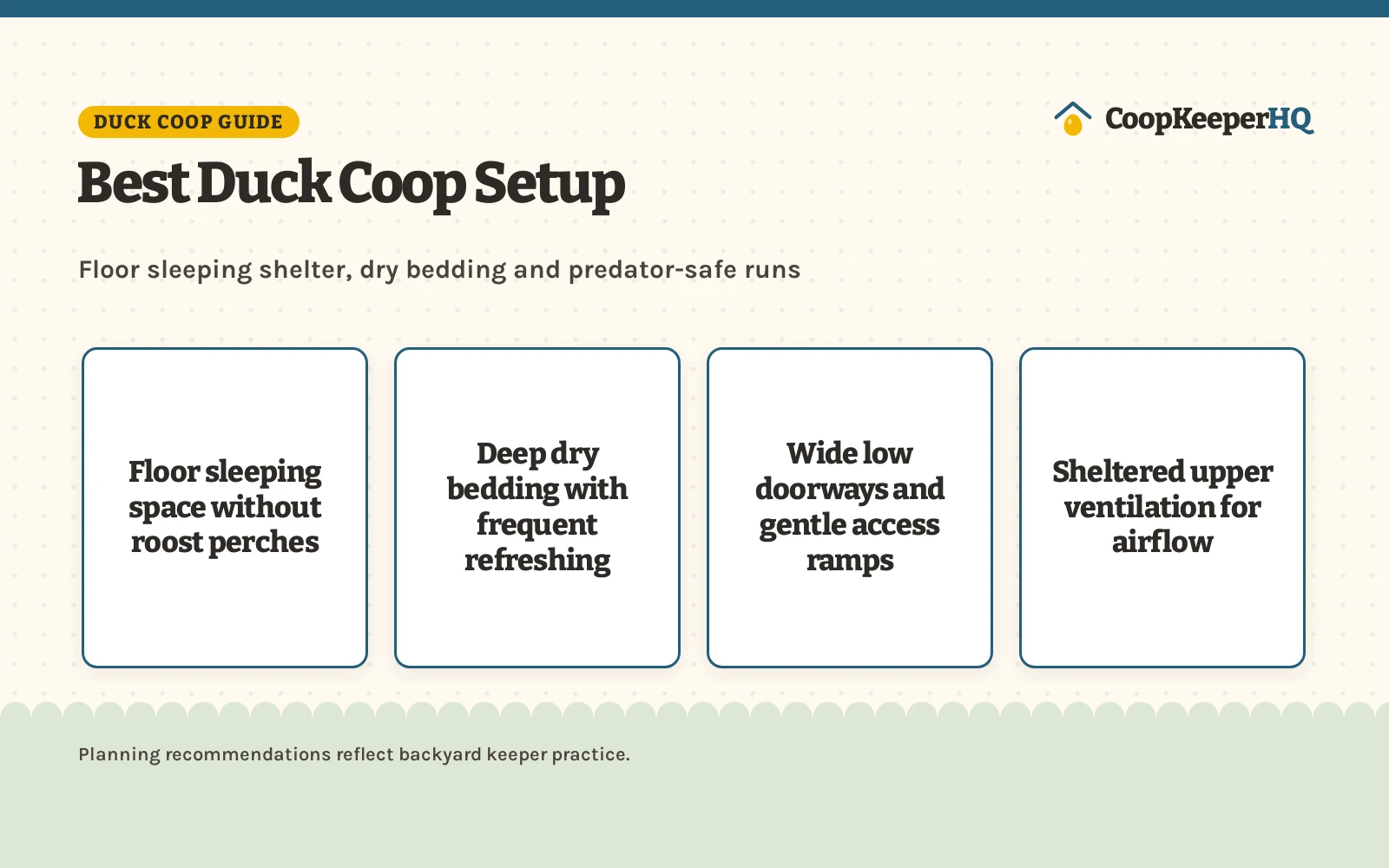
Wind, moisture, and ground predators pose the primary challenges for backyard waterfowl. Unlike chickens, common backyard ducks cannot comfortably grip rounded perches with their webbed feet, and attempting to force them onto elevated roosts leads to sprains or foot injuries. The foundation of a successful shelter is a broad, flat floor without roosting bars, where the entire flock settles together in clean bedding. Whether the shelter sits directly on the ground or features a slightly raised base with a gentle access ramp to avoid ground dampness, open floor space is essential. When planning floor space, check manufacturer dimensions carefully, because duck bodies require more floor area than chickens. If you are comparing shelter styles, our duck house vs chicken coop guide explains these structural differences, and our duck coop size guide outlines flock planning.
Commercial shelters designed specifically for waterfowl reflect this floor-dwelling behavior. For instance, the GDLF plastic duck shelter (on Amazon) measures 39 by 32 by 27.7 inches and weighs 28 pounds, providing a dedicated open-floor night habitat without roosting bars. For smaller flocks, the PawHut wooden duck house (on Amazon) measures 24.8 inches wide by 32.3 inches deep by 29.9 inches high (with alternative packaging dimensions listed as 25 by 32 by 30 inches) and weighs 34 pounds. The PawHut listing rates this space for 2 to 4 ducks, chickens, or geese, utilizing an openable roof and a wide front ramp to accommodate entry.
Provide generous ventilation without floor drafts
Waterfowl release significant amounts of moisture through respiration and damp droppings as they sleep. Sealing a duck house tightly to retain warmth creates a damp, humid interior that chills resting birds. The solution is high-level ventilation that circulates air steadily through the upper portion of the roof while keeping the floor where the ducks sleep sheltered from harsh wind.
Look for shelters that integrate built-in vents, louvers, or ventilation openings along the upper panels. The PawHut duck house incorporates six ventilation holes placed to encourage airflow while maintaining a dry resting space. Similarly, resin models from Vixzen utilize perimeter ventilation louvers situated around the upper eaves to establish continuous convection. Vixzen provides these louvered shelters in several configurations, including a shelter measuring 42.87 inches long by 32.95 inches wide by 31.61 inches high, as well as a compact version measuring 32.21 inches long by 25.12 inches wide by 24.13 inches high. Keep these upper vents open throughout the seasons so that humid air exits naturally without creating drafts across the floor.
Use deep, absorbent bedding for moisture control
Because ducks rest on the floor, proper bedding management separates a clean coop from an unmanageable chore. Wet bedding robs ducks of body warmth and creates foul odors. A thick layer of pine shavings, chopped straw, or commercial bedding insulates the floor and captures nighttime moisture. Many backyard keepers maintain a deep bedding routine: spread a generous layer of dry shavings, spot-clean soiled patches regularly, and add fresh dry material over the surface to maintain clean footing between complete cleanouts.
Access makes all the difference when maintaining heavy bedding. Shelters with full-access lids, such as the Vixzen resin houses that feature gas strut opening mechanisms, allow keepers to reach the floor easily for routine cleanouts. The PawHut wooden duck shelter includes both an openable roof and a removable floor tray to simplify litter replacement. For an overview of bedding options and moisture management, read our best duck coop bedding guide.
Choose wide doorways and gentle ramps
Ducks possess wide bodies, short legs, and sensitive webbed feet. They lack the agility of chickens and cannot climb narrow, steep ladders or squeeze through cramped pop doors. A duck coop doorway must sit close to ground level or connect to a wide, gently sloping ramp with solid footing slats.
The PawHut duck house uses an entry door that unfolds directly to double as an access ramp. When planning entrances, ensure that latches and hardware are thoroughly predator-safe. Waterfowl cannot roost out of reach of raccoons, foxes, or weasels that breach a coop door. Automatic doors offer convenient dawn opening and evening closure, though keepers should verify that the entire flock is safely inside before the door closes for the night. Our automatic coop door reviews cover dependable options with obstacle sensors.
Keep waterers and pools out of the sleeping coop
The most common mistake new duck keepers make is placing water bowls or bathing tubs inside the night coop. Ducks dabble constantly, plunging their bills into water and splashing it across the floor. An open water source inside a closed coop quickly turns dry bedding into cold, wet mud.
Mature ducks do not require water overnight if food is not available in the coop. Place feed troughs and water stations outdoors in the run, where spilled water drains safely away from bedding. Explore clean drinking setups in our water feeder for ducks guide. When providing open swimming water, position pools well away from the coop entrance to keep the doorway dry. Our duck pool guide and our duck pool with bottom drain comparison explain how to manage outdoor splashing without soaking your run.
Pair the shelter with a predator-safe run
Because ducks forage and dabble throughout the day, an enclosed run is just as essential as the night coop. Most domestic backyard ducks cannot fly away from swift ground predators like foxes, coyotes, or dogs, making heavy-duty steel framing and wire mesh necessary around the entire perimeter.
Walk-in metal runs provide ample outdoor space for daytime activities. For example, the Xbrigh walk-in poultry run (on Amazon) provides an enclosure measuring 20 by 10 feet, with specific structural dimensions of 236.5 by 120.1 by 76.9 inches. It features galvanized steel tubing, PVC-coated hexagonal mesh, bolted assembly, and a 210D Oxford fabric waterproof cover. Another option, the EOXNYZR walk-in metal cage (on Amazon), measures 9.84 by 19.68 by 6.6 feet, with product dimensions of 117.6 by 236.2 by 76.8 inches and a weight of 84 pounds. The manufacturer rates the EOXNYZR run for 10 to 20 chickens, utilizing a galvanized metal frame, lockable latching doors, and a waterproof polyethylene tarp roof. Line the lower perimeter of your run with welded wire mesh, and refer to our hardware cloth guide for preventing digging predators.
Selecting coop materials: wood vs plastic
Coop material influences durability, weather resistance, and daily cleaning effort. Traditional fir timber, as seen on the PawHut coop, offers classic backyard styling and natural insulation, but wood absorbs moisture, harbors parasites in crevices, and requires routine staining or weather treatment to prevent rot.
Resin polypropylene and heavy molded plastic have become increasingly popular for waterfowl housing. Materials used in the GDLF shelter and Vixzen houses (such as the Vixzen raised shelter measuring 38.62 by 36.26 by 38.07 inches) resist rotting, warping, and sun damage. Plastic panels can be scrubbed clean and hosed out with minimal fuss, drying far faster than wet lumber. Sloped roofs ensure that rain and melting snow run off smoothly without pooling. For a broader comparison of available housing options, see our best duck house guide.
Winter shelter and weather protection
Adult ducks tolerate winter weather remarkably well due to their thick underdown and oil-coated outer plumage. However, winter dampness and freezing winds remain hazardous. Keep roof lines watertight and position the shelter entrance away from prevailing seasonal winds so cold gusts cannot penetrate the bedding area.
Avoid installing hazardous heat lamps inside the coop, as hot bulbs can ignite dry bedding. Flocks rarely require supplemental coop heat if their shelter remains draft-free, ventilated, and dry. If extreme local temperatures demand supplemental heat, select flat radiant panels with verified safety certifications and connect all outdoor cords to a dedicated GFCI outlet. Our heater for duck coop guide examines safer panel options, while our duck pool heater for winter guide discusses ice prevention in outdoor waterers. If you are ever concerned about flock comfort in severe weather, consult a poultry vet or your state extension office.
Daily rhythm for duck coop care
A consistent daily routine keeps chores simple and maintains flock safety. In the morning, open the coop door and release the ducks into their run where fresh water and morning feed are ready. Take a quick look inside the shelter to check bedding condition and gather freshly laid eggs from the floor before they become soiled.
During the day, refresh water basins and scoop out any wet bedding clumps around the doorway, scattering a handful of dry shavings over damp spots. At dusk, ducks often prefer to remain outside in the run rather than putting themselves to bed. Establish an evening feeding routine to herd your flock into the shelter, count every bird, and fasten all door latches against nocturnal predators. Periodically, perform a thorough cleanout by stripping dirty litter, wiping down the floor, and spreading clean, dry bedding.
A simple duck coop setup checklist
- Spacious floor-level space without roosting perches
- High-wall ventilation openings kept open to release humidity
- Deep, dry bedding maintained with regular spot-cleaning
- Wide entry door with a low threshold or gentle ramp
- Feeders, open drinkers, and swimming pools kept outdoors in the run
- Galvanized wire run with lockable latches and covered roofing
- Weatherproof sloped roof that sheds rain and snow
- All outdoor electrical connections protected by a GFCI outlet
Birds, breed size, run time and climate in; coop floor, run space, roost length and nesting boxes out.
Wash your hands after handling birds, eggs or equipment, supervise children around the flock, and check local rules on flock size and roosters before you buy. For sick birds, call a poultry veterinarian or your state extension office. See CDC backyard poultry guidance. Read our Safety Disclaimer.
FAQ for the flock
Do ducks need a coop?
Yes, ducks need a sturdy coop for protection against nighttime predators and severe weather. While ducks spend their daylight hours foraging outside in a run or yard, an enclosed coop keeps them safe from raccoons, foxes, and cold winds overnight.
Can ducks live in a chicken coop?
Ducks can share or adapt a chicken coop if the structure accommodates their physical needs. Ducks require wide doorways, gentle ramps, and open floor space rather than narrow chicken ladders, high roosting bars, or elevated nesting boxes.
What is a duck coop?
A duck coop is an enclosed shelter designed specifically for waterfowl. It features an open floor plan without roosts, upper ventilation to exhaust humidity, predator-safe door latches, and easy access for cleaning bedding.
What to put in a duck coop?
Line the coop floor with a thick layer of dry, absorbent bedding such as pine shavings or clean straw. Do not place swimming pools or open waterers inside the sleeping coop, as ducks will splash and saturate the bedding overnight.
How do you clean a duck coop?
Spot clean the coop daily by removing soiled bedding clumps and adding fresh dry shavings over damp areas. Perform a complete cleanout periodically by removing all bedding, scrubbing the floor with mild soap and water, allowing it to dry, and laying down fresh litter.
More coop guides
- Duck Coop Size: Floor Space, Ventilation, and Setup Guide
- Best Duck Coop Bedding: 5 Picks for a Clean, Dry Coop (2026)
- Best Duck House: Picks for Backyard Ducks
Explore our complete ducks, quail and turkeys section, our chicken coops collection, and our coop supplies guides.