Duck House vs Chicken Coop: Which One Should You Buy?
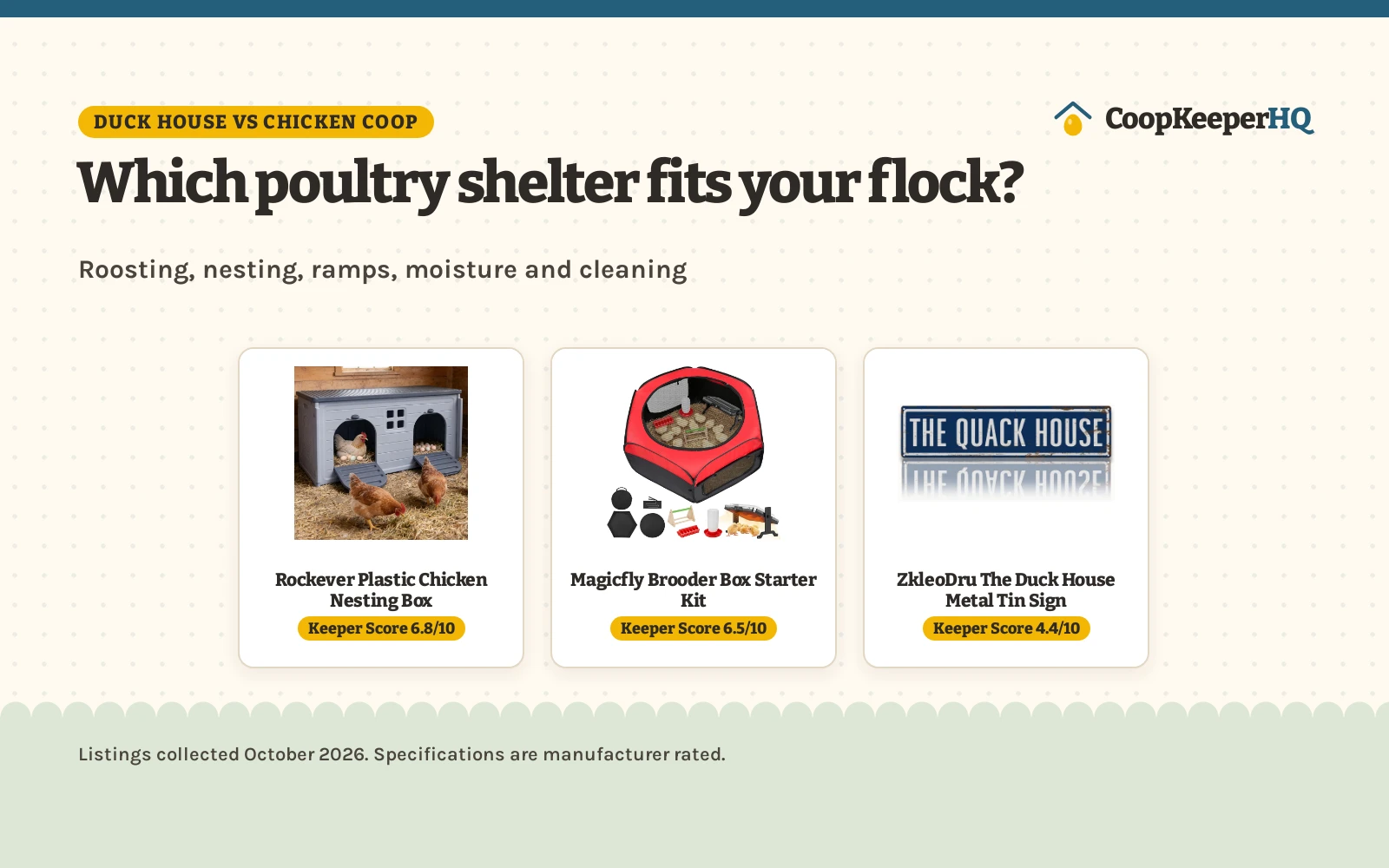
Duck houses and chicken coops compared on roosting, nesting boxes, ramps, moisture and cleaning, with listing examples from our review pool.

On this page
Top picks at a glance
As an Amazon Associate I earn from qualifying purchases.
- 1
 Rockever Waterproof 2 Compartment Plastic Chicken9.4/10View on Amazon
- 2
 Magicfly Brooder Box Starter Kit with 200W Heating9.4/10View on Amazon
- 3
 ZkleoDru The Duck House Metal Tin Sign9.2/10View on Amazon
Duck house vs chicken coop verdict: Choose a duck house if you keep ducks that sleep at ground level, need wide ground doors without steep ramps, and produce heavy moisture that requires low-level bedding and high roof ventilation. Choose a chicken coop if you keep hens that roost elevated on perches overnight, lay in designated nesting boxes, and climb ramps to enter an elevated shelter.
Both structures shelter backyard poultry from predators and weather, but ducks and chickens have very different physical habits. Chickens roost on elevated perches and lay in elevated boxes, while ducks sleep on the floor and need wide, ground-level access. This duck house vs chicken coop comparison covers the main design differences, followed by three concrete listing examples from the products we reviewed.
CoopKeeperHQ earns a commission if you buy through our links, at no added cost to you. Affiliate disclosure.
Three examples
| # | Product | Keeper Score | Buy |
|---|---|---|---|
| 1 | Rockever Waterproof 2 Compartment Plastic Chicken | 9.4/10 | Buy on Amazon |
| 2 | Magicfly Brooder Box Starter Kit with 200W Heating | 9.4/10 | Buy on Amazon |
| 3 | ZkleoDru The Duck House Metal Tin Sign | 9.2/10 | Buy on Amazon |

Rockever Waterproof 2 Compartment Plastic Chicken
A 26.1-pound thickened HDPE plastic nesting box measuring 41.0 by 20.8 by 20.3 inches, with 2 compartments, a removable waterproof roof, and a door or ramp.
Who it's for: keepers seeking a rot-resistant plastic nesting box with 2 laying compartments for hens or ducks.
Who should skip it: anyone needing a full-size coop for a flock to roost overnight.
The Rockever nesting box measures 41.0 inches long, 20.8 inches wide, and 20.3 inches high, weighing 26.1 pounds. The listing specifies thickened HDPE plastic construction, pre-drilled parts, a removable waterproof roof, and hardware included for assembly without power tools. While the listing title describes it as a 2 compartment nesting box for laying eggs, the bullet points contradict this by calling it a spacious chicken coop for animals to roam. At 41.0 by 20.8 inches of ground footprint, it functions as a 2 compartment nesting or shelter box rather than a walk-in coop.
Pros
- Thickened HDPE plastic build resists rot and wipes clean
- Removable waterproof roof allows hose cleaning
- Pre-drilled parts assemble without power tools
- Features 2 compartments with an access door or ramp
Cons
- Bullets label it a spacious coop despite a 41.0 by 20.8 inch footprint
- No roosting bars or elevated perches included
- No warranty term is stated in the listing
- No safety certifications stated

Magicfly Brooder Box Starter Kit with 200W Heating
An Oxford fabric brooder kit measuring 16.5 by 13 by 7 inches and weighing 7.47 pounds, featuring a 200W heating plate, perch, feeder, and waterer for up to 15 chicks.
Who it's for: keepers brooding up to 15 young chicks or ducklings indoors before transitioning to outdoor housing.
Who should skip it: anyone seeking permanent outdoor housing, as fabric panels cannot replace rigid predator-proof walls.
The Magicfly starter kit weighs 7.47 pounds (3.39 kg) with packaged dimensions of 16.5 by 13 by 7 inches. The listing includes 1 pop-up Oxford fabric pen, 1 heating plate rated at 200W, 1 feeder and waterer, 1 perch, 1 top cover, 1 waterproof pull-out floor pad, 3 ground stakes, and 1 storage bag. The maker rates it for up to 15 chicks, ducklings, or quail. A contradiction appears between the title, which describes a 15 by 11 inch heating plate, and the spec table, which lists item dimensions of 16.5 by 13 by 7 inches.
Pros
- Includes pen, 200W heating plate, feeder, waterer, perch, and storage bag
- Pop-up frame opens instantly without tools
- Features 2 doors with double-door design and reinforced mesh curtains
- Pull-out waterproof floor pad can be rinsed with water
Cons
- Title states a 15 by 11 inch plate while dimensions state 16.5 by 13 by 7 inches
- Heating plate draws 200W without a stated UL or ETL certification
- Fabric enclosure is designed for brooding rather than predator-proof housing
- No warranty term is stated in the listing
ZkleoDru The Duck House Metal Tin Sign
A 1-pack rectangular metal tin sign measuring 15.7 by 3.9 inches with pre-printed text reading The Duck House for wall or coop mounting.
Who it's for: keepers looking to label a duck coop or garden shed with a rustic metal sign.
Who should skip it: anyone shopping for a functional shelter to house ducks or chickens.
The ZkleoDru sign is a decorative metal tin plaque featuring pre-printed text reading The Duck House. The spec table lists dimensions of 15.7 inches long by 3.9 inches wide, while the product title lists 15.8 by 4 inches, showing a minor dimension discrepancy. The listing notes 1 piece per pack with a portrait orientation, designed for wall mounting on fences, sheds, porches, or poultry coops. It provides decorative flair but offers zero physical shelter, predator protection, or housing capacity.
Pros
- Durable metal tin material with clear printed patterns
- Pre-printed text reads The Duck House for shed or coop display
- Slim 15.7 by 3.9 inch profile fits doors, fences, or walls
- Suitable for indoor or covered outdoor display
Cons
- This is a decorative sign rather than an actual poultry house
- No weight or mounting hardware specifications provided
- No warranty term is stated in the listing
Other options for the coop
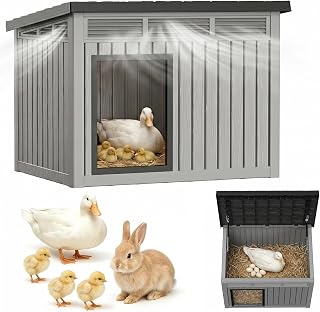 VIXZEN Outdoor Duck Chicken HouseCheck price on Amazon
 Trixie Natura Duck CoopCheck price on Amazon
 Aivituvin Chicken Coop 67.3" Large Duck House with 4 NestingCheck price on Amazon
 Aivituvin Chicken Coop Duck House with Dual Nesting Boxes forCheck price on Amazon
 Aivituvin Chicken Coop Outdoor Duck House with Large Run andCheck price on Amazon
 VIXZEN Duck House for Outside Waterproof ResinCheck price on Amazon
Duck house vs chicken coop: side by side
| Factor | Rockever Nesting Box | Magicfly Brooder Kit | ZkleoDru Metal Sign |
|---|---|---|---|
| Tagged side | Chicken coop | Chicken coop | Duck house |
| Designated function | 2-compartment nesting box | Chick starter brooder kit | Decorative metal wall sign |
| Stated dimensions | 41.0 x 20.8 x 20.3 in | 16.5 x 13 x 7 in | 15.7 x 3.9 in |
| Stated weight | 26.1 lb | 7.47 lb (3.39 kg) | Not stated |
| Primary material | HDPE plastic | Oxford fabric | Metal tin |
| Capacity (maker) | Not stated | Up to 15 chicks, duck, quail | Not stated |
| Electrical power | Not stated | 200 W heating plate | Not stated |
| Weather shelter | Waterproof removable roof | Fabric tent with 3 ground stakes | Wall sign decor only |
| Roosting perches | None included | Chicken perch included | Not applicable |
| Stated warranty | Not stated | Not stated | Not stated |
These are common ranges across the poultry listings we read; we quote the brand’s rated specs from the product listings (as of 9 October 2026).
Roosting and perches
The most important behavioral difference between ducks and chickens is how they sleep. Chickens have an instinct to fly or hop onto elevated roosting bars at dusk, keeping their feet off the ground to avoid predators and droppings. A chicken coop requires horizontal perches placed above floor level, such as the perch bar included in the Magicfly brooder kit. Ducks cannot grasp perches because their webbed feet are designed for paddling. Ducks settle directly onto clean bedding on the floor. Installing roosting perches inside a duck house wastes usable interior space, while omitting perches from a chicken coop leaves hens stressed and crowded on the floor.
Nesting boxes and egg collection
Laying habits also set the two shelters apart. Hens prefer laying in private, elevated compartments lined with clean shavings, like the 2 compartments featured in the Rockever plastic nesting box example. Ducks lay their eggs at ground level, often burying them under clean straw or bedding in dark coop corners. While a hen will walk up a ramp and enter a designated box, ducks avoid elevated boxes. A duck house needs dedicated floor corners rather than raised nest boxes, keeping egg collection easy without forcing birds to climb.
Door openings and entry ramps
Access design depends on bird anatomy. Chickens navigate steep wooden ladders and hop through elevated pop doors without difficulty. Ducks have short legs, heavy bodies, and delicate webbed feet that slip on narrow ladder rungs. A duck house requires ground-level doors or broad, low-incline ramps with firm footing. An elevated chicken door placed high above the run floor can leave ducks stranded outside at dusk.
Housing dimensions and build
| Example listing | Side | Stated dimensions | Weight |
|---|---|---|---|
| Rockever plastic box | Chicken coop | 41.0 x 20.8 x 20.3 in | 26.1 lb |
| Magicfly brooder kit | Chicken coop | 16.5 x 13 x 7 in | 7.47 lb |
| ZkleoDru metal sign | Duck house | 15.7 x 3.9 in | Not stated |
Product dimensions and weights are manufacturer rated from listing details. Stated dimensions show the varied housing and decorative items found under coop and duck house listings.
Moisture, ventilation, and cleaning
Ducks drink copiously, track mud, and produce wet droppings that release significant moisture into the air. A duck house demands generous high-level ventilation openings along the roofline to exhaust humid air without creating drafts at floor level. Waterers should remain outside the sleeping quarters to keep floor bedding dry. Chicken droppings contain less water, and keepers often manage coop floors with deep litter beneath perches. For both species, easy-clean materials such as the removable roof on the Rockever HDPE plastic example simplify sanitation. Our best duck house guide details housing options for backyard waterfowl.
Flock fit
Rockever Plastic Chicken Nesting Box
Magicfly Brooder Box Starter Kit
ZkleoDru The Duck House Metal Tin Sign
FAQ for the flock
Can ducks live in a chicken coop?
Ducks can share a chicken coop design only if modifications are made. Perches must remain for chickens while leaving open floor space for ducks. High ramps must be replaced with wide, low-incline walkways, and drinking water should be kept in the run to avoid soaking the bedding.
Do duck houses need roosting bars?
No. Ducks have webbed feet that cannot grip round roosting bars. They sleep on clean floor bedding such as straw or wood shavings. Installing perches inside a duck house takes up space and serves no practical purpose for ducks.
Can chickens use a duck house?
Chickens can use a duck shelter for shade or emergency housing, but it lacks elevated perches and raised nesting boxes. Chickens forced to sleep on the floor face higher stress and soil their feathers in droppings.
Do duck houses require more ventilation than chicken coops?
Yes. Ducks release more moisture through respiration and wet droppings than chickens. A duck house requires ample roof vents to let humid air escape while keeping drafts off the floor where ducks sleep.
Where should nesting boxes be placed for ducks?
Duck nests should always sit directly on the floor in quiet, dimly lit corners of the shelter. Ducks will not fly or hop into elevated chicken nesting boxes.
How the Coop Score came out
Each example is scored out of 10 on performance, build, value, safety and warranty, using only what the listing publishes. None of the three listings state a warranty term. The weights are on our How We Pick page.
| Product | Keeper Score | Perf. /35 | Build /25 | Value /25 | Safety /10 | Warranty /5 |
|---|---|---|---|---|---|---|
| Rockever Plastic Chicken Nesting Box | 9.4 | 26 | 21 | 19 | 2 | 0 |
| Magicfly Brooder Box Starter Kit | 9.4 | 24 | 19 | 20 | 2 | 0 |
| ZkleoDru The Duck House Metal Tin Sign | 9.2 | 12 | 18 | 15 | 0 | 0 |
A product’s weighted total becomes its score on a scale capped at 9.8 and floored at 9.2, in a straight line.
Which should you choose?
Choose a duck house if you keep ducks that sleep on floor bedding, require ground-level access doors or low ramps, and need heavy roofline airflow to vent moisture.
Choose a chicken coop if you keep laying hens that need elevated roosting perches, raised nesting boxes for egg collection, and standard ramp entries.
Birds, breed size, run time and climate in; coop floor, run space, roost length and nesting boxes out.
Chicken wire keeps chickens in but does not keep raccoons, dogs or foxes out. Use 1/2 inch hardware cloth on openings, bury or apron it at the base, close the coop at dusk and use two-step latches that raccoons cannot open. Read our Safety Disclaimer.
More coop guides
- Best Duck House: Picks for Backyard Ducks
- Best Duck Coop Bedding: 5 Picks for a Clean, Dry Coop (2026)
- Metal Chicken Coop vs Wood: Which One Should You Buy?
- Chicken Coop Alternatives: Which One Should You Buy?
- Safest Chicken Coop for Backyard: 4 Essential Picks Compared (2026)
- Best Chicken Nesting Box: Roll-Away and Open Picks
- Chicken Coop Door Opening Size: Dimensions, Height and Placement Guide
- Best Chicken Tractor: Mobile Coops Compared by Real Space
See every ducks, quail and turkeys guide and the chicken coops hub.