Metal Chicken Coop vs Wood: Which One Should You Buy?
A practical comparison of metal and wooden chicken coops covering predator protection, weather resistance, durability and daily flock maintenance.

On this page
Top picks at a glance
As an Amazon Associate I earn from qualifying purchases.
- 1
 4ever2buy Metal Chicken Coop9.7/10View on Amazon
- 2
 Amopatio Large Metal Chicken Coop 10x6.5 FT Walk in ChickensView on Amazon
- 3
 Aivituvin Chicken Coop Double Folding Fir Wood Chicken HouseView on Amazon
- 4
 Heavy Duty Metal Chicken Coop with Hardware ClothView on Amazon
- 5
 Smilelife Funny Chicken Gifts Chicken Coop Rules Metal SignView on Amazon
- 6
 Deluxe Large Wood Chicken Coop Backyard Hen House 6-10View on Amazon
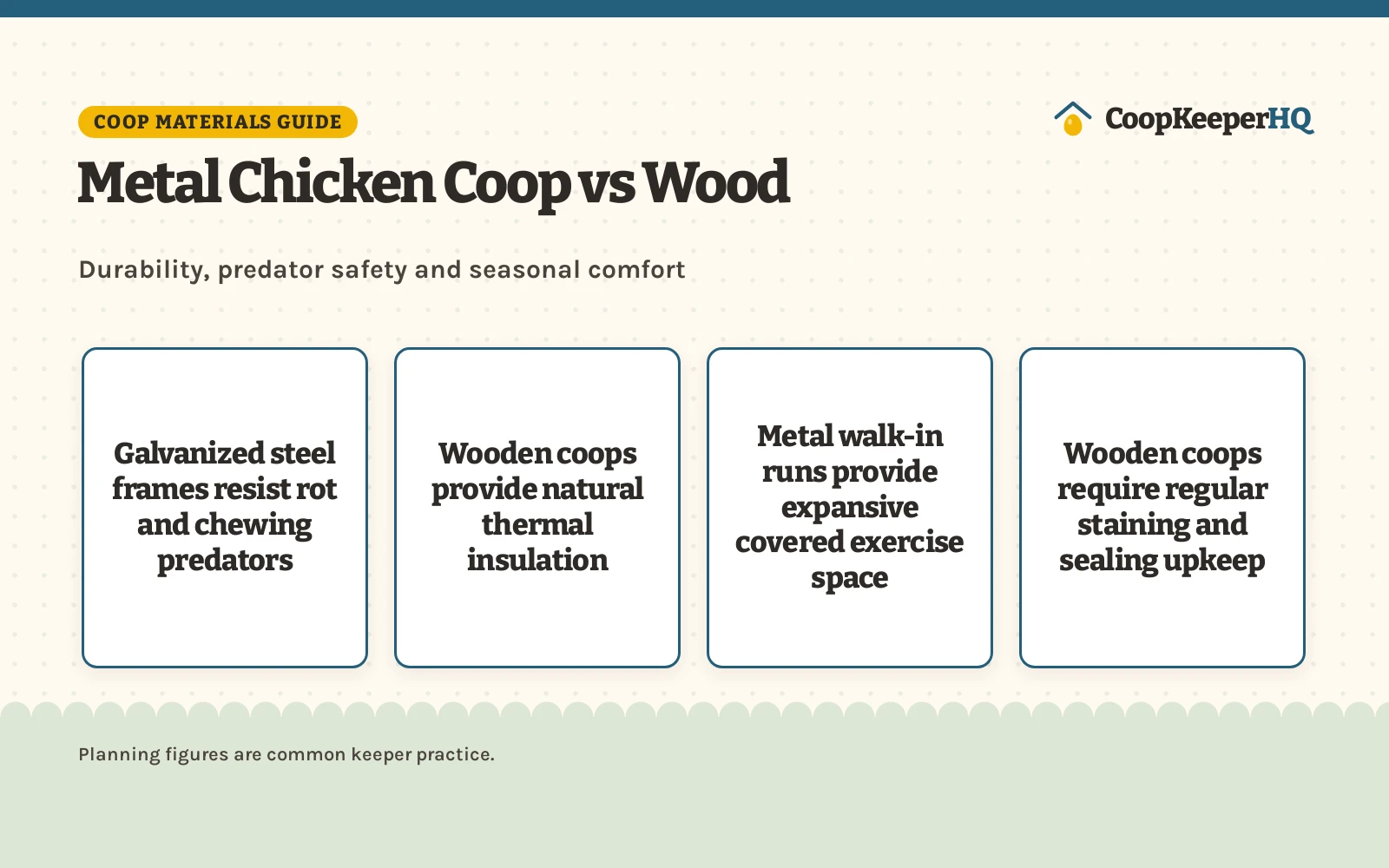
Choosing between a metal chicken coop and a wooden coop comes down to predator protection, weather durability, interior comfort and maintenance. Metal coops provide rot-resistant galvanized steel frames that resist chewing predators, while wooden coops offer natural insulation against summer heat and winter cold. Most backyard keepers find that pairing a sturdy metal walk-in run with an insulated wooden roosting house delivers the most practical setup for flock safety.
Other options for the coop
 Amopatio Large Metal Chicken Coop 10x6.5 FT Walk in ChickensCheck price on Amazon
 Aivituvin Chicken Coop Double Folding Fir Wood Chicken HouseCheck price on Amazon
 Heavy Duty Metal Chicken Coop with Hardware ClothCheck price on Amazon
 Smilelife Funny Chicken Gifts Chicken Coop Rules Metal SignCheck price on Amazon
 Deluxe Large Wood Chicken Coop Backyard Hen House 6-10Check price on Amazon
CoopKeeperHQ earns a commission if you buy through our links, at no added cost to you. Affiliate disclosure.
Metal chicken coop vs wood: key differences at a glance
Backyard poultry housing serves fundamental roles: a safe sleeping shelter and an outdoor exercise space. Metal and wooden coops approach these needs differently. Understanding how each material performs helps you invest in the right structure for your yard and climate.
Metal coops in consumer listings are walk-in wire enclosures supported by tubular steel framing and covered with a weatherproof roof canopy. For example, Morngardo lists a 10 by 10 foot walk-in metal run with 96.8 square feet of floor space and rates it for up to 20 chickens by breed. A metal structure provides an airy, predator-resistant space where keepers walk upright to clean and feed, but it lacks the solid, draft-free walls required for nighttime roosting.
Wooden coops represent the traditional hen house design: solid lumber framing, plywood walls, raised roosts, nesting boxes and latching doors. Wood naturally buffers outdoor temperature swings, keeping roosting birds sheltered from wind and drafts. However, lumber exposed to rain and soil eventually decays without regular care.
Predator protection and structural strength
Predators represent a constant threat to backyard chickens. The structural material dictates how well the shelter repels attacks over seasons of exposure.
Chewing predators cannot penetrate galvanized steel. Raccoons and rodents can gnaw through soft pine, weathered siding or aging plywood corners, but steel tubing stops gnawing completely. In manufacturer listings, Morngardo specifies a frame of 1-inch galvanized steel tubes with 0.6-inch wire mesh. Outvita builds its walk-in enclosure with 1-inch diameter steel pipes and hexagonal wire mesh with a 0.98-inch gap size. While this wire mesh keeps poultry contained and deters aerial hawks, open hexagonal mesh can still allow reach-in attacks from raccoons or entry by small rodents. For enhanced protection, experienced keepers reinforce vulnerable lower sections with welded wire or hardware cloth.
Wooden coops provide solid wall defense, blocking visual contact so sleeping chickens stay calm at night. However, wooden doorframes can warp over time, creating gaps where small predators might enter. Upgrading latches on wooden doors is essential, and our chicken coop latches guide explains secure hardware choices.
Neither material stops burrowing predators when placed on bare dirt. Protecting either coop type requires burying a perimeter apron around the base, and our hardware cloth guide details how to install an outward wire skirt.
Weather durability and climate management
Local weather influences whether metal or wood serves your flock better. Rain, snow, intense sun and freezing temperatures affect each material differently.
In wet or humid regions, metal avoids the rot that affects wooden coops. Untreated wood absorbs rainwater and manure, causing framing to soften and warp over time. Galvanized steel does not rot. Manufacturer listings show that metal runs rely on weather covers to shed precipitation. For instance, Outvita equips its 13 by 10 foot coop with a 180g polyethylene waterproof cover and a sloped roof design. Morngardo uses a 240D anti-UV waterproof tarp, and Aoxun features a 420D Oxford fabric cover on a peak roof frame. Keepers can browse our covered chicken run ideas for more ways to shelter outdoor runs.
In hot weather, wood outperforms metal in temperature regulation. Metal conducts thermal energy quickly, meaning unshaded metal pipes and roofs heat up rapidly under direct sun. Wood acts as a natural insulator, slowing heat transfer and maintaining a cooler interior when paired with cross ventilation.
Winter conditions present distinct challenges for each material. In an open metal wire run, the mesh walls offer no windbreak or thermal insulation against freezing drafts. Chickens left in an unsheltered wire enclosure during winter storms face high wind chill and risk frostbite. Conversely, if an uninsulated coop uses solid metal roofing or enclosed metal panels, warm respiratory moisture from roosting birds rises and condenses on the cold metal underside, dripping dampness back onto bedding. Wooden coops handle winter weather far more effectively because timber provides natural thermal resistance, blocking biting drafts while high wall vents allow moist air to leave safely. For advice on cold-weather flock management, read our guide on how to keep chickens warm in winter.
Assembly, footprint and flock capacity
The time and labor required to assemble your coop influences your choice, as does the total floor space needed for your birds.
Metal walk-in coops rely on modular connections that simplify setup. Morngardo advertises snap-pin assembly in 1 to 2 hours. HEYTOWN notes its 25 mm steel pipe frame requires two people to complete installation, and Aoxun also describes two-person setup using push-button connectors. These structures assemble quickly because they use pre-shaped metal arches and rolls of wire mesh secured with ties.
Wooden coops require more complex assembly. Even prefabricated kits require sorting wooden panels, driving screws, mounting hinges, leveling nest boxes and aligning roof sections.
When it comes to usable floor area, metal enclosures provide substantial space. LEVELEVE lists 65 square feet of living space on its 9.8 by 6.6 foot dome frame. Morngardo supplies 96.8 square feet on a 10 by 10 foot layout, and Betterhood lists 198 square feet on a 31.2 by 9 foot enclosure. However, manufacturer hen ratings are often crowded. While Morngardo lists up to 20 chickens for its 10 by 10 foot enclosure, realistic backyard planning requires balancing run space with enclosed roosting area. Review our guide on how big should a chicken coop be to plan adequate space for your flock.
Cleaning, sanitation and parasite control
Routine hygiene keeps odors down and helps prevent flock health problems. The material you choose determines how easy deep cleaning will be.
Metal coops offer an advantage for parasite management. Poultry mites and lice hide inside tiny fissures, knots and screw holes in wooden boards, emerging at night to feed on roosting birds. Because smooth galvanized steel pipes have no porous grain or cracks, mites find fewer hiding places. When it is time to clean, metal wire runs can be rinsed with a garden hose and scrubbed with water, drying rapidly in open air.
Wooden coops require deliberate cleaning routines. Droppings stick firmly to wooden floors and roosting bars, requiring regular scraping. Because wood absorbs liquid, wet washing must be done on clear, dry days so lumber dries completely before evening. Using suitable bedding helps keep wooden floors dry, and our chicken coop bedding guide compares shavings, hemp and sand.
Maintenance and long-term upkeep
Every backyard coop requires maintenance over time. Evaluating upkeep needs helps you choose a shelter that fits your schedule.
Wooden coops require ongoing preservation. To prevent rot and warping, keepers should paint or seal exterior wood surfaces regularly using animal-safe finishes. Our guide on wood for chicken coop discusses lumber selections and care. With consistent maintenance, a well-built wooden hen house can last for years, but neglected wood deteriorates outdoors.
Metal coops require minimal structural upkeep. Beyond checking frame bolts and inspecting ground-level steel for scuffs, the primary recurring task is replacing the fabric roof cover when sun exposure degrades the material. While large walk-in metal runs remain stationary, smaller metal pipe tractors can be fitted with wheels for pasture grazing, as discussed in our best chicken tractor guide.
The hybrid approach: combining metal and wood
Experienced backyard keepers rarely restrict themselves to a single material option. The most functional coop setups combine the structural strengths of both metal and wood.
A common configuration pairs a large metal walk-in run with an elevated wooden hen house inside or attached to the frame. The wooden coop provides dark, insulated comfort for nighttime roosting and quiet egg laying. Inside the wooden shelter, hens benefit from dedicated roosting bars and cozy nest boxes, which you can choose using our nesting box guide. Installing an automated pop door, covered in our automatic chicken coop door guide, lets birds move safely between the wooden house and the metal run at dawn.
Meanwhile, the surrounding galvanized metal run delivers a chew-proof, hawk-resistant foraging environment where birds can dust bathe and exercise during the day. This combination delivers the thermal comfort of timber alongside the expansive predator protection of galvanized steel.
Buyer checklist for coop materials
- Choose galvanized steel framing to resist rust and outdoor weather
- Reinforce the lower perimeter of wire mesh runs with hardware cloth to deter predators
- Select a pitched or sloped roof canopy that sheds rain and prevents standing water
- Ensure wooden roosting quarters offer draft-free walls and high ventilation openings
- Incorporate nesting boxes with exterior access for convenient egg collection
- Install a buried wire apron around the perimeter base to deter burrowing predators
- Check local municipal and neighborhood guidelines regarding coop dimensions and setbacks
Birds, breed size, run time and climate in; coop floor, run space, roost length and nesting boxes out.
Wash your hands after handling birds, eggs or equipment, supervise children around the flock, and check local rules on flock size and roosters before you buy. For sick birds, call a poultry veterinarian or your state extension office. See CDC backyard poultry guidance. Read our Safety Disclaimer.
FAQ for the flock
Do metal chicken coops get too hot in summer?
Metal framing and unshaded metal roofs conduct heat rapidly under direct sun. An open metal run requires an overhead UV-resistant canopy or shade cloth to block sunlight, while open wire mesh sides allow natural cross ventilation to keep birds comfortable.
Do galvanized steel chicken coops rust outdoors?
Galvanized steel features a protective zinc coating that resists rust and corrosion from rain and snow. However, prolonged exposure to damp soil and acidic chicken manure can eventually degrade the coating along the base, making perimeter drainage essential.
Can predators chew through a wooden chicken coop?
Determined predators such as raccoons, rats and dogs can gnaw through soft or aging wood, especially around corners, loose siding and latch holes. Reinforcing vulnerable wood seams with heavy-duty wire mesh helps prevent chewing breaches.
Which coop material is easier to keep free of mites?
Galvanized metal coops provide fewer hiding spots for poultry mites because the steel pipes are smooth and non-porous. Wooden coops contain grain, seams and screw holes where mites can shelter during the day, requiring diligent monitoring and clean bedding.
Can chickens sleep inside a metal chicken run year-round?
Open wire metal coops do not provide adequate protection for nighttime sleeping during freezing, wet or windy weather. Chickens need an enclosed, draft-free roosting shelter with raised perches and bedding to stay warm and dry throughout the winter.
More coop guides
- Best Hardware Cloth for Chicken Coop Runs and Aprons
- Walk in Chicken Coop Plans: Complete Backyard Guide
See the chicken coop picks and the chicken runs and fencing guides.