Chicken Coop Alternatives: Which One Should You Buy?
A practical guide to converted sheds, hoop houses, chicken tractors and dog runs that shelter a backyard flock without building a standard coop kit.

On this page
Top picks at a glance
As an Amazon Associate I earn from qualifying purchases.
- 1
 PawHut 137" Chicken Coop with Extra Large Run9.7/10View on Amazon
- 2
 9.8 x 6.5 x 6.5 ft Metal Chicken Coop9.7/10View on Amazon
- 3
 Quictent 12x9x6.6ft Large Metal Chicken Coop Run With Perch &9.7/10View on Amazon
Chicken coop alternatives give backyard flock owners practical ways to house poultry without purchasing a pre-made coop kit. Converted garden sheds, mobile chicken tractors, covered hoop shelters and retrofitted metal dog runs can all provide safe, predator-resistant housing when equipped with elevated roosts, dark nesting boxes and adequate high-wall ventilation. The ideal alternative depends on your flock size, your yard layout and whether you prefer stationary walk-in shelter or mobile pasture grazing.
CoopKeeperHQ earns a commission if you buy through our links, at no added cost to you. Affiliate disclosure.
Chicken coop alternatives: choosing the right shelter for your flock
Many keepers look for chicken coop alternatives because mass-market wooden coops often feel cramped, difficult to clean or vulnerable to persistent predators. Building or converting an alternative structure gives you complete control over interior floor space, ceiling height and construction durability. Before selecting an alternative shelter, consider how many birds you plan to keep, whether local rules require a stationary coop and how you intend to manage cleaning and daily egg collection. A spacious shelter makes flock management easier, prevents behavioral stress and maintains drier bedding. For general flock space planning, our guide on how big a chicken coop should be outlines standard backyard principles.
Converting a garden shed into a walk-in coop
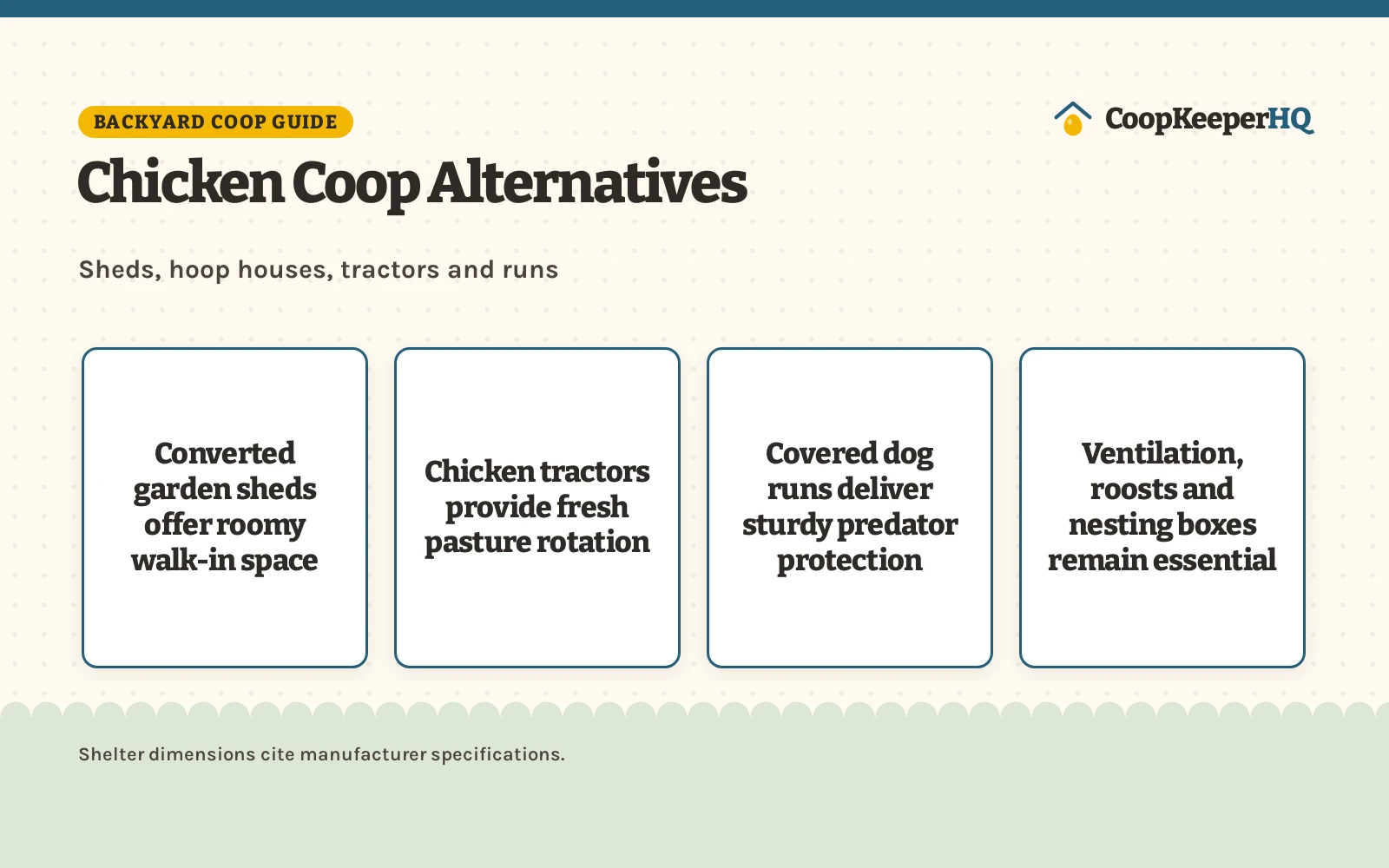
A converted garden shed is widely considered among the most durable and convenient coop alternatives. Because sheds are designed for human storage, they offer full walk-in headroom, solid framing, weatherproof siding and heavy-duty roofing that outlasts lightweight coop kits. Standing upright makes daily tasks like raking bedding, refilling feeders and inspecting birds much simpler on your back.
To convert an existing wooden or resin shed, you need to add dedicated chicken features. Mount elevated roosting bars along the back wall, arrange dark nesting boxes away from high-traffic doors, and cut ventilation openings near the roofline to allow humid air to escape. If you are exploring custom builds or shed conversions, our guides on a chicken coop with shed layout and walk-in chicken coop plans walk through functional floor plans and entryway airlocks.
Chicken tractors and mobile pasture shelters
Chicken tractors combine shelter and run space in a portable frame that moves across your lawn or pasture. Moving the shelter regularly provides your flock with fresh grass, weeds and insects while spreading manure evenly across the ground, preventing the barren mud patches common around stationary coops.
Mobile shelters work especially well for smaller backyard flocks on level ground. For example, TIMHAKA lists an A-frame wooden poultry cage measuring 94.5 x 50 x 46 inches with 2 nesting boxes, which the maker rates for 4-6 chickens and notes can accommodate 4-8 chickens depending on breed size. The triangular frame sheds wind and rain efficiently, while built-in side handles allow two people to relocate the entire unit. Many keepers add heavy-duty wheels for chicken coops to make daily moves effortless. You can explore more portable designs in our dedicated chicken tractor comparison.
Covered metal dog runs and walk-in poultry pens
Heavy-duty chain link dog kennels and walk-in metal runs make outstanding structural frames for backyard chicken housing. These enclosures feature rigid steel pipe framework and walk-in doors that provide spacious outdoor scratching areas while stopping large predators like dogs, coyotes and foxes.
Several manufacturers produce large walk-in metal frames suitable for poultry. VEVOR lists a walk-in metal poultry cage measuring 19.6 x 9.8 x 6.5 ft constructed from 1-inch thick galvanized steel pipes with a protective hexagonal mesh and a waterproof PE-coated tarp. Outvita lists a metal walk-in enclosure measuring 13 x 10 x 6.6 ft, with item dimensions of 156 x 120 x 78 inches and an access door measuring 24.8 x 68.9 inches. Sannwsg lists walk-in pens in 10×13 ft and 10×26 ft dimensions with galvanized steel pipe framing, including a metal perch measuring 55 inches long by 40 inches wide. Garvee lists a metal poultry pen measuring 9.8 ft x 6.5 ft x 6.5 ft featuring galvanized steel frame construction with a waterproof spire roof.
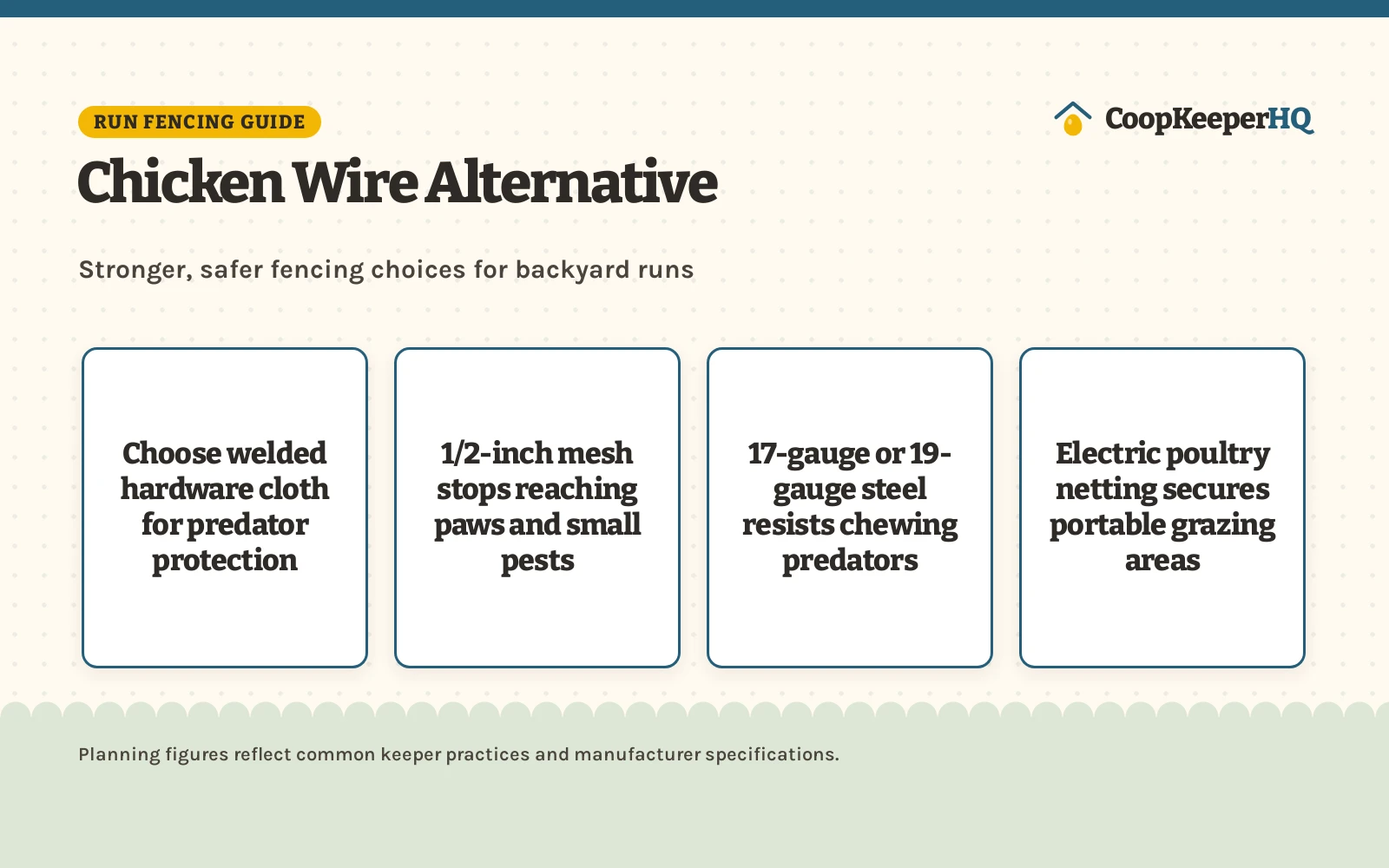
Because open wire mesh does not stop biting wind or small weasels, keepers wrap the lower perimeter with welded wire mesh and place an enclosed sleeping box inside the pen. Our guide on a cheap predator proof chicken run covers reinforcing metal frames, and our chicken runs and fencing section reviews compatible yard barriers.
Repurposing barns, garages, and existing outbuildings
If you have an existing barn, horse stall, detached garage or garden lean-to, partitioning a dedicated section creates an instant walk-in shelter without building a standalone structure. Stalls and outbuilding bays already provide overhead weather protection, solid foundations and wind shielding.
When partitioning a corner of a garage or barn, build an interior dividing wall using lumber framing covered with sturdy wire mesh. Ensure the flock has an exterior pop door leading directly into a secure fenced outdoor run so birds do not wander through work areas. Keep vehicles, fuel, chemicals and machinery completely isolated from the poultry bay to preserve indoor air quality and flock safety.
Essential features every alternative coop must provide
Regardless of whether you choose a converted shed, a pasture tractor, a hoop shelter or a retrofitted dog run, chickens have non-negotiable biological requirements that every alternative shelter must satisfy:
- Elevated roosting bars: Chickens instinctively seek elevated roosts at dusk to feel secure while resting. Use smooth wooden bars with rounded edges mounted higher than the nest boxes, giving birds ample roost length so the flock can roost side by side without crowding.
- Dedicated dark nesting boxes: Hens require quiet, darkened, clean spots to lay eggs. You can build wooden cubbies or mount commercial metal units. For example, Brower lists a 2-tier 10-hole galvanized steel laying station measuring 60 x 12 x 34 inches rated for a 50 to 60 hen capacity. On a smaller scale, TANGJEAMER lists a wooden poultry coop with 2 nesting boxes measuring 19.8 inches wide rated for 2-4 chickens. Review top options in our chicken nesting boxes guide.
- High-wall ventilation: Chickens exhale significant moisture and generate ammonia from droppings overnight. Shelters require open vents positioned high along the walls or roof gables above roost level. This allows warm, humid air to escape continuously without creating drafts that blow directly onto roosting birds.
- Dry absorbent bedding: Deep bedding insulates the floor, cushions footpads and absorbs droppings. Kiln-dried pine shavings, chopped straw or hemp bedding all perform well. For instance, bulk options like the 285L pack of premium hemp bedding provide high absorbency and low dust. Learn more in our chicken coop bedding review.
Predator proofing an alternative shelter
Traditional coops are often breached because lightweight latches and flimsy wire fail against raccoons, foxes, dogs and rodents. When building an alternative coop, predator proofing should be prioritized from the start.
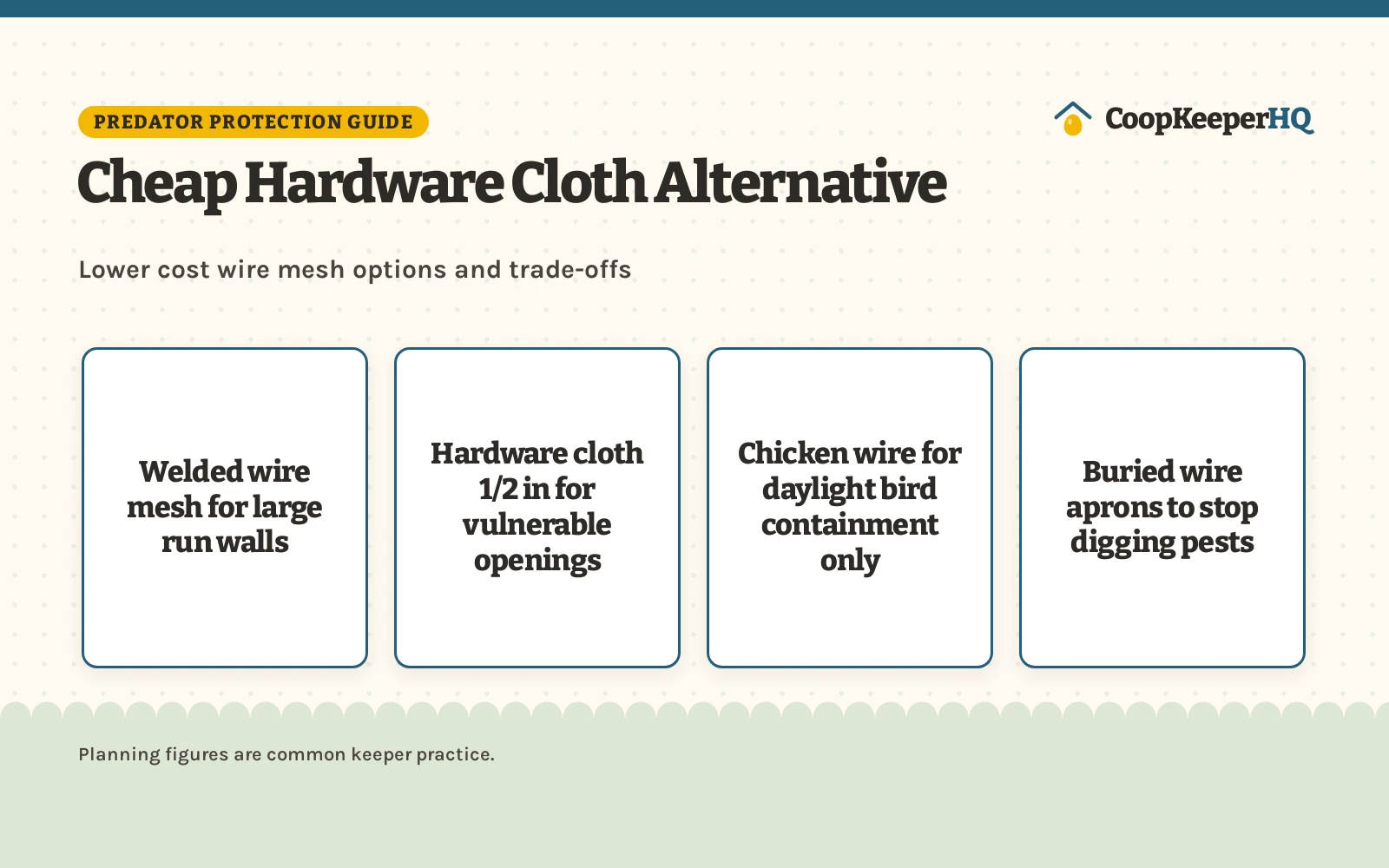
Standard hexagonal poultry netting keeps chickens in, but it does not stop determined predators from tearing through. Cover all ground-level windows, open vents and run perimeters with heavy galvanized welded wire. Our guide on hardware cloth for chicken coops explains proper wire gauge and attachment methods. Bury an exterior wire apron flat along the soil perimeter to stop digging predators. Secure all access doors with dual-action barrel bolts or locking carabiners that raccoons cannot manipulate. To automate evening lockdown, consider installing an automatic chicken coop door on the shelter entrance.
Managing weather, drafts, and floor moisture
A successful coop alternative must keep birds dry during storms and shaded during summer heat. Moisture is the primary cause of respiratory issues and frostbite in poultry. Ensure roof overhangs prevent rain from blowing into vents, and place gutters on converted sheds to direct runoff away from the run perimeter.
In cold winter weather, close low-level air gaps around floor seams to eliminate drafts at roost height, while keeping high-wall gable vents open to vent respiratory moisture. In hot summer months, open shaded windows and run doors to promote cross-ventilation. If converting a metal shelter, ensure adequate shade cloth or insulated roofing is installed, as bare galvanized metal absorbs substantial solar heat.
Daily flock care and maintenance routine
An alternative coop should streamline your daily management chores rather than complicate them. Establish a consistent daily routine to monitor your birds and inspect shelter security:
- Morning release: Open the pop door, verify clean water is flowing, refill feeders and inspect the flock for active, alert behavior.
- Midday collection: Gather fresh eggs from the nesting boxes to prevent accidental breakage or egg-eating habits.
- Dusk lockdown: Count heads once every bird has roosted, secure all access latches and check that the pop door is locked against nocturnal predators.
- Weekly upkeep: Stir bedding to incorporate droppings, spot-clean manure beneath roost bars, top off dry bedding material and inspect wire seams for chewing marks.
If you ever observe sudden changes in flock behavior or bird posture, consult a licensed poultry veterinarian or your state agricultural extension office for professional guidance.
Shelter conversion checklist
- Roof is completely watertight with no active leaks
- High-wall vents allow continuous airflow above roost height
- Drafts are sealed at roost and floor levels
- Sturdy wooden roost bars are mounted higher than nest boxes
- Dark, clean nesting boxes are lined with fresh bedding
- Windows, vents and perimeters are secured with welded wire mesh
- Access doors have predator-proof locking latches
- Feed and clean water stations are protected from rain and droppings
Birds, breed size, run time and climate in; coop floor, run space, roost length and nesting boxes out.
Wash your hands after handling birds, eggs or equipment, supervise children around the flock, and check local rules on flock size and roosters before you buy. For sick birds, call a poultry veterinarian or your state extension office. See CDC backyard poultry guidance. Read our Safety Disclaimer.
FAQ for the flock
Do chickens need a coop?
Chickens do not strictly require a purpose-built commercial coop kit, but they do require a dry, draft-free, predator-proof shelter. Converted sheds, chicken tractors, hoop structures and retrofitted outbuildings satisfy all of their biological needs as long as they provide elevated roosts, dark nesting boxes, deep bedding and continuous high ventilation.
How big a shelter is needed for 10 chickens?
When planning shelter for a flock of 10 chickens, you must provide adequate enclosed floor space so birds do not crowd or peck. Keepers also need enough roost bar length for all birds to sleep side by side and dedicated nesting boxes for egg laying. Our detailed breakdown on what size chicken coop for 10 chickens outlines exact backyard sizing considerations.
What size shelter is needed for 12 chickens?
Housing a flock of 12 chickens requires a roomy interior that accommodates multiple roosting bars and several separate nesting spots. A walk-in converted shed, a spacious hoop house or a partitioned barn stall works very well for 12 chickens, giving the flock room to move comfortably on inclement days when they prefer staying indoors.
Can a garden shed be converted into a chicken coop?
Yes. Garden sheds make excellent chicken coop alternatives because they provide durable framing, weatherproof siding and full human walk-in height. To complete the conversion, you simply add high-wall ventilation vents covered in welded wire mesh, install elevated wooden roosting bars and place nesting boxes near the entrance for convenient egg collection.
Is a dog kennel suitable as a chicken coop alternative?
A chain link or metal pipe dog kennel makes a sturdy, spacious outdoor run frame. However, because chain link has wide openings that allow weasels or raccoons to reach through, the lower perimeter must be lined with heavy welded wire mesh. Additionally, keepers must place an enclosed, weather-tight sleeping box inside the kennel to give birds a dry, draft-free roosting space at night.
More coop guides
- Walk in Chicken Coop Plans: Complete Backyard Guide
- Best Chicken Tractor: Mobile Coops Compared by Real Space
- Chicken Coop with Shed: 5 Roomy Backyard Picks (2026)
See the chicken coops hub and our coop supplies guides.