How Long Do Chicks Need a Heat Plate
Chicks need a heat plate until they are fully feathered and stop seeking its warmth, and the signs in the brooder tell you when that moment has come.

On this page
Top picks at a glance
As an Amazon Associate I earn from qualifying purchases.
- 1
 Brinsea Ecoglow Safety 600 Chick or Duckling Brooder9.7/10View on Amazon
- 2
 Sindarhor 200W Brooder Heat Plate with Temperature Sensor for9.6/10View on Amazon
- 3
 RentACoop 10x10in Chick Brooder Heating Plate with Anti-Roost9.4/10View on Amazon
Morning chores in the brooder start the same way: fresh water, a scoop of starter feed, and a quick look under the heat plate to see where the chicks spent the night. The question that follows is how long do chicks need a heat plate, and the honest answer is until they are fully feathered and no longer seek its warmth. Feathering and behavior tell the story better than any calendar, so this guide walks through the signs that say the plate stays and the signs that say it can go.
CoopKeeperHQ earns a commission if you buy through our links, at no added cost to you. Affiliate disclosure.
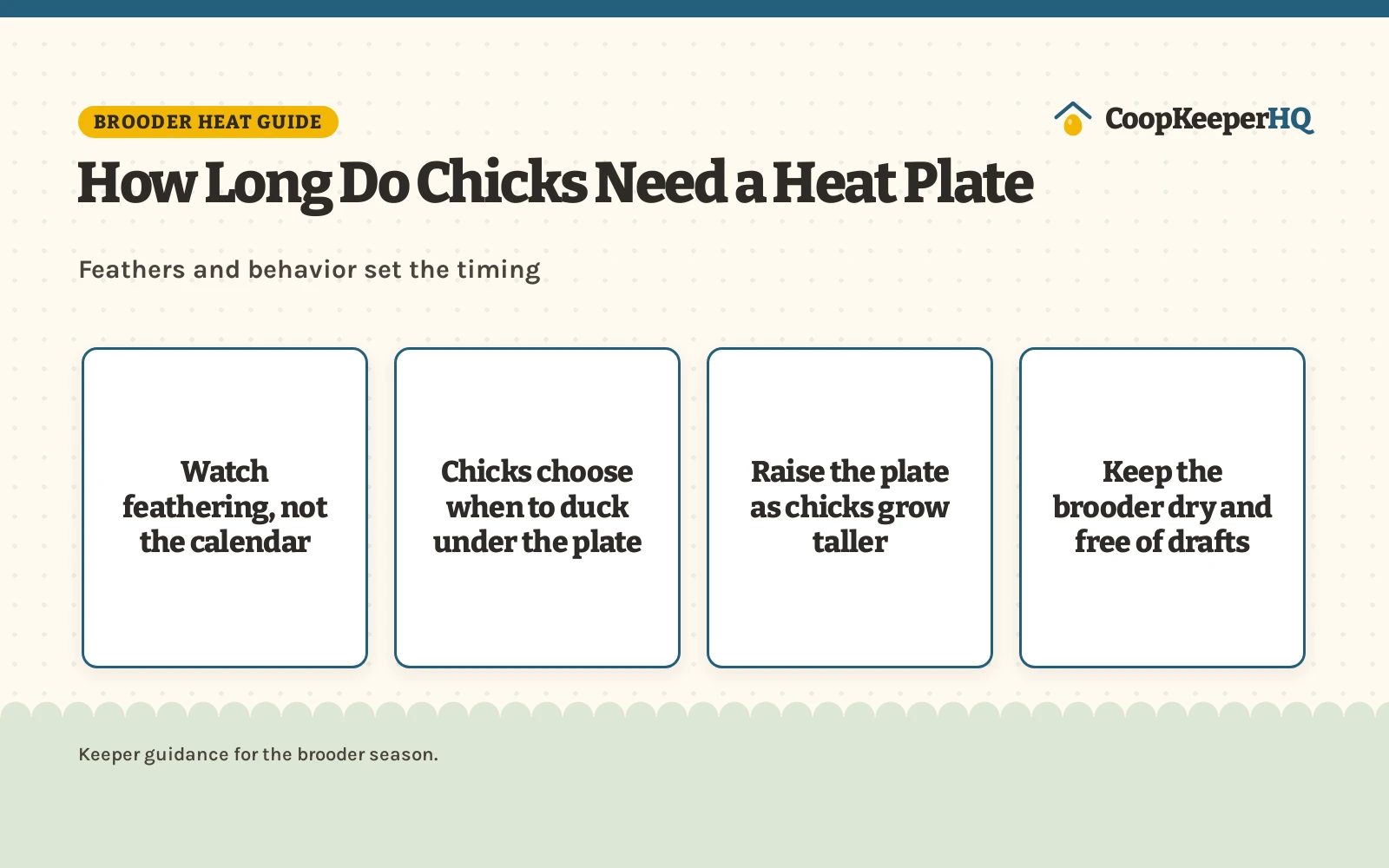
How long do chicks need a heat plate: watch the feathers, not the calendar
Chicks need a heat plate until their down gives way to a full coat of feathers and they spend the day away from the plate and sleep away from it through the night. That moment arrives at a different age for every batch, because breed shapes how fast chicks feather out, while brooder warmth and the weather outside shape how long they need the plate. A slow-feathering breed holds onto heat longer than a quick-feathering batch, and a cool brooder stretches that time further, so the calendar is a poor guide. Watch the feathers and the behavior, and let the chicks set the pace.
How a heat plate warms chicks
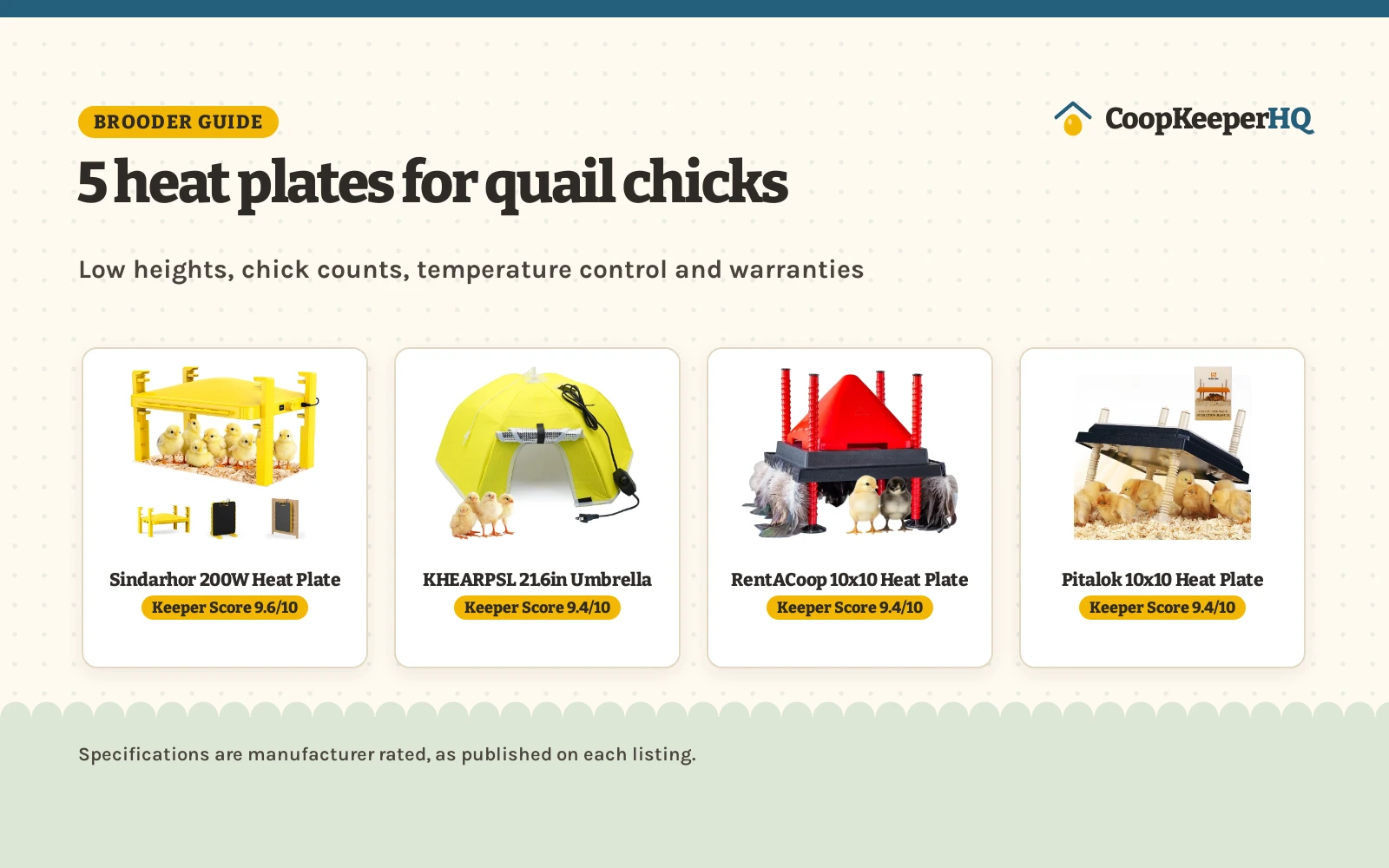
A heat plate is a low, flat panel on legs that chicks walk under, and it warms by contact with their backs, much as a hen warms chicks tucked beneath her. The plate heats the space directly underneath it and leaves the rest of the brooder cooler, so chicks can move between warm and cool ground as they please. Chicks that feel too warm can step away instead of panting in a brooder that is hot all over. The safety guide for brooder plates and the heat plate and heat lamp comparison explain why many keepers pick a plate over a lamp.
Signs chicks still need the plate
Young chicks tell you plainly when they still need heat. They pile under the plate in a tight group, they cheep loudly and without pause, and they move little beyond the edge of the plate to reach feed and water. Chicks that huddle in a corner away from the plate are cold or uncomfortable, so check the brooder for drafts and check that chicks can slip under the plate with ease. Feed and water belong close to the plate while chicks are small, and the starter feed guide covers the daily routine.
Signs chicks are ready to leave the plate behind
Feathering is the clearest sign. Down on the wings gives way to real feathers, then the back and belly fill in, and a chick covered from head to tail in smooth feathers holds its own warmth. Behavior backs up the feathers: chicks sleep scattered across the bedding instead of packed under the plate, they spend the day scratching and dust bathing away from the heat, and they visit the plate rarely, if at all. When the plate sits unused through the night, take it away in stages: raise it high for a stretch so chicks get less warmth from it, then lift it out and watch the chicks settle.
Raising the plate as chicks grow
A heat plate has legs that adjust, and the height matters as much as the heat. Set the plate low while chicks are small, so their backs brush the warm surface when they duck underneath, and raise it a little at a time as they grow taller. A plate set too high warms the air instead of the chicks, and a plate set too low blocks chicks from slipping under, so watch how they move and adjust until they pass beneath it with ease. The brooder heat plate guide covers plate styles and heights for keepers choosing a plate.
Cold nights, warm rooms and drafty brooders
Where the brooder sits shapes how long the plate stays. A brooder in a warm room lets chicks leave the plate sooner, while a brooder in a cool garage or an outbuilding in a cold snap keeps chicks under the plate for longer. Drafts matter more than a cool room: a brooder with gaps at chick height chills chicks even when the plate is warm, so block drafts where chicks sleep and leave the top open enough for damp air to leave without blowing across the birds. Dry bedding holds warmth better than damp bedding, so change wet patches and keep the waterer from spilling, and the brooder size guide covers floor space.
Heat plate or heat lamp after dark
Chicks need heat around the clock while they are small, and the plate meets that need without keeping the brooder lit all night. A lamp glows through the night and leaves chicks with no real dark, while a plate gives warmth in the dark and lets chicks sleep as they would under a hen. Keepers who still use a lamp should hang it with care and never let it rest on bedding, and the lamp hanging guide covers safe mounting. Any outdoor electrical gear belongs on a GFCI outlet, and the summer heat lamp guide looks at warm-weather brooding.
Moving chicks out to the coop
The plate comes out before the chicks move out, and the move itself waits until the chicks are fully feathered and the coop is dry, draft-free and ready for them. Give the new arrivals a sheltered corner of the coop with feed and water close by, and keep them shut in the coop until they know it as home. The brooder and coop comparison explains how the spaces differ for keepers planning the move. Watch the weather on moving week and pick a mild stretch, and if a bird looks off, ask a poultry vet or the state extension office rather than guessing.
A simple brooder checklist
- Chicks sleep scattered, not packed under the plate
- Feathers cover wings, back and belly
- Plate height lets chicks pass beneath with ease
- Bedding is dry and drafts are blocked at chick height
- Feed and water sit close to the plate
- Outdoor electrical gear runs on a GFCI outlet
When each item on the list checks out, the plate can come out and the chicks can face the coop on their own warmth.
Heat lamps are a common cause of coop and barn fires. If you use one, secure it with more than the clamp (a chain or wire to a fixed point), keep it well away from bedding, walls and cardboard, and plug it into an outlet or a cord rated for the load. Radiant heat plates run cooler and remove most of that risk. Check chicks often in the first days: huddling under the heat means too cold, spreading to the edges means too warm. Read our Safety Disclaimer.
FAQ for the flock
When do chicks not need a heat lamp?
Chicks stop needing a lamp or a plate when they are fully feathered and sleep away from the heat through the night. Until then, keep the heat in place and let feathering and behavior decide the timing.
Do chicks need a heat lamp around the clock?
Young chicks need warmth around the clock, and a heat plate gives it without light, so chicks can sleep in the dark as they would under a hen. A lamp also gives warmth around the clock, but it keeps the brooder lit, which is why many keepers favor the plate.
Can chicks sleep away from the heat plate?
Chicks that are feathered out can sleep away from the plate and stay warm on their own. Young chicks that still need heat will return to the plate on their own, so leave it in place until they stop visiting it at night.
What to do when chicks stop using the plate?
Raise the plate for a stretch so chicks get less warmth from it, then lift it out and watch the chicks settle for the night. If they sleep scattered and wake ready to eat, leave the plate out. If they pile and cheep through the night, put it back and give them more time.
Do chicks need a heat plate in warm weather?
Chicks in a warm room still need a plate while they are small and downy, because they cannot hold their own warmth until they feather out. They will visit the plate less often as the room warms, and they will leave it sooner than chicks in a cool brooder.
More coop guides
- Are Brooder Plates Safe for Chicks
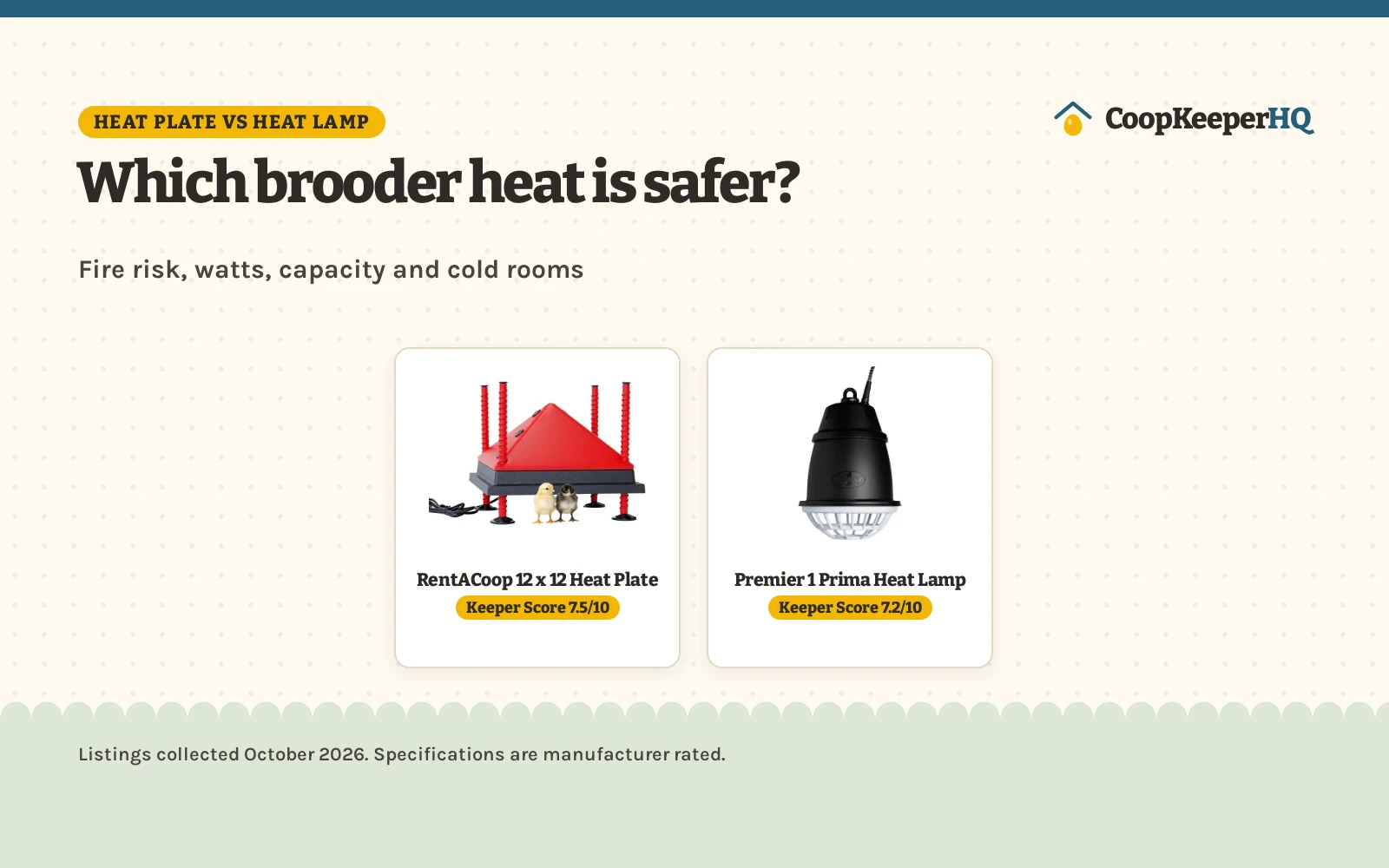
- Heat Plate vs Heat Lamp for Chicks: Which Is Safer?
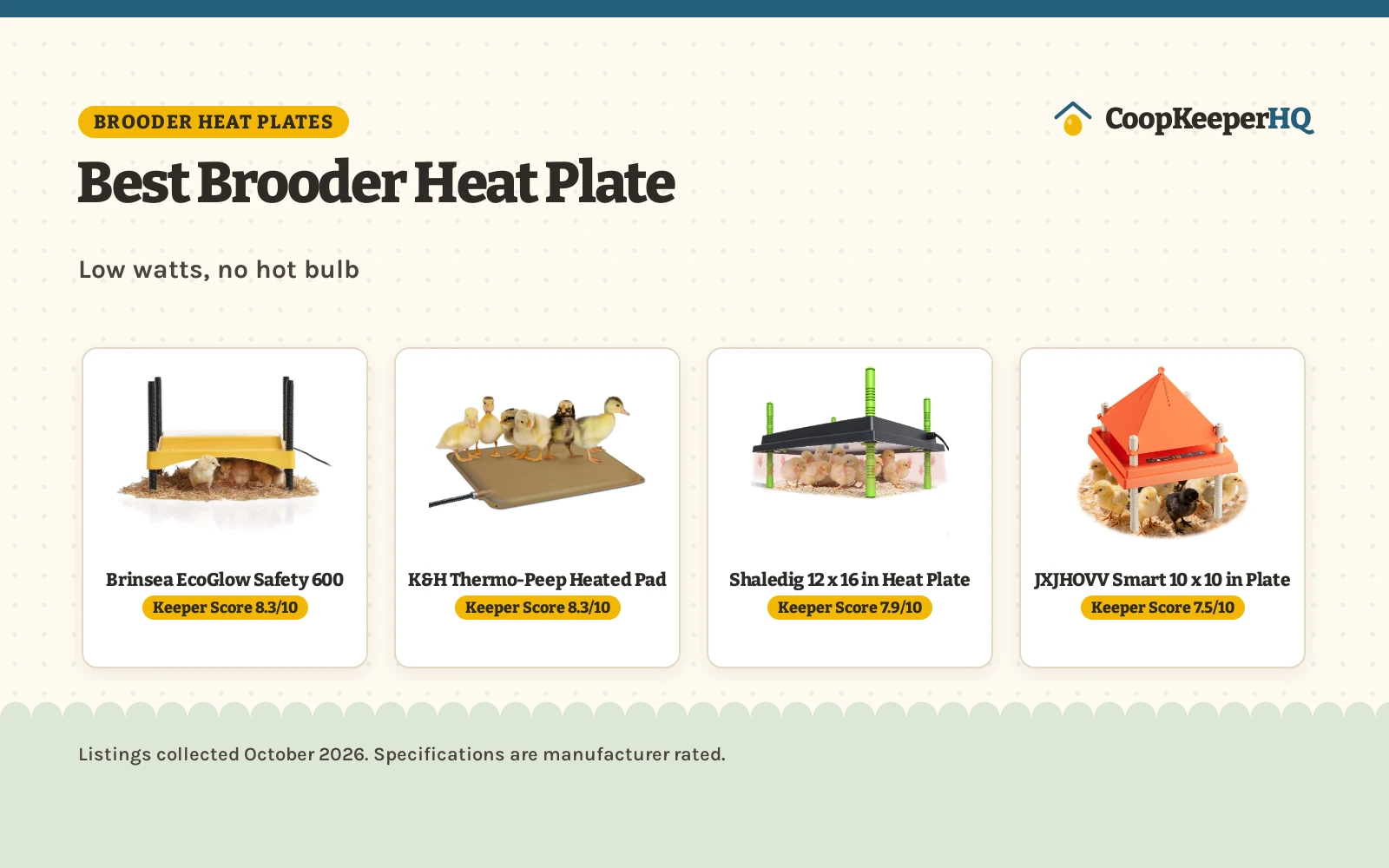
- Best Brooder Heat Plate: Safer Heat for Chicks
- Do Chicks Need Heat Lamp in Summer? A Keeper Guide
- Chick Brooders for Backyard: 5 Starter Kits Compared (2026)
- How to Hang a Heat Lamp for Chicks
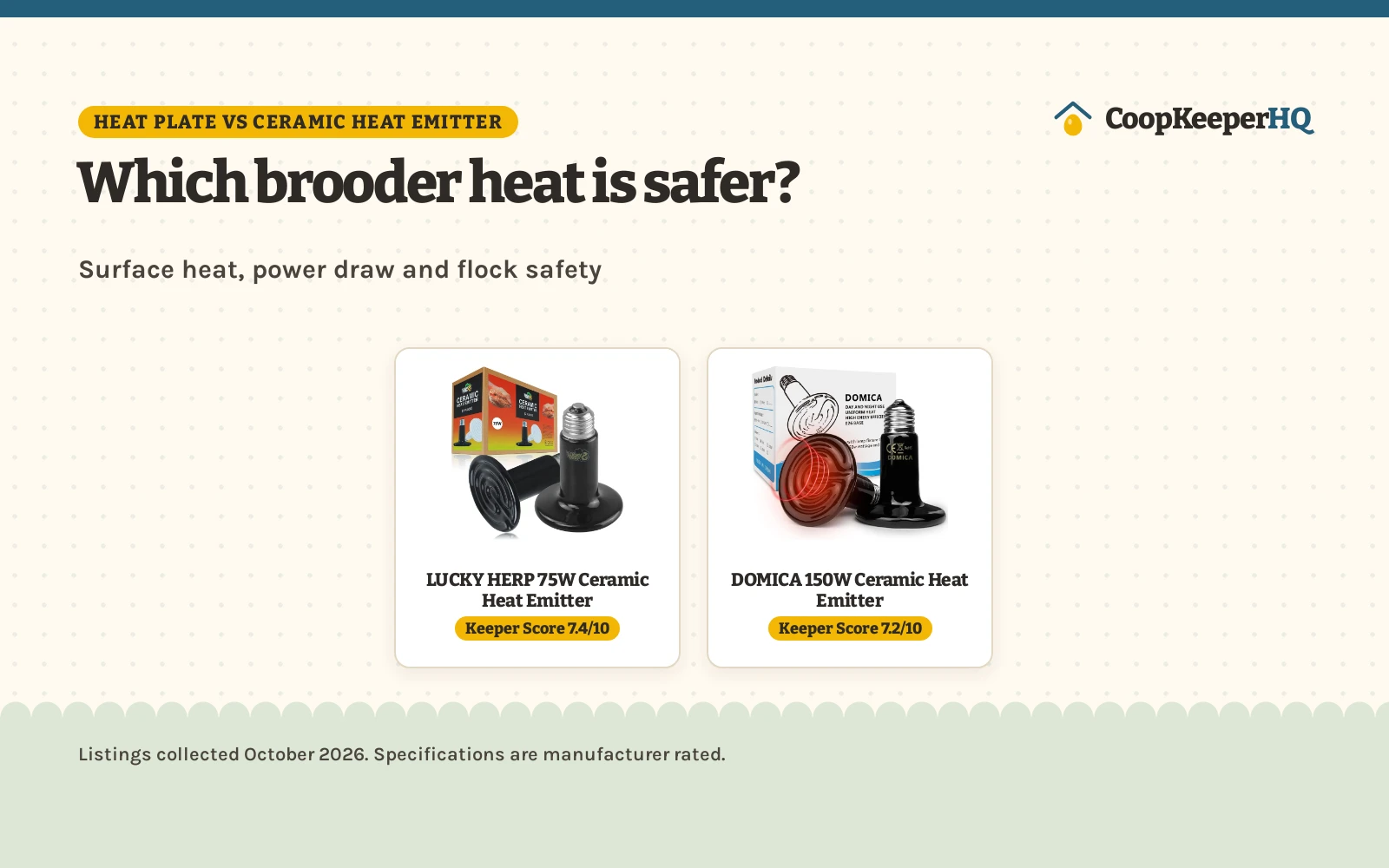
- Heat Plate vs Ceramic Heat Emitter: Which One Should You Buy?
- Chick Brooder Temperature: How to Set It and Read the Chicks
See the brooder guides and the best brooder heat plate picks for more on keeping chicks warm.