Foam vs Plastic Egg Incubator: Which One Should You Buy?
Foam and plastic egg incubators compared on insulation, capacity, turning and humidity control, with four examples from the listings we reviewed.

On this page
Top picks at a glance
As an Amazon Associate I earn from qualifying purchases.
- 1
 Egg Incubators for Hatching Eggs9.7/10View on Amazon
- 2
 Farm Innovators 2450 Digital Circulated Air Incubator withView on Amazon
- 3
 Little Giant® Digital Circulated Air IncubatorView on Amazon
- 4
 JAEDO Automatic Egg Incubator 150~180 Egg Incubator DigitalView on Amazon
- 5
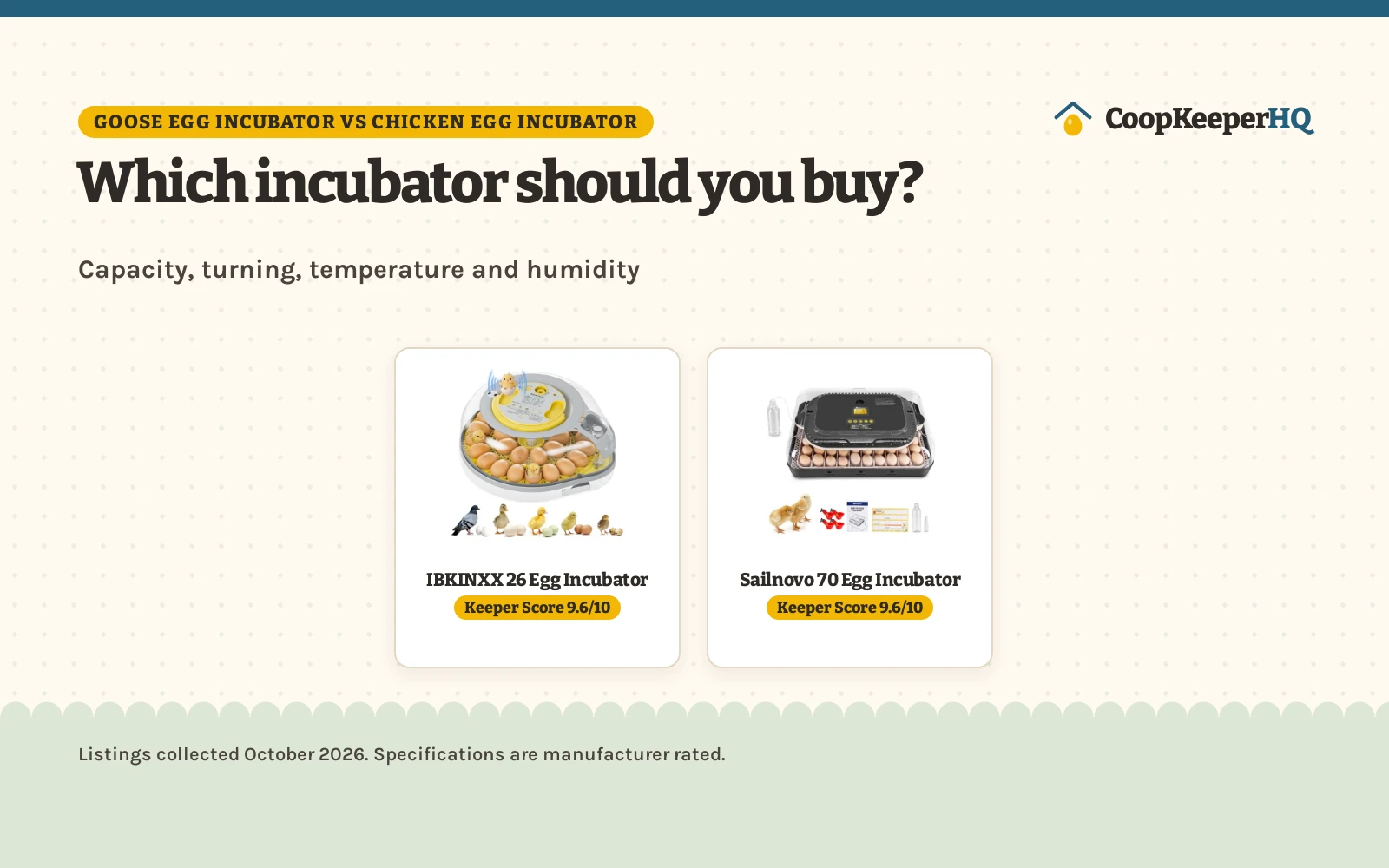
 Sailnovo 70 Egg IncubatorsView on Amazon
- 6
 Incubators for Hatching Eggs with Smart Voice AssistantView on Amazon
- 7
 32 Egg Incubator for Hatching EggsView on Amazon
Setting eggs is an exercise in patience: you set the eggs, close the lid and trust the little box on the counter to do the hen’s work of holding warmth steady. An incubator has to keep the air warm, turn the eggs and keep things damp enough, all without you hovering. The foam vs plastic egg incubator question is really about the shell around that job. This guide compares foam and plastic incubators using only what the listings state, so you can match a machine to the size of your hatch and the steadiness of your room.
Other options for the coop
 Farm Innovators 2450 Digital Circulated Air Incubator withCheck price on Amazon
 Little Giant® Digital Circulated Air IncubatorCheck price on Amazon
 JAEDO Automatic Egg Incubator 150~180 Egg Incubator DigitalCheck price on Amazon
 Sailnovo 70 Egg IncubatorsCheck price on Amazon
 Incubators for Hatching Eggs with Smart Voice AssistantCheck price on Amazon
 32 Egg Incubator for Hatching EggsCheck price on Amazon
CoopKeeperHQ earns a commission if you buy through our links, at no added cost to you. Affiliate disclosure.
Foam vs plastic egg incubator: what the shell does
Foam incubators are built around insulation. Three of the four listings here use polystyrene or styrofoam shells that the makers say retain warmth and steady the temperature inside. The plastic example takes the other path: a rigid cabinet with a much larger capacity and dual power options, trading insulation claims for scale and features. Neither shell changes the basics: three of the four state a built-in fan and digital temperature control, and the JAEDO’s title calls it a digital hatcher without stating a fan.
The foam examples
The Farm Innovators 2450 is a recycled polystyrene foam unit with digital controls, circulated air, an automatic egg turner and a built-in hygrometer. E-Z Fill water channels let you add water without removing the lid, a forced-air fan steadies the temperature, and the deep bottom tray fits larger eggs including ducks and geese. The maker lists a 41-egg capacity.
The Little Giant is a styrofoam unit the maker calls warmth-retaining, with an LCD display, one-touch digital temperature control that holds within one degree, a built-in fan and a digital hygrometer with water channels. It holds 41 large chicken eggs, or up to 120 bantam or quail eggs when used with the Little Giant Automatic Egg Turner. The redesigned plastic heater runs cooler to the touch than metal elements, and a mesh plastic screen has no sharp edges. It measures 18 by 18 by 9 inches, weighs 4 pounds and is made in the USA.
The Farm Innovators FI-2250 is the smaller foam sibling: recycled polystyrene foam, 40 watts, room for up to 48 eggs (4 dozen), a digital display showing temperature, humidity and a days-to-hatch countdown, an integrated fan, EZ-fill water channels, a high and low temperature alert light and large viewing windows. It weighs 4 pounds.
The plastic example
The JAEDO is the plastic cabinet of the set, titled as a 150 to 180 egg incubator with automatic turning. Its bullets claim up to 168 eggs, 126 duck eggs, 84 goose eggs or 238 bird eggs; the spec table lists far smaller figures (35 chickens, 28 ducklings, 18 goslings, 46 birds), so treat the title and bullets as the figures to trust. It runs on 110V home power with a 12V battery input for outages, turns eggs automatically on a default 1.5-hour cycle, uses an adjustable roller design for different egg sizes and includes a built-in egg candler. It measures 24.5 by 21 by 10 inches and weighs 18.61 pounds.
The four machines, ranked
Scored on the published specs, the Farm Innovators 2450 leads: foam insulation plus an included automatic turner, a hygrometer, fill-without-opening water channels and a tray that fits duck and goose eggs. The Little Giant follows with its 41-egg or 120-bantam capacity, one-degree temperature control and USA build, docked slightly because the automatic turner is a separate piece. The JAEDO takes third on sheer scale and the 12V backup, with the capacity mismatch between its bullets and spec table noted above. The FI-2250 rounds out the set: a solid small foam unit with 40-watt draw and a 48-egg capacity, but no turner or candler stated. A keeper hatching a few dozen eggs in a drafty room leans foam; a keeper filling trays by the hundred leans plastic.
Match the shell to your hatch
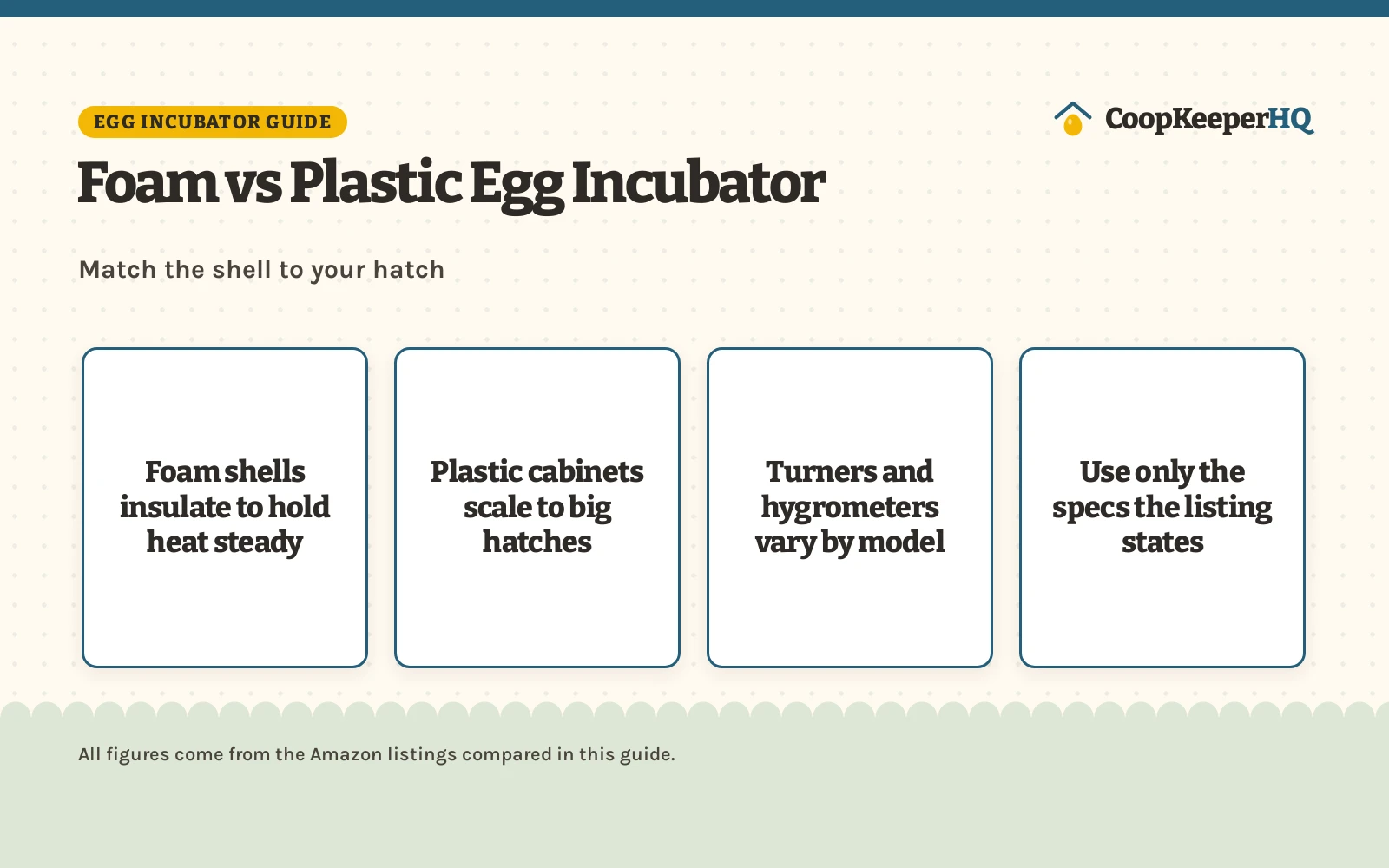
- Insulation matters in a cold room. The foam listings state thermal insulation and warmth retention; the plastic listing states none. If your hatching room swings with the weather, foam forgives more.
- Capacity sets the chore. The listings here run from 41 eggs to 150 to 180. Match the machine to the number of eggs you actually set; a half-empty cabinet still runs the full cycle.
- Turning varies. The 2450 includes an automatic turner, the Little Giant works with its automatic turner, the JAEDO turns on a 1.5-hour cycle, and the FI-2250 states no turner. If you cannot turn by hand on schedule, buy the turner in the box.
- Humidity control is stated on three. The 2450, Little Giant and FI-2250 all list humidity monitoring with water channels; the JAEDO does not state a hygrometer. For more on measuring it, see the hygrometer guide.
- Power backup is rare. Only the JAEDO lists a 12V battery input for outages. If your power blinks, that single feature can matter more than the shell.
Pick a species and a set date for candling days, lockdown and hatch day, with a calendar file to save.
Run the incubator for a day before you set eggs to confirm temperature and humidity, keep it away from direct sun and drafts, and plug it into a protected outlet. Plan the brooder before hatch day. Wash your hands after handling eggs and chicks. See CDC backyard poultry guidance. Read our Safety Disclaimer.
FAQ for the flock
Is a foam or plastic egg incubator better?
The listings do not crown a winner. Foam shells state insulation that steadies temperature in drafty rooms; the plastic cabinet offers far larger capacity and a 12V backup. Pick foam for small hatches in changeable rooms, plastic for big hatches where scale matters.
How many eggs do these incubators hold?
The Farm Innovators 2450 lists 41 eggs, the Little Giant 41 large chicken eggs or up to 120 bantam or quail eggs with its turner, the FI-2250 up to 48 eggs, and the JAEDO 150 to 180 eggs by title (its bullets claim up to 168 chicken eggs). Size the machine to the hatch you actually run.
Do these incubators turn the eggs?
Three of the four state automatic turning: the 2450 includes an auto turner, the JAEDO turns on a 1.5-hour cycle, and the Little Giant works with its automatic turner. The FI-2250 states no turner, so check the listing if hands-off turning matters to you.
What happens if the power goes out?
Only the JAEDO states a backup: a 12V battery input alongside 110V home power. The other three listings state no backup power, so a generator or battery plan is on you.
Can I hatch duck or goose eggs in these?
The 2450’s deep tray fits larger eggs including ducks and geese, and the JAEDO’s bullets claim 126 duck eggs or 84 goose eggs. The Little Giant lists 41 large chicken eggs or 120 bantam or quail eggs. Match the egg size to the tray, not just the count.
More coop guides
- Best Incubator for Chicken Eggs: Hatch Picks by Size
- Best Incubator for Beginners: Easy First-Hatch Picks
- Best Egg Incubator with Automatic Turner (2026)
- 24 vs 48 Egg Incubator: Which One Should You Buy?
- 18 vs 36 Egg Incubator: Which One Should You Buy?
- 12 vs 36 Egg Incubator: Which One Should You Buy?
- Best Hygrometer for Egg Incubator (2026): 5 Top Picks Compared
- Automatic Egg Turner for Incubator: 5 Trays Compared (2026)
- Best Egg Incubator for Off Grid: 5 Top Picks for Homesteaders (2026)
- Best Incubator for Cold Climates (2026): 4 Compared
- Digital vs Analog Incubator Thermometer: Which Hatches Better?
- Best Incubator for Quail Eggs: Small Trays, Big Batches
See the incubators and hatching picks and the brooder guides.