Hexagonal vs Square Poultry Netting: Which One Should You Buy?
Hexagonal chicken wire is light and flexible for coops and gardens, while square welded wire is the stiffer pick for predator defense; four hexagonal rolls compared.


On this page
Top picks at a glance
As an Amazon Associate I earn from qualifying purchases.
- 1
 Starkline Electric Poultry Netting Kit9.6/10View on Amazon
- 2
 PPOLB Electric Poultry Fence Netting9.6/10View on Amazon
- 3
 Fencer Wire 20 Gauge Galvanized Poultry Netting9.6/10View on Amazon
- 4
 MTB Supply 20GA Galvanized Hexagonal Poultry Netting ChickenView on Amazon
- 5
 PVC Hexagonal Poultry Netting Chicken Wire 24" x25' x 1" MeshView on Amazon
- 6Fencer Wire 20 Gauge Galvanized Poultry Netting FenceView on Amazon
- 7Fencer Wire Poultry Netting FenceView on Amazon
- 8
 48In x 150Ft Hexagonal Chicken WireView on Amazon
- 9PVC Hexagonal Poultry Netting Chicken Wire 36" x50' x 1" MeshView on Amazon
Hexagonal vs square poultry netting comes down to the job: hexagonal chicken wire is the light, flexible pick for keeping chickens in and garden pests out, while square welded wire is the stiffer, stronger pick where predators push against the fence. This guide compares the two mesh types, then four hexagonal netting rolls from the listings we reviewed.
Other options for the coop
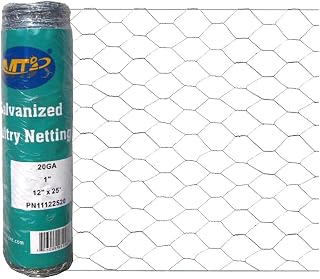 MTB Supply 20GA Galvanized Hexagonal Poultry Netting ChickenCheck price on Amazon
 PVC Hexagonal Poultry Netting Chicken Wire 24" x25' x 1" MeshCheck price on Amazon
 Fencer Wire 20 Gauge Galvanized Poultry Netting FenceCheck price on Amazon
- Fencer Wire Poultry Netting FenceCheck price on Amazon
 48In x 150Ft Hexagonal Chicken WireCheck price on Amazon
- PVC Hexagonal Poultry Netting Chicken Wire 36" x50' x 1" MeshCheck price on Amazon
CoopKeeperHQ earns a commission if you buy through our links, at no added cost to you. Affiliate disclosure.
Hexagonal vs square poultry netting: the short answer
Choose hexagonal chicken wire when you need a light, flexible barrier: it is easy to cut, shape and staple, and it keeps chickens in and protects the garden from the animals the makers name, like cats, dogs, gophers and goats. Choose square welded wire when you need rigidity and strength: its welded joints resist pushing, climbing and chewing better, which matters on predator-heavy ground. The listings here are all hexagonal galvanized steel; the difference is the mesh geometry and what it does.
How hexagonal mesh behaves
Hexagonal poultry netting, the classic chicken wire, is made by twisting wire into hexagonal openings. Every listing here describes it as lightweight and easy to cut and shape, and three of the four use 20 gauge galvanized steel wire. The twist gives it flex: it unrolls, follows uneven ground and fastens to posts without a fight, and the Miuwauer listing includes 100 cable zip ties for fastening. The tradeoff is that it can be pushed out of shape, and determined predators can work at the twists.
Mesh openings in these listings run from 0.8 inch (the Miuwauer’s 0.8 by 1.38 inch mesh) to 2 inches. The 1-inch mesh suits chickens and garden defense; the 2-inch mesh suits garden fencing and larger openings where small birds are not a concern. All four makers describe their netting as galvanized for long-term outdoor use.
How square mesh behaves
Square poultry netting is welded wire: the wires are welded at each crossing into a rigid grid. It holds its shape under pushing and climbing, which is why keepers choose it for run walls and predator aprons. It is heavier and harder to cut than hexagonal wire, and it does not conform to uneven ground the way twisted mesh does. None of the four listings here is square mesh; they are all hexagonal, so the square side is described as the category.
Mesh size and gauge
Gauge is wire thickness: three listings here state 20 gauge, and the Miuwauer states 0.8 mm wire. The makers describe the 20 gauge wire as lightweight and sturdy and easy to cut and trim, and the Miuwauer’s 0.8 mm wire as easy to cut and shape; none states a direct thickness comparison, so compare the stated figure on each roll. Mesh opening decides what passes through: the 1-inch mesh on the MTB 48-inch and Fencer Wire rolls suits chickens and garden defense, while the 2-inch mesh on the MTB 36-inch roll suits larger openings where small birds are not a concern.
Roll size matters too. The MTB rolls run 150 feet long, the Fencer Wire 50 feet, and the Miuwauer 237 inches. Measure your fence line before you buy, and remember that the listings state the roll dimensions, not the installed coverage after overlaps and trimming.
A note on the Miuwauer’s PVC coating: it is the only listing here with a coated wire, and the maker describes it as ensuring long-term use. The maker describes the coating as ensuring long-term use. It does not change the mesh geometry: the listing still describes hexagonal chicken wire with the same flex and shape.
The gear: four hexagonal rolls
All four listings are hexagonal galvanized poultry netting, ranked by listing completeness and stated specs:
MTB Supply 48-Inch x 150-Foot, 1-Inch Mesh. The workhorse: 20 gauge steel wire with 1-inch hexagonal mesh, 48 inches wide by 150 feet long, with a stated weight of 46 lb. The listing is clean and contradiction-free, describing garden fences, chicken enclosures, livestock confinement and runs. Best for long fence runs where you want the standard 1-inch mesh.
Fencer Wire 6-Foot x 50-Foot, 1-Inch Mesh. The run-height pick: 20 gauge galvanized wire with 1-inch hexagonal mesh, 72 inches wide by 50 feet long. Six feet of height suits a walk-in run wall. The spec table has quirks, including a unit count that does not match the stated size and swapped length and width figures, but the title’s dimensions are clear. Best for run walls that need height.
MTB Supply 36-Inch x 150-Foot, 2-Inch Mesh. The garden pick: 20 gauge steel wire with 2-inch hexagonal mesh, 36 inches wide by 150 feet long, with a stated weight of 17.9 lb. The wider mesh suits garden fencing and larger openings; it is too open for chicks or small pests. Best for garden beds and general barriers.
Miuwauer PVC-Coated, 13.7-Inch x 237-Inch. The specialty pick: hexagonal mesh with a PVC coating in green, 0.8 mm wire, 0.8 by 1.38 inch mesh openings, and 100 cable zip ties in the box. The green PVC coating is the listing’s stated difference from the plain galvanized rolls. The spec table contradicts the title on size, so trust the title’s 13.7 by 237 inches. Best for small garden projects where handling and looks matter.
Use a charger rated for the length of netting you run, ground it as the manual describes and post warning signs where neighbors or children can reach the fence. Keep grass and weeds off the bottom strands, and never leave netting unpowered, because birds and wildlife can tangle in it. Read our Safety Disclaimer.
FAQ for the flock
Is hexagonal or square netting better for chickens?
For keeping chickens in, hexagonal chicken wire works: the 1-inch mesh listings here are made for poultry. For keeping predators out, square welded wire is the stronger pick because its welded joints resist pushing and chewing.
What gauge poultry netting do I need?
Three listings here use 20 gauge galvanized steel, the standard for poultry netting. Thicker wire lasts longer against weather and animals; thinner wire is easier to cut and shape.
Can chicken wire keep predators out?
These listings describe their netting for keeping chickens in and garden pests out; none describes chicken wire as predator-proof. Square welded wire is the stiffer category pick where predators push against the fence.
How do I install poultry netting?
Unroll it along the fence line, staple or tie it to posts, and bury the bottom edge or lay an apron against digging. The Miuwauer listing includes cable zip ties for fastening. Keep the mesh taut so it does not sag between posts, and overlap seams, fastening both layers so gaps do not open over time.
Does poultry netting rust?
All four listings are galvanized, which the makers describe as rust resistant for long-term outdoor use. The Miuwauer is PVC-coated over galvanized wire.
More coop guides
- 48 vs 60 Inch Poultry Netting: Which One Should You Buy?
- 36 vs 48 Inch Poultry Netting: Which One Should You Buy?
- Electric Netting vs Poultry Netting: Which One Should You Buy?
- Poultry Netting vs Welded Wire: Which One Should You Buy?
- Chicken Wire vs Welded Wire: Which One Should You Buy?
- Best Chicken Wire for Chicken Coop (2026): 4 Rolls Compared
See the chicken runs and fencing hub and our best chicken wire for chicken coop picks.