How Deep Post for Fence: Setting Run Posts That Stay Straight
Set the post deep enough to hold the fence against wind and frost, deeper for corners and gates, and brace the line so the run stays straight.

On this page
Top picks at a glance
As an Amazon Associate I earn from qualifying purchases.
- 1
 VEVOR 6 ft Fence PostView on Amazon
- 2
 1 Pack 24 Inch Black Fence Post Driver with Handle 34LB IronView on Amazon
- 3
 MTB Supply 1 Pack 24 Inch Fence Post Driver with Handle 12LBView on Amazon
- 4
 Metal Fence Posts Heavy Duty U-Post Stakes for Wire FencingView on Amazon
- 5
 Metal Garden Fence PostsView on Amazon
- 6
 Zareba Standard T-Post Insulators for Electric FenceView on Amazon
The run fence leans a little more after every wet winter, and the corner post gives way first. How deep post for fence should go is the question to settle before you dig: the depth depends on your local frost depth and on the length of the post, with more buried at the corners and gates and in soft ground. The steps below walk through the depth rule, the hole and the setting.
Other options for the coop
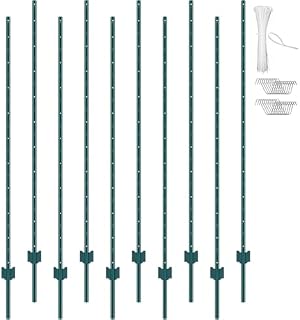 VEVOR 6 ft Fence PostCheck price on Amazon
 1 Pack 24 Inch Black Fence Post Driver with Handle 34LB IronCheck price on Amazon
 MTB Supply 1 Pack 24 Inch Fence Post Driver with Handle 12LBCheck price on Amazon
 Metal Fence Posts Heavy Duty U-Post Stakes for Wire FencingCheck price on Amazon
 Metal Garden Fence PostsCheck price on Amazon
 Zareba Standard T-Post Insulators for Electric FenceCheck price on Amazon
CoopKeeperHQ earns a commission if you buy through our links, at no added cost to you. Affiliate disclosure.
How deep post for fence should go
A fence post holds because the ground grips the buried part, so depth is the main thing you control. Two things set it: how deep the ground freezes where you live, and how long the post is. As general guidance only, a commonly quoted rule of thumb is to bury roughly one third to one half of the post length, and to make sure the bottom sits below the local frost depth so winter cannot heave it upward. The longer or taller the post, the more of it belongs underground.
Treat that rule as a starting point, not a fixed answer. Frost depth differs a great deal from one region to the next, so check the figure for your area with your county extension office or local building department before you dig. Go deeper where the soil is soft, wet or sandy, since loose soil grips less. Corner posts and gate posts carry the pull of the whole line, so they need more depth than a plain line post. Check local, HOA and state rules too, since fence height and setback rules vary by place.
What makes a post move
Frost, wind and weight move a post. Frost lifts a shallow post a little each winter, and the lift adds up over the years. Wind pushes on the wire and the post like a sail, and a tall run catches more wind than a low run. The gate hangs its weight on a single post, and every swing works that post loose. Animals pushing on the wire add to the load, so a run fence works harder than a garden fence that only marks a line.
Mark the line and dig the hole
Walk the line first and mark each post spot with a stake, then pull a string between the corner stakes so the line runs straight. Dig each hole wider at the bottom than at the top where the soil allows, so the fill locks the post in. Keep the holes clear of roots and rocks that would push the post off line, and pile the dug soil beside the hole for backfill. A hand auger or a powered digger saves effort in firm soil, and our gas post hole digger guide covers the powered kind.
Set the post plumb and brace it
Drop the post in the hole and check it from both sides with a level, since a post that leans at the bottom stays leaning at the top. Brace corner and gate posts with a diagonal brace to the next post, so the pull of the wire cannot draw them in. Fill around the post in layers, tamping each layer firm before you add the next, and leave the top of the fill mounded so rain runs away from the post. Do not hang wire or a gate until the fill is firm.
Steel posts are driven rather than dug. Our manual fence post driver guide and the steel T post driver picks cover that job, and the chain link fence post size guide helps if your run uses chain link.
Cutting the wire to fit
Once the posts stand, the wire has to be cut to the run with a cutter matched to the wire. Our chicken wire cutters for hardware cloth guide compares the options.
A simple post-setting checklist
- Local frost depth checked with the extension office or building department
- Line is marked and straight between the corner stakes
- Posts sit below the frost depth, with more buried at corners and gates
- Each post is plumb, checked from both sides
- Corner and gate posts are braced
- Fill is firm and mounded at the top
Wash your hands after handling birds, eggs or equipment, supervise children around the flock, and check local rules on flock size and roosters before you buy. For sick birds, call a poultry veterinarian or your state extension office. See CDC backyard poultry guidance. Read our Safety Disclaimer.
FAQ for the flock
How deep should a fence post go?
It depends on local frost depth and post length. As general guidance, a commonly quoted rule of thumb is roughly one third to one half of the post length underground, with the bottom below the frost depth. Check your local frost depth before you dig, and go deeper in soft, wet or sandy soil.
Do corner posts need more depth than line posts?
Yes. Corners and gates carry the pull of the wire, so they need more depth and a brace to the next post. A line post only carries the wire on either side of it.
Should I use concrete or gravel around the post?
Either can hold the post if the hole is deep enough. Gravel drains water away from the post and needs tamping firm in layers, while concrete sets hard and holds the post still. Mound the top of the fill so rain runs away from the post either way.
How do I keep the post straight while I fill the hole?
Brace the post to the next post or to stakes on both sides, check it with a level as you fill, and do not hang wire or a gate until the fill is firm.
Does soft or wet soil change how deep the post should go?
Yes. Loose, wet or sandy soil grips less, so bury more of the post there than you would in firm ground, and brace the corners and gates well.
More coop guides
- Manual Fence Post Driver: How to Choose the Right One
- Best Steel T Post Driver (2026): 5 Picks for Fence Lines
- Best Gas Post Hole Digger with Stand (2026)
- Chain Link Fence Post Size: Terminal, Line and Rail Sizes
- Best Ground Post Anchors (2026)
- T Post vs Wood Post: Which One Should You Buy?
- Best Chicken Wire Cutters for Hardware Cloth (2026)
See the chicken run and fencing guides for more on building the run.