How Much Oyster Shell Do Chickens Need
Laying hens take the oyster shell they need from a separate dish, so keep it full, dry and close to the feed.

On this page
Top picks at a glance
As an Amazon Associate I earn from qualifying purchases.
- 1
 2-Pack Metal Chicken Grit Feeder and Oyster Shell Feeder with9.6/10View on Amazon
- 2
 COZOFU Chicken Grit Oyster Shell Feeder Poultry Hanging9.5/10View on Amazon
- 3
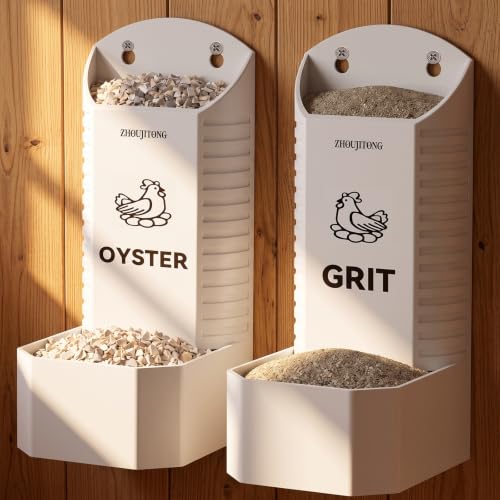 Oyster Shell and Grit Feeder Combo 2-Pack Hanging Gravity9.5/10View on Amazon
A laying hen slips off the roost at dawn, scratches in the run while the keeper fills the feeder, then settles into the nest box and leaves an egg with a shell that feels thin under the fingers. The question that follows is a plain question, and the answer is just as plain: how much oyster shell do chickens need has no set amount, because a laying hen takes what she needs when crushed shell sits in a separate dish beside the feed. Keep the dish full, keep it dry, and let the flock choose.
CoopKeeperHQ earns a commission if you buy through our links, at no added cost to you. Affiliate disclosure.
How much oyster shell do chickens need: the short answer
Free choice is the whole method. A dish of crushed oyster shell stands beside the feeder, and each hen pecks at it when her body calls for calcium. A hen in full lay visits the dish often, while a hen that has paused laying may pass it by for days. The keeper does not measure out a portion or mix shell into the ration; the dish does the work, and the flock sets the pace.
The dish should never sit empty for long. Check it when the feeder gets filled, top it up when the level drops low, and move it under cover when rain blows into the run. A heavy ceramic or metal dish stays put where a light dish tips over, and a dish at hen height stays cleaner than a dish set on the ground in the mud.
Why laying hens reach for oyster shell
An eggshell is built from calcium, and a laying hen draws on calcium with each egg she lays. Layer feed carries calcium in the ration, and the shell dish covers the rest, giving each hen a way to top up on the days she needs more. Hens that lay often reach for shell more often, and hens that lay less often leave it alone, which is why a shared dish suits a mixed flock better than a fixed amount in the feed.
Layer feed and shell work together. The feed carries the daily ration, and the shell dish gives each hen a top-up she can take or leave. Neither replaces the other, and the flock does best when both stand within reach through the laying season. The oyster shell vs layer feed guide explains how feed and shell work side by side.
Offer shell in a separate dish
Mixing shell into the feed sounds simpler, and it can cause trouble in a mixed flock. Hens that are not laying would eat shell with each beakful of feed, while a laying hen that needs more would have no way to take extra. A separate dish keeps the choice with the hen, and it keeps the feed ration the same for each bird in the flock.
Set the dish where the hens already gather, close to the feeder and the waterer, under cover from rain. A spot inside the coop near the pop door works well, and a sheltered corner of the run works too. Check the dish at feeding time, and refill it before it runs dry, so a hen never finds it empty on a laying morning.
Crushed shell, not powder
Crushed shell suits the dish better than powder. Pieces of shell sit in the dish where a hen can peck them up, while powder blows away in a breeze and turns to paste in the rain. The pieces also last longer in the dish, so the keeper refills less often. The oyster shell vs crushed eggshell comparison looks at the other shell a keeper might offer.
Buy shell sold as crushed oyster shell for poultry, and skip shell sold for garden beds or crafts, which may carry coatings or treatments the flock does not need. Store the bag in a dry place, and tip only what the dish holds, so the rest stays clean.
What to watch in the nest box
Shells that crack under a light touch point to the same check: look at the dish. Rough patches and eggs with no shell at all have other causes too, so if they keep showing up, ask a poultry vet or the state extension office. A dish that ran empty, a dish that filled with rain, or a dish that sat behind the feeder where hens rarely visit can leave a flock short. Refill the dish, move it into the open, and give the flock time to settle back into a rhythm.
When shells stay thin after the dish has been kept full and dry, the cause may sit elsewhere, and a poultry vet or the state extension office can advise on the flock and the ration. Do not reach for a new supplement on a guess, and do not change the feed in the same week as the shell routine, or the keeper will not know which change made the difference.
Oyster shell is not grit
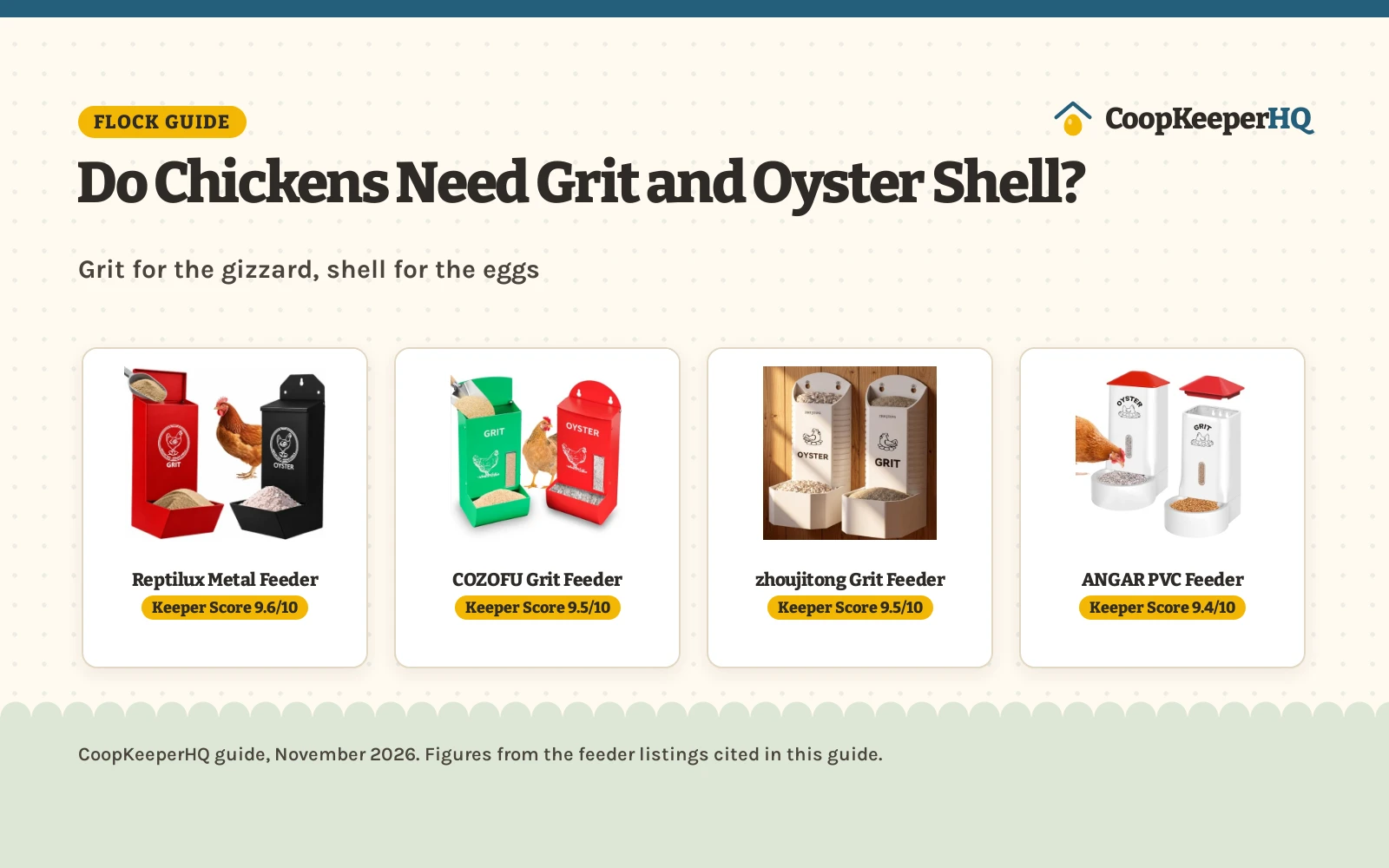
Grit and oyster shell look alike in the dish, and they do different jobs. Grit is small hard stone that sits in the gizzard and grinds feed, while oyster shell breaks down and supplies calcium for the shell. Many keepers offer both: grit for the feed, and shell for the eggs. The grit and oyster shell guide sets out the difference in full.
A simple routine for the shell dish
A short routine keeps the shell dish working without adding a chore to the day. Look at the dish when the feeder gets filled, and keep the routine the same through the laying season.
- Dish stands beside the feeder, under cover from rain
- Dish stays full enough that a hen never finds it empty
- Shell stays dry, and wet shell gets tipped out
- Dish sits at hen height, clear of mud and droppings
- Dish holds crushed pieces, not powder
- Nest box shells get a glance at egg collection time
For the full feeding routine, see the how to feed oyster shell to chickens guide.
Birds, breed size, run time and climate in; coop floor, run space, roost length and nesting boxes out.
Wash your hands after handling birds, eggs or equipment, supervise children around the flock, and check local rules on flock size and roosters before you buy. For sick birds, call a poultry veterinarian or your state extension office. See CDC backyard poultry guidance. Read our Safety Disclaimer.
FAQ for the flock
Do chickens eat oyster shell every day?
Laying hens visit the dish on the days they lay, and they may pass it by on the days they rest. The dish stays full through the laying season, and the hens set their own rhythm.
Can chicks eat oyster shell?
Chicks and young growers do not lay, so they do not need a shell dish. Keep the dish with the laying hens, out of the chicks’ reach, and let the young birds grow on their starter ration.
Should oyster shell go in the feed?
No. Shell mixed into the feed reaches hens that do not need it and gives a laying hen no way to take extra. A separate dish keeps the choice with the hen.
What happens if the shell dish runs empty?
Hens keep laying, and the shells may come out thin or soft until the dish gets filled again. Refill the dish, check that it sits under cover, and watch the nest box over the following days.
Does oyster shell replace layer feed?
No. Layer feed is the daily ration, and shell is a top-up beside it. A hen that eats well and has shell within reach has what she needs for shells that hold their shape.
More coop guides
- How to Feed Oyster Shell to Chickens
- Do Chickens Need Grit and Oyster Shell?
- Oyster Shell vs Layer Feed: Which One Should You Buy?
- Oyster Shell vs Crushed Eggshell: Which One Should You Buy?
- How Much Do Chickens Eat? Daily and Monthly Feed Math
For feed amounts through the flock, see how much do chickens eat.