Oyster Shell vs Layer Feed: Which One Should You Buy?
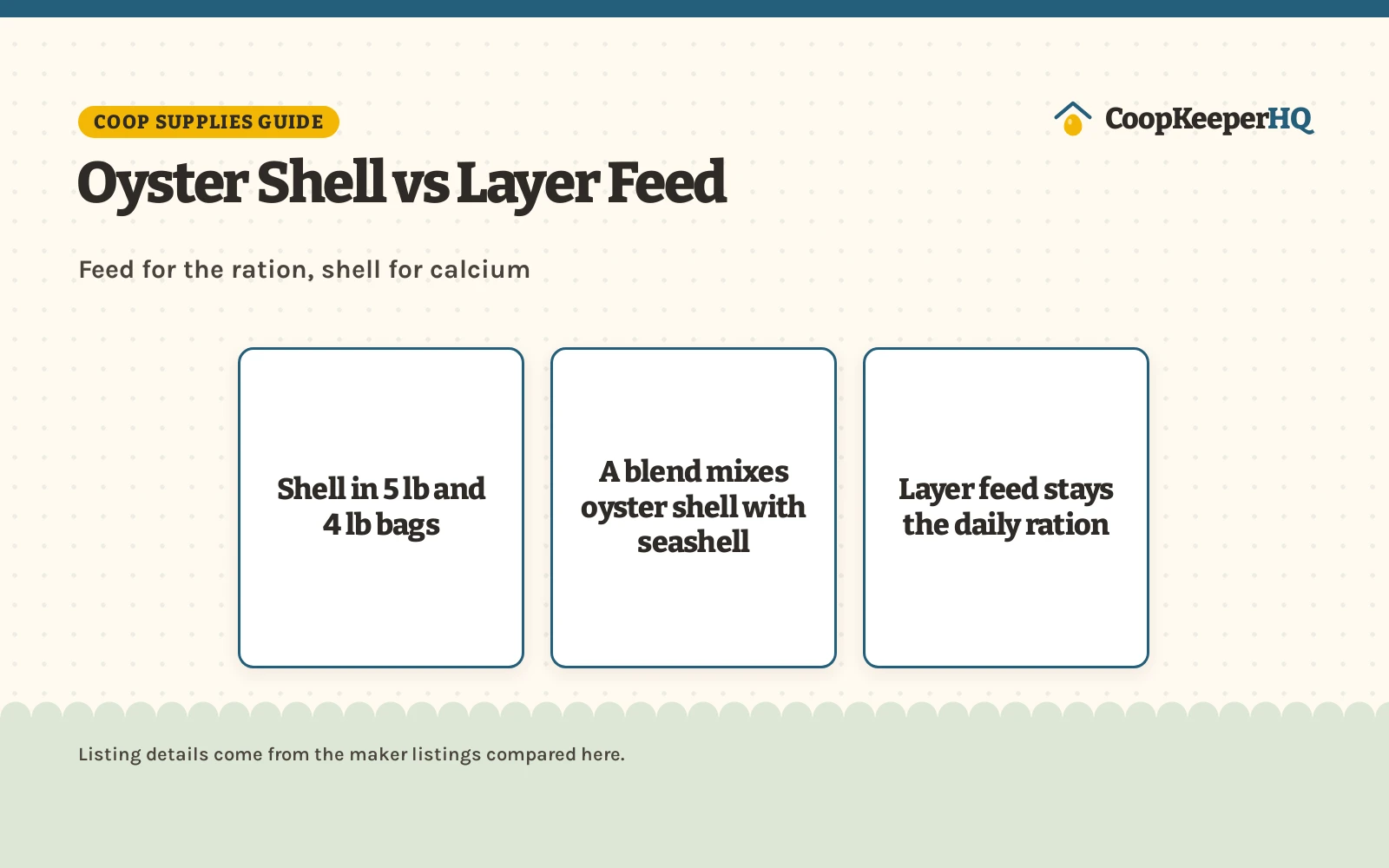
Layer feed is the daily ration and oyster shell is the calcium supplement beside it, so the choice is not either or but how each serves the flock.

On this page
Top picks at a glance
As an Amazon Associate I earn from qualifying purchases.
- 1
 2-Pack Metal Chicken Grit Feeder and Oyster Shell Feeder with9.6/10View on Amazon
- 2
 Scratch and Peck Feeds9.6/10View on Amazon
- 3
 Scratch and Peck FeedsView on Amazon
- 4
 Small Pet Select Flaked Oyster ShellView on Amazon
- 5
 Homestead Harvest Coastal Oyster Shell Calcium SupplementView on Amazon
- 6
 Oyster Shell Flour 5LBView on Amazon
Morning chores in the run usually end at the feeder, and that is where the oyster shell vs layer feed question comes up. Layer feed is the daily ration, and oyster shell is the calcium supplement offered beside it, so each does a different job and the flock gets each in its own place. This guide compares what the listings state, so you can tell a shell listing from a feed listing and pick shell that suits your hens and ducks.
Other options for the coop
 Scratch and Peck FeedsCheck price on Amazon
 Small Pet Select Flaked Oyster ShellCheck price on Amazon
 Homestead Harvest Coastal Oyster Shell Calcium SupplementCheck price on Amazon
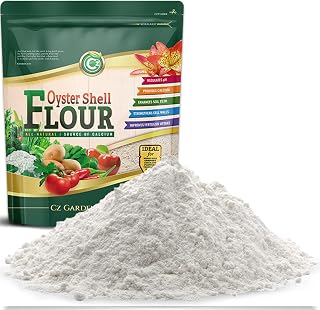 Oyster Shell Flour 5LBCheck price on Amazon
CoopKeeperHQ earns a commission if you buy through our links, at no added cost to you. Affiliate disclosure.
Oyster shell vs layer feed: what each one does
Layer feed covers the daily ration. The Scratch and Peck Feeds listing describes its feed side as a balanced and complete diet for laying chickens and ducks, enriched with protein from organic grains. Oyster shell covers calcium. Each shell listing here describes its product as a calcium supplement that supports strong eggshells, offered beside the ration rather than in place of it. When a bag reads like feed and is sold as shell, or shell is treated as a ration, the flock ends up with the wrong job covered, so reading the title and the bullets together matters more than reading either alone.
Shell listings compared
The listings below are in the order they fit the question, from the clearest shell listing to the listing that mixes shell and feed language. Form, ingredients and sourcing separate them more than bag size does.
Small Pet Select Flaked Oyster Shell comes in a 5 lb bag of 100% flaked oyster shell, with no seashells or fillers, according to its title and bullets. The listing states uniformly sized flakes that are easy for chickens and ducks to consume, a low-dust formula that keeps more product usable, and sourcing from Pacific Pearl, a name in oyster shell calcium since 1906. It names laying hens, chickens, ducks and poultry. A detail to read with care: the spec table lists Flavor as Seashell, while the title and bullets state 100% oyster shell with no seashells, so the title and bullets carry the listing here. Package dimensions are listed as 13.78 x 6.57 x 3.03 inches.
Small Pet Select Oyster and Seashell Mix comes in a 5 lb bag as a flaked blend of oyster shell and seashell. The listing states UK sourced oyster and sea shells, a form that is easily digestible, and a mix that supports strong eggshells for laying hens, chickens and ducks. Its spec table names all life stages and all breed sizes, and gives dimensions of 6 x 12 x 16 inches. Where the pure flaked listing suits a keeper who wants shell and nothing else, this blend suits a keeper who is happy for seashell to sit in the mix.
Scratch and Peck Feeds Oyster Shell comes in a 4 lb pouch in granule form, which sets it apart from the flaked listings above. The listing states recyclable and compostable packaging and sourcing in the Pacific Northwest, in the USA and Canada. Read it with care, though: its bullets describe a feed enriched with 16% protein from organic grains and a balanced and complete diet, while its title sells oyster shell for eggshell strength. Taken on its title, it is a shell listing with feed language mixed in, and the granule form is the detail that matters for a keeper comparing flake against granule. Dimensions are listed as 6.5 x 4.5 x 10.5 inches.
How to offer shell beside feed
Keep shell in its own spot beside the feeder, so hens take it apart from the ration. Refill it when it runs low, and keep the bag dry between refills. If the flock ignores a new shell, check the form before changing anything else: the listings offer flake and granule forms, and a switch of form is one change to try. For a closer look at ration options, see the layer feed pellets guide.
What to check on a shell listing
- Form: flake or granule, as the listing states it
- Ingredients: pure oyster shell, or a blend with seashell
- Bag weight and package dimensions, as the listing states them
- Sourcing statements, such as UK sourced or Pacific Northwest sourced shell
- Agreement between the title, the bullets and the spec table
A listing that agrees with itself is easier to trust than a listing that mixes feed claims into a shell title. Where the title and the spec table disagree, the title and bullets carry the listing, as with the Flavor entry noted above.
How much feed your flock eats a day and a month, how long a bag lasts, and what it costs.
Wash your hands after handling birds, eggs or equipment, supervise children around the flock, and check local rules on flock size and roosters before you buy. For sick birds, call a poultry veterinarian or your state extension office. See CDC backyard poultry guidance. Read our Safety Disclaimer.
FAQ for the flock
Is oyster shell a replacement for layer feed?
No. Layer feed covers the daily ration, and oyster shell is a calcium supplement offered beside it. The listings here describe shell as a supplement for eggshell strength, not as a ration, so the feeder still needs its feed.
Can chickens and ducks share the same oyster shell?
The listings here name laying hens, chickens and ducks, and the blend listing names all breed sizes.
What is the difference between flaked shell and granule shell?
Flaked shell comes as flakes, and the Small Pet Select flaked listing states uniformly sized flakes with a low-dust formula. Granule shell comes in granule form, as the Scratch and Peck Feeds pouch states. Form is a matter of what the flock takes readily, and the listing form is the detail to compare.
Does a shell blend with seashell differ from pure oyster shell?
Yes. The Small Pet Select blend mixes oyster shell with seashell, while the Small Pet Select flaked listing states 100% flaked oyster shell with no seashells or fillers. The blend suits a keeper who accepts seashell in the mix, and the pure listing suits a keeper who wants shell alone.
What should I check on a shell listing before buying?
Check the form, the ingredients, the bag weight and whether the title, bullets and spec table agree. A listing that mixes feed language into a shell title, or a spec table entry that disagrees with the title, deserves a second read before it goes in the basket.
More coop guides
- Oyster Shell vs Poultry Grit: Which One Should You Buy?
- Best Layer Feed Pellets (2026): 5 Bags Compared
- Best Chicken and Duck Feed (2026): 5 Feeds Compared
- Best Type of Chicken Feeder: 5 Backyard Picks (2026)
See the coop supply guides.