How to Feed Oyster Shell to Chickens
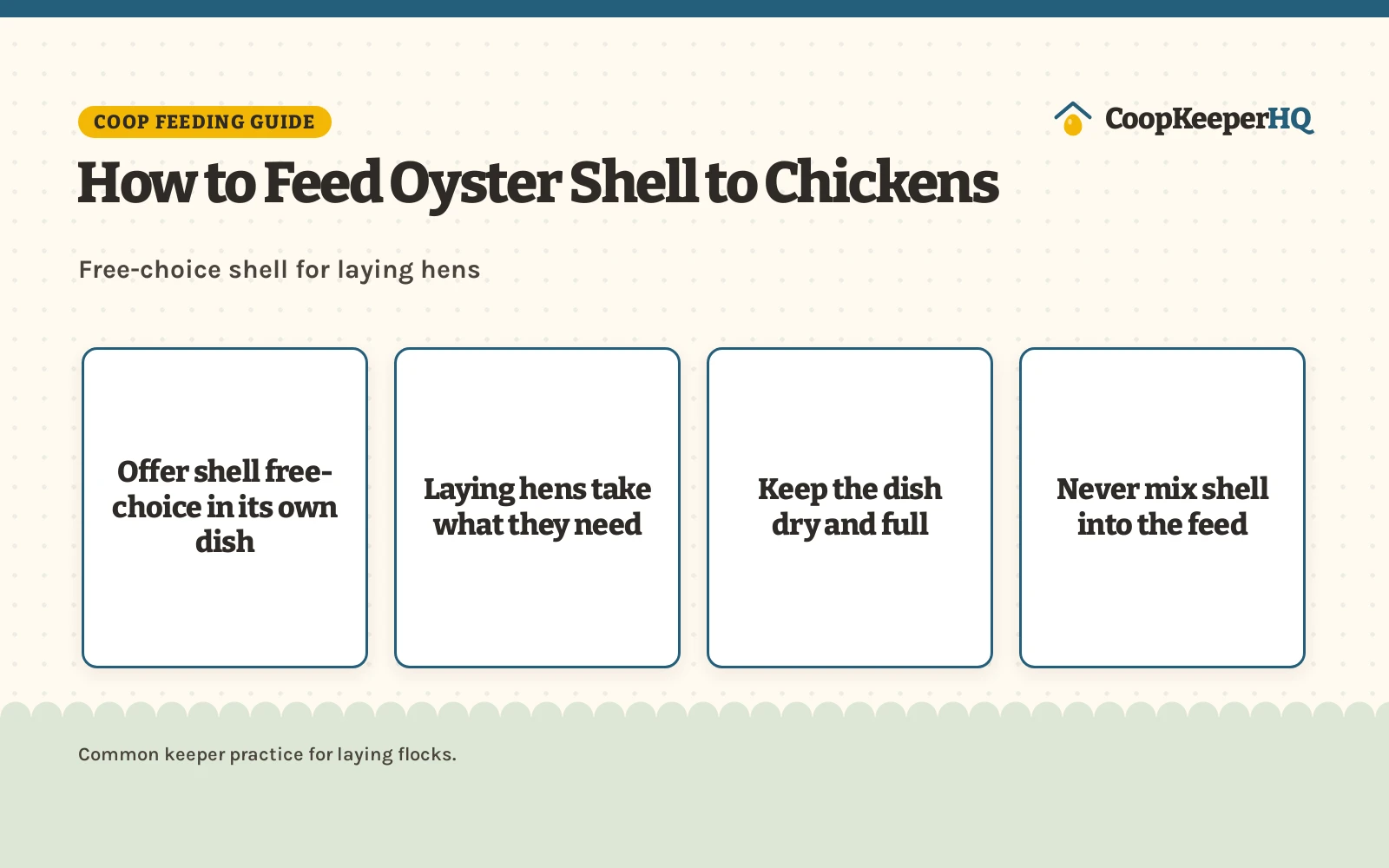
Crushed oyster shell offered free-choice in a dish of its own lets laying hens take the calcium they need for their eggshells, without forcing it on birds that need little of it.

On this page
Top picks at a glance
As an Amazon Associate I earn from qualifying purchases.
- 1
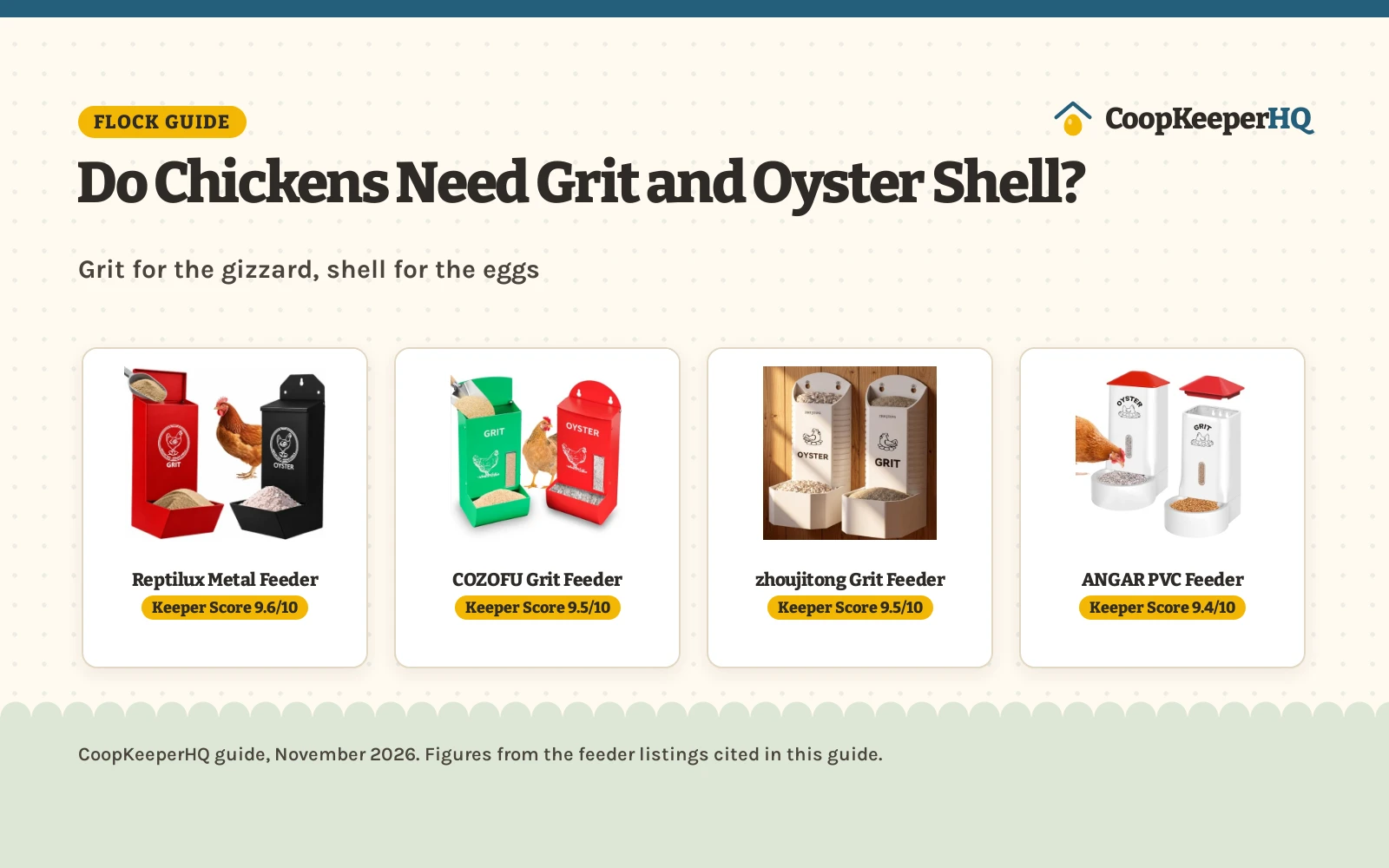
 2-Pack Metal Chicken Grit Feeder and Oyster Shell Feeder with9.6/10View on Amazon
- 2
 COZOFU Chicken Grit Oyster Shell Feeder Poultry Hanging9.5/10View on Amazon
- 3
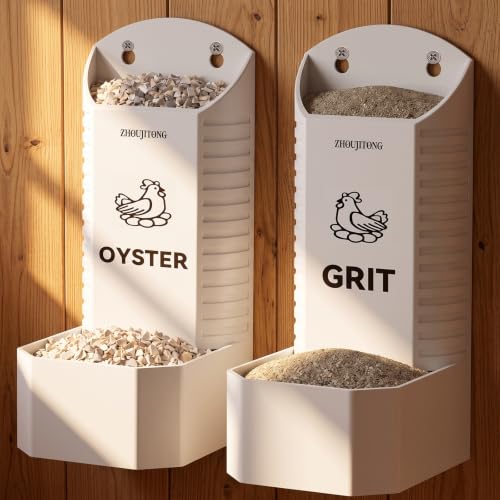 Oyster Shell and Grit Feeder Combo 2-Pack Hanging Gravity9.5/10View on Amazon
- 4
 Scratch and Peck FeedsView on Amazon
- 5
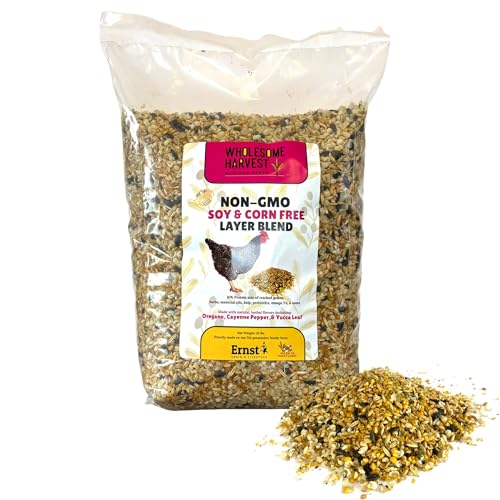 Wholesome Harvest Non-GMO Soy and Corn Free Whole Grain LayerView on Amazon
- 6
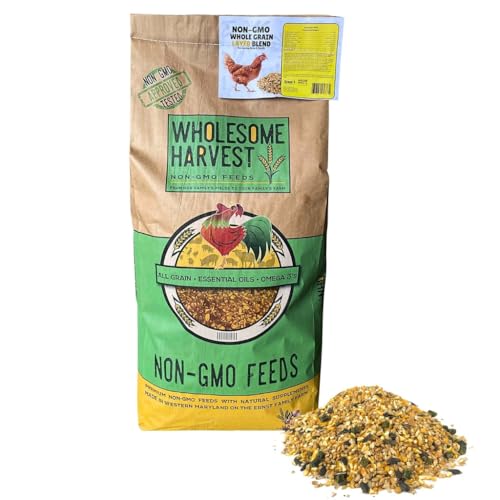 Wholesome Harvest Non-GMO Whole Grain Layer Blend 16%View on Amazon
A laying hen builds every eggshell from the calcium she takes in, and the feed in the trough does not always carry enough on its own. That is where a dish of crushed oyster shell earns its place beside the feeder. How to feed oyster shell to chickens is simple: offer it free-choice in a dish of its own, keep it dry and full, and let the hens that are laying take what they need.
Other options for the coop
 Scratch and Peck FeedsCheck price on Amazon
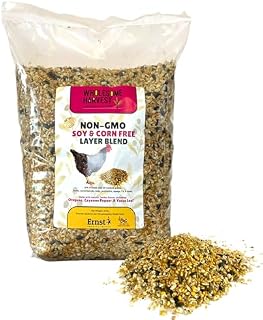 Wholesome Harvest Non-GMO Soy and Corn Free Whole Grain LayerCheck price on Amazon
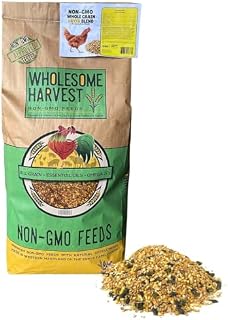 Wholesome Harvest Non-GMO Whole Grain Layer Blend 16%Check price on Amazon
CoopKeeperHQ earns a commission if you buy through our links, at no added cost to you. Affiliate disclosure.
How to feed oyster shell to chickens: offer it free-choice
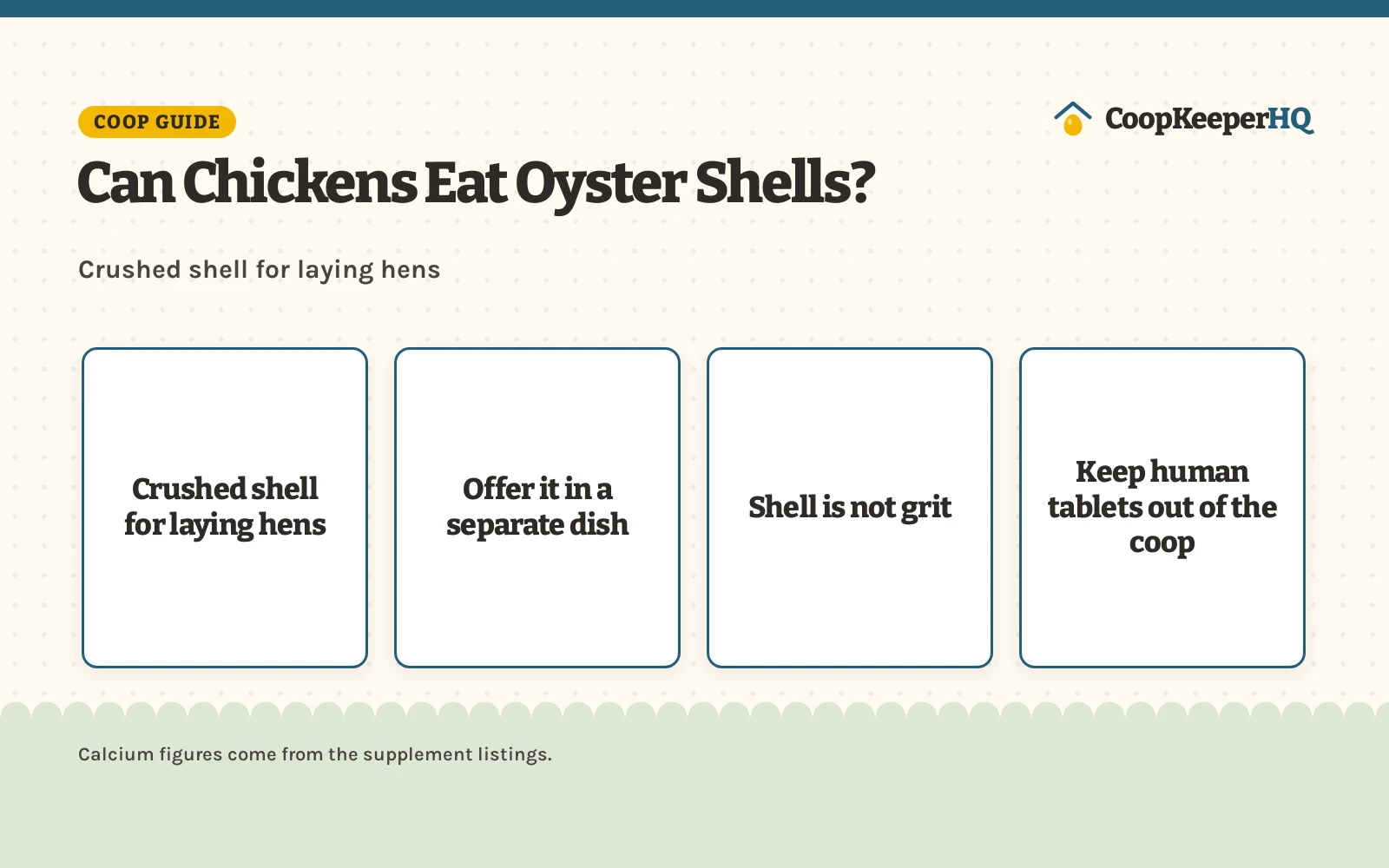
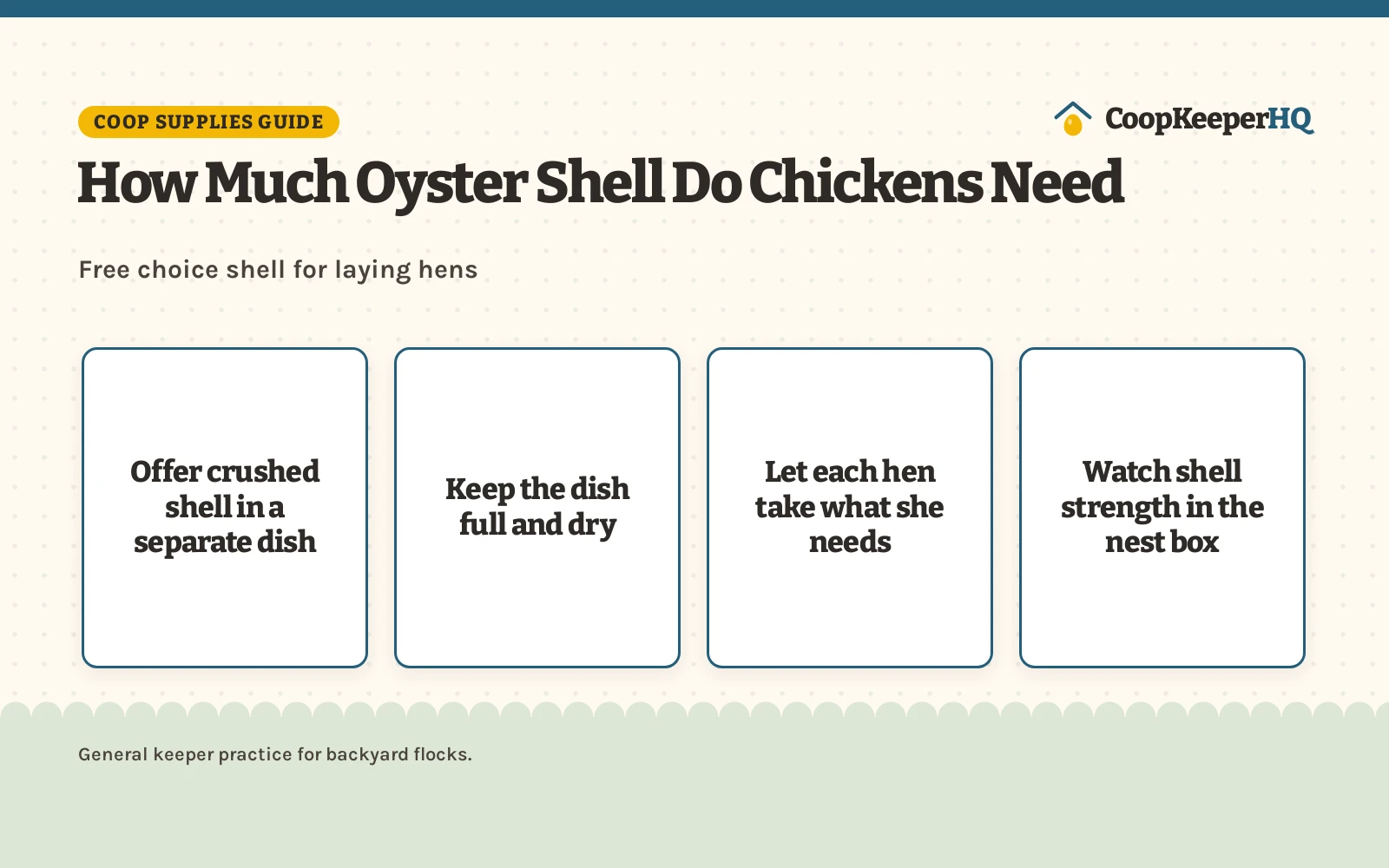
Put the shell in a shallow dish or a small feeder of its own, set where the hens walk past it on the way to the nest boxes or the run. Hens that are laying will pick at it through the day, and hens that are not laying mostly leave it alone. That is the point of feeding it apart from the main feed: each bird takes what she needs. Refill the dish when it runs low, and tip out any shell that has gone damp or dirty before you top it up.
What oyster shell is for
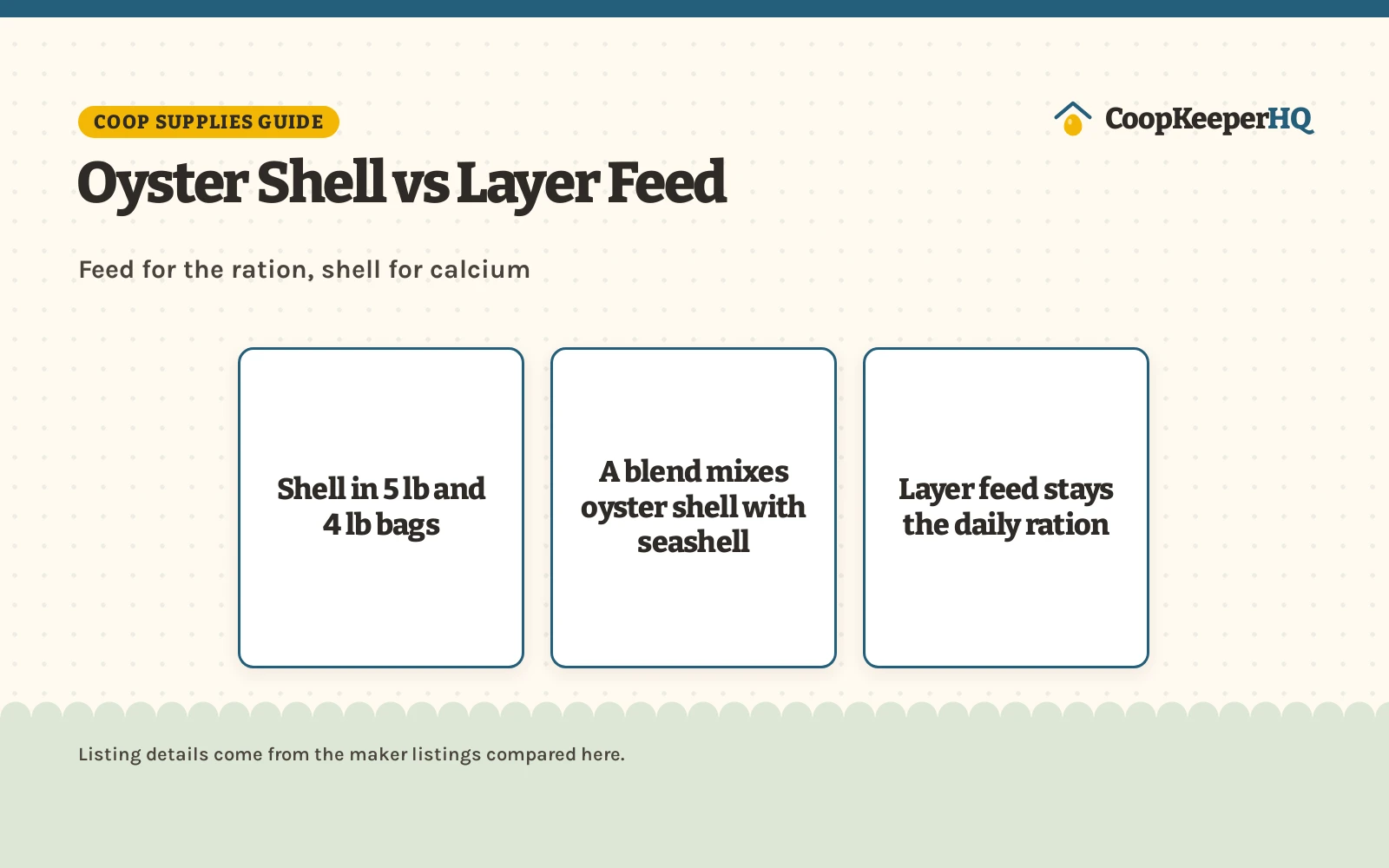
Oyster shell is crushed shell from oysters, sold as a calcium source for laying hens. The hen uses the calcium to form the shell around each egg, so a laying flock goes through shell steadily while it is in lay. A hen that is not laying, a young pullet and a rooster have little use for it, which is another reason to offer it on the side rather than mixed into the feed. Layer feed already carries calcium, and the oyster shell vs layer feed guide explains how the two work together.
Keep the shell in its own dish
A heavy dish that cannot tip works well, and a wall-mounted feeder keeps the shell out of the bedding. Set it under cover so rain cannot reach it, and away from the waterer so splashes do not soak it. Wet shell clumps and goes off, and hens are less likely to eat shell that has sat in damp bedding. Check the dish when you collect eggs, and scoop out anything that looks dirty before you refill. Our oyster shell for laying hens guide compares the crushed shell on offer.
When hens start needing shell
Pullets coming into lay are the birds that need it, and a laying flock needs a dish kept full through the laying season. Hens lay less in the short days of winter, and the dish will empty more slowly then; that is normal, and the shell should still stay out so it is there when laying picks up again. Keep the dish full through spring and summer, when most flocks lay hardest.
What size shell to offer
Crushed oyster shell comes in pieces of mixed size, and the pieces should be big enough for a hen to pick up and small enough to swallow. Fine powder blows away and gets lost in the bedding, and very coarse chunks may sit untouched. If the bag you buy looks more like powder than shell, look for a coarser crush next time. Never offer the human calcium tablets sold as oyster shell supplements: those are made for people, not for hens, and they belong nowhere near the coop.
Do not mix it into the feed
Mixing shell into the feed forces every bird to eat it, including roosters and young birds that have little use for it, and it leaves you guessing how much each hen gets. A dish on the side lets the laying hens regulate themselves. It also keeps the feed itself unchanged, so a change in the feed is not tangled up with the shell.
A simple shell checklist
- Shell sits in a dish of its own, apart from the feed
- Dish stays full through the laying season
- Shell stays dry, under cover and away from the waterer
- Damp or dirty shell is tipped out before refilling
- Human calcium tablets are never offered to hens
Birds, breed size, run time and climate in; coop floor, run space, roost length and nesting boxes out.
Wash your hands after handling birds, eggs or equipment, supervise children around the flock, and check local rules on flock size and roosters before you buy. For sick birds, call a poultry veterinarian or your state extension office. See CDC backyard poultry guidance. Read our Safety Disclaimer.
FAQ for the flock
Do all chickens need oyster shell?
No. Laying hens are the birds that use it. Hens that are not laying, young pullets and roosters have little use for it, which is why the shell goes in a dish of its own.
Can I mix oyster shell into the feed?
It is better not to. Mixing it in forces every bird to eat it, and a dish on the side lets the laying hens take what they need.
What is the difference between oyster shell and poultry grit?
Oyster shell is a calcium source that dissolves as the hen uses it, while poultry grit is hard stone that stays in the gizzard to grind feed. They do different jobs, and the oyster shell vs poultry grit guide explains the difference.
My hens are not eating the shell. Is something wrong?
Not usually. Hens eat shell when they are laying, and a flock that is moulting or resting in the short days will take little. Keep the dish full and dry, and if the birds look unwell or the shells stay thin, ask a poultry vet or your state extension office.
Can I use crushed eggshell instead?
Some keepers dry and crush their own eggshells, and the oyster shell vs crushed eggshell guide compares the two. Oyster shell from the feed store is the simpler choice, since it comes ready to offer.
More coop guides
- Best Oyster Shell for Laying Hens (2026)
- Oyster Shell vs Crushed Eggshell: Which One Should You Buy?
- Oyster Shell vs Poultry Grit: Which One Should You Buy?
- Oyster Shell vs Layer Feed: Which One Should You Buy?
- Best Layer Feed Pellets (2026): 5 Bags Compared
- Best Chicken Nesting Box: Roll-Away and Open Picks
See the coop supply guides and the oyster shell for laying hens picks.