Oyster Shell vs Poultry Grit: Which One Should You Buy?
Oyster shell vs poultry grit: what each one does for a laying flock, with four oyster shell listings ranked from the most complete flock option to the smallest.

On this page
Top picks at a glance
As an Amazon Associate I earn from qualifying purchases.
- 1
 2-Pack Metal Chicken Grit Feeder and Oyster Shell Feeder with9.6/10View on Amazon
- 2
 Manna Pro Poultry Grit with Probiotics9.5/10View on Amazon
- 3
 COZOFU Chicken Grit Oyster Shell Feeder Poultry Hanging9.5/10View on Amazon
- 4
 Manna Pro Crushed Oyster Shell Calcium SupplementView on Amazon
- 5
 Oyster ShellsView on Amazon
- 6
 Scratch and Peck FeedsView on Amazon
- 7
 Small Pet Select Flaked Oyster ShellView on Amazon
- 8
 Homestead Harvest Coastal Oyster Shell Calcium SupplementView on Amazon
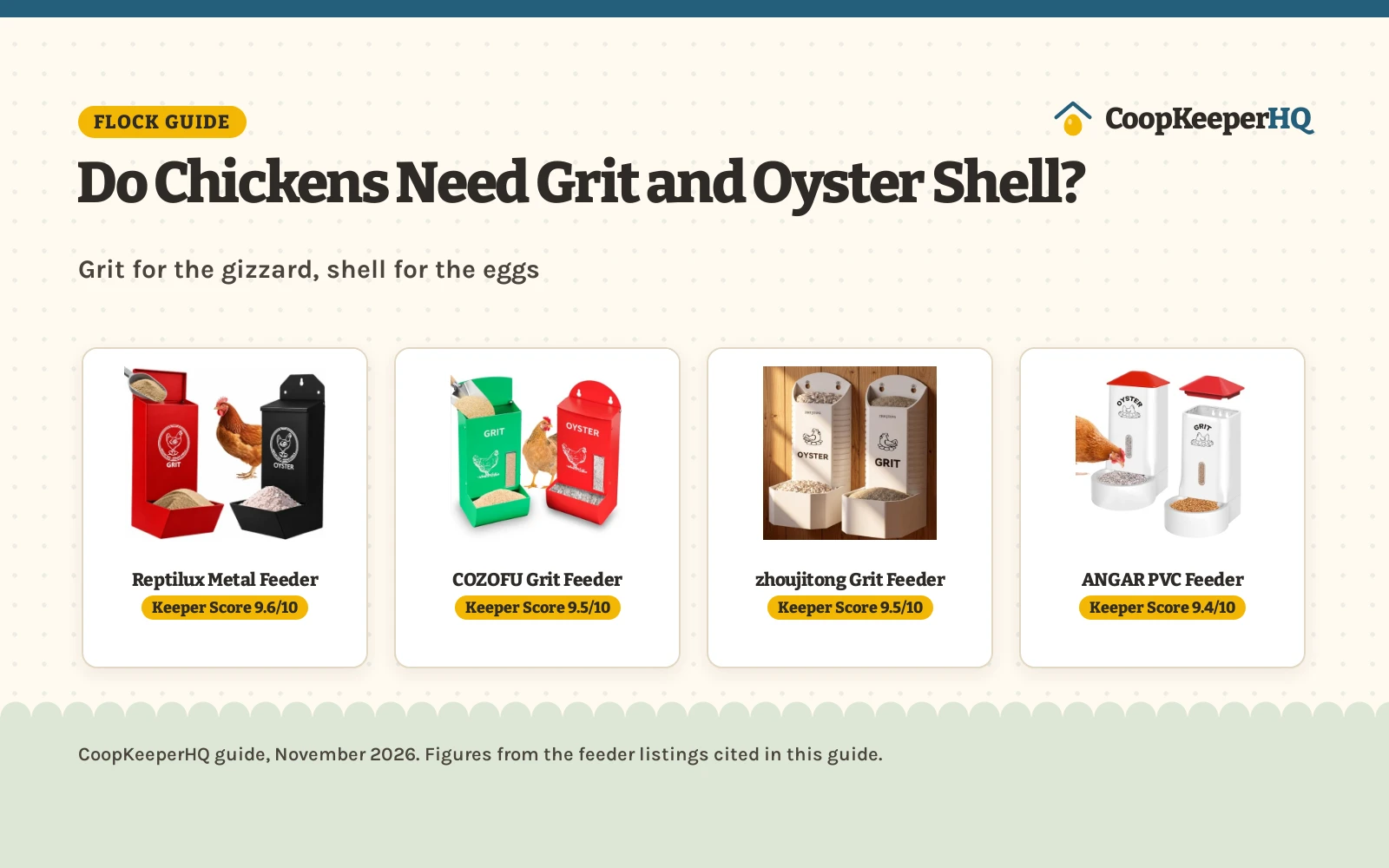
Finding a thin-shelled egg in the nest box is the moment most keepers start asking about oyster shell vs poultry grit. The short answer: oyster shell is a calcium supplement that the listings say supports strong eggshells, while poultry grit is insoluble crushed stone that helps the gizzard grind feed. They do different jobs, and a laying flock usually needs both offered separately.
Other options for the coop
 Manna Pro Crushed Oyster Shell Calcium SupplementCheck price on Amazon
 Oyster ShellsCheck price on Amazon
 Scratch and Peck FeedsCheck price on Amazon
 Small Pet Select Flaked Oyster ShellCheck price on Amazon
 Homestead Harvest Coastal Oyster Shell Calcium SupplementCheck price on Amazon
CoopKeeperHQ earns a commission if you buy through our links, at no added cost to you. Affiliate disclosure.
Oyster shell vs poultry grit: the short answer
Oyster shell dissolves in the digestive tract and supplies calcium; the listings tie it to eggshell formation and bone health. Grit does not dissolve and supplies no nutrients; it sits in the gizzard and grinds feed. Because they do different jobs, one cannot replace the other, and skipping either one leaves a gap the other cannot fill. Our best poultry grit picks cover the grit side of the question.
| Oyster shell | Poultry grit | |
|---|---|---|
| What it is | Crushed oyster shells, a calcium source | Insoluble crushed stone |
| Job | Calcium for eggshell formation, per the listings | Helps the gizzard grind feed |
| Suits | Laying hens and ducks | Birds eating whole grains or foraging |
When each one matters most
Oyster shell matters as pullets near lay and once hens are laying, since the listings tie its calcium to eggshell formation. The Manna Pro listing is crushed to pullet size and names pullets and young laying hens, while the Small Pet Select and Scratch and Peck listings name laying hens, chickens and ducks. Grit matters whenever birds eat anything tougher than crumbles or mash: whole grains, scratch, garden scraps and the seeds and fibrous bits picked up while foraging all need grinding in the gizzard. Birds on a complete pelleted feed alone get less use from grit, but most backyard flocks scratch and forage enough for it to earn its dish.
What the listings say oyster shell does
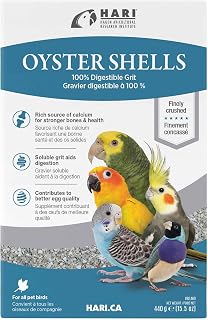
Every oyster shell listing here describes the same core purpose: a natural calcium source that supports strong eggshells. The Manna Pro listing is the most detailed, naming pullets and young laying hens, heat treatment for purity, and a pullet-size crush for easy eating. The Manna Pro listing adds bone health and skeletal development for pullets and young laying hens, and notes the shells are heat-treated for purity. The Small Pet Select listing describes a flaked oyster and seashell mix for laying hens, chickens and ducks. The Scratch and Peck listing describes pure flaked oyster shells with no bleach, coral or filler shells. The Hagen listing is the outlier: a 15.5 oz bottle aimed at caged birds and small breeds rather than a laying flock.
The four oyster shell picks, ranked
The four listings below are all oyster shell products, ranked from the most complete flock option to the most limited. No grit products were in this set, so the grit side is covered by the comparison above. Every figure comes from the listing.
Manna Pro Crushed Oyster Shell. The most complete option for a laying flock: six 5 lb bags, 30 lb in total, crushed to pullet size. The listing states heat treatment for purity and ties the calcium to strong eggshells, bone health and skeletal development in pullets and young laying hens.
Small Pet Select Oyster and Seashell Mix. A 5 lb bag of flaked oyster and seashell mix for laying hens, chickens and ducks. The listing states UK sourced shells and describes the flakes as easily digestible, with stronger eggshells and better egg quality as the stated benefits.
Scratch and Peck Feeds Oyster Shell. A 4 lb pouch of flaked oyster shell for chickens and ducks. The listing states no bleach, coral or filler shells, and the pouch itself is recyclable and compostable, per the listing.
Hagen Oyster Shells. A 15.5 oz bottle, the smallest option here by far, with the listing aimed at caged birds and small breeds. The stated benefits match the others, calcium for bones and hard-shelled eggs, but the size and audience make it a poor fit for a backyard laying flock.
Sizing the buy
A laying flock goes through oyster shell steadily, so match the bag to the birds. The Manna Pro six-pack totals 30 lb of shell crushed to pullet size, the only listing that names heat treatment for purity, and it is built for pullets and young laying hens, so it suits a larger laying flock that refills dishes often. The Small Pet Select 5 lb bag is a flaked oyster and seashell mix, UK sourced and described as easily digestible, a middle option for a small flock of chickens and ducks. The Scratch and Peck 4 lb pouch is flaked shell with no bleach, coral or filler, and the pouch itself is recyclable and compostable, which suits keepers who watch packaging waste. The Hagen 15.5 oz bottle is aimed at caged birds and small breeds, so it only fits a tiny flock. Offer shell and grit in separate dishes so each bird takes what it needs, and keep the bags sealed and dry between refills.
How to offer them
Offer oyster shell and grit in separate dishes, not mixed into the feed, so each bird takes what it wants and the non-layers in a mixed flock are not forced onto the calcium. A dish or a feeder made for the purpose keeps the supplement clean and dry; see our chicken feeder for grit picks for dispensers. Refill when the dish runs low, keep the bags sealed and dry between refills, and watch which dish empties faster to learn what your flock reaches for.
Wash your hands after handling birds, eggs or equipment, supervise children around the flock, and check local rules on flock size and roosters before you buy. For sick birds, call a poultry veterinarian or your state extension office. See CDC backyard poultry guidance. Read our Safety Disclaimer.
FAQ for the flock
Do laying hens need both oyster shell and grit?
They serve different purposes. The listings describe oyster shell as a calcium source for eggshells, while grit is insoluble stone that stays in the gizzard to grind feed. A laying flock benefits from both offered separately.
How much oyster shell do these bags hold?
The Manna Pro listing is six 5 lb bags for 30 lb in total. Small Pet Select lists 5 lb, Scratch and Peck lists 4 lb, and the Hagen bottle is 15.5 oz.
Is oyster shell the same as poultry grit?
No. Oyster shell dissolves and supplies calcium, per the listings. Grit stays hard in the gizzard to grind feed and supplies no nutrients.
Which birds is oyster shell for?
The Manna Pro listing names pullets and young laying hens, and the Small Pet Select and Scratch and Peck listings name laying hens, chickens and ducks. The Hagen listing is aimed at caged birds and small breeds rather than a laying flock.
Can ducks have oyster shell?
The Small Pet Select and Scratch and Peck listings name chickens and ducks as the audience. The Hagen listing is aimed at caged birds rather than a laying flock.
More coop guides
- Best Poultry Grit (2026): 5 Picks for Your Flock
- Chicken Feeder for Grit (2026): 5 Top Dispensers Compared
- How Much Do Chickens Eat? Daily and Monthly Feed Math
- Backyard Chicken Supplies List: What Beginners Need (2026)
See the coop supply guides and the feeder and waterer picks.