How to Trap a Rat Near Chicken Coops
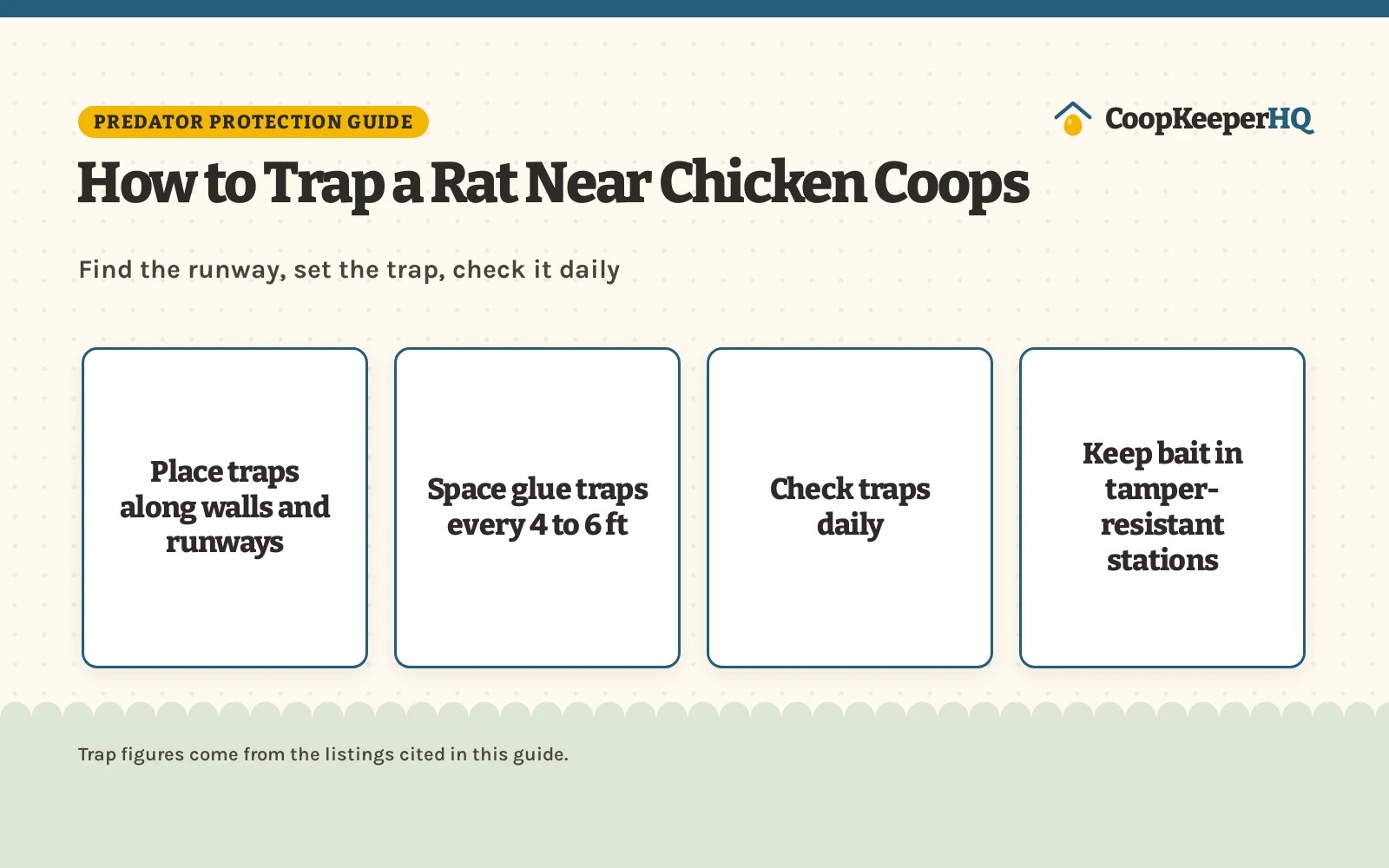
Find where rats travel around the coop, set the right trap on that path and check it daily to keep the flock safe.

On this page
Top picks at a glance
As an Amazon Associate I earn from qualifying purchases.
- 1
 TRATPER Covered Rat Snap Trap with Dual-Entry Tunnel9.6/10View on Amazon
- 2
 Guarden Rat Trap 6 Pack9.6/10View on Amazon
- 3
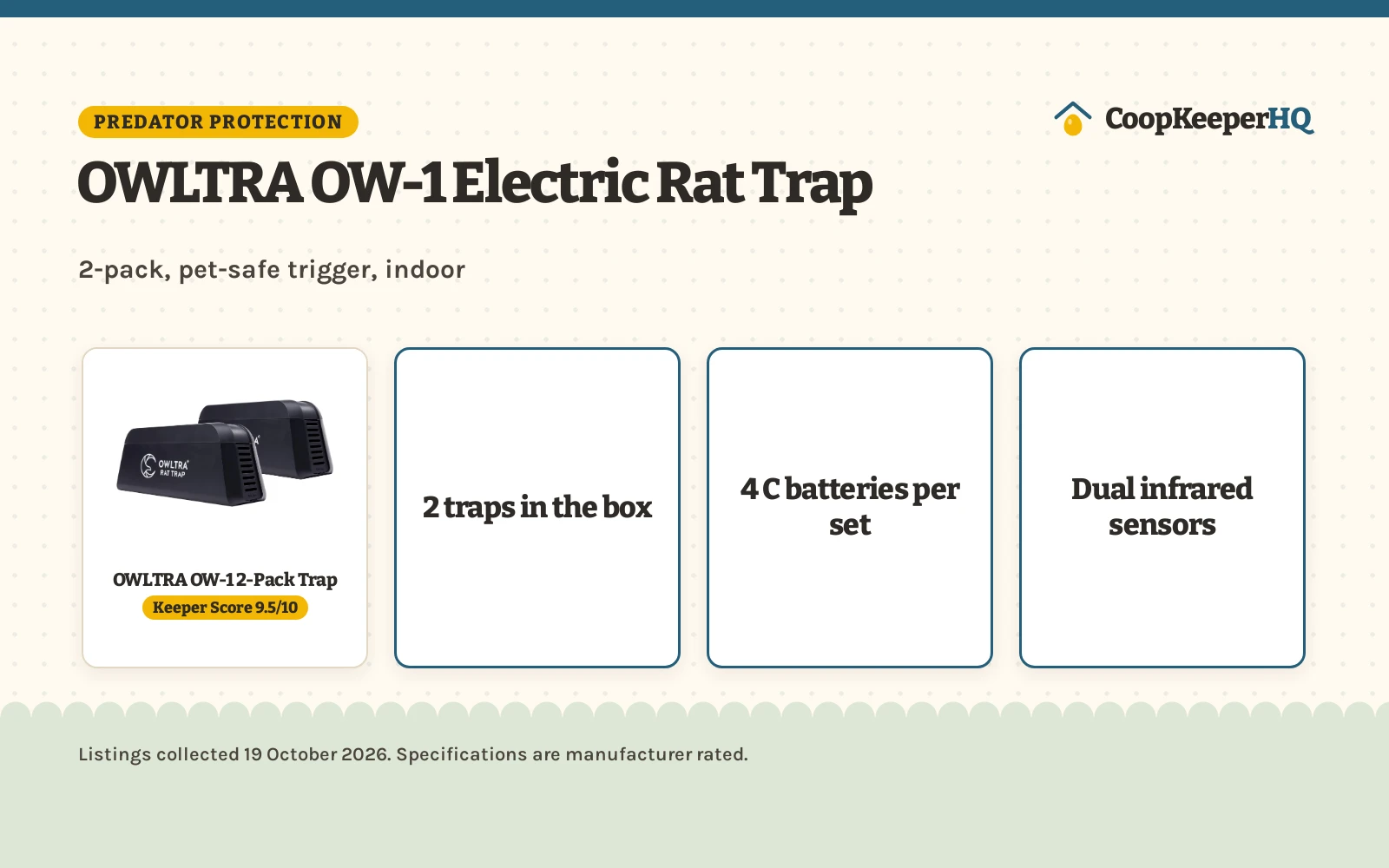
 OWLTRA OW-1 Indoor Electric Rat Trap 2PCS9.5/10View on Amazon
You go out at dusk to shut the pop door and find feed scattered across the floor, droppings along the wall and a gnawed corner on the feed bin. Rats have found the coop, and they will keep coming back while feed and water sit out in the open. Learning how to trap a rat near a chicken coop starts with finding where the rats travel, then placing the right trap on that path and checking it every day.
CoopKeeperHQ earns a commission if you buy through our links, at no added cost to you. Affiliate disclosure.
How to trap a rat: start by finding where rats travel
Rats are creatures of habit, and they run the same routes night after night. Look for droppings along the base of the coop wall, greasy rub marks where fur brushes the same spot, burrow holes near the run fence and feed spilled under the feeder. A trail of droppings or a worn path in dusty bedding tells you more than one sighting. Set your traps on those routes, not in the middle of open ground, because rats hug walls and cover and avoid crossing bare space. Our rat trap type guide compares the main designs before you buy.
Pick the trap type that fits the spot
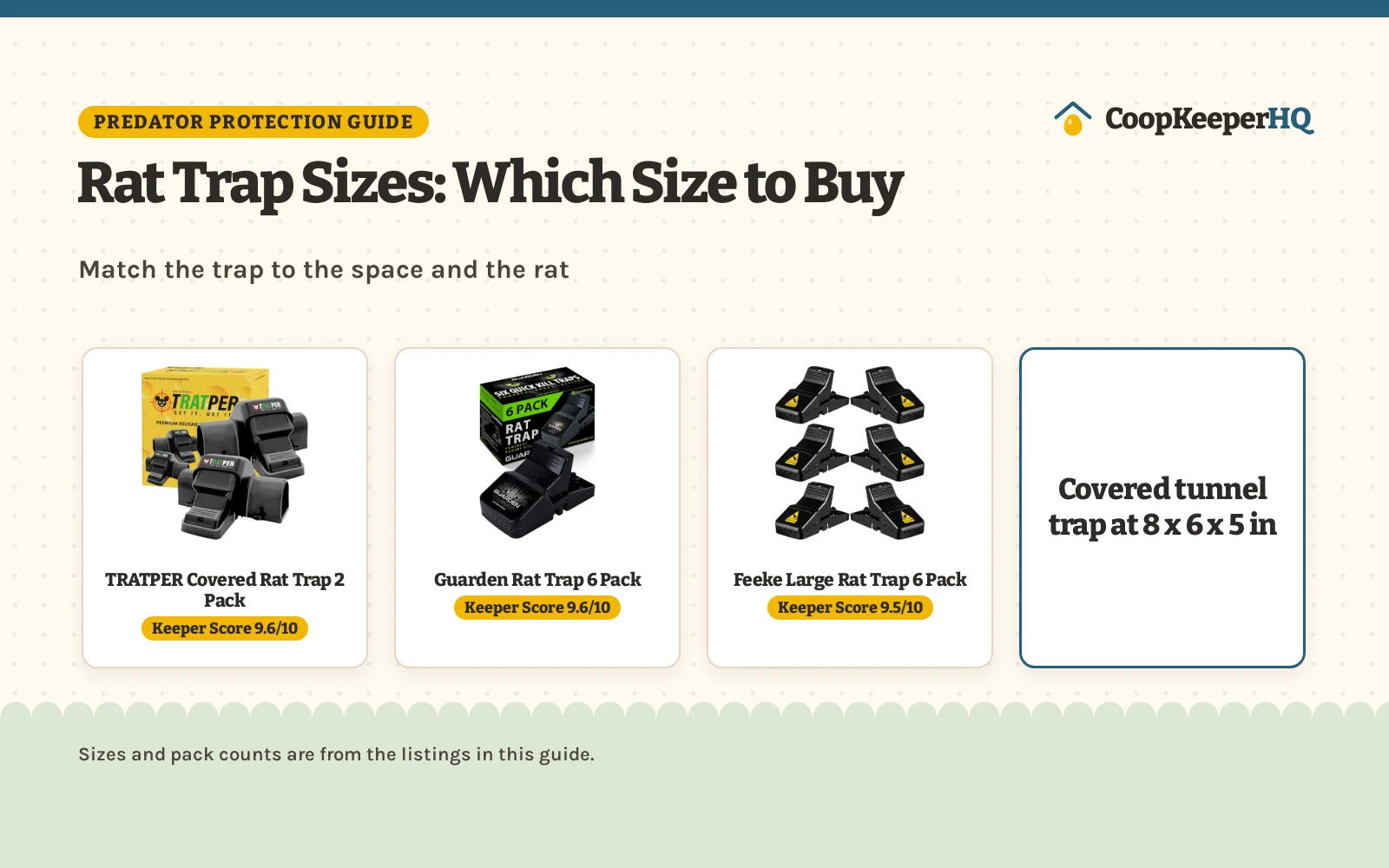
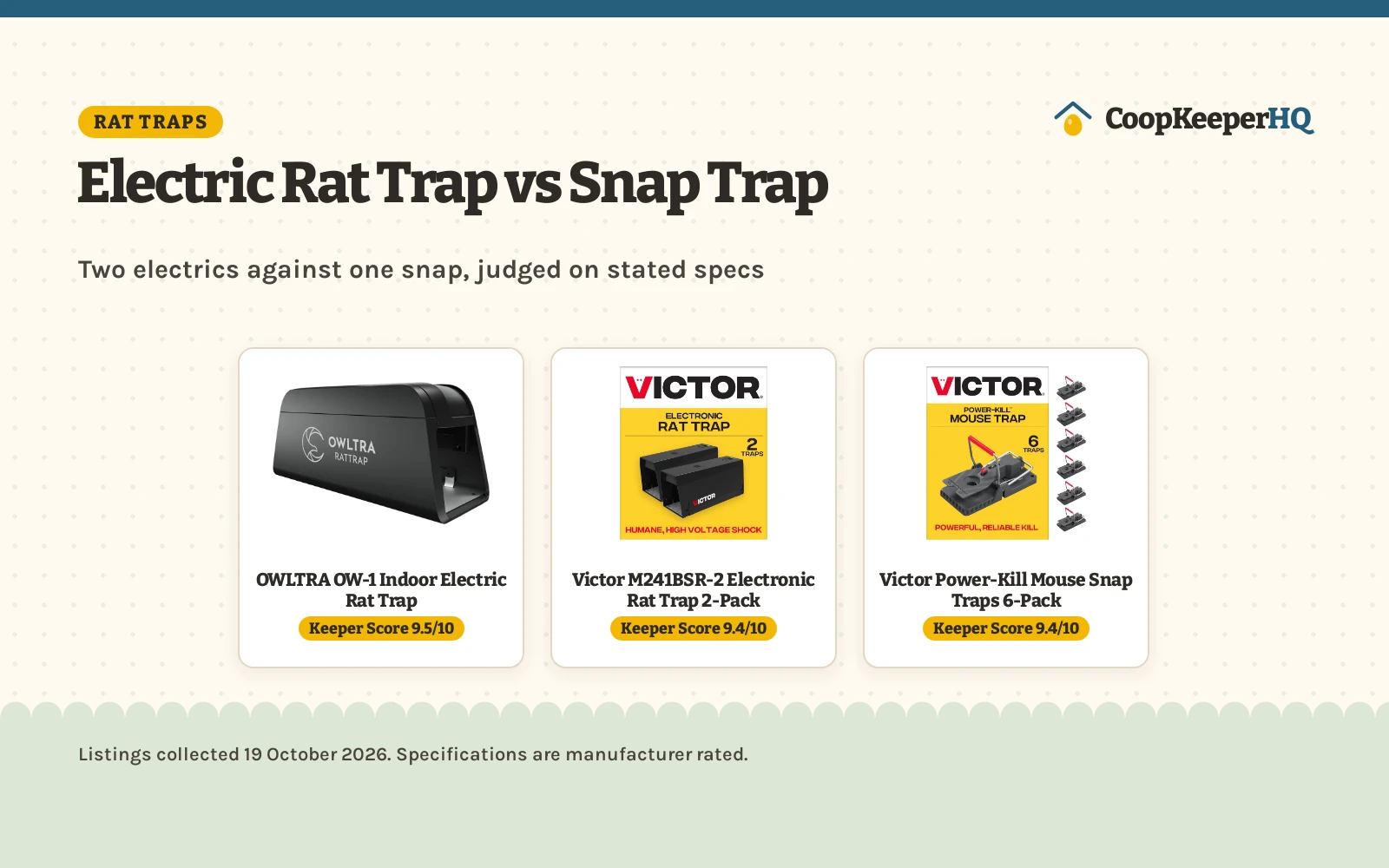
Snap traps are the workhorse for rats. Victor lists its Wide Pedal Snap Rat Traps as a 12-pack with a pre-baited trigger pedal and a large trip pedal, and the listing gives the size as 1.4 x 4.0 x 10.2 inches. Do not use a mouse trap for a rat: Victor lists its Metal Pedal Mouse Traps at 3.9 x 1.8 x 0.6 inches, so check the size in our rat trap size guide. Glue traps need no bait and suit damp spots: Catchmaster lists its Rat and Mouse Glue Traps as a 12-pack of trays measuring 10.0 x 5.0 x 0.5 inches, ready to use once pulled apart, and states the trays last up to one full year under normal conditions. LULUCATCH lists a 12-pack of larger 5 x 10 inch trays with extra-strong adhesive, pre-baited with a peanut butter scent. Covered tunnel traps hide the mechanism inside a tunnel, which keeps hens, children and pets away from the snap bar: TRATPER lists a 4-pack of dual-entry tunnel traps measuring 8 x 6 x 5 inches in durable ABS plastic, reusable and washable, while UCatch lists a dual-entry trap in a pack of 2. Electric traps are another option, and our electric trap vs snap trap comparison covers them. To catch the rat alive, read our live trap vs snap trap comparison first.
How to set a rat trap
If you are learning how to set rat trap models for the first time, a covered tunnel design is the forgiving place to start. Here is how to set up a rat trap near a coop wall: bait the pedal or the bait area with a dab of peanut butter, which TRATPER suggests as bait of choice and LULUCATCH uses as a pre-baited scent, then push the lever down until it locks. Handle the trap with gloves, since TRATPER notes that human scent can discourage rodents from approaching bait. Set the trap flush against a wall on a known runway, entry facing the path, and fit glue traps flush against the wall as well. Catchmaster states to place glue traps along pathways every 4 to 6 ft and to avoid corners for rats, placing them in corners only for insects. Once the trap is set, leave it in place on the runway.
Where to put traps around a chicken coop
Put traps where rats already travel and where hens cannot reach them. Along the outside of the coop wall, under feed room shelving, in the feed store and along the run fence are all good spots, and LULUCATCH suggests the same kind of placement indoors: along walls, under large kitchen appliances and in cupboards. Keep traps out of the run itself, because hens peck at anything new and a snap bar can injure a curious bird. Before you set traps, look for the gaps rats use to get in and cover them with hardware cloth; our hardware cloth guide covers what to buy.
Bait, bait stations and keeping the flock safe
Poison bait is not a trap, and it needs more care than any trap. Tomcat lists its Bromethalin Bait Chunx as a 4.25 lb pail of 1 oz bait blocks for agricultural use and professional applicators, and states that each block kills up to 12 mice. The same listing states that bait blocks must be placed inside tamper-resistant bait stations where children, pets and non-target animals may have access, and that bait must be applied within 100 feet of man-made structures. Never scatter loose bait blocks around a coop. Snap traps, glue traps and tunnel traps avoid poison entirely. Check local rules before using rodenticide bait near livestock.
Check traps daily and reset them
A trap you forget is worse than no trap at all. Catchmaster states to check glue traps daily or when noise is heard, and the same habit suits snap traps and tunnel traps. Lift the trap with gloves, remove the catch, and reset a reusable snap trap or wash and reuse a tunnel trap. TRATPER lists its tunnel traps as washable and reusable. Replace a glue tray when it is dusty, full or no longer sticky. A quick look at dusk, when you shut the pop door, is enough to keep the routine going.
When trapping alone is not enough
Trapping removes the rats that are already visiting, but it does not stop the next ones. Walk the coop and run with fresh eyes: cover gaps and holes with hardware cloth, store feed in sealed containers and sweep up spilled feed each evening. Our hardware cloth guide for keeping mice out covers mesh choices, and the predator protection hub gathers the rest of the coop defense guides. Fewer easy meals means fewer rats to trap.
Birds, breed size, run time and climate in; coop floor, run space, roost length and nesting boxes out.
Wash your hands after handling birds, eggs or equipment, supervise children around the flock, and check local rules on flock size and roosters before you buy. For sick birds, call a poultry veterinarian or your state extension office. See CDC backyard poultry guidance. Read our Safety Disclaimer.
FAQ for the flock
How do I set a rat trap so it catches rats?
Bait it with a dab of peanut butter, handle it with gloves, set it flush against a wall on a known rat runway and check it daily. Traps placed in the middle of open ground catch little, because rats hug walls and cover.
Where should I put a rat trap near a chicken coop?
Along the outside of the coop wall, in the feed store and along the run fence, always out of the run where hens can reach it. A covered tunnel trap is the safer choice near the flock, since the mechanism sits inside the tunnel.
Are snap traps or glue traps better for rats near chickens?
Snap traps give a quick kill and can be reset, while glue traps need no bait and suit damp spots. Near a flock, a covered tunnel snap trap is often the better pick, because the snap bar sits inside a tunnel that hens and pets cannot reach.
Can I use rat bait near a chicken coop?
Only inside a tamper-resistant bait station, never as loose blocks. Tomcat states that its 1 oz bait blocks must go in tamper-resistant bait stations where children, pets and non-target animals may have access, and within 100 feet of man-made structures. Check local rules before using rodenticide bait near livestock.
How often should I check rat traps?
Daily. Catchmaster states to check glue traps daily or when noise is heard, and the same habit suits snap traps and tunnel traps. A daily check at dusk, when you shut the pop door, keeps the routine simple.
More coop guides
- Best Type of Rat Trap (2026)
- Rat Trap Sizes: Which Size to Buy
- Electric Rat Trap vs Snap Trap: Which One Should You Buy?
- Live Trap vs Snap Trap for Rats: Which One Should You Buy?
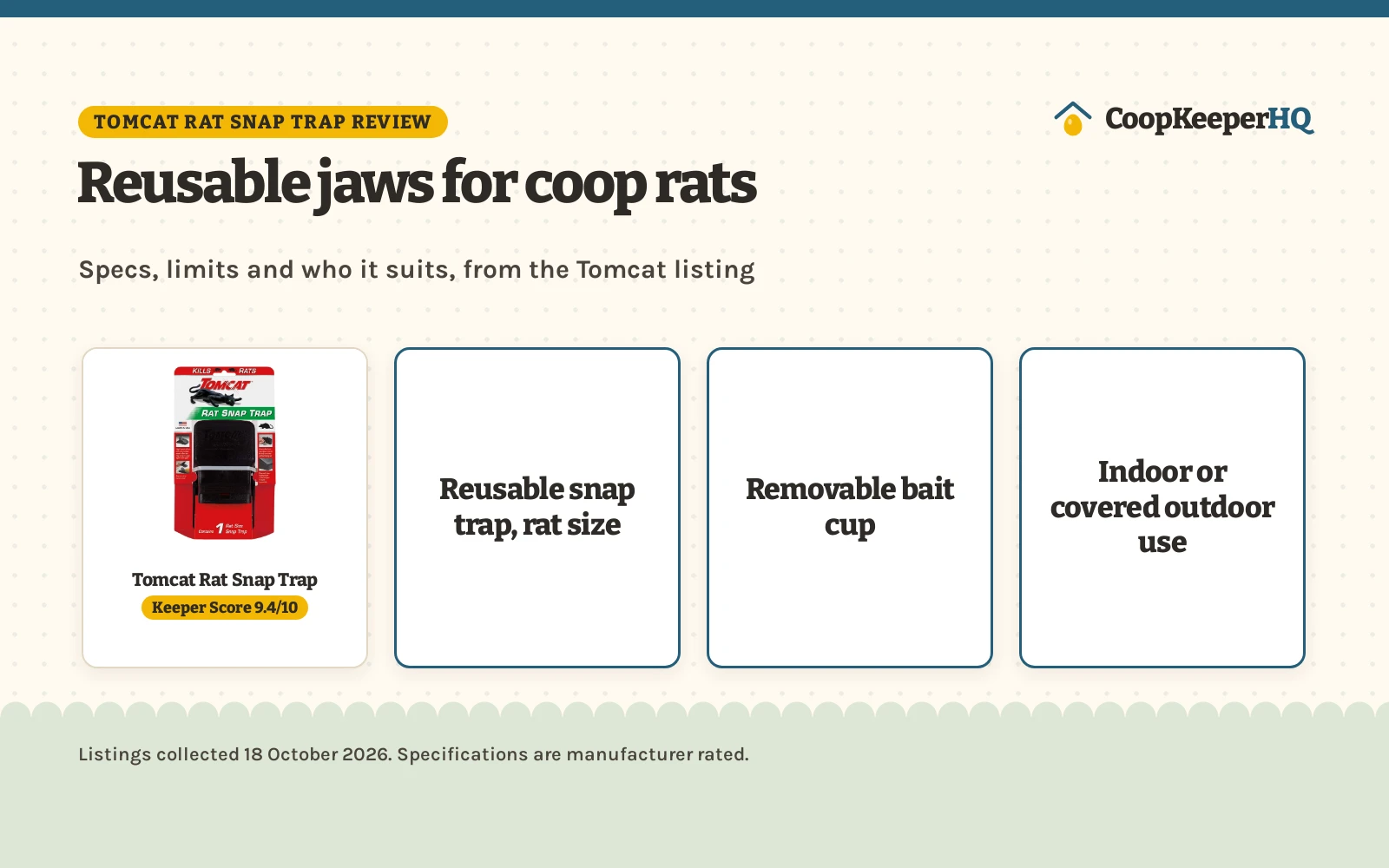
- Tomcat Rat Snap Trap Review: Pros, Cons & Who It’s For
- Victor Rat Zapper Classic Review: Pros, Cons & Who It’s For
- Owltra OW-1 Electric Rat Trap Review: Pros, Cons & Who It’s For
- How to Set Fox Trap: A Live Trap Guide for the Coop
See the predator protection guides and the rat trap type guide for the full comparison before you buy.