Large Chicken Coop Ideas: Walk-In Layouts, Runs and Sizing
Walk-in runs, connected double coops, sheltered perches, outside egg collection and simple sizing layouts for housing a larger backyard flock comfortably.

On this page
Top picks at a glance
As an Amazon Associate I earn from qualifying purchases.
- 1
 HomeSheek 69.5 in Outdoor Large Chicken Coop for 6-10 Chickens9.7/10View on Amazon
- 2
 Magazoopet Large Chicken Coop for 4-6 Chickens with 6 Nesting9.6/10View on Amazon
- 3
 HIWOKK Large Metal Chicken Coop with Cover9.5/10View on Amazon
Stepping out each morning with a full feed bucket quickly shows whether your flock setup works with your routine or against it. Ducking under low wire, squeezing past narrow perches and reaching awkwardly for eggs turns daily chores into frustrating work. Exploring practical large chicken coop ideas centers on generous walk-in headroom for chores, connected run space for foraging, and outside access doors for quick egg collection and cleanouts.
CoopKeeperHQ earns a commission if you buy through our links, at no added cost to you. Affiliate disclosure.
Large chicken coop ideas: plan for walk-in headroom and floor space
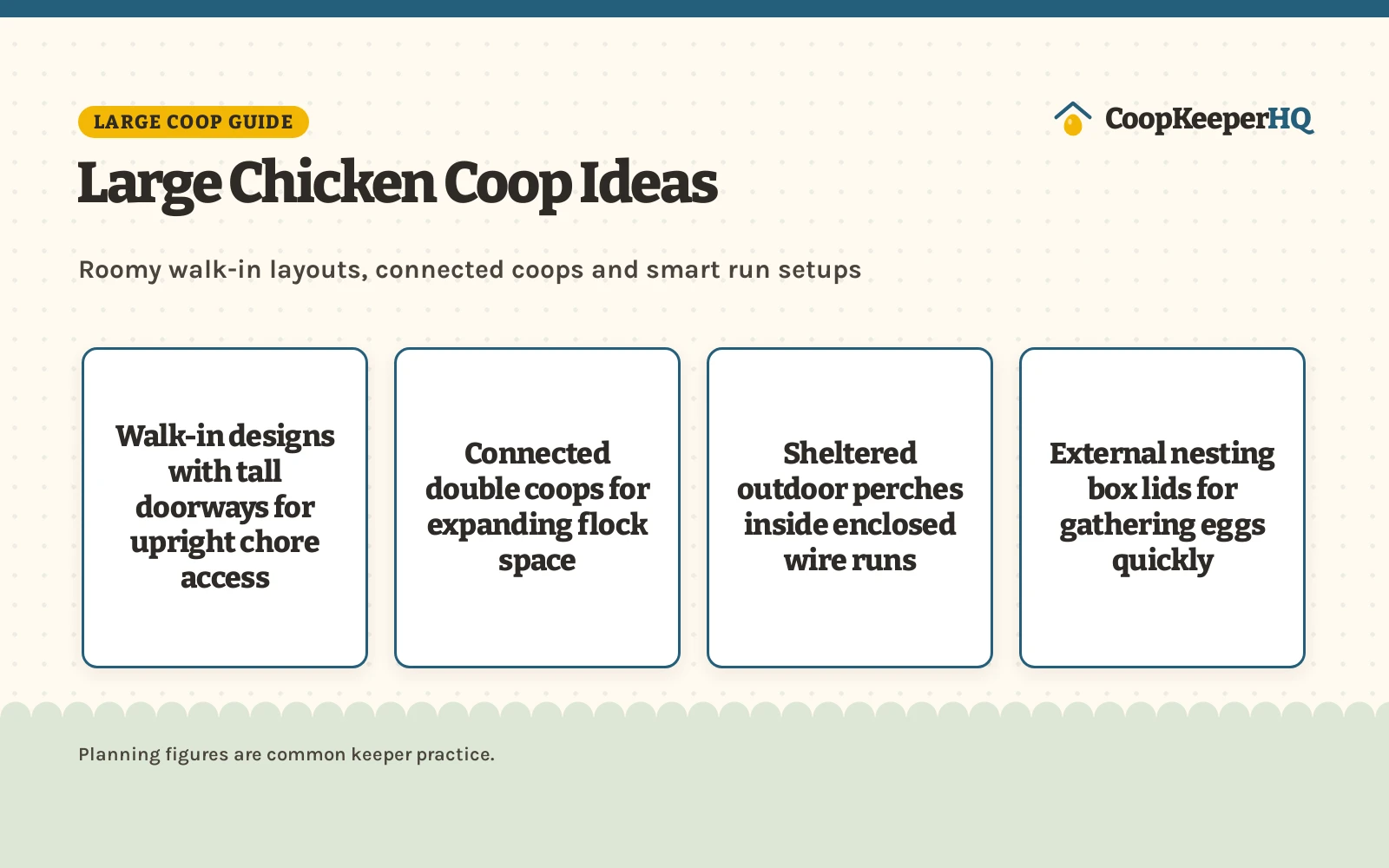
The most important upgrade in a large coop is enough vertical headroom to stand fully upright. When an enclosure forces you to stoop or crawl inside, routine maintenance gets delayed. Walk-in designs transform daily care by turning the hen house and run into a workspace you can step into comfortably. Sizing begins with floor area and door clearance, as explained in our square foot for chicken coop guide.
Vertical clearance varies between doorways and interior roof peaks across modern builds. AnMetora lists a walk-in coop with a 6.1-ft-tall doorway and an arched roof reaching a peak height of 6.9 ft, providing full upright clearance from the entry inward. By contrast, Rainbow Well lists a walk-in coop with 54 sq ft of floor area and an interior peak height of 72 inches, paired with a 55.5-inch front door that requires a stoop when stepping inside. Reviewing dedicated walk-in chicken coop plans helps align doorway and roof height with keeper comfort.
Connected double coop layouts for expanding flocks
Backyard keepers often start small and expand their flock over time. A connected double coop layout links two matching houses together to expand roosting and nesting capacity without overcrowding. Connecting two units also allows keepers to separate birds when integrating pullets or isolating a broody hen while maintaining a cohesive footprint.
Pawbuilt offers a commercial example with its 190.6″L x 31.5″W x 44.9″H double outdoor coop. The maker includes 4 metal connector plates joining two matching wooden hen houses into one connected layout. The listing rates the double setup for 8 to 12 standard-size hens, though interior floor square footage is not stated, and includes 10 doors for cleaning and access. Exploring extra large chicken coop with run options shows how connected sections distribute nighttime roosting across sheltered bays.
Separate elevated hen house and enclosed run configurations
Another proven layout separates sheltered sleeping quarters from an attached open-air run. Elevating the hen house preserves shaded ground underneath where birds can dust bathe, while keeping bedding dry and away from ground dampness.
Keepers must distinguish between total enclosure area and enclosed hen house floor space. FunXplore lists an extra large coop (model PD-1035) measuring 135.7″ L x 60.6″ W x 62.5″ H providing 55.64 sq.ft of total space, split into a 38.8 sq.ft open run and a 16.84 sq.ft elevated hen house with 10 access doors. While rated by the maker for 10 to 14 adult chickens, applying the standard formula of 4 square feet per standard hen inside the hen house (16.84 sq.ft divided by 4) yields a realistic sleeping capacity of about 4 standard hens. Our guide to a chicken coop with large enclosed run highlights how pairing a compact house with an extensive run balances shelter with roaming room.
High-capacity metal runs with independent feeding doors
Large flocks consume feed and water quickly. Opening a full-sized door while carrying heavy buckets often lets lively hens dart past your feet. Modern walk-in metal runs solve this by adding independent feeding ports.
Sannwsg lists walk-in metal runs where the title states 20x10x6.6FT while product dimensions list 315″L x 118.11″W x 78.74″H, built from galvanized steel pipe and hexagonal mesh. The listing highlights an independent half-door feeding port and 3 reinforced metal locks to slide supplies inside without opening the main door. Sannwsg also includes a 55″ x 40″ chicken perch made from galvanized pipe and eucalyptus wood. Pairing these runs with a dedicated large chicken feeder and a high-volume chicken waterer for large flocks keeps chores efficient.
Exterior egg collection hatches and nesting bays
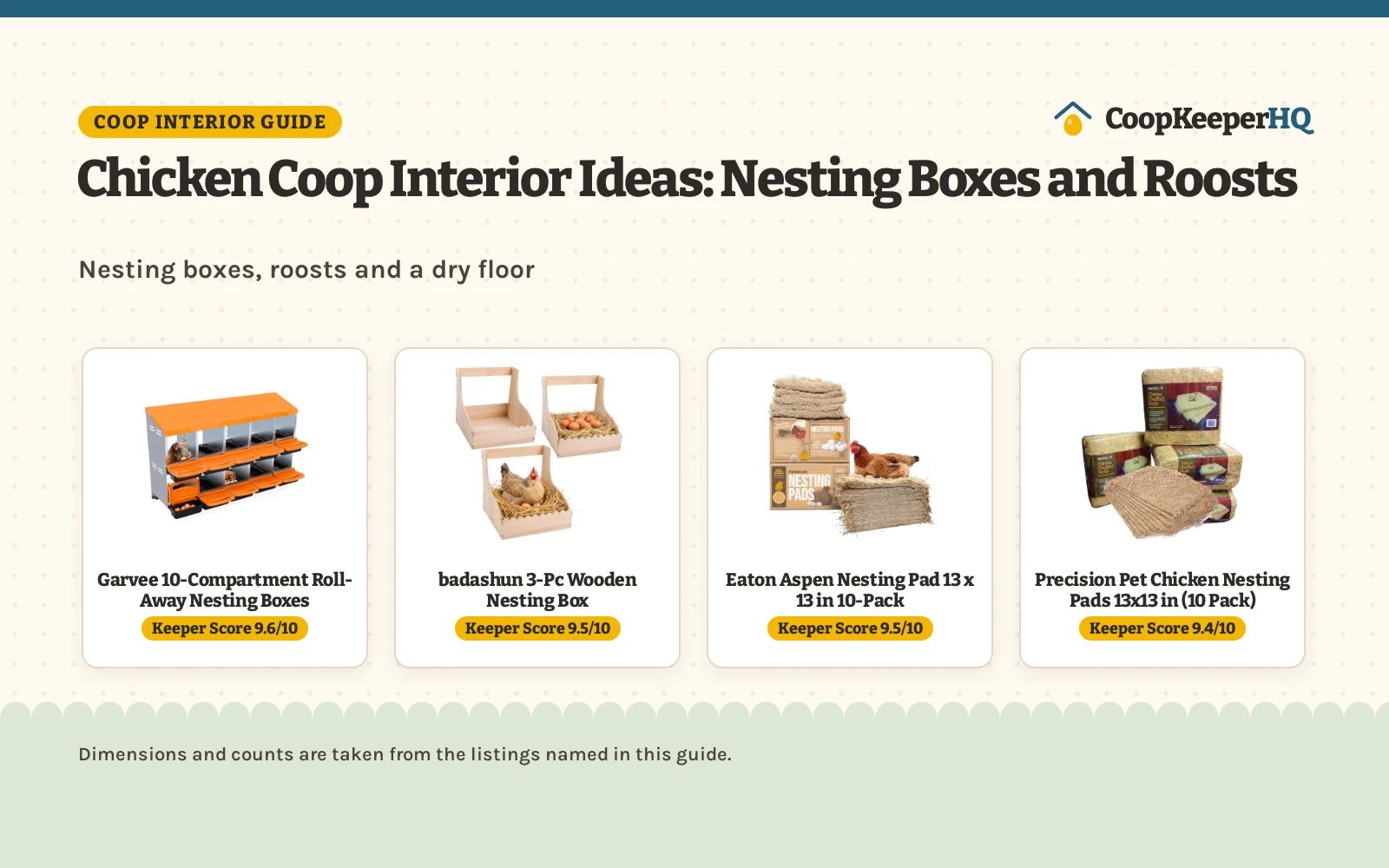
Daily egg gathering should be quick and clean. Stepping inside the coop stirs up bedding dust and disturbs roosting birds. Exterior nesting boxes with top-hinged lids allow keepers to collect clean eggs from outside the enclosure in seconds.
Reference models frequently feature outside access. COZIWOW lists a wooden walk-in coop with 4 nesting boxes, 2 elevated roosting bars, and a 54 ft² enclosure rated for 10 to 15 poultry, though interior floor square footage is not stated. Rainbow Well lists 4 nesting boxes with rear lids on a 54 sq ft walk-in coop. Pawbuilt provides dual nesting boxes with 6 total laying compartments, and FunXplore’s model PD-1035 includes 6 dedicated nesting boxes. For upgrades, our chicken nesting box guide compares roll-away and compartment designs.
Multi-season ventilation windows and protective covers
Chickens exhale substantial moisture overnight. Without proper airflow, dampness accumulates inside sleeping quarters. Effective large coop layouts place high ventilation openings above roost height to exhaust warm, moist air without blowing cold drafts directly across the birds.
Weather coverings add seasonal versatility. Rainbow Well lists a roll-up waterproof tarp over galvanized mesh that rolls up for airflow and lowers during storms. FunXplore features oversized ventilation windows with sliding panels to regulate seasonal air exchange. For arched metal runs, AnMetora lists a waterproof PE tarp covering 3 roof arches spaced 39 inches apart, while Sannwsg supplies removable PE covers on a gabled frame. Explore protective options in our chicken coop cover review and find absorbent materials in our chicken coop bedding guide.
Mobile chicken coop considerations: tractors versus stationary layouts
Moving a coop across fresh ground distributes manure and provides fresh forage. However, flock size dictates whether mobility is practical.
Compact mobile tractors suit smaller groups. Lovinhut lists a mobile coop measuring 83.3″x33.5″x41.6″ with pull handles and wheels rated for 4 standard chickens or up to 8 bantams, and FunXplore lists model PD-1037 offering 26.53 sq ft of space with 4 roosting perches. In contrast, large coops are heavy and difficult to move regularly. Pawbuilt lists a 190.6″L x 31.5″W x 44.9″H double coop weighing 198.2 pounds for 8 to 12 hens; the maker notes that while wheels help during setup, the connected layout is best used as a fixed coop. Keepers needing mobility for larger flocks can consult our chicken coop on wheels plans.
Predator-proofing wire mesh and latch hardware
A large coop presents an expansive perimeter to defend against climbing raccoons, digging foxes, and birds of prey. Flimsy wire or simple turn-buttons leave birds at risk.
AnMetora and Sannwsg list galvanized steel pipe frames with PVC-coated hexagonal wire mesh featuring 1-inch openings. Pawbuilt and FunXplore use reinforced fir frames with wire mesh and lockable latches. For maximum security, keepers line the lower perimeter with welded wire cloth and bury a protective apron underground, as detailed in our chicken coop with hardware cloth guide. Door latches from our predator proof chicken coop door guide keep entries secure overnight.
Daily flock management and routine in a large coop
A thoughtful layout streamlines daily chores. In the morning, release birds into the run, check water levels and adjust vents or tarps for daytime airflow. Gather eggs through exterior nesting lids before noon. In the afternoon, refill feed via independent feeding ports and check perimeter latches.
At dusk, verify all birds have roosted and secure exterior latches. An automatic chicken coop door automates evening lockups and morning releases, guarding against missed latches. For birds showing unusual behavior, consult a licensed poultry vet or local agricultural extension office.
Large chicken coop planning checklist
- Sufficient walk-in vertical clearance to stand upright during chores
- Separate roosting quarters paired with an enclosed walk-in run
- Exterior egg collection doors opening to dedicated nesting compartments
- Independent feeding ports to refill feed and water easily
- Cross-ventilation openings above roost height with sliding panels or roll-up tarps
- Galvanized wire mesh and multi-point locking latches to deter predators
To calculate exact footprint dimensions based on your bird count, explore our sizing tools below.
Birds, breed size, run time and climate in; coop floor, run space, roost length and nesting boxes out.
Wash your hands after handling birds, eggs or equipment, supervise children around the flock, and check local rules on flock size and roosters before you buy. For sick birds, call a poultry veterinarian or your state extension office. See CDC backyard poultry guidance. Read our Safety Disclaimer.
FAQ for the flock
How much space does a large chicken coop require?
Space depends on flock size, breed type and run access. Inside the hen house, standard keeper guidelines allocate 4 square feet of floor space per standard hen, 2 square feet for bantams and 5 square feet for large breeds. An attached run provides essential room for daily scratching and dust bathing.
Is a walk-in chicken coop worth the investment?
Yes. Walk-in designs let keepers stand upright while scooping bedding, refilling heavy drinkers and inspecting birds, reducing back strain and simplifying deep litter maintenance compared to low-profile coops.
How many nesting boxes do large chicken coops need?
Hens take turns laying throughout the morning. Providing multiple dedicated nesting compartments (such as 4 to 6 nesting boxes) ensures hens lay comfortably without crowding, especially when fitted with exterior collection lids.
Can you connect two separate chicken coops together?
Yes. Keepers frequently join matching wooden coops with metal connector plates to expand roosting space. This modular approach provides separate roosting zones for growing flocks while sharing run access.
What type of wire mesh protects a large chicken run?
While commercial runs often include 1-inch hexagonal wire to contain birds, 1-inch openings do not stop raccoons from reaching through or rodents from entering. Installing heavy welded hardware cloth with narrow mesh along the perimeter and burying an apron provides reliable predator protection.
More coop guides
- Walk in Chicken Coop Plans: Complete Backyard Guide
- Chicken Coop with Large Enclosed Run: 5 Top Picks (2026)
- Extra Large Chicken Coop with Run: 5 Roomy Backyard Picks (2026)
See the chicken coop guides and the chicken run setups.