Square Foot for Chicken Coop: Complete Sizing Guide (2026)
Realistic floor space, outdoor run sizing and roost requirements for keeping a backyard chicken flock comfortable and healthy.

On this page
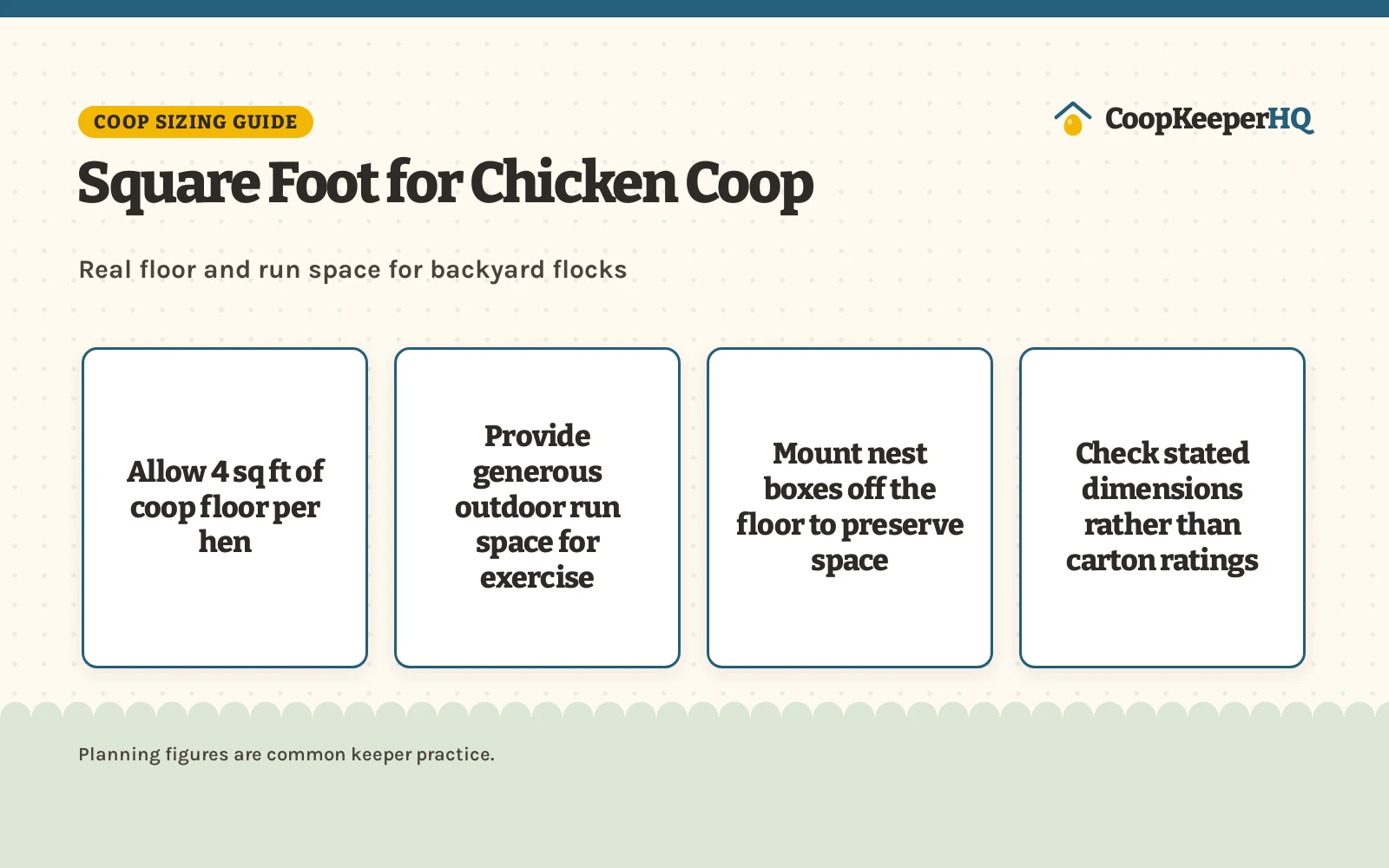
Opening the coop door at dawn to let the flock into the run is a rewarding part of keeping chickens, but watching hens bump into each other or crowd the pop door quickly shows when a setup is too tight. Choosing the right square foot for chicken coop sizing is the foundation of a healthy backyard flock, keeping litter dry, reducing stress and preventing feather pecking. As a reliable rule of thumb, standard adult hens require about 4 square feet of indoor coop floor space per bird, smaller bantam breeds need about 2 square feet, and heavy dual-purpose breeds thrive with 5 square feet, all paired with ample outdoor run space for daily foraging.
As an Amazon Associate I earn from qualifying purchases. CoopKeeperHQ earns a commission if you buy through our links, at no added cost to you. Affiliate disclosure.
Square foot for chicken coop: the indoor floor space baseline
Indoor floor space is the working area where your chickens walk, scratch and access food during bad weather. For standard adult hens with regular access to an outdoor run, keepers generally plan for about 4 square feet of dedicated floor space per bird. Smaller bantam breeds often do well with about 2 square feet per bird because of their compact body size. Conversely, heavier heritage and meat breeds benefit from about 5 square feet per bird to remain comfortable without crowding flock mates. For keepers setting up a new hen house, our chicken coop for beginners guide walks through initial coop placement and essential layout requirements.
Giving your birds enough indoor floor area does more than keep the peace. Chickens produce substantial moisture through their droppings and respiration, especially overnight. In a coop with adequate square footage, bedding stays drier, air circulates freely and ammonia does not accumulate near floor level. When birds are crowded onto inadequate floor space, droppings build up faster than the bedding can absorb them, creating damp conditions that chill hens in winter and create unpleasant odors in summer. For a deeper look at overall coop dimensions and flock spacing, see our guide on how big should a chicken coop be.
Sizing the outdoor run for daily flock exercise
While indoor space protects hens while they sleep or take shelter from storms, the outdoor run is where they spend the vast majority of their waking hours. Confining active chickens to an undersized run quickly strips the ground to bare dirt and creates muddy conditions during rainy spells. Providing generous run space allows hens to scratch, stretch their wings and forage naturally without getting in each other’s way.
Backyard keepers planning an attached run should aim to give their birds as much outdoor ground as their yard allows. Sturdy fencing and overhead cover protect foraging birds from aerial hawks and neighborhood predators. For ideas on sheltering your run area from rain and harsh sun, explore our covered chicken run ideas and browse our complete chicken runs and fencing recommendations.
Roosting space and vertical coop layout
Coop square footage measures the flat floor, but chickens make use of vertical height as well. Roosting bars elevate your birds off the floor at night, satisfying their natural instinct to sleep above ground where they feel secure from ground predators. Providing adequate roosting length ensures that every hen can find a comfortable spot to settle down at dusk without fighting for position.
Positioning roosting bars higher than the nesting boxes encourages hens to sleep on the perches rather than in the nests, which prevents soiled eggs. Roost bars should be positioned higher than the nesting boxes but far enough below the ceiling to provide proper head clearance and airflow. Installing an automatic chicken coop door ensures your flock is securely locked inside at sunset once all birds have hopped onto their roosts for the evening.
Nesting boxes and preserving usable floor area
A common mistake when calculating coop square footage is allowing nesting boxes to consume open floor space. Chickens do not need an individual nesting box for every hen; a flock shares boxes throughout the morning laying period. However, placing nesting boxes directly on the coop floor robs your flock of vital square footage where they would otherwise walk and scratch.
To preserve maximum floor space, choose a coop with exterior bump-out nest boxes or mount internal boxes on the wall above the floor. Raising the boxes gives your hens full access to the floor underneath, effectively keeping your usable square footage intact. Our chicken nesting box guide compares roll-away and wall-mounted designs that keep eggs clean while saving coop floor space.
Why manufacturer capacity ratings mislead keepers
When shopping for a pre-built chicken coop, maker capacity claims can be remarkably misleading. Many commercial listings calculate advertised capacity by combining the indoor house and outdoor run into one total figure, or by assuming buyers keep miniature bantam breeds rather than standard-sized laying hens.
Examining published listing specifications highlights this discrepancy clearly. For instance, the Petsfit coop (on Amazon) listing states an inner nesting area of 6.07 square feet and an attached outdoor wire run of 12.56 square feet, marketed for 4 to 6 small hens or bantams. Applying the realistic planning calculation of 4 square feet per standard hen (or 2 square feet for bantams), 6.07 square feet provides realistic room for only 1 to 2 standard hens, or about 3 small bantams. Similarly, the FunXplore mobile chicken coop (on Amazon) listing specifies 8.4 square feet of main house space and a 17.28 square foot run, claiming room for 4 to 8 chickens. Dividing 8.4 square feet by 4 demonstrates that the main house realistically accommodates about 2 standard adult hens.
Walk-in runs also require careful measurement rather than relying on category labels. For example, the Amopatio metal walk-in run listing publishes 63.7 square feet of unit area for its small model rated for 6 to 8 chickens, while larger options like the Ariiles walk-in run listing state approximately 193 square feet of space for 30 to 35 birds. While walk-in runs provide excellent daytime foraging space, keepers must remember that an open wire run does not replace a sheltered indoor hen house. Always check the actual stated dimensions rather than trusting the manufacturer carton label when planning your flock setup.
Seasonal confinement and weather adjustments
Seasonal weather dramatically influences how much coop square footage your flock genuinely needs. In regions with harsh winters, heavy snow can trap chickens inside the hen house for days or weeks at a time. Hens that are normally content with a compact coop because they spend all day in a large pasture can quickly become stressed when confined indoors around the clock.
If you live in an area prone to severe winter weather or prolonged rainy seasons, sizing your coop floor area on the generous side is essential. Extra square footage allows you to maintain deep, dry bedding and provides room for feeders and waterers without crowding the roosting zone. If you are planning for a flock of 6 birds, explore our coop for 6 chickens guide to compare models based on their true floor dimensions rather than marketing claims.
Warning signs of an overcrowded coop
Chickens communicate clearly when their quarters are cramped. Paying close attention to flock behavior and coop conditions during morning and evening chores will help you identify overcrowding before serious problems develop.
Common behavioral warning signs include missing feathers on the backs and tails of subordinate hens, aggressive pecking around the feeder, and birds that linger outside at dusk because they are bullied off the roost. Environmental warning signs include bedding that turns damp and compacted quickly, strong ammonia smells rising from damp litter, and soiled eggs in crowded nest boxes. If you observe severe pecking injuries or persistent flock distress, consult your state agricultural extension office or a licensed poultry veterinarian for expert guidance.
A practical coop sizing checklist
- Provide about 4 square feet of indoor floor space for each standard adult hen with run access
- Allow about 2 square feet of indoor floor area for bantam breeds
- Budget about 5 square feet of indoor floor area for heavy heritage breeds
- Maximize outdoor run space so hens can forage and dust bathe daily
- Mount nest boxes off the floor or use exterior bump-outs to preserve floor area
- Position roosting bars higher than nesting boxes with adequate head clearance
- Verify published dimensions and calculate floor area rather than relying on carton ratings
Birds, breed size, run time and climate in; coop floor, run space, roost length and nesting boxes out.
Wash your hands after handling birds, eggs or equipment, supervise children around the flock, and check local rules on flock size and roosters before you buy. For sick birds, call a poultry veterinarian or your state extension office. See CDC backyard poultry guidance. Read our Safety Disclaimer.
FAQ for the flock
How many square feet do chickens need in a coop?
Standard backyard adult hens require about 4 square feet of indoor floor space per bird when paired with outdoor run access. Smaller bantam breeds can thrive with 2 square feet of floor space, while larger dual-purpose breeds do best with 5 square feet of indoor room.
What is the minimum run space per chicken?
Outdoor runs require significantly more room than indoor hen houses because chickens spend their waking hours foraging, scratching and dust bathing. Giving your flock generous outdoor space keeps the run dry, prevents mud buildup and reduces behavioral squabbles.
Does the nesting box count as coop square footage?
Nesting boxes placed directly on the coop floor consume usable space and should not be counted toward open floor area. Elevating nest boxes on the wall or using exterior bump-out boxes preserves the entire floor for walking and scratching.
How do I know if my chicken coop is overcrowded?
Frequent warning signs of an overcrowded coop include aggressive feather pecking, squabbling at dusk over roosting spots, rapid moisture and ammonia buildup in the bedding, and reluctance by subordinate hens to enter the hen house.
Why do manufacturer coop ratings differ from realistic space?
Coop makers frequently base advertised capacities on combined coop and run footprints or compact bantam chickens rather than realistic indoor floor space. Dividing the stated floor square footage by 4 square feet per standard hen provides an accurate estimate of flock capacity.
More coop guides
- How Big Should a Chicken Coop Be? Space per Bird Explained
- Chicken Coop for Beginners: Sizing, Setup, and Daily Care
- Best Chicken Coop for 6 Chickens: Picks Checked for Real Floor Space
See our chicken coop guides and chicken run resources for more flock planning tips.