Oil Filled vs Ceramic Heater for Chicken Coop: Which One Should You Buy?
Oil-filled radiators give steady fanless heat while ceramic heaters warm air faster with a fan; four oil-filled heaters ranked, with coop safety checks.

On this page
Top picks at a glance
As an Amazon Associate I earn from qualifying purchases.
- 1
 Hykolity Oil Filled Radiator Heater9.6/10View on Amazon
- 2
 DXHAOSTET Chicken Coop Heater9.7/10View on Amazon
- 3
 PETNF Chicken Coop Heater with Remote Control9.6/10View on Amazon
- 4
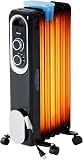 Dumos Oil Filled Radiator Heater with Adjustable ThermostatView on Amazon
- 5
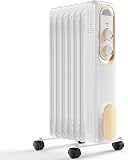 Sweetcrispy Oil Filled Radiator Heater for Indoor Use 1500WView on Amazon
- 6
 Fanspex 600W Hanging Heater for Poultry Chicken Coop PetView on Amazon
- 7
 Chicken Coop Heater for Winter with Smart APP ControlView on Amazon
- 8
 PETNF Chicken Coop Heater 140 Watts Radiant Heat ChickenView on Amazon
- 9
 Chicken Coop Heater for Winter with Remote APP ControlView on Amazon
Oil filled vs ceramic heater for chicken coop is a question about how heat behaves in a dusty coop full of dry bedding. An oil-filled radiator warms slowly and holds heat in sealed oil, with no fan and no glowing element. A ceramic heater, the other side of this comparison, blows air across a heated ceramic element with a fan, adding moving air to a dusty room. This guide compares the two types and ranks four oil-filled heaters from the listings, with the coop safety checks each one calls for.
Other options for the coop
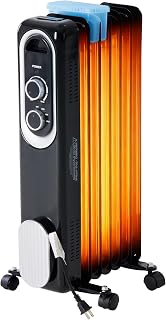 Dumos Oil Filled Radiator Heater with Adjustable ThermostatCheck price on Amazon
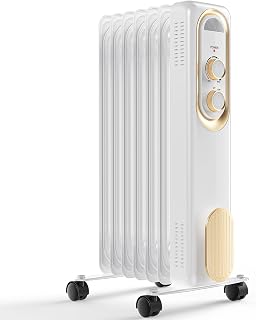 Sweetcrispy Oil Filled Radiator Heater for Indoor Use 1500WCheck price on Amazon
 Fanspex 600W Hanging Heater for Poultry Chicken Coop PetCheck price on Amazon
 Chicken Coop Heater for Winter with Smart APP ControlCheck price on Amazon
 PETNF Chicken Coop Heater 140 Watts Radiant Heat ChickenCheck price on Amazon
 Chicken Coop Heater for Winter with Remote APP ControlCheck price on Amazon
CoopKeeperHQ earns a commission if you buy through our links, at no added cost to you. Affiliate disclosure.
Oil filled vs ceramic heater for chicken coop: how they differ
An oil-filled radiator is a sealed unit: the oil inside never needs refilling, and the metal fins radiate steady heat with no fan. All four listings here are this type, and all four describe silent, fanless operation. A ceramic heater works differently, pushing air across a heated ceramic element with a fan, which stirs dust and needs the fan to keep running. In a coop, that difference matters: dry bedding, feathers and dust are everywhere, and a fan blowing across them is one more thing to manage.
None of the four listings is marketed for chicken coops. The DREO names garage and greenhouse among its recommended uses, and the others list home and office rooms. Treat these as indoor heaters you would adapt to a coop with care, not as coop-rated equipment.
The gear: four oil-filled heaters, ranked
1. DREO DR-HSH010 oil filled radiator
The most fully specified of the four. The listing states 1500W with 600W, 900W and 1500W modes plus an eco mode, a digital thermostat from 41 to 95 degrees F, a 24-hour timer, remote control, child lock and 7 fins. Safety features named are triple overheat protection, tip-over protection, fire-resistant material and an ETL listing, and the spec table gives 250 sq ft of heating coverage at 17.6 pounds. If a safety listing matters to you, this is the only one of the four that states one.
2. EZ-HEAT MTDR-06WC oil-filled radiator
A simpler radiator with the core safety pair stated: a tip-over switch that shuts the heater off if it topples, and an overheat protection system. The listing gives three heat settings at 600W, 900W and 1500W, an adjustable thermostat, 5120 british thermal units of heat output, a max temperature setting of 155 degrees F, and dimensions of 24.5 inches high by 8.5 inches wide by 13 inches deep at 13.8 pounds. Oversized back wheels and a solid front end are described for moving and stability.
3. DUMOS oil filled radiator
The listing states 1500W with 600W, 900W and 1500W modes, an adjustable thermostat from -5 to 60 degrees C, overheat protection and a tip-over safety switch, at 13 pounds with 4 heavy-duty casters. One honest note: the bullets state coverage of 10-15 square meters, while the spec table prints 15500-23250 sq ft, which does not match. Go by the bullets. The listing also warns to plug directly into a dedicated grounded wall outlet, never an extension cord or power strip.
4. Sweetcrispy oil filled radiator
Built on the same platform as the DUMOS, at 13 pounds with the same 4-caster design and 600W, 900W and 1500W modes. The listing states overheat protection and a tip-over safety switch, an adjustable thermostat and quiet fanless operation. The same coverage-table conflict appears here, so trust the 10-15 square meter bullet figure. The safety bullet repeats the wall-outlet-only warning: no extension cord, power strip or multi-plug adapter.
Buying advice: watts, thermostat and safety
All four heaters top out at 1500W with 600W, 900W and 1500W modes, and the DREO and EZ-HEAT listings state a 12.5 A draw at full power, so the circuit must handle that load from a dedicated outlet. Start on the 600W setting; a small coop needs far less than full power, and lower settings cycle less. For control, the DREO lists a digital thermostat from 41 to 95 degrees F with a 24-hour timer, while the DUMOS lists an adjustable thermostat from -5 to 60 degrees C. On safety, only the DREO states a listing, ETL, with triple overheat protection and tip-over protection; the other three state tip-over switches and overheat protection, and the DUMOS and Sweetcrispy listings warn to plug directly into a grounded wall outlet, never an extension cord. Match the heater to the coop size: the DREO spec table states 250 sq ft of coverage, while the DUMOS and Sweetcrispy bullets state 10-15 square meters, and most backyard coops are smaller than either figure.
What to check before any heater goes in a coop
Keep every heater clear of bedding, feathers and dust, and never leave one running unattended in a coop. Run anything plugged in from a GFCI outlet with the cord off the ground and out of reach of beaks, and check cords every few weeks since coop air ages them faster than house air. Do not use heat lamps in a coop. If you are unsure whether your birds need extra warmth at all, ask your state extension office or a poultry vet before buying a heater; see our guide to keeping chickens warm in winter for the no-heat options.
Birds, breed size, run time and climate in; coop floor, run space, roost length and nesting boxes out.
Wash your hands after handling birds, eggs or equipment, supervise children around the flock, and check local rules on flock size and roosters before you buy. For sick birds, call a poultry veterinarian or your state extension office. See CDC backyard poultry guidance. Read our Safety Disclaimer.
FAQ for the flock
Is an oil-filled radiator safer than a ceramic heater in a coop?
An oil-filled radiator has no fan and no exposed hot element, which suits a dusty coop better than a fan-driven ceramic heater. Every heater still brings a hot surface and a power cord into the coop, so clearance from bedding and a GFCI outlet matter either way.
Do these heaters need a special outlet?
The DUMOS and Sweetcrispy listings say to plug directly into a dedicated grounded wall outlet, never an extension cord, power strip or multi-plug adapter. The DREO and EZ-HEAT listings state 12.5 A draw at 1500W, so the circuit must handle that load.
Can I leave a heater running overnight in the coop?
Do not leave any heater running unattended in a coop. Heaters with timers and thermostats, like the DREO with its 24-hour timer and digital thermostat, still need you present and the unit clear of bedding.
What size heater does a coop need?
Match the heater to the space. The DREO spec table states 250 sq ft of coverage, while the DUMOS and Sweetcrispy bullets state 10-15 square meters. Many backyard coops are smaller than either figure, so a small heater on a low setting is the starting point, not full power.
Are any of these heaters rated for coops?
No. These listings describe indoor heaters for rooms like bedrooms and offices, with the DREO also naming garage and greenhouse use. Only the DREO states a safety listing, ETL. If you want coop-specific guidance, our best chicken coop heater guide compares safer panel types.
More coop guides
- Best Chicken Coop Heater: Safer Panels for Winter
- How to Keep Chickens Warm in Winter Without Overheating the Coop
- How to Winterize a Chicken Coop: A Fall Checklist
- Best Heated Chicken Waterer: Picks That Will Not Freeze
- Best Chicken Coop Bedding: Shavings, Hemp and Sand
- Chicken Coop Fan vs Heater: Which One Should You Buy?
See the chicken coop picks and the coop supply guides.