Padlock Dimensions: Sizes for Coop and Gate Security
Padlock dimensions come down to body width, shackle diameter and shackle clearance, and this guide shows how to measure each one for a coop hasp.

On this page
Top picks at a glance
As an Amazon Associate I earn from qualifying purchases.
- 1
 Master Lock Heavy-Duty Padlock with Key9.7/10View on Amazon
- 2
 SEPOX® 2PC All-Weather Padlock Keyed Alike 1-3/4" Long Shackle9.6/10View on Amazon
- 3
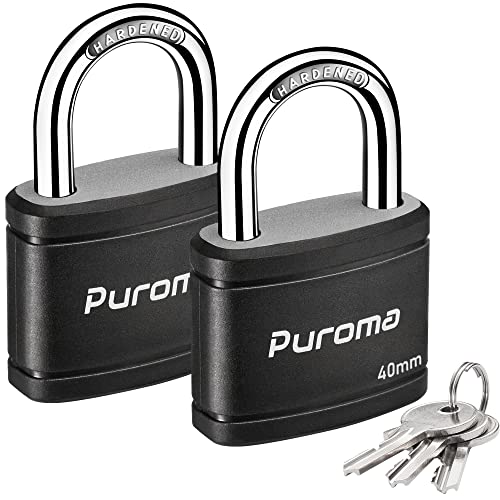 Puroma 2 Keyed Padlock with 3 Keys 7/8" School Locker Lock9.6/10View on Amazon
A coop door that will not stay shut at dusk is a worry every keeper knows. Padlock dimensions are the measurements that decide whether a lock fits the hasp and latch on that door: body width, shackle diameter and shackle clearance. Measure the holes and the hasp before you buy, and the lock you bring home will close the door instead of hanging loose on it.
CoopKeeperHQ earns a commission if you buy through our links, at no added cost to you. Affiliate disclosure.
Padlock dimensions: the measurements that matter
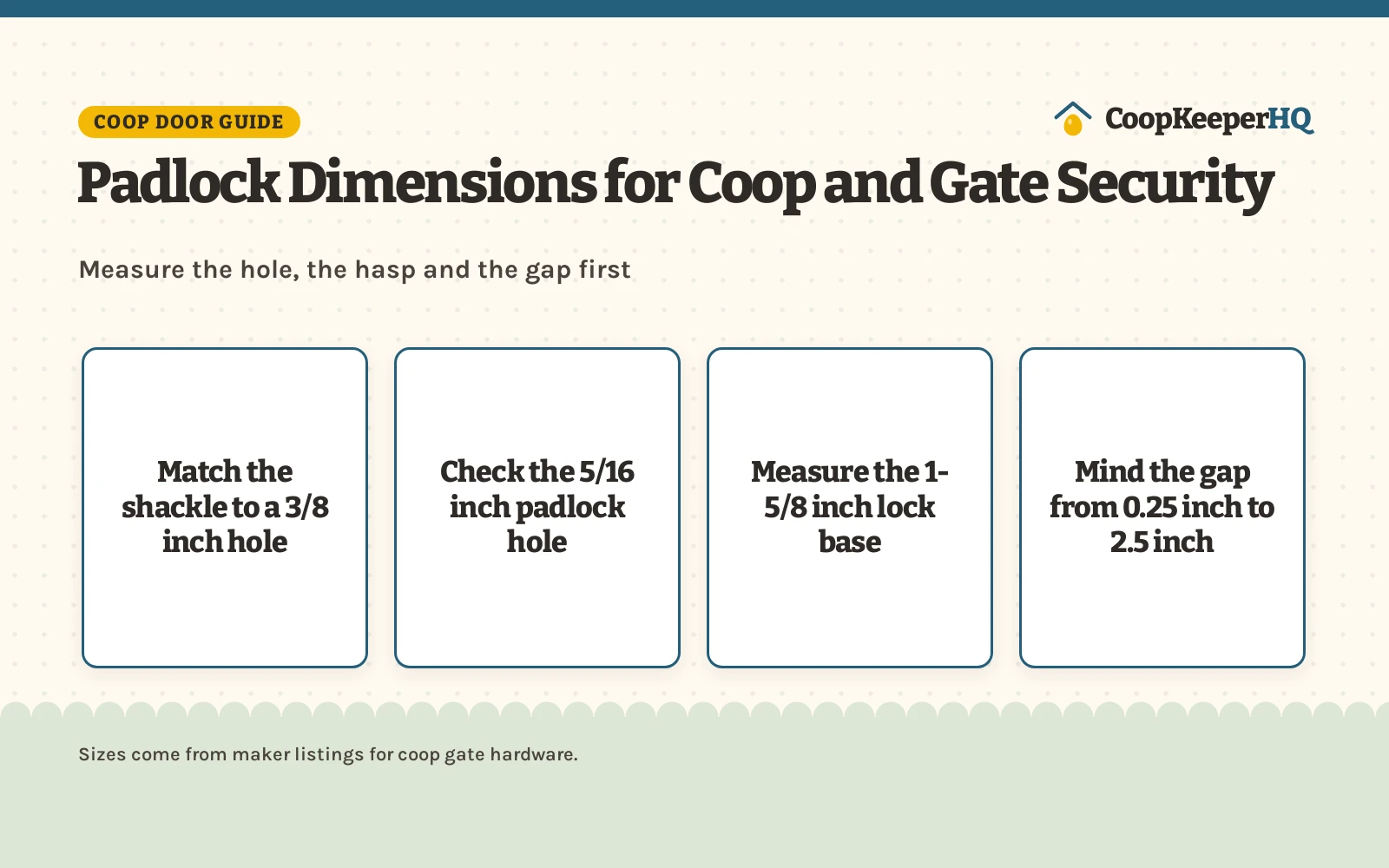
Every padlock has 4 measurements that decide the fit: body width, shackle diameter, shackle clearance and shackle span. Body width is the width of the lock body across the front. Shackle diameter is the thickness of the shackle leg. Shackle clearance is the space between the lock body and the top of the shackle when the shackle is closed. Shackle span is the distance between the 2 shackle legs. The hasp and latch set the limits for each one. A flip latch with 4 padlock holes takes a shackle up to 3/8 inch across, while a slide bolt with a padlock hole about 5/16 inch across takes a shackle no wider than 5/16 inch. Check the hole first, then check the body and the clearance against the hasp.
Body width: match the lock to the hasp
The lock body hangs from the staple on the hasp, so its width does not set the fit the way the shackle does: a body wider than the 1-5/8 inch lock base can still close, as long as it clears the screws and the latch arm when it hangs. A swivel hasp set lists a 4-1/2 inch latch and a 1-5/8 inch lock base, with a plate 1/16 inch thick and 3/4-inch mounting screws, which shows how small the parts are: a heavy body on a light hasp adds load to the screws every time the door swings. Measure the lock base across its widest point, then pick a body that clears the screws and the latch arm.
Shackle diameter: the hole sets the limit
The shackle has to pass through the hole in the latch, so the hole diameter is the hard limit. Flip gate latches list 4 holes that take a 3/8 inch shackle, and the same latches list a 4mm thick carbon steel arm, so the hole is the part to check, not the arm. A slide bolt latch lists a padlock hole about 5/16 inch (8 mm) across, so a shackle thicker than 5/16 inch will not pass through it. A barrel bolt latch in 304 stainless steel lists a padlock hole in the bolt, and the same idea holds: measure the hole across its widest point and pick a shackle a shade thinner. If the shackle does not slide clean through the hole, the lock will not close, and a lock that will not close is no use on a coop door. The door latch for padlock guide compares latches with padlock holes.
Shackle clearance: leave room for the shackle to close
Clearance is the space the shackle needs to pass around the bolt or the latch arm and still close. No maker states a shackle clearance figure, so measure it on your own door: close the hasp, drop the lock through the hole and check that the shackle closes without pressing on the latch arm. Do not mix that space up with the gap the latch spans. A flip latch arm adjusts across gaps from 0.25 inch to 2.5 inch, with adjustment holes at 1/4 inch, 7/8 inch, 1-9/16 inch and 2-9/16 inch, and another flip latch lists a gap range from 0.25 inch to 2.75 inch. Those figures set where the latch sits on the gate, not how much room the shackle needs. A swivel hasp opens 300 degrees and fits 180-degree and 90-degree installs; the lock comes off before the hasp swings, so the arc is about the hasp, not the shackle. The gate latch types guide shows how flip latches and slide bolts differ.
Measure before you buy
Take a tape to the coop door and write down 4 figures before you shop: the hole diameter, the lock base width, the gap the latch has to span and the length of the latch arm. Flip latches here list a 9 inch arm, and a 6.3 inch slide bolt lists a bar about 9/16 inch (14 mm) across, 6-5/16 inch (160 mm) long and 1-5/8 inch (42 mm) wide. An 8 inch barrel bolt lists a body 8.0 inches by 1.65 inches by 1.0 inch. A slide bolt latch lists a body 7.77 inches by 3.43 inches by 0.69 inches and 1.5 inch (38 mm) screws. Measure your own door the same way, in inches, and compare each figure with the lock listing before you order. If a figure is missing from the listing, the maker has not stated it, so pick a lock whose stated figures you can check.
Weather and daily use
A coop lock lives outside in rain, snow and humidity, so the finish matters as much as the size. Flip latch listings state use from -40°F to 120°F, and barrel bolt listings describe 304 stainless steel that resists rust and corrosion. A black powder coating and a galvanized finish are listed on gate latch hardware for the same reason: the lock has to keep working through every season. Wipe the shackle dry when you shut the coop at dusk so moisture does not sit on it through the cold months.
A quick sizing checklist
- Measure the padlock hole across its widest point: 3/8 inch on a flip latch, 5/16 inch on a slide bolt
- Measure the lock base: 1-5/8 inch on a swivel hasp set
- Measure the gap the latch spans: 0.25 inch to 2.5 inch on a 9 inch flip latch
- Check the latch arm length: 9 inch on a flip latch, 6.3 inch on a slide bolt, 8 inch on a barrel bolt
- Check the screws that hold the hasp: 3/4-inch screws on a swivel hasp, 1.5 inch screws on a slide bolt latch
Wash your hands after handling birds, eggs or equipment, supervise children around the flock, and check local rules on flock size and roosters before you buy. For sick birds, call a poultry veterinarian or your state extension office. See CDC backyard poultry guidance. Read our Safety Disclaimer.
FAQ for the flock
What padlock size fits a chicken coop hasp?
Match the shackle to the hole: a flip latch with 3/8 inch holes takes a shackle up to 3/8 inch across, and a slide bolt with a 5/16 inch hole takes a shackle up to 5/16 inch across. The body has to sit on the hasp base, and a swivel hasp set lists a 1-5/8 inch lock base, so measure the base before you buy.
How do I measure a padlock shackle?
Measure the shackle leg across its widest point for the diameter, then measure the space between the lock body and the top of the shackle for the clearance, and the distance between the legs for the span. Compare each figure with the hole in your latch: the diameter must be smaller than the hole, and the clearance must be deep enough to pass around the bolt.
What is the difference between a 3/8 inch hole and a 5/16 inch hole?
A 3/8 inch hole accepts a thicker shackle than a 5/16 inch hole, so a flip latch with 3/8 inch holes gives you more choice of lock than a slide bolt with a 5/16 inch hole. The trade is size: the bigger hole needs a hasp and latch built around it, so measure the latch you own before you pick a lock.
Does a bigger padlock fit a bigger gate?
Not on its own. A 9 inch flip latch arm and a 6.3 inch slide bolt are different lengths, but the lock still has to match the hole and the hasp on the gate you own. A body wider than the 1-5/8 inch lock base can still close, but a heavy body on a light hasp adds load to the screws, so fit beats size every time.
Will the same padlock fit every latch on a coop?
Only if every latch shares the same hole size and the same hasp width. A coop can mix a flip latch with 3/8 inch holes, a slide bolt with a 5/16 inch hole and a swivel hasp with a 1-5/8 inch lock base, so measure each latch and pick a lock that fits the smallest hole in the set.
More coop guides
- How to Lock Chain Link Fence Gate (2026 Guide)
- Gate Latch Types: How to Choose the Right One
- Best Door Latch for Padlock (2026): 5 Picks for the Coop Door
- Best Gate Latch (2026)
- Chicken Coop Door Ideas: Automatic and Manual Options
- Manual Chicken Coop Door: Types and What to Buy
- Best Latch for Metal Chicken Coop Door (2026)
- Best Chicken Coop Door Latch for Freezing Weather (2026)
- Chain Link Fence Gate Latch Types Compared
See the padlock dimensions guide hub for more predator protection, and the coop door guides for latches and automatic doors.