Manual Chicken Coop Door: Types and What to Buy
A hand-operated pop door for the coop: the types, how to size the opening, and how to fit and latch it each night.

On this page
Top picks at a glance
As an Amazon Associate I earn from qualifying purchases.
- 1
 Automatic Chicken Coop Door9.7/10View on Amazon
- 2
 Automatic Chicken Coop Door Solar Powered XL Chicken Door 39.6/10View on Amazon
- 3
 VEVOR Automatic Chicken Coop Door9.4/10View on Amazon
- 4
 Automatic Chicken Coop Door Solar Powered with Remote ControlView on Amazon
- 5
 Automatic Chicken Coop DoorView on Amazon
- 6
 Automatic Chicken Coop Door Solar Powered with Timer & LightView on Amazon
- 7
 Chicken Coop DoorView on Amazon
- 8
 JVR Automatic Chicken Coop DoorView on Amazon
- 9
 Automatic Chicken Coop Door with CameraView on Amazon
A manual chicken coop door is a pop door you open and close by hand, morning and night, with no motor, timer or sensor doing the job for you. You lift or slide the panel yourself, latch it shut, and the flock stays in for the night. This guide covers the types of manual doors, how to size the opening, and how to fit and latch one so it stays shut.
Other options for the coop
 Automatic Chicken Coop Door Solar Powered with Remote ControlCheck price on Amazon
 Automatic Chicken Coop DoorCheck price on Amazon
 Automatic Chicken Coop Door Solar Powered with Timer & LightCheck price on Amazon
 Chicken Coop DoorCheck price on Amazon
 JVR Automatic Chicken Coop DoorCheck price on Amazon
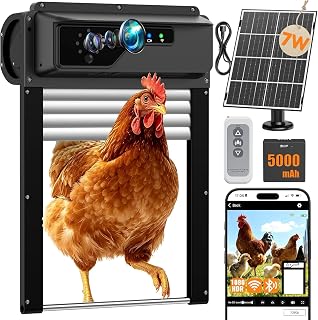 Automatic Chicken Coop Door with CameraCheck price on Amazon
CoopKeeperHQ earns a commission if you buy through our links, at no added cost to you. Affiliate disclosure.
Manual chicken coop door: what it is
A manual door is a panel on runners or hinges that covers the pop hole between the coop and the run. You open it in the morning so the flock can reach the run, and you close it at dusk so the birds are shut in for the night. There is no motor to wire, no battery to charge and no timer to set, which is the whole point: the door does what you do with it, and nothing else. The trade is the daily trip to the coop, morning and night, in all weather.
Types of manual doors
Sliding doors run up and down in runners, and they suit a flat coop wall with room above the opening for the panel to rise. Roll-up doors use a flexible curtain that winds up instead of a rigid panel, and one listing says the roll-up design saves ceiling space in the coop. A self-locking door adds wings that engage when the panel drops, so a predator cannot lift it from outside with its claws. The roll-up vs sliding comparison covers the curtain style.
See the hinged vs sliding chicken coop door comparison and the roll-up vs sliding chicken coop door comparison.
How to size the opening
Size the opening to the largest bird that will use it, not the smallest. A passage of 11.8 by 10.6 inches fits chickens, ducks and geese, per the MASTERFUN listing, so a door that size suits a mixed flock. The Budsom door (on Amazon) measures 10.98 by 14.33 inches, per its listing, and the ChickenGuard door (on Amazon) measures 25cm by 30cm with a 59.5cm runner, per its listing. Measure the birds and the wall before cutting, and leave the runners room to run true: a panel that binds in the runners is a door that sticks. The chicken coop door opening size guide walks through measuring for the opening.
See the chicken coop door opening size guide.
Fitting a manual door
Mount the door on a flat, solid part of the coop wall, with the runners straight and plumb so the panel slides without binding. The Budsom listing says its door fastens with a few screws, and the same idea holds for a manual panel: screws into solid wood, runners square to the opening, and a clear path for the panel to travel. Check the slide by hand before the flock uses it, and clear bedding and droppings out of the runners when they build up. A door that slides freely in the morning will slide freely at dusk.
Latching it against predators
A manual door is only as good as its latch. A sliding panel that rests in its runners can be lifted from outside, so fit a latch or a self-locking design that holds the panel down. One listing describes self-locking wings that engage when the door is lowered, and says foxes, raccoons and badgers are thwarted by the lock. A bolt or hasp works too, as long as it holds the panel down and a raccoon cannot work it open with its paws. Check the latch every night when you close up: a latch left open is a door left open. The predator-proof coop door guide and the latch guide cover the hardware to use.
See the predator-proof chicken coop door guide and the chicken coop door latch guide.
Manual or automatic: which suits your routine
A manual door suits a keeper who is home at dawn and dusk and likes a simple door with nothing to charge or set. An automatic door suits a keeper who is away some nights, since it opens and closes on a timer or a light sensor. The automatic listings show what that costs in complexity: the FarmParadise door (on Amazon) runs on a 5000mAh battery with a 3.7W solar panel and works for 15 days through cloud and rain, per its listing, and its remote works from up to 66 feet away. The Budsom door runs on 3 AA batteries and reverses and stays open for 10 seconds if it meets resistance while closing, per its listing. The MASTERFUN door (on Amazon) runs on a 7W solar panel with a 4000mAh battery and a remote that works from 65ft, per its listing. A manual door has none of that to look after, and it never runs out of charge. The automatic coop door guide compares the motorized kind, and the light sensor vs timer comparison explains how each mode decides when to open. The coop doors and automation hub gathers the guides for manual and automatic doors.
See the automatic chicken coop door guide and the light sensor vs timer coop door comparison.
The daily routine
Open the door in the morning, check that the panel runs free in the runners, and count heads as the flock comes out. In the evening, check the run is clear, close the door and set the latch, and count heads again from the roost. A short routine beats a long list, and a door you check each night is a door that holds. If the panel starts to stick, clear the runners and check the screws before it binds shut.
Birds, breed size, run time and climate in; coop floor, run space, roost length and nesting boxes out.
Wash your hands after handling birds, eggs or equipment, supervise children around the flock, and check local rules on flock size and roosters before you buy. For sick birds, call a poultry veterinarian or your state extension office. See CDC backyard poultry guidance. Read our Safety Disclaimer.
FAQ for the flock
Do I need a manual or an automatic coop door?
A manual door suits a keeper who is home morning and night and wants a simple door with nothing to charge. An automatic door suits a keeper who is away some nights, since it opens and closes on a timer or a light sensor. The choice is about routine, not about the door itself.
What size should a chicken coop door be?
Size it to the largest bird that will use it. A passage of 11.8 by 10.6 inches fits chickens, ducks and geese, per the MASTERFUN listing, and the Budsom door measures 10.98 by 14.33 inches, per its listing. Measure the birds and the wall before cutting the opening.
Can a manual door keep predators out?
Yes, if it latches. A panel that only rests in its runners can be lifted from outside, so fit a latch or a self-locking design. One listing describes self-locking wings that engage when the door is lowered, and says foxes, raccoons and badgers are thwarted by the lock.
Can I add a motor to a manual door later?
One door here takes a motor. The ChickenGuard listing says its door can be attached to an existing automatic coop door motor or operated manually, so that panel can start manual and gain a motor later.
How do I stop a sliding door from sticking?
Keep the runners clear of bedding and droppings, and check that the screws holding the runners are tight. A panel that binds is usually a track full of litter or a runner out of square, so clear the track first and square the runners if it still sticks.
More coop guides
- Chicken Coop Fan vs Heater: Which One Should You Buy?
- Insulated vs Uninsulated Chicken Coop: Which One Should You Buy?
- Side vs Top Door Chicken Coop: Which One Should You Buy?
- Mobile vs Stationary Chicken Coop: Which One Should You Get?
- Digital vs Analog Incubator Thermometer: Which Hatches Better?
- How to Keep Chickens Cool in Summer: Shade, Water and Airflow
- Are Backyard Chickens Worth It? Costs, Time and Eggs
- Chicken Keeping Supplies List: What You Need and What Can Wait
- How to Winterize a Chicken Coop: A Fall Checklist
- Best Chicken Coop Heater: Safer Panels for Winter
- Best Chicken Coop Bedding: Shavings, Hemp and Sand
See the chicken coop picks and the coop supply guides.