Pine Pellets vs Pine Shavings: Which One Should You Buy?
Pine pellets vs pine shavings for chicken coops: compressed pellets against loose shavings on absorbency, dust, odor control, cleanup and composting.

On this page
Pine pellets vs pine shavings is the coop bedding version of concentrated vs fluffy. Pine pellets are compressed sawdust pressed into dense nuggets that break down into sawdust as they absorb moisture; pine shavings are loose curls of kiln-dried pine that cushion the floor from day one. Pellets win on absorbency and low dust; shavings win on softness underfoot and easy spreading. Either one keeps a coop dry and smelling of pine; the right pick depends on your cleaning routine and how dusty your coop gets.
As an Amazon Associate I earn from qualifying purchases. CoopKeeperHQ earns a commission if you buy through our links, at no added cost to you. Affiliate disclosure.
The reference listings for this guide are pine pet bedding products, cat litter and small animal bedding, not chicken-specific bags. The material comparison carries over to coops, and every figure below comes from the listings cited by brand.
Pine pellets vs pine shavings: the short answer
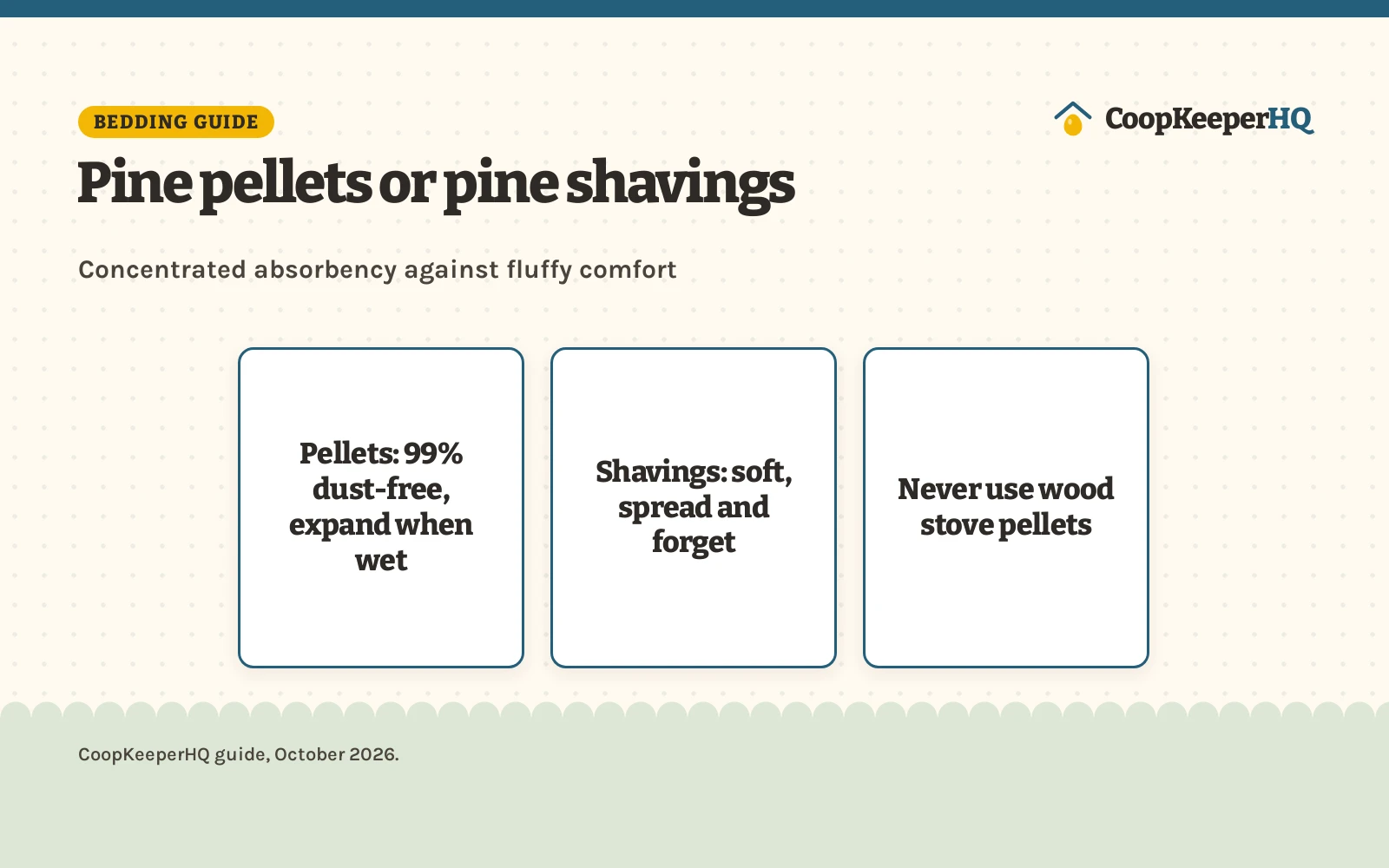
Choose pine pellets when absorbency and low dust matter most. The Small Pet Select listings offer 8, 20 and 40 lb bags of high-density pine pellets, triple-screened to 99 percent dust-free, that expand when wet and compost afterward; the NATURE’S LOGIC listing is a 12 lb bag of 100 percent ponderosa pine pellets, also dust-free and biodegradable. Choose pine shavings when you want a soft, ready-to-spread bed: the ARM & HAMMER Feline Pine Platinum is a 17 lb bag of pine shavings with baking soda for odor control, described as lightweight and low dust, while the Feline Pine Original is a 7 lb bag of sawdust shavings the maker calls gentle on paws.
What pine pellets offer
Pellets are the concentrated option. The Small Pet Select listings describe high-density pine pellets that absorb more moisture per pellet than traditional bedding, with odor control that reduces how often you change the bedding. They expand when wet, breaking down into sawdust that you scoop out, which makes spot cleaning easy: remove the damp sawdust, leave the dry pellets. The 99 percent dust-free claim, from triple-screening, is the standout for coops, where dust from bedding irritates both birds and keepers.
The listings also answer the safety questions keepers ask about pellets. Small Pet Select states its pellets are free of the toxins found in wood stove pellets, made from unbleached natural pine with no dyes or scents, and compostable for the garden. The NATURE’S LOGIC 12 lb bag makes the same core claims: 100 percent natural pine, dust-free, biodegradable, highly absorbent. For a brooder or a coop with chicks, the low-dust angle is the strongest argument pellets have.
What pine shavings offer
Shavings are the traditional option and the easiest to use: pour, spread, done. The ARM & HAMMER Feline Pine Platinum combines pine shavings with baking soda, which the listing says binds odors like tiny sponges soaking up liquid and locking away ammonia. At 17 lb it is described as lightweight, less than half the weight of clay litter, which matters when you haul bedding to the coop. The shavings come from kiln-dried lumber production reclaim, so no new trees are cut for them, per the listing.
The Feline Pine Original is the simpler 7 lb bag: sawdust shavings the maker describes as highly absorbent and gentle on paws, with natural odor control and no added fragrance. Shavings give birds a soft surface to scratch in from the first day, and they mix readily into deep litter, where the coop’s microbes do the composting work in place.
Pine pellets vs pine shavings compared
| Feature | Pine pellets | Pine shavings |
|---|---|---|
| Form | Compressed nuggets; break into sawdust when wet | Loose curls; ready to spread |
| Dust cited | 99% dust-free (Small Pet Select); dust-free (NATURE’S LOGIC) | Low dust (Platinum); no figure on Original |
| Odor control | High absorbency; fewer changes | Baking soda plus pine (Platinum) |
| Spot cleaning | Scoop damp sawdust, leave dry pellets | Remove soiled patches, top up |
| Bag sizes cited | 8, 12, 20 and 40 lb | 7 and 17 lb |
| Composting | Compostable per listings | Composts in deep litter |
| Underfoot feel | Hard until broken down | Soft from day one |
Which one suits your coop?
Choose pellets if dust is your complaint, if you spot-clean between full changes, or if you brood chicks where airborne dust matters. The 99 percent dust-free figure and the expand-when-wet behavior are the reasons. Buy the 20 or 40 lb Small Pet Select bags if you bed a full coop; the 8 and 12 lb bags suit a brooder or a few nest boxes.
Choose shavings if you run deep litter, want the softest floor for heavy breeds, or like the simplest routine: spread and forget until the clean-out. The Platinum’s baking soda is the odor-control pick; the Original is the plain pine pick.
Mix them if you want both: pellets under the roost where droppings concentrate, shavings everywhere else for comfort.
Birds, breed size, run time and climate in; coop floor, run space, roost length and nesting boxes out.
Wash your hands after handling birds, eggs or equipment, supervise children around the flock, and check local rules on flock size and roosters before you buy. For sick birds, call a poultry veterinarian or your state extension office. See CDC backyard poultry guidance. Read our Safety Disclaimer.
Common mistakes to avoid
- Buying wood stove pellets for the coop. The Small Pet Select listing warns its pet pellets are free of the toxins found in wood stove pellets. Stove pellets can contain additives unsafe for animals; buy bedding-grade pellets.
- Expecting pellets to stay pellets. They break down into sawdust as they absorb moisture; that is the design, not a defect. If you want permanent nuggets, you misunderstand the product.
- Skipping the dust question. Coops are dusty enough without bedding adding to it. The 99 percent dust-free pellet figure is the one hard number in these listings; weigh it if anyone in the household has sensitive airways.
- Comparing bag weights directly. A 40 lb bag of dense pellets covers far less volume than 40 lb of fluffy shavings. Buy by the coop area you need to cover, not by the pound.
FAQ for the flock
Are pine pellets safe for chickens?
The listings are pet-market products, but their safety claims carry over: Small Pet Select states no harmful additives, chemicals or scents, and warns against wood stove pellets with their toxins. For chickens specifically, choose bedding-grade pine pellets from a pet or farm supplier, not stove pellets.
Do pine pellets control odor better than shavings?
The pellet listings claim superior absorbency and odor control with fewer bedding changes; the Platinum shavings answer with baking soda. Both approaches work; pellets lean on absorbency, the Platinum shavings lean on chemistry.
How do you clean a pellet bed?
Spot clean: the pellets expand into damp sawdust where wet, which you scoop out, leaving dry pellets behind. The Small Pet Select listing describes this as easy spot cleaning with minimal mess.
Can I compost used pine bedding?
Yes. The Small Pet Select listings state the pellets are compostable, and shavings compost in a pile or in deep litter. Pine is slow to break down, so give the pile time and mix in nitrogen-rich material.
Which is cheaper for a big coop?
The listings give no prices, so compare by coverage: pellets come in 8 to 40 lb bags, shavings in 7 and 17 lb bags here. Pellets’ absorbency means fewer bedding changes, which the listings state directly.
More coop guides
- Hemp Bedding vs Pine Shavings: Which One Should You Buy?
- Sand vs Pine Shavings: Which One Should You Buy?
- Pine Shavings vs Straw: Which One Should You Buy?
- Best Chicken Coop Bedding for Deep Litter (2026): 4 Top Picks
See also our hemp bedding vs pine shavings and sand vs pine shavings comparisons.