Pine Shavings vs Straw: Which One Should You Buy?
Comparing absorbency, odor control, coop cleanup and nesting comfort to pick the right bedding material for a clean, dry backyard flock.

On this page
Top picks at a glance
As an Amazon Associate I earn from qualifying purchases.
- 1
 CountryMax Pine Shavings9.5/10View on Amazon
- 2
 HealthiStraw FarmStraw Coarse Cut Wheat Straw Bedding9.6/10View on Amazon
- 3
 xixisusu Pine Shavings 2 LB Bag for Chicken Coop Bedding9.5/10View on Amazon
When cleaning out the chicken coop on a Saturday morning, every keeper wants bedding that absorbs droppings, keeps moisture down and makes daily chores manageable. In the debate of pine shavings vs straw, pine shavings are the better all-around coop bedding for most backyard flocks because they absorb moisture rapidly, control ammonia odors and sift cleanly during routine coop maintenance. Straw remains a practical choice for lining nesting boxes and covering outdoor run mud, but hollow straw stems do not absorb liquid and can trap dampness on the coop floor.
CoopKeeperHQ earns a commission if you buy through our links, at no added cost to you. Affiliate disclosure.
Pine shavings vs straw: quick verdict for chicken coops
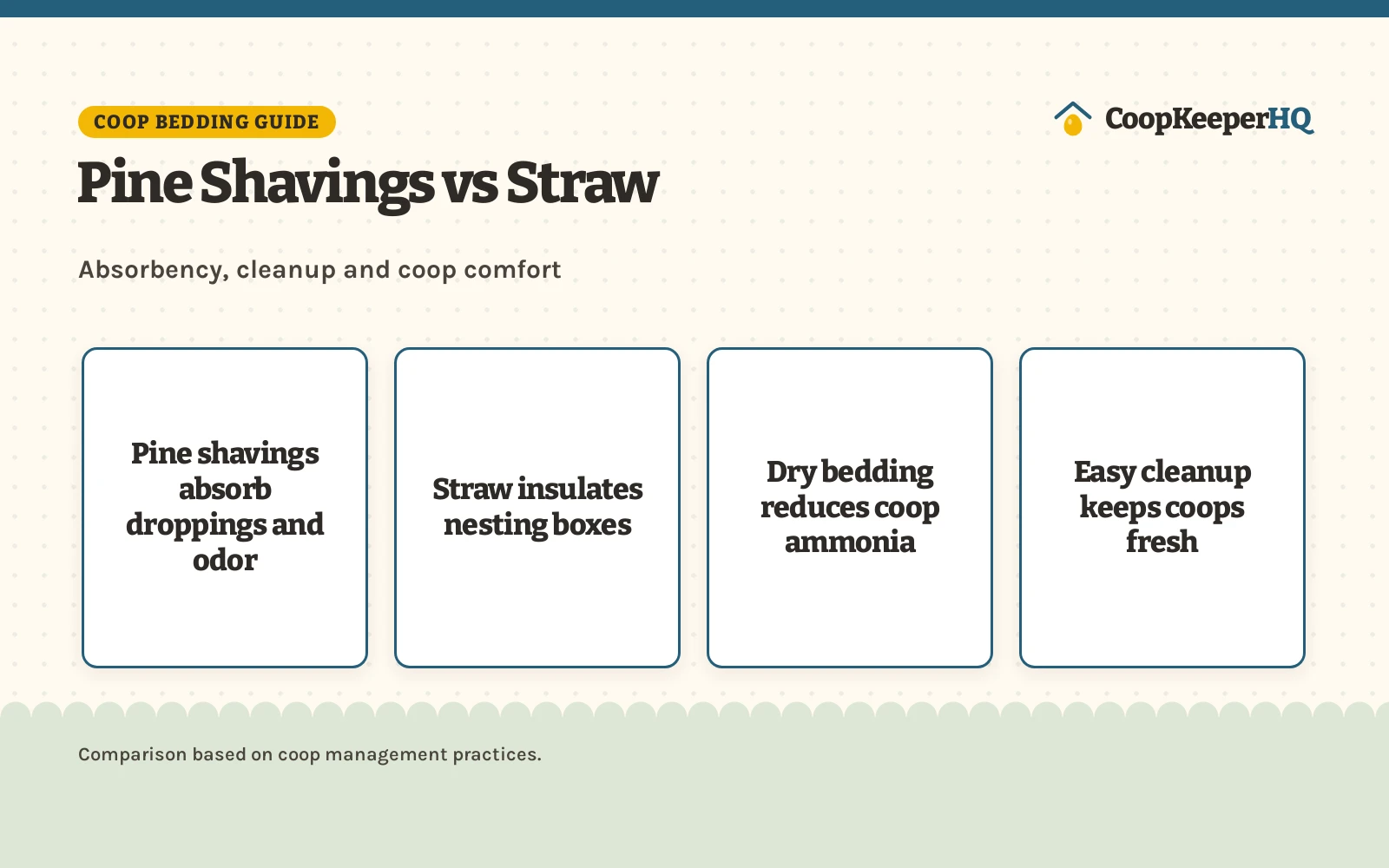
Choosing between pine shavings and straw comes down to how each material handles moisture, flock habits and coop airflow. For the main coop floor where hens spend the night over their droppings, kiln-dried pine shavings consistently outperform straw. Wood shavings draw liquid away from the surface, dry out between cleanings and prevent droppings from forming slick, smelly mats. Straw consists of hollow, waxy stalks designed by nature to shed water rather than absorb it, which means chicken manure pools around the stems instead of soaking into them.
Straw still has a respected place around the homestead. It provides soft, comfortable nesting material that cushions eggs and keeps shells clean. Straw can also provide temporary mud coverage in the outdoor chicken run after heavy rains. Inside the enclosed coop, however, pine shavings provide superior absorbency and odor suppression. If your main goal is maintaining a dry floor with minimal ammonia buildup, pine shavings are the clear choice for the coop floor, while straw works best kept to the nest boxes. Our chicken coop bedding guide compares these and other common floor coverings in more detail.
Absorbency and moisture control on the coop floor
Moisture is the primary challenge inside any chicken shelter. Chickens do not produce liquid urine; instead, their droppings contain high amounts of moisture and nitrogen. When that manure hits bedding, the material must absorb the moisture quickly to keep the air dry and protect bird footpads. Kiln-dried pine shavings excel here because the wood fibers act like tiny sponges, soaking up wetness across the entire bedding surface.
Straw behaves very differently. While straw stalks are hollow and can hold air, the outer surface has a waxy cuticle that repels water. Droppings sit on top of the straw or slide between stems down to the floorboards. Without wood fiber to pull moisture inward, the bottom layer turns slick and compacted. Wet bedding cools the coop in winter and creates humid air in summer. Keeping bedding dry is essential, and our overview of chicken coop ventilation explains how airflow works alongside absorbent bedding to exhaust dampness from the shelter.
Ammonia reduction and coop air quality
When chicken manure remains damp, bacteria break down the uric acid into ammonia gas. Ammonia irritates a chicken’s respiratory tract and eyes, and keepers can easily smell the sharp fumes when stepping inside an unventilated or soggy coop. Because pine shavings absorb wet droppings and dry relatively fast, they slow down bacterial activity and help lock up odors before fumes become overwhelming.
Pine shavings also carry natural wood scents that help mask coop smells naturally. Straw contains no natural deodorizers. When wet straw compresses under chicken feet, it creates anaerobic pockets where odor-producing bacteria thrive. In damp weather, decomposing straw develops a sour, musty smell that worsens coop air quality. For a keeper seeking a fresh-smelling coop without artificial fragrances or chemicals, pine shavings provide a noticeable advantage over agricultural straw.
Daily maintenance and ease of cleaning
Coop maintenance routines depend heavily on how easily bedding separates from droppings. Pine shavings behave much like coarse litter. Keepers can use a sifting scoop or rake to lift soiled clumps off the floor, leaving dry flakes behind. Spot-cleaning takes just minutes each morning, extending the lifespan of the clean shavings and reducing waste. When the time comes to empty the coop completely, dry shavings shovel out cleanly without clinging to corners or perches.
Straw makes spot-cleaning significantly harder. Long straw stalks interlock into a dense, fibrous web that a rake or scoop cannot sift. When chickens scratch through straw, droppings get trampled into the woven stalks, forming heavy, solid mats. Removing soiled straw requires pulling and cutting apart tangled sections with a pitchfork. Wet straw often sticks to coop plywood or vinyl flooring, turning routine chores into heavy physical labor. Keepers with busy schedules generally find pine shavings far more convenient for ongoing maintenance, as detailed in our guide on how to clean small chicken coop setups.
Nesting box comfort and egg cleanliness
While pine shavings dominate coop floors, the comparison shifts when looking at nesting boxes. Hens seek a private, comfortable bowl-shaped nest where they can lay their eggs without cracking them. Straw performs beautifully in this role. The long, pliable stems allow a laying hen to arrange a cozy depression that holds its shape. Straw provides gentle cushioning that cradles eggs safely above the hard nesting box floor.
Pine shavings also work well in nesting boxes, offering soft padding and absorbing broken egg yolk if an accident occurs. Some keepers find that vigorous hens scratch loose pine flakes out of the nest opening, leaving bare wood underneath. Straw stays in place better than light shavings because the interlocking stems resist scratching. If you prefer using pine throughout the coop, adding nesting pads or blending a small handful of straw into the shavings creates a secure nest. Check our nesting box guide and our nesting box bedding guide for additional nest management ideas.
Bedding performance in deep litter systems
Many backyard keepers practice the deep litter method, building a thick bed of bedding that stays in the coop through winter. As hens scratch through the bedding, they turn manure into the litter, where beneficial microbes slowly decompose the organic matter and generate gentle warmth. The deep litter method requires a carbon-rich material that breaks down evenly without packing into an airtight crust.
Pine shavings are widely considered the gold standard for deep litter management. As chickens scratch, small wood flakes tumble easily, distributing droppings downward and aerating the bed. Straw, by contrast, tends to mat together when walked on by hens. Instead of incorporating droppings, straw forms a dense, soggy layer on top that blocks oxygen and halts proper decomposition. Keepers attempting deep litter with straw frequently end up with wet, packed thatch that harbors mold rather than rich, composting litter. Learn more about setting up this method in our guide on the best chicken coop bedding for deep litter.
Composting coop bedding for the garden
Used coop bedding is a valuable source of organic matter for backyard gardens. Both pine shavings and straw are carbon-rich materials that balance the high nitrogen content of chicken manure in a compost pile. However, their textures influence how quickly the compost pile matures and breaks down into rich humus.
Pine shavings decompose steadily when mixed with manure, moisture and garden waste. Because individual flakes are relatively small, microbes access the wood fibers easily once properly soaked. Straw composts well too, but long straw stalks can take longer to break down unless chopped into smaller pieces before adding to the pile. Another factor with straw is sourcing: agricultural straw from grain fields can occasionally carry persistent herbicide residues that survive composting and harm garden vegetables. Flocks using clean, untreated pine shavings avoid that concern entirely. A basic list of coop management tools is covered in our chicken keeping supplies list.
Commercial packaging and stated absorbency ratings
Bedding options vary widely in how makers compress, package and measure them for backyard coops. Commercial pine shavings are commonly kiln-dried to remove natural sap and moisture, leaving lightweight wood flakes that expand significantly when fluffed out of the bag. Package sizes range from compact bags suited for a nest box to large, compressed bales that cover an entire walk-in coop floor.
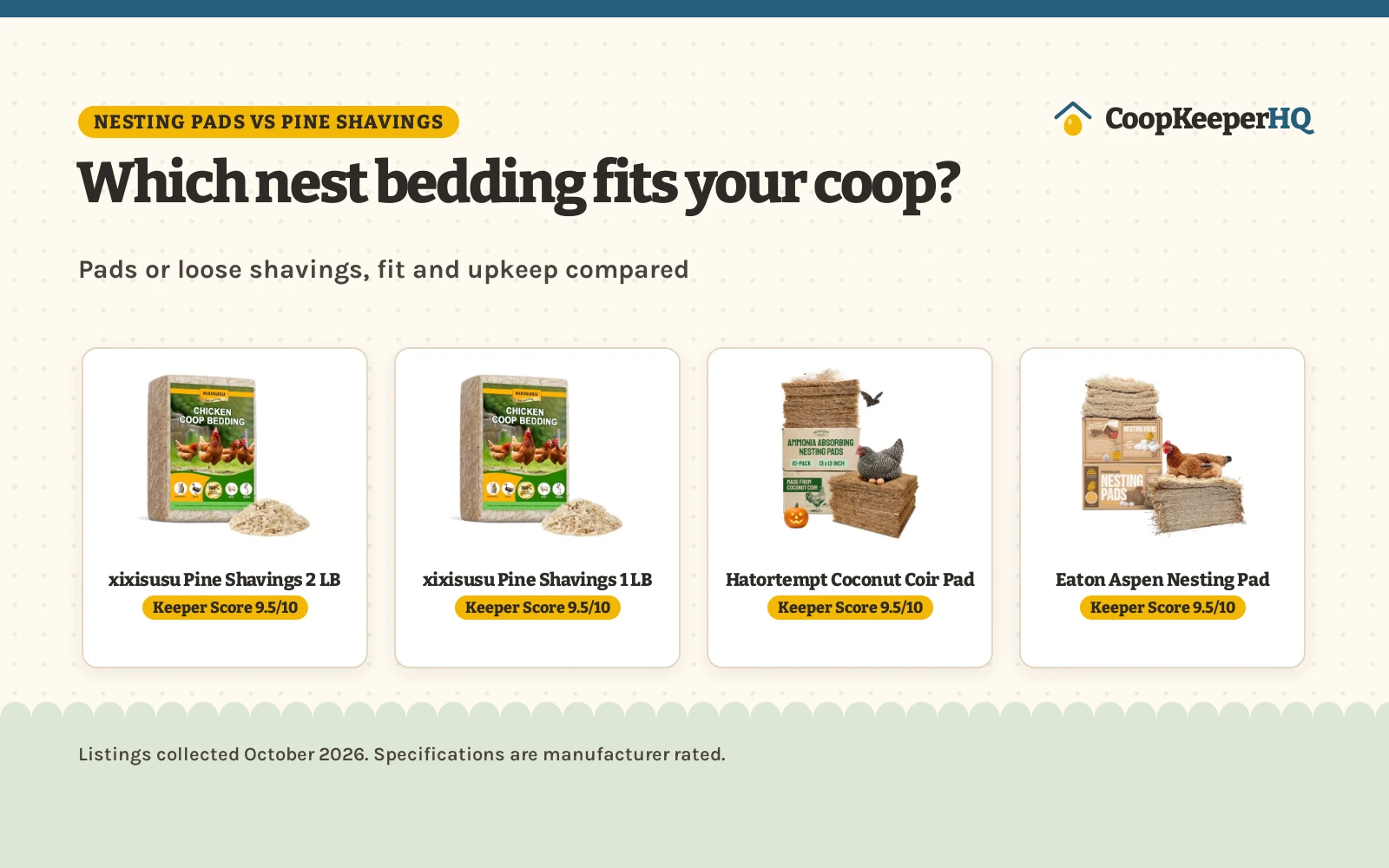
Several brands publish specific packaging measurements and performance figures for their coop bedding. Wood Smith USA packages pine shavings in 4 quart, 8 quart and 16 quart bags, stating that kiln-dried shavings absorb liquid up to 2 times their weight in moisture. For larger flocks, Small Pet Select supplies compressed pine shavings in a 2-pack totaling 282 liters, with each individual pack holding 141 liters, and lists the product as 99% dust-free. BobbleT rates its 10 pound bag of radiata pine shavings to absorb over 3 times its own weight in moisture. DOTUHAO provides a 4 pound compressed pack of shavings for keepers seeking smaller quantities. While straw is typically purchased from local farm supply stores as whole agricultural bales without standardized moisture ratings, commercial pine bedding gives keepers clearly defined package sizes and stated absorbency claims.
A simple coop bedding checklist
- Choose kiln-dried pine shavings for the main coop floor to absorb manure and reduce ammonia fumes
- Reserve clean, dry straw for nesting boxes where cushioning and shape retention protect eggs
- Spot-clean soiled droppings regularly to keep the remaining bedding clean and dry
- Avoid straw on enclosed coop floors where poor drainage can create compacted, soggy mats
- Provide adequate ventilation high on coop walls so moisture leaves the shelter freely
- Store spare bedding in airtight containers away from rain, rodents and damp ground
For more details on keeping coop floors clean, see our guide to cleaning a small chicken coop.
Birds, breed size, run time and climate in; coop floor, run space, roost length and nesting boxes out.
Wash your hands after handling birds, eggs or equipment, supervise children around the flock, and check local rules on flock size and roosters before you buy. For sick birds, call a poultry veterinarian or your state extension office. See CDC backyard poultry guidance. Read our Safety Disclaimer.
FAQ for the flock
Which is better for chicken coop bedding, pine shavings or straw?
Pine shavings are the superior choice for coop floors because they absorb moisture from droppings, reduce ammonia odor and allow easy spot-cleaning. Straw works well for nesting boxes or dry outdoor runs, but hollow straw stems do not absorb liquid and can create soggy, compacted mats inside an enclosed coop.
Can straw cause respiratory issues or mold in a chicken coop?
Straw can promote mold and respiratory irritation if it gets damp inside an enclosed coop. Because straw stems shed water rather than soaking it up, trapped moisture under bird droppings creates anaerobic, musty conditions. If you notice signs of illness in your flock, consult a licensed poultry veterinarian or your local agricultural extension service.
Are cedar shavings safe to use instead of pine shavings?
Cedar shavings should not be used in chicken coops. Cedar contains strong aromatic hydrocarbons and plicatic acid that irritate bird airways and respiratory systems. Always verify that wood shavings are kiln-dried pine or aspen rather than cedar.
Can you use straw in nesting boxes if you use pine shavings on the coop floor?
Yes, many keepers combine both materials successfully. Pine shavings keep the coop floor dry and manageable, while a layer of soft straw inside the nesting boxes creates a warm, comfortable bowl that protects freshly laid eggs from cracking.
Which bedding material is better for composting in a garden?
Both materials make excellent carbon additions to a garden compost pile when combined with nitrogen-rich chicken manure. Pine shavings break down evenly because of their small flake size, while straw stalks may require chopping or additional turning time to decompose fully.
More coop guides
- Best Chicken Coop Bedding: Shavings, Hemp and Sand
- Straw for Chicken Coop Bedding: 5 Top Picks Compared (2026)
- Best Chicken Nesting Box Bedding: 5 Clean Pads and Herbs
- Best Chicken Coop Bedding for Deep Litter (2026): 4 Top Picks
- Chicken Keeping Supplies List: What You Need and What Can Wait
- Chicken Coop Ventilation: How Much and Where
See the chicken coop picks and the coop supply guides.