Hemp Bedding vs Pine Shavings: Which One Should You Buy?
A practical guide comparing hemp bedding and kiln-dried pine shavings for coop absorbency, odor management, dust levels and everyday flock maintenance.

On this page
Top picks at a glance
As an Amazon Associate I earn from qualifying purchases.
- 1
 CountryMax 33 LB Hemp Bedding9.5/10View on Amazon
- 2
 CountryMax Pine Shavings9.5/10View on Amazon
- 3
 Hemp Bedding for ChickensView on Amazon
- 4
 Small Pet Select Hemp HURD Chicken Coop BeddingView on Amazon
- 5
 Aubiose Hemp Bedding 44 lbView on Amazon
- 6
 AubiChick Hemp Bedding 44 lbView on Amazon
- 7
 Cozy CoopView on Amazon
- 8
 Hemp BeddingView on Amazon
Scraping down the coop floor during morning chores quickly shows whether your litter is doing its job or turning into a damp crust under the roost. When deciding between hemp bedding vs pine shavings, the right choice depends on whether you prioritize moisture capture or local supply access. Hemp bedding is the better choice for keepers wanting high absorbency, lower dust, and steady odor control, whereas kiln-dried pine shavings remain the practical pick for easy farm store availability and a lower upfront purchase price.
Other options for the coop
 Hemp Bedding for ChickensCheck price on Amazon
 Small Pet Select Hemp HURD Chicken Coop BeddingCheck price on Amazon
 Aubiose Hemp Bedding 44 lbCheck price on Amazon
 AubiChick Hemp Bedding 44 lbCheck price on Amazon
 Cozy CoopCheck price on Amazon
 Hemp BeddingCheck price on Amazon
CoopKeeperHQ earns a commission if you buy through our links, at no added cost to you. Affiliate disclosure.
Hemp bedding vs pine shavings: how they compare
Bedding does heavy work inside a chicken coop. Hens spend their nights perched over the litter, and droppings accumulate along the drop zone. Good bedding captures moisture, helps prevent sharp ammonia fumes, and insulates the floor when cold winds blow. Both materials manage these core jobs, but they behave differently once your flock scratches through them.
Pine shavings are the traditional backyard standard: widely accessible, familiar to spread, and cushioning. Hemp bedding, made from the chipped woody inner stalk of the industrial hemp plant known as hurd, is a popular modern alternative. Its porous particles hold liquid inside their plant fibers rather than letting moisture pool on the surface. Choosing between them comes down to flock management, cleaning habits, and local availability.
Absorbency and coop moisture control
Moisture is the primary challenge in any chicken coop. Chickens expel moisture in droppings overnight, and damp bedding creates an environment where ammonia builds up and flock feet chill. Keeping the coop floor dry keeps your birds comfortable and your coop air fresh.
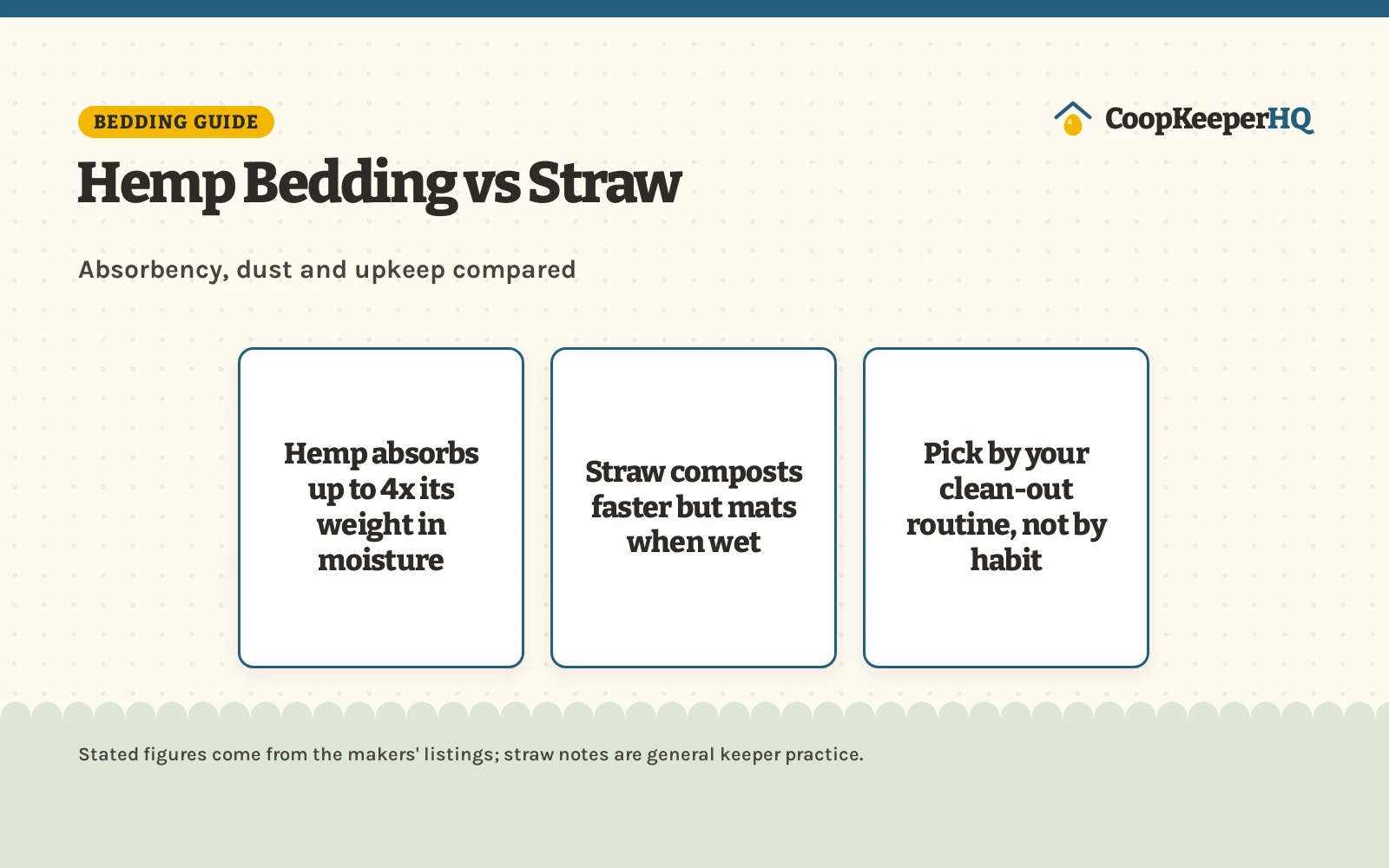
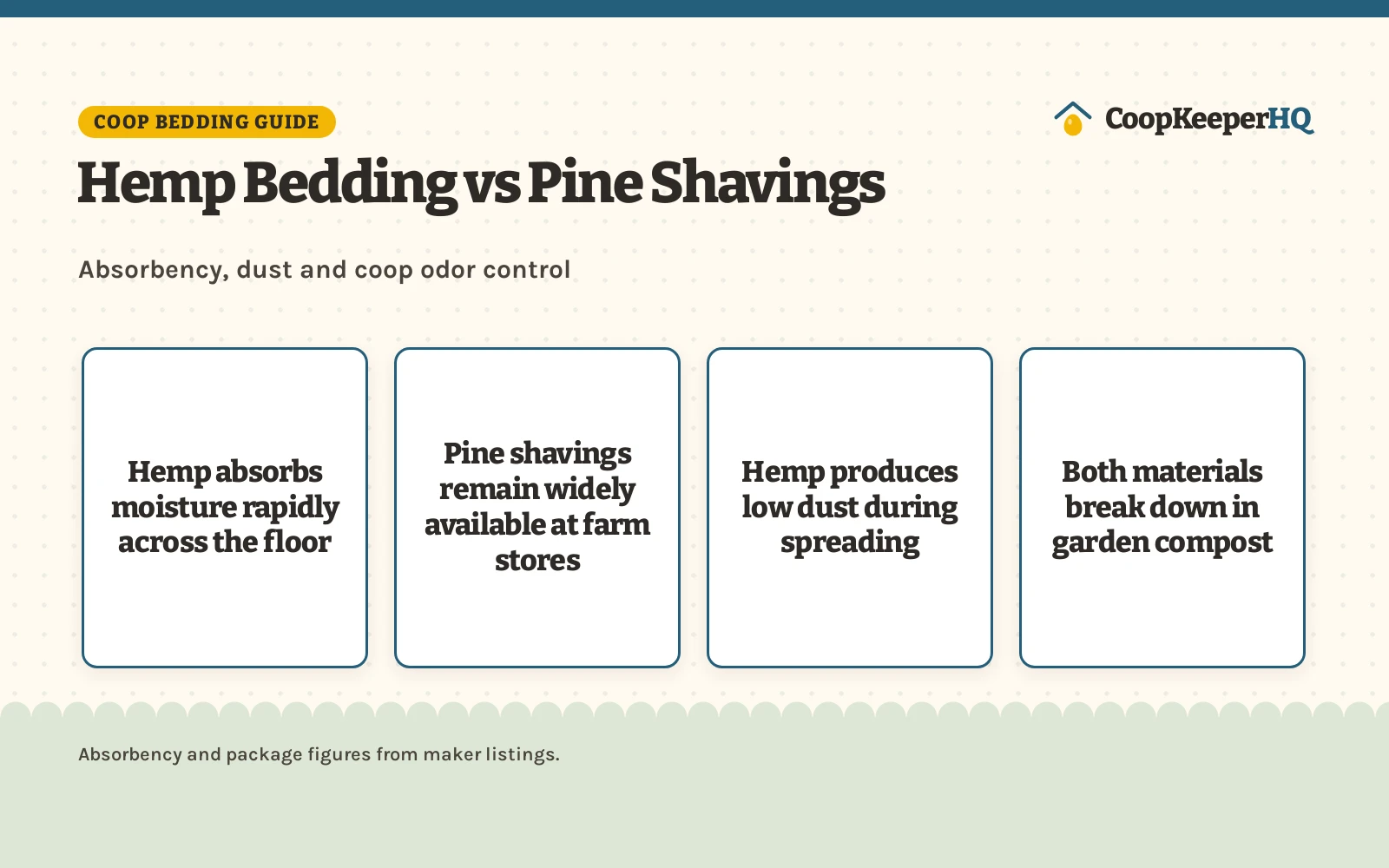
Hemp bedding captures liquid effectively because inner hurd fibers are naturally porous. Individual brand listings highlight this capacity: Eaton Pet and Pasture lists that its hemp bedding provides up to 2x the absorbency of pine shavings, absorbing 4x its weight in moisture, while Small Pet Select claims its hemp hurd absorbs up to 400% of its weight in moisture. Porous particles pull liquid inside the fiber structure, helping keep floorboards underneath dry. Kiln-dried pine shavings also absorb moisture readily, but flatter wood flakes reach saturation sooner under heavy roosting areas and require regular turning. Our deep litter bedding guide explains how managing coop moisture protects timber floorboards.
Dust levels and respiratory comfort
Chicken coops are naturally dusty spaces. Between feather dander, dried droppings, and loose feed, keepers spend substantial time managing airborne particles. The bedding you spread across the floor plays a major role in coop air quality.
Hemp bedding is screened during manufacturing to remove loose debris, producing low dust when poured or disturbed by scratching hens. That makes it pleasant to work with during chore time and helps maintain clear air inside the coop enclosure. Pine shavings vary by mill: kiln-dried large flake pine produces modest dust, while compressed shavings can release noticeable wood dust when fluffed. Low-dust bedding is particularly helpful in coops with modest airflow. Our chicken coop ventilation guide details vent placement above roost level. If a bird in your flock ever exhibits wheezing or difficulty breathing, consult a poultry vet or your state extension office rather than guessing at home remedies.
Odor control and coop air quality
Ammonia odor develops when manure moisture combines with warmth in unventilated spaces. Walking into a coop in the morning should never bring a harsh chemical sting.
Hemp bedding controls coop odors primarily through rapid moisture absorption. Ammonia forms when bacteria break down uric acid in chicken droppings in the presence of moisture. By pulling moisture away from fresh manure quickly and holding it within hurd fibers, hemp slows bacterial activity and keeps the coop smelling neutral between routine chores. Pine shavings provide a pleasant forest aroma when freshly spread. While pine shavings absorb moisture as well, their lower absorption capacity means heavy drop zones become damp more quickly, releasing ammonia unless stirred or refreshed with dry flakes. For coops near neighboring homes, steady moisture control maintains neighbor-friendly coop air.
Deep litter performance and bedding lifespan
The deep litter method builds up a thick, carbon-rich bedding pack that breaks down manure through natural microbial action. Instead of stripping the floor bare every week, keepers stir the bedding, spot clean heavy deposits, and add fresh material on top to sustain an active base.
Hemp bedding works well in deep litter systems because woody hurd particles resist compacting into an airless mat. Hens readily scratch through the material, helping aerate the pack naturally. Packaging options accommodate different flock setups: Eaton Pet and Pasture packages its hemp bedding in an 8 Lb bag as well as a 33 Lb size. HURDZ HEMP packages its hemp bedding in a 33 lbs bag, which the listing states is equivalent to 300 liters. Premium Poultry offers Cozy Coop hemp bedding in a 10lb pack and a larger 22.5lb option providing 3 Cubic Feet of volume. Because hemp particles remain loose and absorb moisture over an extended period, keepers can top off bedding rather than doing frequent full cleanouts. Pine shavings also function in deep litter setups, though flatter flakes compress faster under hen traffic, requiring more frequent pitchfork fluffing.
Composting and garden breakdown
Eventually, used coop litter heads to the compost pile. Chicken manure is rich in nitrogen, making the carbon-to-nitrogen ratio of your bedding critical for productive garden compost.
Spent hemp bedding breaks down readily in an active compost heap. Small hurd pieces decompose steadily alongside nitrogen-rich chicken manure, transforming into dark, crumbly organic matter for garden beds. Pine shavings also produce rich compost, but because wood flakes contain higher amounts of natural lignins, they require more moisture and turning to decompose fully. If applied before fully rotted, coarse wood shavings can temporarily tie up soil nitrogen. For keepers wanting quick compost turnaround, hemp bedding speeds up decomposition cycles.
Availability and package sizes
Even absorbent coop material is impractical if you cannot easily procure it or store it on your property. Considering package weight, delivery access, and bag volume helps prevent mid-season bedding shortages.
Pine shavings dominate local agricultural retail channels. Nearly every rural farm store and feed cooperative stocks compressed bales wrapped in plastic or paper. They are easy to pick up during routine feed runs, and their low upfront purchase price fits starting flock budgets well. Hemp bedding is primarily purchased through online delivery or specialty distributors, though regional feed mills increasingly stock it. Available sizes vary among brands: Aubiose supplies its hemp bedding in a compressed 44 lb bale designed for generous floor coverage. Small Pet Select sells its hemp hurd in a 36 lb package split into two 18 lb bags for easier carrying through garden gates. Cranky Frank Hemp provides a 20 LB bag yielding 75 usable liters. For keepers without a truck, parcel delivery of boxed hemp bags eliminates hauling bulky bales in a car trunk.
Nesting box comfort and clean eggs
Clean nesting boxes produce clean eggs with intact blooms that do not require aggressive washing. Bedding must provide a welcoming, cushioned bowl that hens feel safe occupying during daily laying hours.
Pine shavings remain an enduring favorite for nesting boxes. Hens naturally shape the pliable, curled wood shavings into a supportive bowl, and broad flakes cushion eggs gently as they are laid. The light color of pine also makes cracked eggs or soiled spots easy to spot during egg collection. Hemp bedding can also be placed in nest boxes, but because small hurd particles do not hold a molded shape as easily, hens can scratch loose particles out of boxes that lack a high front lip. Many flock keepers choose a practical hybrid routine: filling nesting boxes with soft pine shavings or nest liners while reserving absorbent hemp bedding for the main coop floor. Our nesting box bedding guide reviews alternative liners and clean nest box practices.
Daily chore rhythm and coop upkeep
A smooth chore routine keeps flock management enjoyable rather than burdensome. Bedding behavior influences how much time you spend each week turning litter and refreshing the floor.
In a coop bedded with hemp, morning chores focus on quick spot checks. Because hemp absorbs moisture directly around drop zones, soiled areas remain localized, allowing keepers to scoop out concentrated manure beneath roosts with a small barn shovel without disturbing the surrounding dry base. This targeted cleaning conserves bedding and extends intervals between larger coop cleanouts. With pine shavings, daily maintenance involves using a pitchfork to turn and fluff the litter, blending droppings into the carbon layer so the surface stays dry. An automatic coop door simplifies your morning schedule further by letting hens into the run at dawn while you tend to coop chores at your convenience. For a broader look at coop floorings, see our chicken coop bedding guide, our pine shavings vs straw comparison, and our sand vs pine shavings guide.
A simple bedding checklist
- Choose hemp bedding if high absorbency and steady odor control are primary goals
- Choose pine shavings if low upfront purchase price and local retail availability matter most
- Use hemp bedding if you maintain deep litter or want fast breakdown in garden compost
- Use pine shavings if your hens prefer pliable curls for shaping deep nesting bowls
- Select low-dust screened bedding to keep coop air clean for birds and keepers alike
- Ensure roof leaks are repaired and high wall vents remain open regardless of litter choice
Birds, breed size, run time and climate in; coop floor, run space, roost length and nesting boxes out.
Wash your hands after handling birds, eggs or equipment, supervise children around the flock, and check local rules on flock size and roosters before you buy. For sick birds, call a poultry veterinarian or your state extension office. See CDC backyard poultry guidance. Read our Safety Disclaimer.
FAQ for the flock
Which is more absorbent, hemp bedding or pine shavings?
Hemp bedding generally offers higher absorbency by weight than kiln-dried pine shavings due to the porous structure of inner hemp hurd. Brand listings such as Eaton Pet and Pasture rate hemp at up to twice the absorbency of pine shavings. Flatter pine flakes reach saturation sooner under heavy roosting areas.
Can you use hemp bedding for baby chicks in a brooder?
Yes, hemp bedding works well in chick brooders once chicks recognize their crumble feed. Its low dust supports clear brooder air, and its absorbency keeps brooder corners dry. Always provide proper heat and fresh water alongside clean bedding.
Does hemp bedding work with the deep litter method?
Hemp bedding performs well in deep litter systems. Woody hurd particles resist compacting into an airless crust, allowing chickens to scratch and aerate the pack naturally as manure breaks down over time.
Is pine shavings dust harmful to chickens?
Excessive wood dust can irritate flock airways in poorly ventilated coops. Always choose kiln-dried, dust-screened pine shavings rather than fine sawmill dust, and avoid cedar shavings entirely due to aromatic oils that irritate bird airways.
Which bedding breaks down faster in garden compost?
Hemp bedding breaks down faster in garden compost than pine shavings. Small hurd particles decompose steadily alongside chicken manure, whereas broader wood flakes contain natural lignins that take longer to decay.
More coop guides
- Best Chicken Coop Bedding: Shavings, Hemp and Sand
- Best Chicken Coop Bedding for Deep Litter (2026): 4 Top Picks
- Pine Shavings vs Straw: Which One Should You Buy?
- Sand vs Pine Shavings: Which One Should You Buy?
- Best Chicken Nesting Box Bedding: 5 Clean Pads and Herbs
- Straw for Chicken Coop Bedding: 5 Top Picks Compared (2026)
See the chicken coop picks and the coop supply guides.