Sand vs Pine Shavings: Which One Should You Buy?
A practical comparison of sand and pine shavings for chicken coop bedding, covering daily cleaning, moisture control, odor management and flock comfort.

On this page
Top picks at a glance
As an Amazon Associate I earn from qualifying purchases.
- 1
 Premium Chicken Sand 50 lbs9.6/10View on Amazon
- 2
 CountryMax Pine Shavings9.5/10View on Amazon
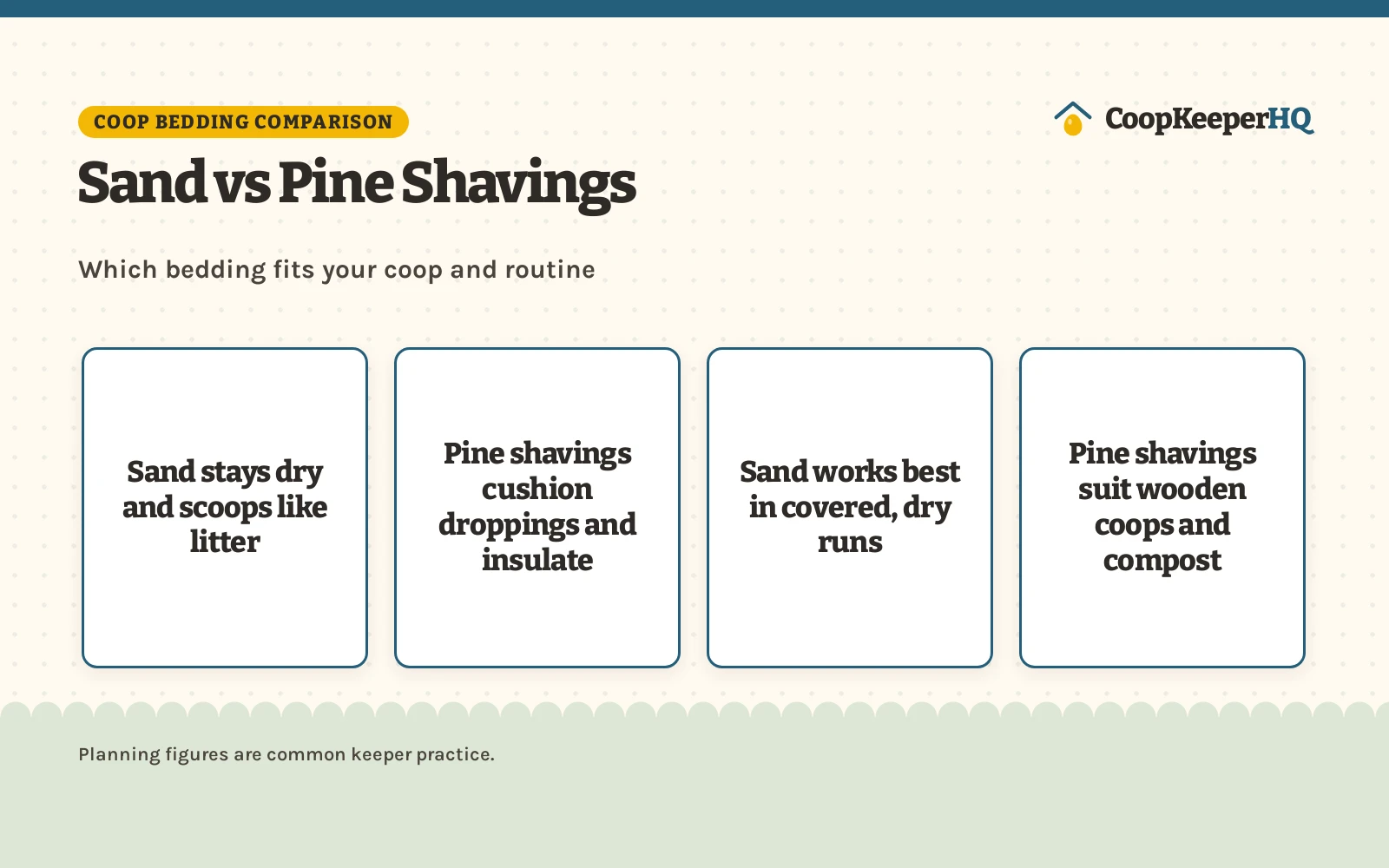
Morning coop chores always bring you face to face with what sits beneath the roosts. Choosing between sand vs pine shavings comes down to how you prefer to clean and what your coop floor can support. Sand works best for keepers who want quick daily sifting like a litter box inside a dry, covered run or a coop with a sturdy concrete floor, while pine shavings remain the dependable choice for wooden coop floors, cold climates where floor insulation matters, and keepers who compost bedding for garden soil.
CoopKeeperHQ earns a commission if you buy through our links, at no added cost to you. Affiliate disclosure.
Sand vs pine shavings: how each bedding works in a coop
Backyard flock keepers want coop flooring that keeps birds clean, cuts down on ammonia smell and keeps chore time manageable. Sand and pine shavings handle moisture and manure in completely opposite ways. Sand is an inert mineral material that does not absorb liquid. When chicken droppings land on sand, moisture evaporates quickly from the surface into moving air, leaving dried waste resting on top. You scoop the dried waste away and leave clean mineral grains behind. Our chicken coop bedding guide compares how both options perform across different setups. Pine shavings work on absorption rather than sifting. Softwood flakes cut from kiln-dried pine pull liquids inward and trap moisture deep within the bedding pack. Instead of sifting droppings, keepers stir the bedding so droppings settle underneath, or remove damp clusters as needed.
Daily cleaning routine: sifting vs refreshing
The time you spend on coop chores depends heavily on which material covers the floor. Sand calls for frequent, light attention. Because droppings sit directly on the mineral surface without soaking in, they dry out into firm clumps. Keepers use a wire sifter or a dedicated sand scooper to sift through the top layer each morning. The chore takes very little time when handled daily, leaving the coop fresh and clean. If you skip cleaning, however, droppings accumulate across the top and form a crust that takes real effort to remove. Pine shavings favor a different rhythm. Daily maintenance involves spot-checking wet spots around drinkers and giving the bedding a quick turn with a pitchfork. Many keepers prefer this workflow when cleaning a small chicken coop, because you simply scatter fresh flakes over worn spots and do a full cleanout seasonally.
Moisture control and coop ventilation
Excess humidity is among the most common challenges inside any chicken coop, especially during cold snaps and wet weather. Sand provides excellent drainage in dirt-floored runs, but it cannot absorb ambient moisture. On an impermeable coop floor, spilled water from a drinker cannot drain away through sand, leaving wet patches that dry slowly without strong airflow. In poorly ventilated spaces, lingering dampness contributes to chill that perching birds struggle to handle. Pine shavings actively pull water out of humid air and cushion wet droppings, buffering moisture swings inside the building. For this bedding to perform properly, your coop needs steady coop ventilation placed high on the walls so damp air escapes without blowing drafts across the roosts. Flocks on shavings also benefit from deep litter bedding, where beneficial microbes slowly break down wood flakes and droppings into dry compost right on the coop floor.
Coop floor compatibility and weight limits
Before purchasing sand, inspect your coop construction carefully. Sand is exceptionally dense and heavy. A thick bed across a coop floor adds massive dead weight. If you keep birds in an elevated wooden coop, that weight can bow floorboards, loosen structural joints and cause premature sagging. Sand can also trap dampness against wood, accelerating rot underneath. Sand belongs on solid ground, well-drained dirt or concrete slab foundations inside sturdy chicken coops. Pine shavings are lightweight and gentle on structural lumber. A compressed bale fluffs out into a deep, pillowy layer that places minimal strain on elevated floors. Wooden floorboards stay drier under pine flakes because wood breathes and permits air movement beneath the bedding. If your coop sits on stilts or moves around the property as a mobile tractor, pine shavings are the sensible material.
Seasonal performance in summer heat and winter cold
Weather swings bring out distinct seasonal advantages for each material. During hot summer weather, sand functions as a natural heat sink. Chickens love scratching down into cooler lower sand layers, resting warm bellies against cool mineral grains and taking refreshing dust baths that clean their feathers. If your flock experiences long, scorching summers, sand keeps birds comfortable during heat waves. In winter, that thermal mass works in reverse. Sand turns into a dense, chilly block that draws warmth away from flock toes whenever birds walk across the floor. Pine shavings contain countless tiny air pockets that act as natural insulation between cold ground and warm birds, keeping walking surfaces comfortable underfoot. Combining deep pine shavings with seasonal shelter prep creates a comfortable winter coop; review our guide to winterizing a chicken coop to confirm drafts are closed before freezing weather arrives.
Compost piles and garden soil use
What happens to spent bedding after it leaves the coop is an essential consideration for backyard gardeners. Pine shavings mixed with chicken manure create outstanding material for compost. Softwood flakes break down into rich humus over time in an active compost pile. The carbon in wood shavings balances the rich nitrogen in chicken manure, yielding dark, crumbly compost that feeds garden soil and vegetable patches. Sand presents a genuine challenge for garden disposal. Sand never decomposes or adds organic nutrients to soil. If you routinely dump spent coop sand into your garden, especially if your soil contains heavy clay, mineral grains can bind with clay and form dense, compacted ground. Keepers who use sand either sift droppings out for the compost pile and reuse the sand indefinitely, or dispose of soiled sand away from garden beds.
Dust levels and respiratory comfort
Air quality inside the coop directly affects flock vitality. Both materials produce dust, but the composition of that dust differs substantially. Sand dust is mineral-based silica. If you use fine play sand or masonry sand, scratching birds kick up a persistent haze that coats roosts, walls and delicate bird airways. To prevent respiratory irritation, keepers choose coarse construction sand, washed concrete sand or washed river sand that has been screened free of fine silt. Pine shavings generate organic wood dust rather than mineral dust. Low-grade shavings from sawmill sweepings often contain fine wood powder that irritates chicken lungs. Always buy commercial packages labeled as kiln-dried and dust-screened pine flakes. Never use cedar shavings, because cedar contains strong aromatic compounds that irritate poultry airways. Our comparison of pine shavings vs straw details why clean pine flakes provide a safer alternative than dusty farm straw. If you ever notice birds coughing, wheezing or acting lethargic, consult a poultry vet or state agricultural extension office promptly.
Run flooring vs indoor coop bedding
Many keepers find that an effective setup matches bedding choice to different parts of the flock enclosure. In an outdoor run over natural soil, coarse sand provides superb drainage, allowing rainwater to percolate into the ground without pooling into muddy ruts. Inside a covered run or enclosed coop, sand stays dry and gives the flock a clean, durable scratching surface. Our chicken run flooring guide highlights why sand excels in exterior flock enclosures. Meanwhile, wood shavings in an open run turn into a soggy, matted soup in wet weather, making them far better suited to dry, covered shelters. Indoors, where rain cannot reach, pine shavings deliver the softness, insulation and odor buffering that wooden coops demand.
Nesting boxes and egg cleanliness
Egg collection requires clean, cushioned nest boxes where hens feel secure laying their fresh eggs. Sand is rarely suitable for nesting boxes. Hens vigorously kick and scratch when settling into a nest, which flings loose sand out of the box and onto the coop floor. Furthermore, an egg laid directly on hard sand or bare box wood can crack easily, and liquid from broken eggs turns sand into messy, cemented clumps. Pine shavings excel inside nest boxes. Fluffy wood flakes cushion newly laid eggs, prevent shell cracks and absorb any stray mess before eggs get soiled. For keepers seeking low-maintenance alternatives, dedicated nest pads can also be placed under or alongside shavings; our guide to nesting box bedding compares clean liners and herbal bedding blends that encourage hens to lay in designated boxes.
Bedding selection checklist for your coop
Use this practical checklist to match bedding properties to your coop structure, local climate and cleaning preferences:
- Choose coarse sand for covered runs, concrete slab floors and keepers who prefer quick daily sifting
- Choose kiln-dried pine shavings for elevated wooden coops, cold winter regions and deep litter management
- Use coarse construction sand or washed concrete sand rather than fine masonry or play sand
- Select dust-screened softwood flakes and avoid aromatic cedar or fine wood powder
- Line nesting boxes with pine shavings or nesting pads rather than loose sand to cushion eggs
- Send spent pine shavings to your compost heap while keeping mineral sand away from heavy clay garden plots
For more equipment recommendations and essential flock gear, explore our complete chicken keeping supplies list.
Birds, breed size, run time and climate in; coop floor, run space, roost length and nesting boxes out.
Wash your hands after handling birds, eggs or equipment, supervise children around the flock, and check local rules on flock size and roosters before you buy. For sick birds, call a poultry veterinarian or your state extension office. See CDC backyard poultry guidance. Read our Safety Disclaimer.
FAQ for the flock
Can you mix sand and pine shavings together in a coop?
Mixing sand and pine shavings together creates an awkward blend that cancels out the benefits of both. Shavings clog up sifting scoops, making daily sand cleaning frustrating, while heavy sand settles to the bottom and traps moisture against the floor. Keep both materials separate rather than mixing them in the same floor layer: pick either sand or pine shavings for your coop floor based on your setup, or use sand in the run and pine shavings inside the coop.
What kind of sand is safe for chicken coops?
Coarse construction sand, washed concrete sand or washed river sand works best for chicken coops. These sands contain irregular grains that drain well without forming dense dust clouds. Never use fine play sand, sandbox sand or masonry sand, because microscopic silica dust irritates avian airways and fine grains compact easily if pecked.
Are pine shavings safe for baby chicks?
Large-flake pine shavings work well after young chicks learn to identify their crumble feed. During early brooding, keepers often place paper towels over shavings so newly hatched chicks do not accidentally peck and ingest wood flakes. Once chicks eat feed reliably, dry pine flakes provide dependable warmth and moisture control.
Does sand get too cold for chickens in the winter?
Sand acts like solid stone, holding ambient cold and chilling bird feet when they walk on the coop floor during freezing weather. In regions with severe winters, cold sand makes walking surfaces chilly inside unheated coops. Pine shavings provide far superior thermal insulation against cold floors during winter weather.
Can you use cedar shavings instead of pine shavings?
Cedar shavings should never be used in chicken coops or brooders. Cedar contains potent aromatic oils that irritate chicken respiratory tracts and cause chronic breathing discomfort. Always choose kiln-dried pine, aspen or hemp bedding to keep coop air safe and comfortable for your flock.
More coop guides
- Best Chicken Coop Bedding: Shavings, Hemp and Sand
- Pine Shavings vs Straw: Which One Should You Buy?
- Best Chicken Coop Bedding for Deep Litter (2026): 4 Top Picks
- Best Sand Scooper for Chicken Coop (2026): 5 Sifting Picks
- Best Chicken Run Flooring: Sand, Wood Chips and More
- Chicken Coop Ventilation: How Much and Where
See the chicken coops picks and the coop supplies guides.