Chicken Coop Ventilation: How Much and Where
A practical guide to chicken coop ventilation, sizing passive vents and exhaust fans, and preventing drafts to keep your flock dry and comfortable.

On this page
Top picks at a glance
As an Amazon Associate I earn from qualifying purchases.
- 1
 48x50 Hardware Cloth 1/2 Inch 19Ga9.6/10View on Amazon
- 2
 Amagabeli Hardware Cloth 1/2 inch 48 x 100 ft Hot-Dipped9.6/10View on Amazon
- 3
 Hardware Cloth9.5/10View on Amazon
Every flock owner knows the feeling of unlatching the coop door at dawn and being met by stuffy, humid air or the sharp sting of ammonia. When cold weather hits or summer humidity settles in, it is tempting to seal every crack to keep the weather outside. But chickens create a surprising amount of moisture through their droppings and breath while they sleep, and that vapor has to go somewhere. Planning proper chicken coop ventilation means establishing continuous, sheltered airflow high along the roofline and gable walls so damp air and fumes can rise out freely without creating drafts across the roosting bars.
CoopKeeperHQ earns a commission if you buy through our links, at no added cost to you. Affiliate disclosure.
Chicken coop ventilation: start high above the roosts
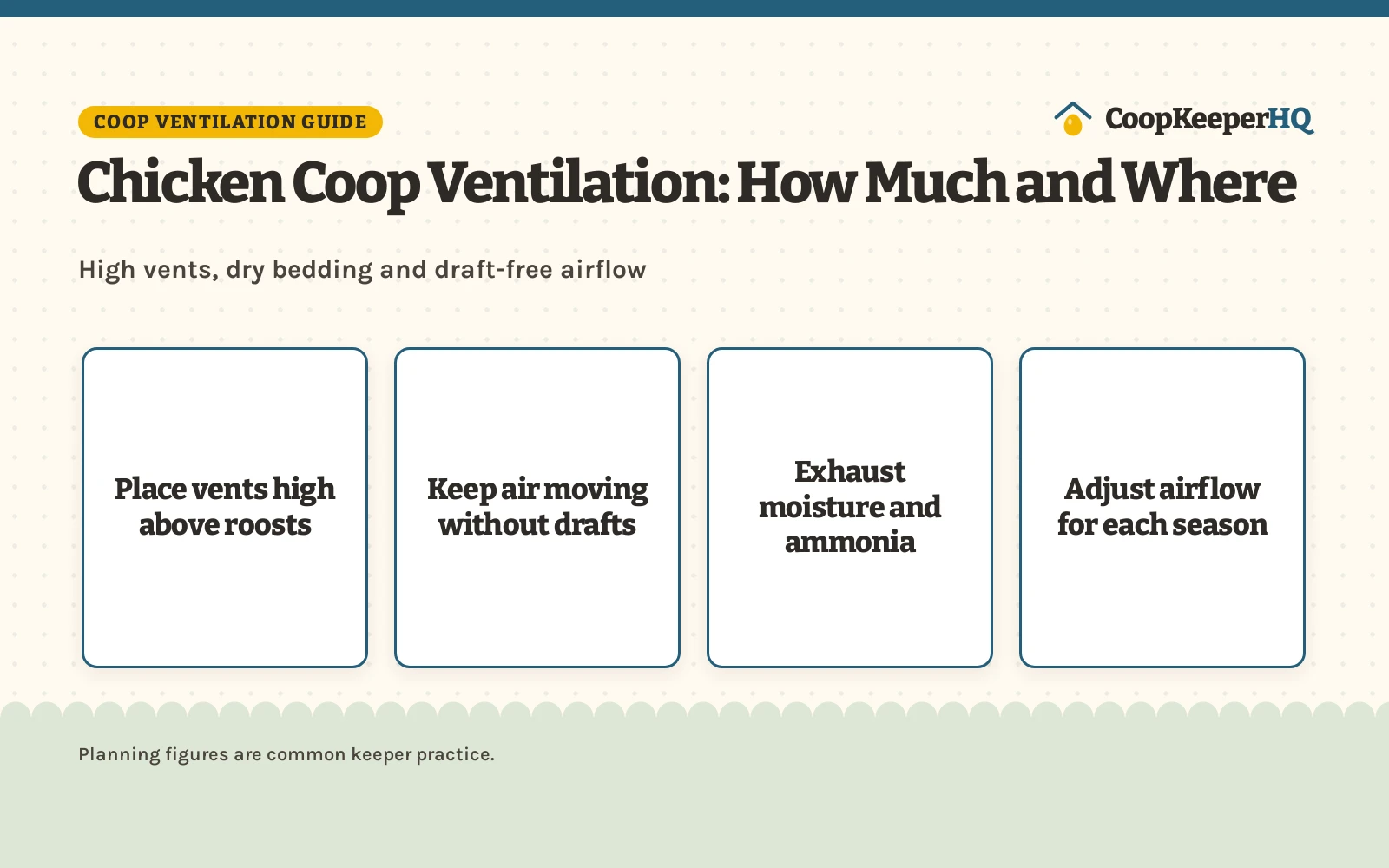
A primary principle of coop airflow is positioning exhaust vents up high, well above where your chickens sleep. Warm, moist air naturally rises toward the ceiling. When open vents sit along the roof peak or upper gable walls, that damp vapor flows out of the building. Vents placed directly at roost level, on the other hand, can direct moving air across your birds, stripping away their insulating feather warmth.
For passive airflow in traditional wooden coops, screened wall louvers offer reliable, year-round air exchange. For example, Zepoty lists a louvered aluminum gable vent designed for an 18 x 24 inch wall opening with a 20 x 26 inch outer frame, as well as a compact 10 x 10 inch aluminum gable vent that fits an 8 x 8 inch wall opening. Installing matching gable vents on opposing ends encourages an air current across the upper rafters that carries humidity away day and night. If you are comparing shelter styles for your flock, our chicken coops guide explores different coop layouts and roof shapes.
Ventilation versus drafts: protecting roosting birds
Keepers often worry that leaving vents open in cold weather will chill their birds. Understanding the clear distinction between gentle ventilation and harmful drafts puts those worries to rest. Drafts occur when wind blows directly onto roosting chickens, parting their feathers and pulling body heat away. Ventilation, by contrast, is the quiet exchange of stale air overhead while the air around the roosting bars remains calm and sheltered.
Chickens wear dense feather coats that keep them comfortable in cold weather, provided they stay dry and out of the wind. Seal unwanted gaps, knot holes, or leaky wall seams around the roosting area so air cannot whistle through at bird height. Leave your high gable and ridge openings unobstructed so moisture exits before it can settle. Our guide on keeping chickens warm in winter details how roost placement keeps birds sheltered through freezing weather.
Managing moisture, bedding and ammonia
Trapped moisture is often more troublesome for a flock than low temperatures alone. During the night, hens exhale moisture and drop wet manure onto the floor beneath the perches. If fresh air cannot circulate overhead to carry that water vapor outside, it condenses against the walls, roof sheathing, and ceiling. In freezing conditions, this condensation can settle on combs and wattles, increasing the risk of frostbite. In warm weather, trapped moisture combines with manure to create airborne ammonia fumes that irritate sensitive poultry airways.
Controlling coop humidity requires both steady airflow and dry floor management. Keep a generous layer of absorbent wood shavings, chopped straw, or sand across the coop floor to soak up droppings. Stir the bedding regularly to bring dry material to the top, and remove wet clusters promptly around entrances and water stations. For detailed advice on litter materials and moisture control, visit our chicken coop bedding guide.
Roost height, intake air and layout
Effective passive ventilation relies on a natural convective loop: fresh air enters the coop, absorbs moisture, and rises toward the upper exhaust vents. To make this system work without chilling your birds, plan your roost height carefully in relation to incoming air. Perches should sit well below the primary airflow path, maintaining a sheltered buffer of calm air around the sleeping flock.
Intake air should enter from protected locations above bird level rather than low openings that blow across the floor. Under-eave soffit openings or high, sheltered wall slots work well to introduce fresh air smoothly. When planning smaller vent cutouts, TVKJHG lists 6 x 6 inch louvered vents that fit openings of 5 inches or less. Placing louvers away from direct roosting lines helps fresh air circulate without creating drafts on the birds. If you are setting up or remodeling your coop interior, check our guide on how big should a chicken coop be to balance perching space and overall room volume.
Waterers and coop humidity
Many coop moisture problems originate from the flock drinker rather than the weather. Open water pans, fonts, and troughs spill easily when birds jostle each other, and standing water continually evaporates into the enclosed air. Spilled water inside a coop increases the moisture load that vents must clear, making it harder to keep the interior dry.
Whenever practical, position feeders and drinkers out in the covered run rather than inside the sleeping quarters. Because chickens roost through the night without drinking, keeping water outside during the day helps keep indoor bedding dry and reduces airborne dampness. If freezing conditions require keeping water inside, elevate the fount on a level stand or switch to drip-free nipples. For outdoor setup ideas and predator-safe enclosures, explore our comparison of the chicken coop and run.
Should you add an exhaust fan?
Passive vents rely on thermal buoyancy and natural breezes, which perform reliably throughout most of the year. However, during muggy summer heat waves when outside air sits completely still, passive louvers may not exchange air quickly enough to keep the coop comfortable. In such situations, installing a dedicated wall exhaust fan pulls hot, humid air out and draws cooler air inside.
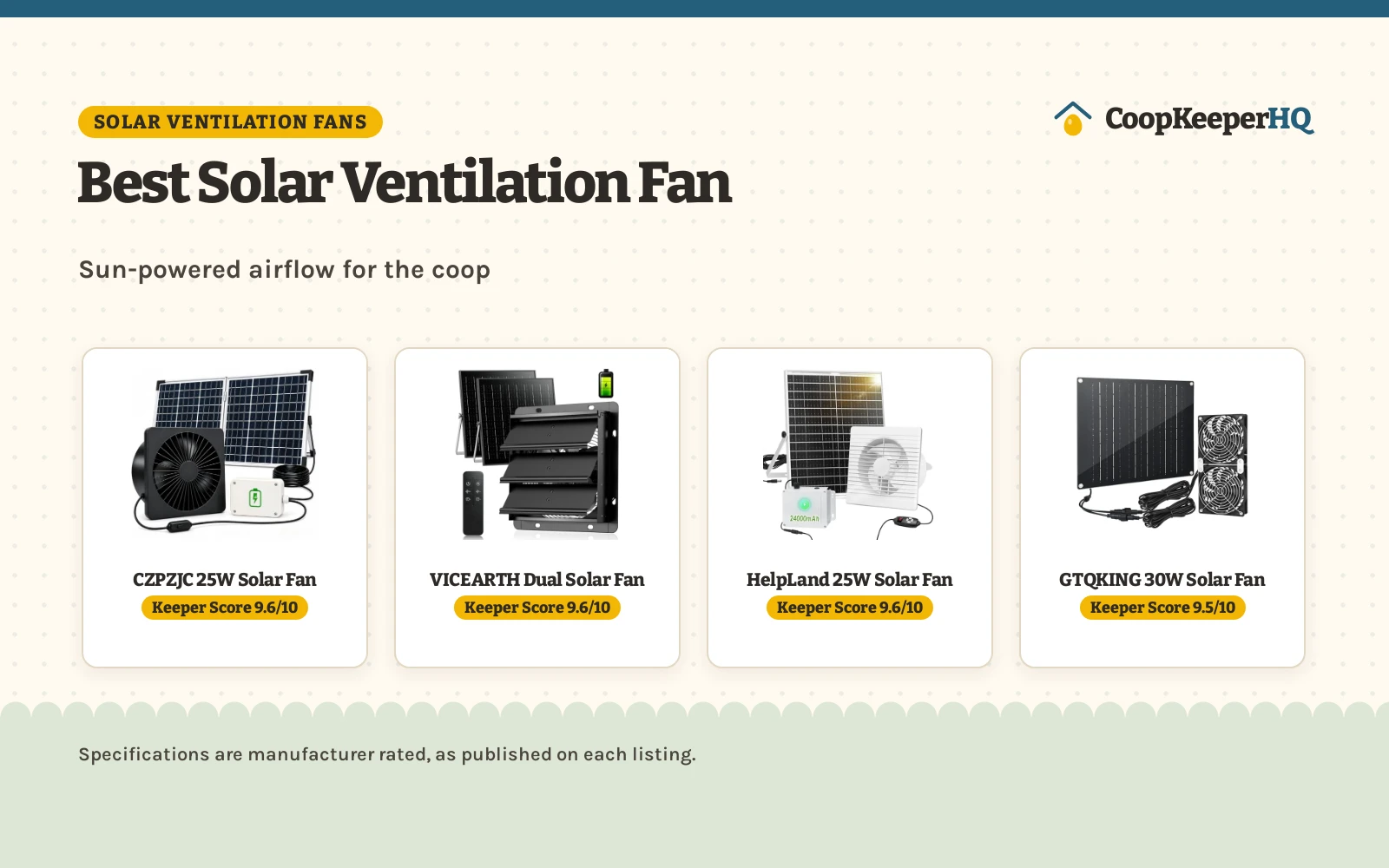
Among corded exhaust options, Windigaga lists an 8 inch shutter exhaust fan with a 26 watt motor that moves 760 CFM on 120 volts, featuring automatic shutters that close when off to block drafts and pests. For solar ventilation, TARKARI lists an exhaust kit featuring a 25 watt panel, a 2500 mAh battery, and dual 120 CFM fans, which the manufacturer suggests for a 6 x 6 ft coop. HG Power lists a 12 inch solar exhaust fan moving 764 CFM paired with a 40 watt bifacial panel. For high-volume ventilation needs, YOZON lists a 12 inch wall fan moving 1300 CFM with a 35 watt motor and a digital controller with settings from 32 to 140 degrees. To compare exhaust models, see our review of the chicken coop fan for humidity.
Adjusting ventilation for summer and winter
Coop airflow needs change across the seasons. In hot summer weather, your goal is maximum air movement and heat dissipation. Open windows, drop-down wall panels, and run doors to encourage breezes, adding wire-screened barriers so the coop can breathe freely while staying predator safe.
When winter arrives, adjust your ventilation strategy rather than shutting it down. Close lower windows and floor-level openings to prevent icy winds from blowing across the flock. Keep high gable and ridge vents open so rising moisture and ammonia escape unimpeded. Before freezing weather arrives, check weatherstripping and inspect building joints, following our seasonal checklist for winterizing a chicken coop.
Predator proofing and wire mesh
Any vent opening requires sturdy predator protection. Raccoons, weasels, rats, and snakes can squeeze through small gaps or tear through flimsy window screening and thin wire. Never rely on standard hexagonal chicken wire to cover ventilation holes, as determined predators can bend or chew through it with ease.
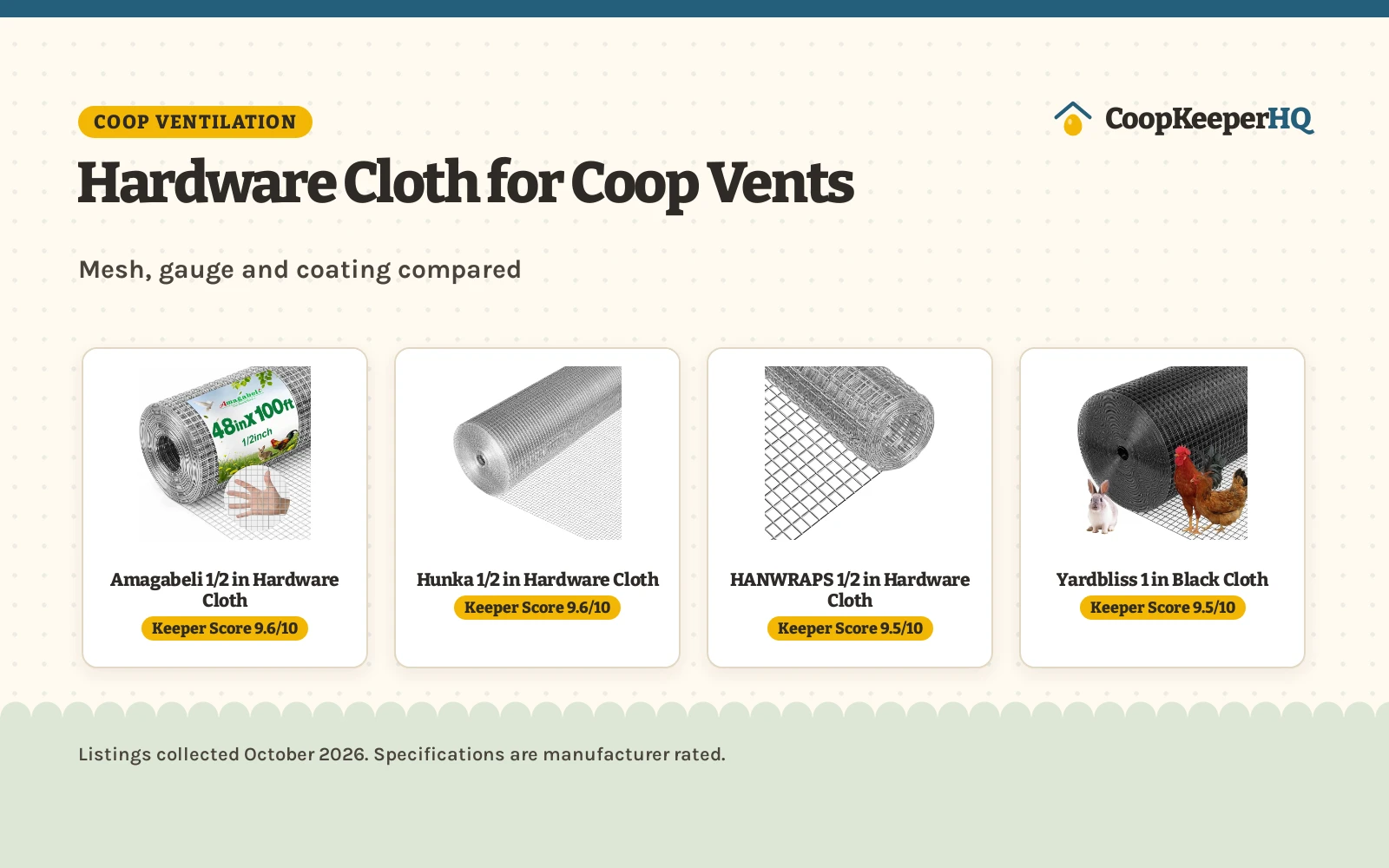
Fasten heavy welded wire mesh securely over every louver, soffit slot, window, and ridge opening using sturdy screws and washers or heavy fencing staples. Our guide to hardware cloth explains wire gauges and installation methods for predator protection. Additionally, protect wiring for any powered exhaust fan installed in the coop from curious beaks and rodents, and all outdoor electrical connections should plug into a certified GFCI outlet to protect against moisture and dust hazards.
Daily keeper routine for coop airflow
A dependable daily routine helps you catch ventilation problems before they harm your birds. Each morning when you open the coop, pause for a moment inside the doorway. Take a deep breath: the air should smell like clean wood shavings and fresh bedding. If you smell sharp ammonia or feel heavy dampness, your vents are either partially blocked or need to be expanded.
Look at the underside of the roof and window panes on cold mornings. Condensation or frost on interior surfaces is a clear signal that moisture cannot escape and ventilation should be increased. At lock-up in the evening, glance at the roosts to confirm hens are settling calmly without ducking out of drafts. Installing an automatic coop door helps ensure timely morning release even when chores run late. If you notice a bird behaving differently or showing signs of discomfort, consult a poultry veterinarian or your state extension office rather than guessing.
A simple coop ventilation checklist
- High exhaust vents remain open above roost height throughout the year
- Roosting bars are positioned safely below draft lines and incoming air currents
- All vent louvers, windows, and soffits are covered with predator-proof wire mesh
- Coop bedding is kept clean, dry, and routinely turned to absorb moisture
- Drinkers are placed in the run or raised to avoid wet litter under perches
- Powered exhaust fans are connected to outdoor GFCI outlets with protected wiring
- Interior ceiling and windows remain free of condensation and morning frost
Birds, breed size, run time and climate in; coop floor, run space, roost length and nesting boxes out.
Wash your hands after handling birds, eggs or equipment, supervise children around the flock, and check local rules on flock size and roosters before you buy. For sick birds, call a poultry veterinarian or your state extension office. See CDC backyard poultry guidance. Read our Safety Disclaimer.
FAQ for the flock
How much ventilation does a chicken coop need?
A coop needs enough continuous airflow to exhaust humid air and ammonia fumes without creating drafts across the roosts. High gable vents, ridge openings, and sheltered eave louvers provide steady passive exchange year-round, while a powered exhaust fan can provide supplemental cooling during hot summer stretches.
Where should coop vents be placed?
Primary exhaust vents belong high on the walls, at the ridge, or at the gable peaks, where warm, humid air collects. Intake openings are best placed under sheltered eaves or high wall slots, positioned so incoming fresh air circulates above the roosts rather than blowing directly across the sleeping flock.
Should chicken coop vents be closed in the winter?
No, high vents should remain open through cold winter weather. Chickens release substantial moisture through breath and droppings overnight. Closing vents traps that humidity inside, where it can settle on feathers and wattles and heighten the risk of frostbite in freezing weather.
Can a chicken coop have too much ventilation?
A coop can have too much draft, but rarely too much high ventilation. As long as openings sit well above the roosts and wind cannot blow directly onto the flock, generous overhead airflow keeps the coop dry, fresh, and comfortable in all weather.
Do I need an exhaust fan for my chicken coop?
Most backyard coops perform well with passive gable and ridge vents alone. However, in regions with extreme summer heat or persistent high humidity, a shuttered wall fan or solar exhaust fan helps move stagnant air and keep the flock comfortable.
More coop guides
- Best Chicken Coop Fan for Humidity (2026): 5 Moisture Exhaust Picks
- How to Winterize a Chicken Coop: A Fall Checklist
- How to Keep Chickens Warm in Winter Without Overheating the Coop
See the chicken coop picks and the coop supply guides.