Raising Quail for Eggs: Backyard Setup and Daily Care
Predator-proof housing, high-protein feed, shallow waterers and daily care routines for keeping a productive covey of laying quail in your backyard.

On this page
Top picks at a glance
As an Amazon Associate I earn from qualifying purchases.
- 1
 40 Quail Egg Incubator with Automatic Egg Turning HumidityView on Amazon
- 2
 Quail Egg Incubator with Automatic Turner and HumidityView on Amazon
- 3
 60 Pcs Quail Egg CartonsView on Amazon
- 4Quail Egg Incubator for Hatching 40 Quail Eggs with AutomaticView on Amazon
- 5
 JAPCHET 150 Pack 18 Grid Quail Egg CartonsView on Amazon
- 6
 Egg IncubatorView on Amazon
Walking out to check water dishes and fill feed troughs is a familiar morning rhythm for backyard poultry keepers, but game birds bring their own unique routine. Raising quail for eggs is a practical, space-conscious way to produce rich eggs in compact enclosures with fast turnaround times and manageable daily maintenance. Success with a laying covey centers on sturdy predator-proof housing, steady game bird feed, dependable water, good ventilation and calm handling.
Other options for the coop
 40 Quail Egg Incubator with Automatic Egg Turning HumidityCheck price on Amazon
 Quail Egg Incubator with Automatic Turner and HumidityCheck price on Amazon
 60 Pcs Quail Egg CartonsCheck price on Amazon
- Quail Egg Incubator for Hatching 40 Quail Eggs with AutomaticCheck price on Amazon
 JAPCHET 150 Pack 18 Grid Quail Egg CartonsCheck price on Amazon
 Egg IncubatorCheck price on Amazon
CoopKeeperHQ earns a commission if you buy through our links, at no added cost to you. Affiliate disclosure.
Raising quail for eggs: housing and predator protection
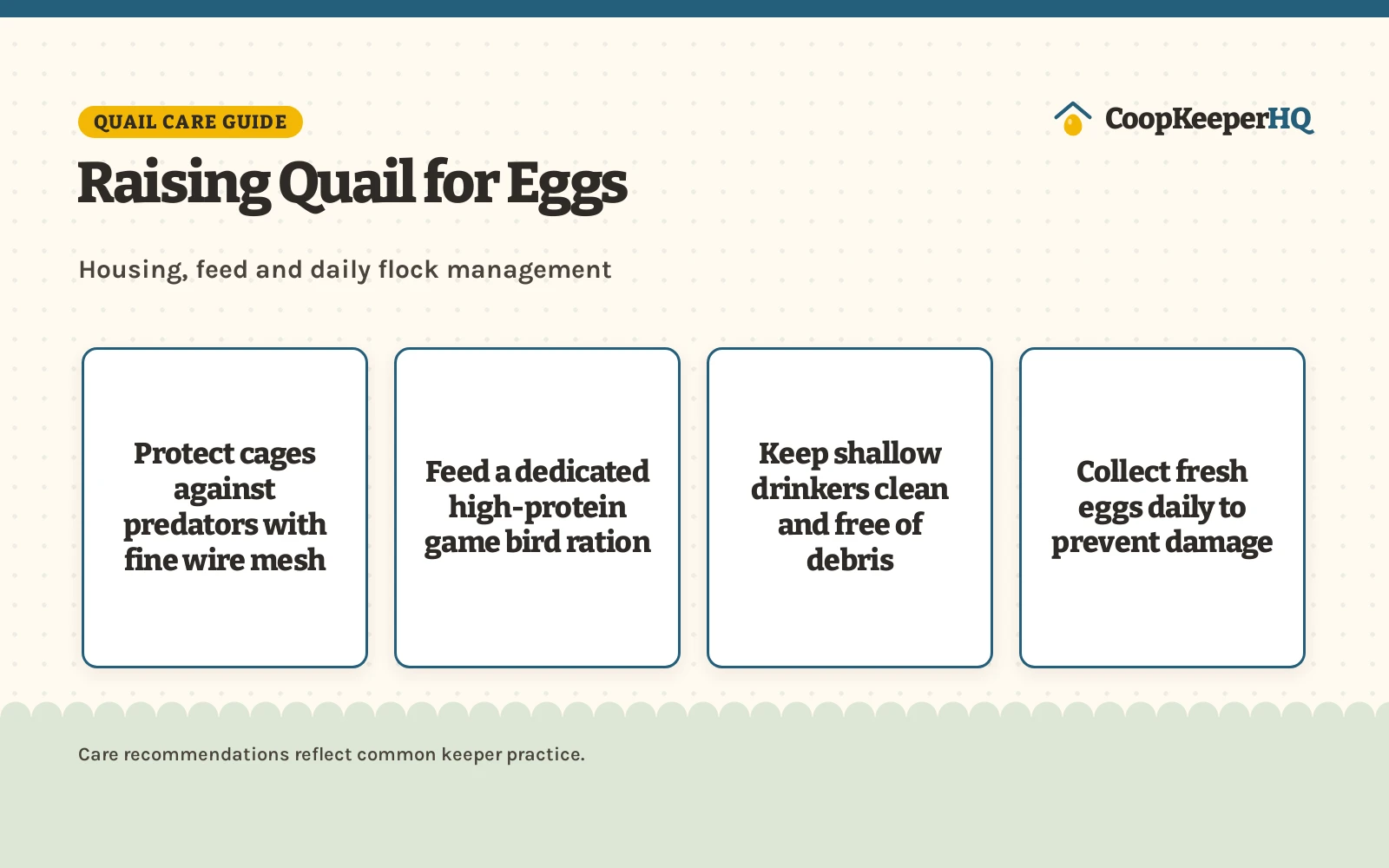
Quail have very different housing needs than standard chickens. While chickens return to a coop roost at dusk, quail stay on the ground and will flush straight upward into the air when startled. That flight response makes fully enclosed, covered pens essential. Predators such as raccoons, rats, snakes and neighborhood cats can easily reach through wide wire gaps, so enclosures require small-mesh wire coverings. Sturdy latches and buried wire skirts or elevated hutch designs keep digging pests from reaching the floor. For detailed wire choices, see our hardware cloth guide to pick predator-safe mesh for sides and vents.
Choosing the right cage size and ceiling height
Caging quail requires balancing walking room with ceiling safety. When a covey is crowded, birds peck each other and egg production drops quickly. Giving the flock adequate floor area keeps aggression down and reduces stress across the group. Ceiling height is just as critical. Standard pens should either have low padded ceilings that stop birds before they build upward speed, or tall walk-in roofs where birds can fly without hitting the top forcefully. Mid-height ceilings without padding risk head injuries when birds flush. Our quail cage size guide covers room layouts, and our quail cage guide compares manufactured enclosures for backyard coveys.
Selecting clean flooring and absorbent bedding
Clean flooring protects quail feet and keeps egg shells clean. Keepers generally choose between wire-mesh floors with drop pans underneath or solid floors covered in deep bedding. Wire floors allow droppings to fall away from eggs, but the wire must be smooth and narrow enough to support small feet comfortably. Solid floors require absorbent material like kiln-dried pine shavings or chopped hemp to manage moisture. Wet bedding quickly leads to soiled eggs and unpleasant ammonia odors in the pen. Our quail hutch bedding guide compares common materials to help maintain a dry environment.
Feeding a balanced game bird ration
Laying quail have high protein demands because they lay frequently relative to their body mass. Standard chicken layer feed lacks sufficient protein for laying quail, leading to reduced egg production and feather pecking. Provide a commercial game bird crumble formulated specifically for laying game birds. Ensure the ration contains adequate calcium for building strong eggshells, or offer finely ground calcium in a separate dish if hens require supplemental minerals. Keep feed dry in durable dispensers, such as our recommended quail feeders, which mount to pen walls and prevent scratching waste.
Keeping water clean and shallow
Clean water must be available continuously, but open deep dishes pose a drowning hazard for smaller birds. Quail can easily get soaked or drown in deep open troughs. Use shallow drinker founts or automatic watering cups mounted at breast height. Nipple waterers connected to an elevated reservoir keep water free of dust and droppings while preventing messy spills on bedding. In freezing weather, water dishes freeze rapidly due to their small volume, so check drinkers frequently throughout the day or supply warm water replacements during cold snaps.
Managing light for consistent egg laying
Egg production in quail is heavily influenced by daily light exposure. Hens require consistent daily light to maintain their laying cycle. As daylight hours shorten in autumn and winter, egg production naturally slows down or ceases completely as birds enter a resting period. Keepers who want eggs year-round often mount a gentle light on a timer inside sheltered enclosures to supplement natural daylight. If supplemental lighting is added, maintain a steady schedule, as sudden fluctuations in light hours can stress hens and interrupt laying routines.
Daily egg collection and safe handling
Quail do not use designated nesting boxes like chickens; instead, hens lay directly on the pen floor, in quiet bedding corners or on roll-away wire trays. In bedding pens, eggs rest on the floor where birds walk, while slanted wire pens channel them into roll-away collection troughs. Gathering eggs daily keeps shells clean and prevents accidental crushing. Quail eggs feature naturally beautiful speckled patterns and a tough inner membrane beneath the shell. For fresh countertop or refrigerator storage, specialized cartons keep small eggs upright and cushioned. Our small egg cartons guide covers packaging options, while our fresh egg storage guide outlines safe handling habits.
Preparing and cracking small eggs in the kitchen
In the kitchen, cooking with quail eggs is enjoyable, but their small size and tough inner membrane can frustrate cooks using traditional cracking methods. Hitting a quail egg against a countertop often crushes the shell inward into fragments. Using specialized stainless steel quail egg scissors allows keepers to snip cleanly across the shell top without pushing shell shards into the yolk. Keepers interested in raising quails for eggs find these simple kitchen tools make preparing poached eggs, appetizers and salads quick and mess-free.
Protecting coveys from extreme weather
Quail are vulnerable to damp drafts, torrential rain and extreme temperatures. In summer, pens must be situated in deep shade with ample airflow, as excessive heat causes stress and reduces laying. In winter, cold temperatures and chilly winds also suppress egg production and chill small birds quickly. Wrap wire pen sides with wind-blocking covers or heavy tarps while keeping high vents open to expel moisture and ammonia. Keep bedding dry, as quail cannot tolerate damp cold. If a bird appears unwell or lethargic, separate it promptly and contact a poultry vet or your state agricultural extension office for advice.
Daily rhythm for a laying covey
A predictable daily chore schedule keeps birds calm and laying steadily. Start each morning by checking that drinkers have fresh water and that feed troughs are filled. Remove wet bedding clumps around waterers and scoop droppings from trays. Walk the pen perimeter to ensure wire latches remain firmly closed against nocturnal predators. In the afternoon or early evening, collect newly laid eggs, checking each shell for cleanliness. Keep handling gentle and movements deliberate, as sudden noises or rough motions startle quail easily. Regular daily observation helps you notice subtle behavioral shifts across your flock before minor issues grow.
A simple quail keeper checklist
- Pen wire is predator-proof with narrow mesh and sturdy latches
- Ceiling has protective padding or ample vertical clearance
- Floor has clean, dry bedding or smooth wire with clean drop pans
- Waterers are shallow or nipple-based to prevent soaking
- Game bird ration provides adequate protein for laying hens
- Supplemental calcium is available if needed for strong eggshells
- Eggs are collected daily from bedding or roll-away trays
- Wire sides are sheltered from harsh wind and direct summer sun
For guidance on choosing the right pen setup, see our quail cage guide.
Birds, breed size, run time and climate in; coop floor, run space, roost length and nesting boxes out.
Wash your hands after handling birds, eggs or equipment, supervise children around the flock, and check local rules on flock size and roosters before you buy. For sick birds, call a poultry veterinarian or your state extension office. See CDC backyard poultry guidance. Read our Safety Disclaimer.
FAQ for the flock
How do you raise quail for eggs?
Raising quail for eggs requires predator-proof housing with narrow wire mesh, clean absorbent bedding, high-protein game bird feed and dependable water. Quail mature rapidly and start laying once they reach adulthood under steady light conditions. Keeping pens clean, dry and draft-free ensures consistent daily production.
How large are quail eggs?
Quail eggs are small compared to standard chicken eggs, featuring distinctive brown speckles across the shell. Despite their compact size, they contain a large yolk proportion relative to the egg white, giving them a rich taste in cooking and baking recipes.
How much do quail eggs cost?
Quail egg prices vary depending on regional market demand, feed expenses, local farm stand competition and whether eggs are purchased for table eating or hatching. Check local farmers markets and backyard keeper listings in your area to determine going retail rates.
What do you do with quail eggs?
Quail eggs can be fried, boiled, poached or pickled just like standard poultry eggs. Their bite-sized appearance makes them popular for party appetizers, salads and decorative culinary dishes. Because the inner membrane is remarkably tough, keepers typically use specialized snips to remove the top cleanly.
More coop guides
- Best Quail Cage: Hutches and Cages for Coturnix
- Quail Cage Size: Space, Dimensions and Setup Guide
- Best Egg Laying Quail (2026)
See the quail and game bird guides and our egg handling picks.