Treadle Feeder vs Hanging Feeder: Which One Should You Buy?
Treadle feeder vs hanging feeder compared by pest control, feed waste, capacity and training, so you can pick the right feeder for your flock.

On this page
Top picks at a glance
As an Amazon Associate I earn from qualifying purchases.
- 1
 MUDUOBAN stainless treadle feeder9.6/10View on Amazon
- 2
 Harris Farms 1000293 Galvanized Hanging Poultry Feeder9.5/10View on Amazon
- 3
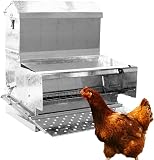 RentACoop Automatic Treadle Chicken FeederView on Amazon
- 4
 Automatic Chicken Feeder Treadle Large Poultry Feeders NoView on Amazon
- 5
 XINYI Chicken Treadle FeederView on Amazon
- 6
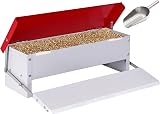 15lb Automatic Chicken Feeder Rat Proof for Duck LargeView on Amazon
Rat-proofing the feed is the job this comparison exists for. If you are choosing between a treadle feeder vs hanging feeder, here is the short answer: a treadle feeder keeps feed covered and is designed to block rats, mice and wild birds, because the lid only opens while a bird stands on the step. A hanging feeder is simpler, with no moving parts to maintain and nothing for the birds to learn, but it stays open to pests and spilled feed. Pick a treadle feeder if rats and wild birds are your problem; pick a hanging feeder if you want the simplest daily setup and do not mind topping up and sweeping spilled feed.
Other options for the coop
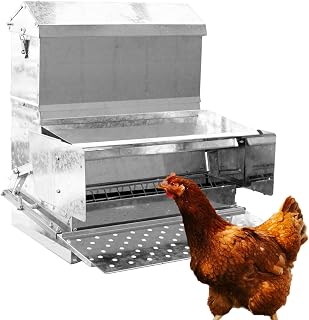 RentACoop Automatic Treadle Chicken FeederCheck price on Amazon
 Automatic Chicken Feeder Treadle Large Poultry Feeders NoCheck price on Amazon
 Chicken Feeder No Waste Rat Proof Automatic Treadle Feeder 15Check price on Amazon
 XINYI Chicken Treadle FeederCheck price on Amazon
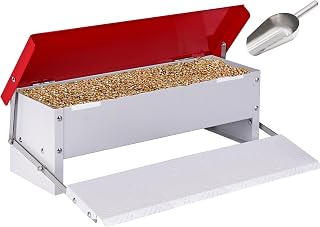 15lb Automatic Chicken Feeder Rat Proof for Duck LargeCheck price on Amazon
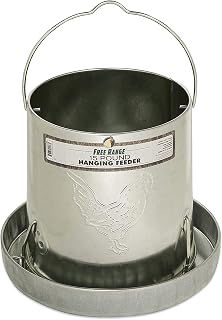 Harris Farms 1000293 Galvanized Hanging Poultry FeederCheck price on Amazon
CoopKeeperHQ earns a commission if you buy through our links, at no added cost to you. Affiliate disclosure.
Treadle feeder vs hanging feeder: the short answer
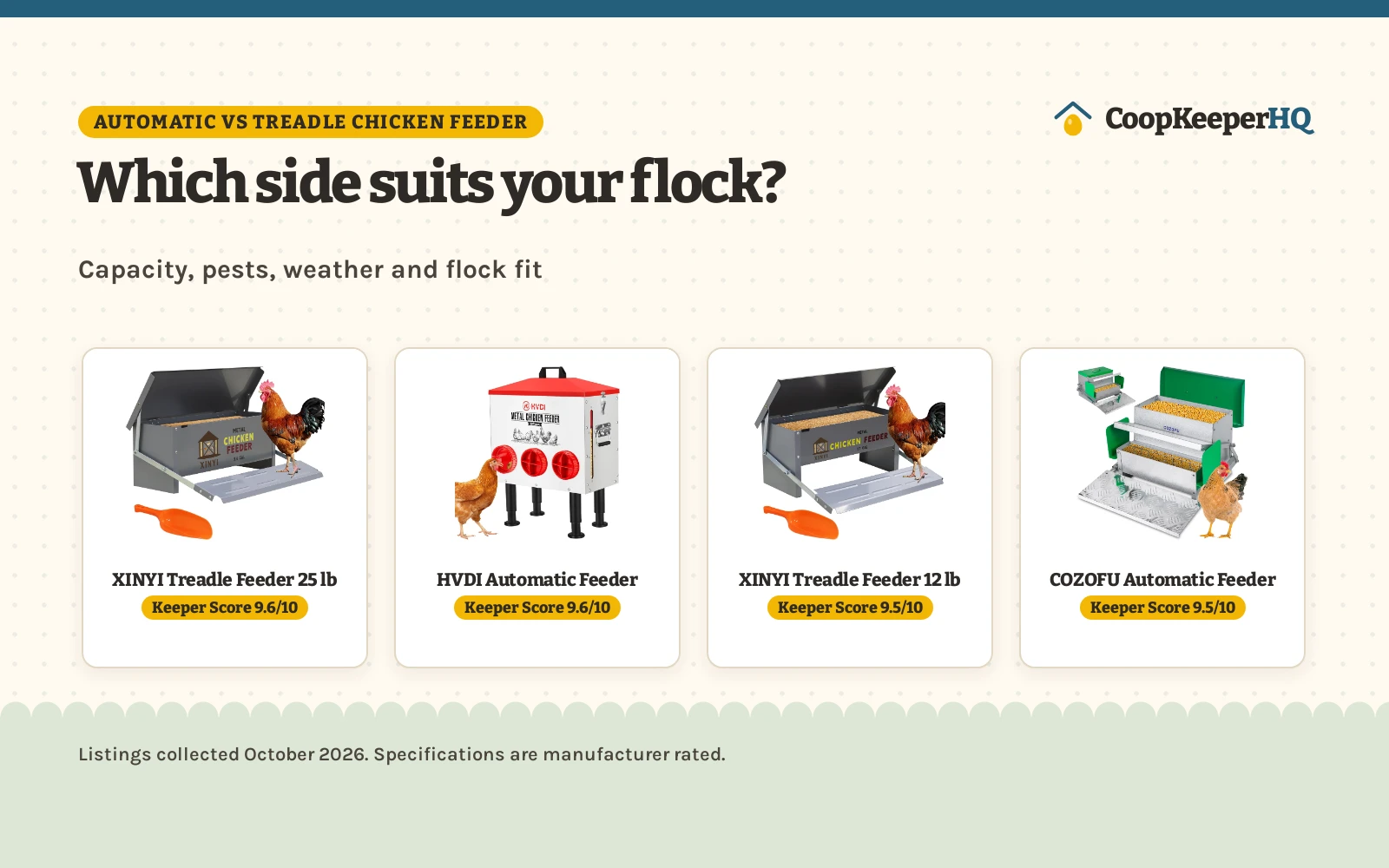
A treadle feeder is a hopper with a step. The bird steps on the treadle, the lid opens, and feed is exposed only while the bird eats. When the bird steps off, the lid closes and the feed is sealed again. A hanging feeder is a tube or trough that hangs from the coop or run roof at beak height, with feed always available in an open tray.
The trade is pest control against simplicity. The treadle design blocks rats, mice, squirrels and wild birds because the lid stays shut when no bird is on the step. The hanging feeder has nothing to press, nothing to learn and nothing to jam, but anything that can reach the tray can eat from it.
How a treadle feeder works
The bird steps onto a treadle plate, the lid swings open over the feed trough, and the bird eats with its head inside the hood. Step off, and the lid falls shut. The RentACoop 40 lb model lists a 40 lb capacity in a 21 by 14.5 by 14.5 in galvanized body, with a grate in the trough that stops birds raking feed out, an adjustable feed-flow plate that sits higher for pellets or lower for crumble and grains, and a step that can be locked shut overnight. A detachable step weight lets lighter birds like bantams and silkies trigger the treadle.
The listed weights tell you what to expect on delivery day: 27.6 pounds for the RentACoop 40 lb and 23 pounds for its 25 lb sibling. These are not light feeders, and they sit on the ground rather than hanging, so plan a level spot. The listings also mention rain hoods, anti-roost lids and blinders that guide calm, front-only feeding.
How a hanging feeder works
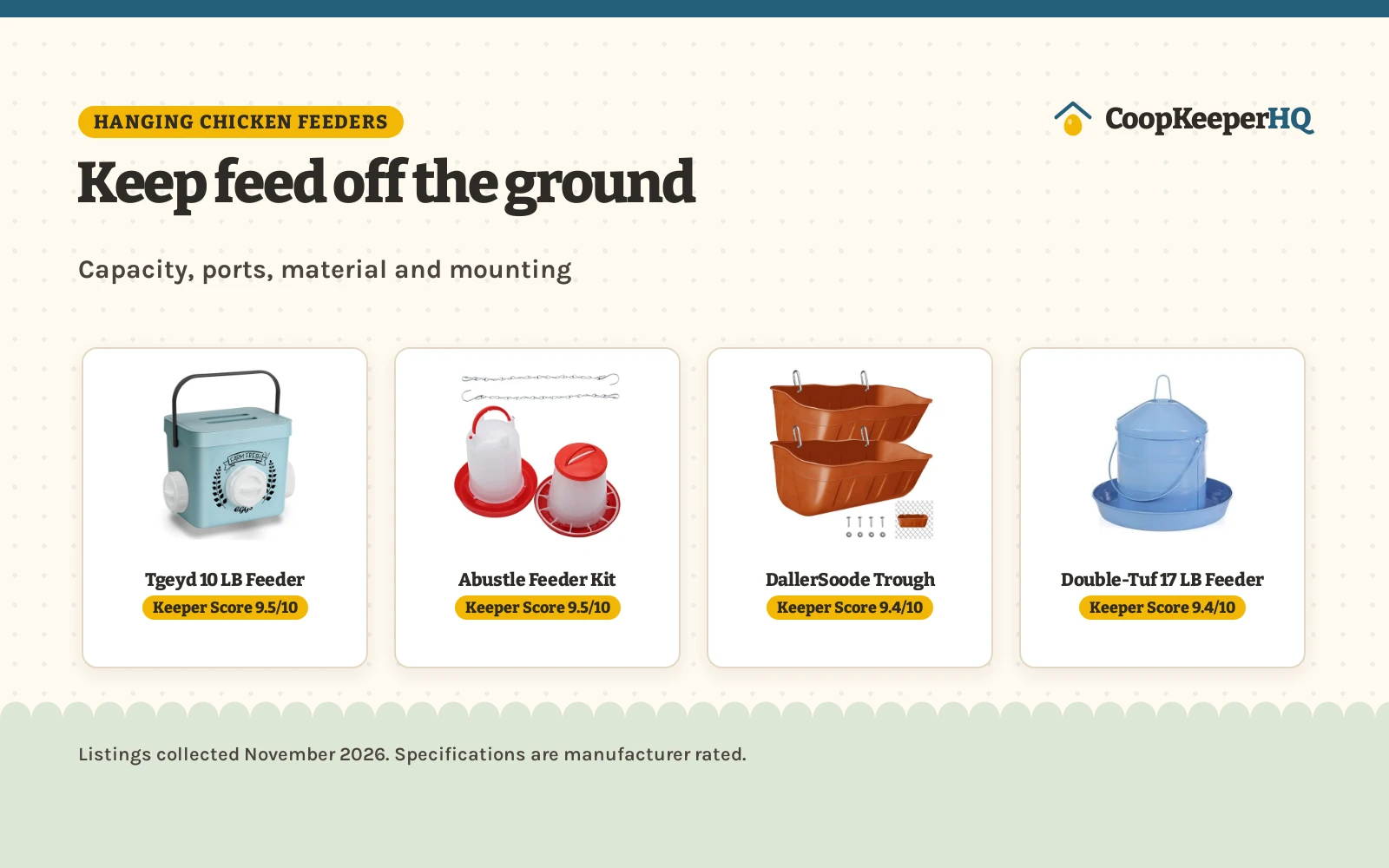
Feed drops from a tube into a tray as the birds eat, and the whole unit hangs from a chain or hook. Hang it so the tray sits at beak height and adjust it as the birds grow; feed that sits too low gets scratched full of bedding, and feed hung too high may go untouched. The open tray is the weakness and the strength: always available, always exposed.
Pest control: where the treadle wins
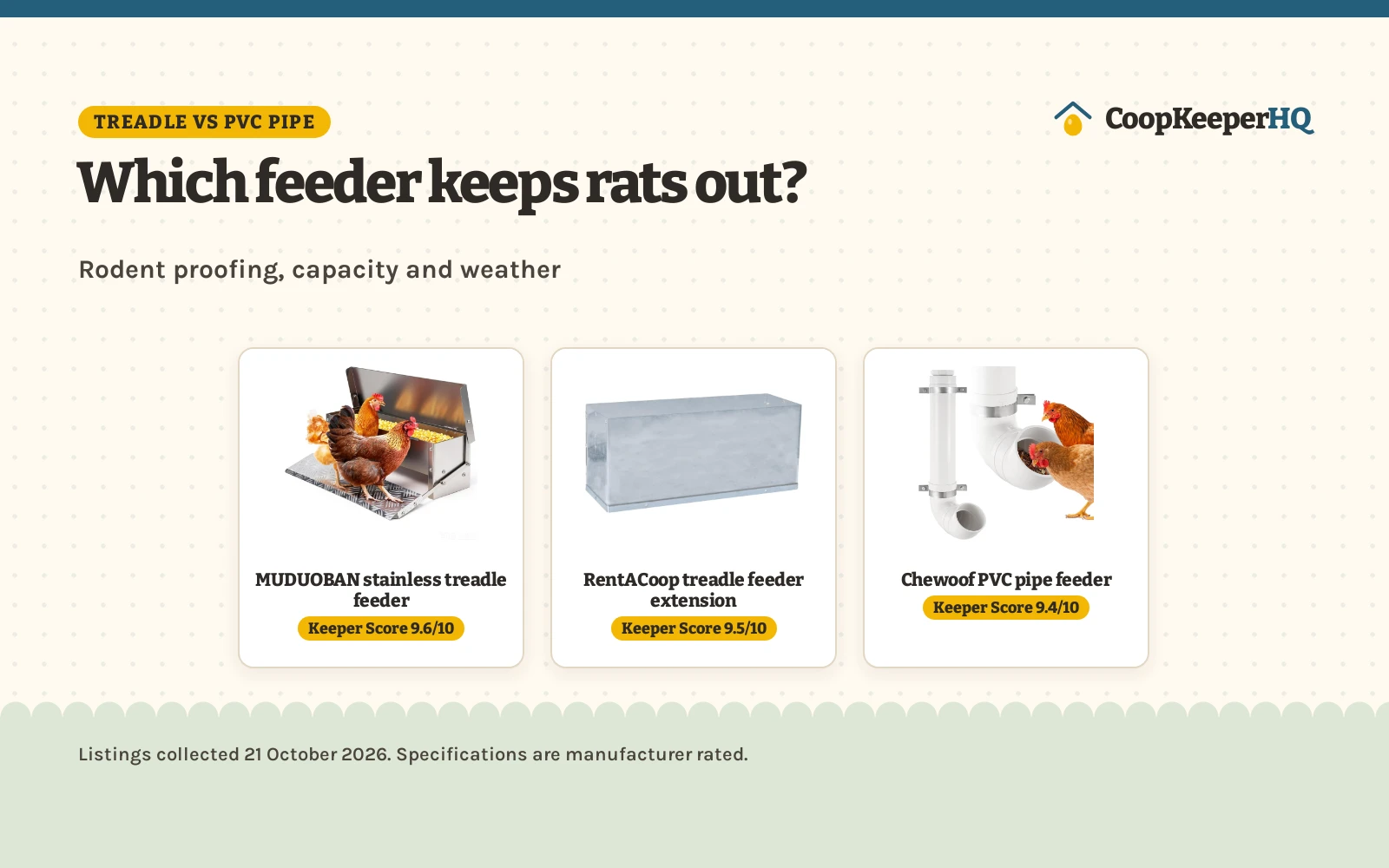
This is the main reason treadle feeders exist. Rats, mice, squirrels and wild birds steal feed from open trays day and night, and a closed lid stops them. The listings are explicit about it: rat proof, no waste, blocks rats, mice and wild birds. The lid opens under a bird’s weight, one listing cites 1.5 pound and another 400 grams, and closes automatically when the bird steps off, which is why the listings market them as rat proof. Some models add a step lock so you can shut the feeder down overnight.
A hanging feeder offers no such barrier. If rats visit your run at night, they will find the tray. The usual answer is bringing the feeder inside at night, which is a daily chore the treadle feeder skips.
Feed waste: spilling and billing out
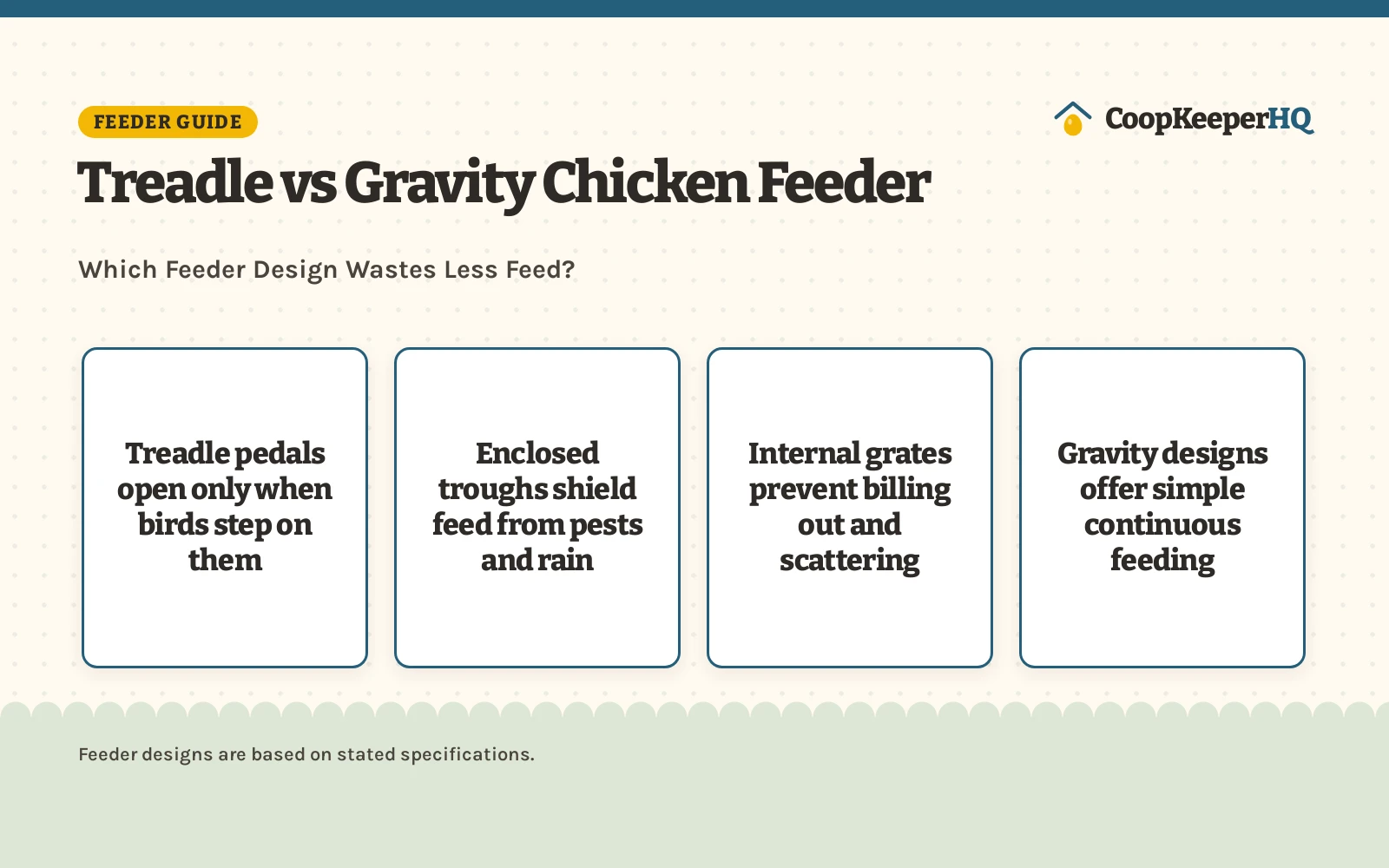
Chickens rake feed out of trays with their beaks, a habit the listings call billing out. Treadle feeders fight it with the lid, which limits feeding time, and with grates in the trough that stop the raking. Hanging feeders rely on tray design, while an open tray leaves more spilled feed on the ground than a closed hopper. Feed on the ground is feed for rats, so waste and pests are the same problem wearing two hats.
Capacity and how often you refill
Capacities in the listings run from 12 lb, the XINYI 12 lb at 1.7 gallon, and 12 kg, the VOSS Feedomatic, up through 25 lb and 40 lb models. What that means in days: the COZOFU 25 lb listing says it lasts 10 days for 6 to 12 chickens; the MUDUOBAN 15 lb listing says it feeds 6 hens for 7 days; the PAULOZYN listing says its 11 lb capacity feeds 6 to 10 chickens for about a week. A hanging feeder holds whatever its tube holds, and it can mean refilling more often for the same flock, since spilled feed is lost feed.
Training: the treadle’s learning curve
A hanging feeder needs no training: birds see feed and eat. A treadle feeder needs a few days. The usual method is propping the lid open at first, then letting the birds learn the step. Shy birds and bantams take longer; the RentACoop listings mention a detachable step weight so lighter birds can trigger it. Keep a backup feeder out during the training days so no bird goes hungry.
Weather and placement
Treadle feeders sit on the ground with rain hoods and weatherproof lids; the listings describe galvanized and stainless bodies built for outdoor use. A hanging feeder swings in the wind and does better in a sheltered spot, since an exposed tray catches rain. Either way, keep feed dry: wet feed molds, and moldy feed can sicken a flock.
Treadle feeder vs hanging feeder: which should you buy
Buy a treadle feeder if rats, mice or wild birds steal your feed, if you want to fill once and walk away for days, or if spilled feed is feeding the local wildlife. Buy a hanging feeder if your run is pest-free and you want the simplest feeder with nothing to teach and nothing to maintain. Plenty of keepers run both: a treadle feeder as the main supply and a hanging feeder in the brooder or isolation pen.
Wash your hands after handling birds, eggs or equipment, supervise children around the flock, and check local rules on flock size and roosters before you buy. For sick birds, call a poultry veterinarian or your state extension office. See CDC backyard poultry guidance. Read our Safety Disclaimer.
Whatever feeder you use, keep feed dry and clean the trough on a steady rhythm. Store bagged feed in sealed containers off the ground, and never feed moldy or musty feed. If birds stop eating or droppings change, check the feed first.
FAQ for the flock
Do treadle feeders really keep rats out?
The listings market them as rat proof, and the closed lid removes the easy meal. No feeder is perfect on its own, so pair it with sealed feed storage and closing gaps in the coop.
Will my chickens learn the treadle?
Many catch on within a few days. Prop the lid open at first, then let them work the step. Bantams and lighter birds may need the step weight adjusted so they can trigger it.
Can ducks use a treadle feeder?
The VOSS listing names chickens and ducks, and the RentACoop listings name chickens, turkeys and guinea fowl. Match the feeder to the birds you keep.
How much feed does a treadle feeder hold?
The listings cited here run from 12 lb to 40 lb. Bigger hoppers mean fewer refills, but also more feed at risk if the lid is ever left open.
Is a hanging feeder a bad choice?
Not at all. For a pest-free run it is the simplest option: nothing to learn, nothing to jam, easy to clean. It just cannot do the pest control a treadle feeder does.
More coop guides
- Treadle vs Gravity Chicken Feeder: Which Wastes Less?
- Wall Mounted vs Hanging Chicken Feeder: Which Suits Your Coop?
- Pvc vs Galvanized Chicken Feeder: Which One Should You Buy?
- Chicken Feeder Ideas: Setups and Designs for Backyard Flocks
- Best Chicken Feeder No Waste Under $50 (2026)
See the feeder and waterer guides and the coop supply guides.