A-frame vs Hoop Chicken Tractor: Which One Should You Buy?
A-frame vs hoop chicken tractor compared on size, moving, shelter, predators and flock, with real dimensions from current listings.

On this page
Top picks at a glance
As an Amazon Associate I earn from qualifying purchases.
- 1
 55ft² Chicken CoopView on Amazon
- 2
 Super Large Chicken CoopView on Amazon
A-frame vs hoop chicken tractor is the first choice a mobile-coop keeper faces. An A-frame chicken tractor is a triangular, house-shaped mobile coop with a peaked roof and solid ends, while a hoop chicken tractor is a curved tunnel, usually bent pipe or wire hoops covered in mesh or a tarp, that you drag to fresh grass. Buy the A-frame if you want a self-contained coop and run in one unit for a small flock; buy the hoop if you want the most grazing area for the least material to give birds fresh ground. The rest of this guide walks through size, moving, shelter and predators so you can match the style to your flock.
Other options for the coop
 55ft² Chicken CoopCheck price on Amazon
 Super Large Chicken CoopCheck price on Amazon
CoopKeeperHQ earns a commission if you buy through our links, at no added cost to you. Read our affiliate disclosure.
What an A-frame chicken tractor is
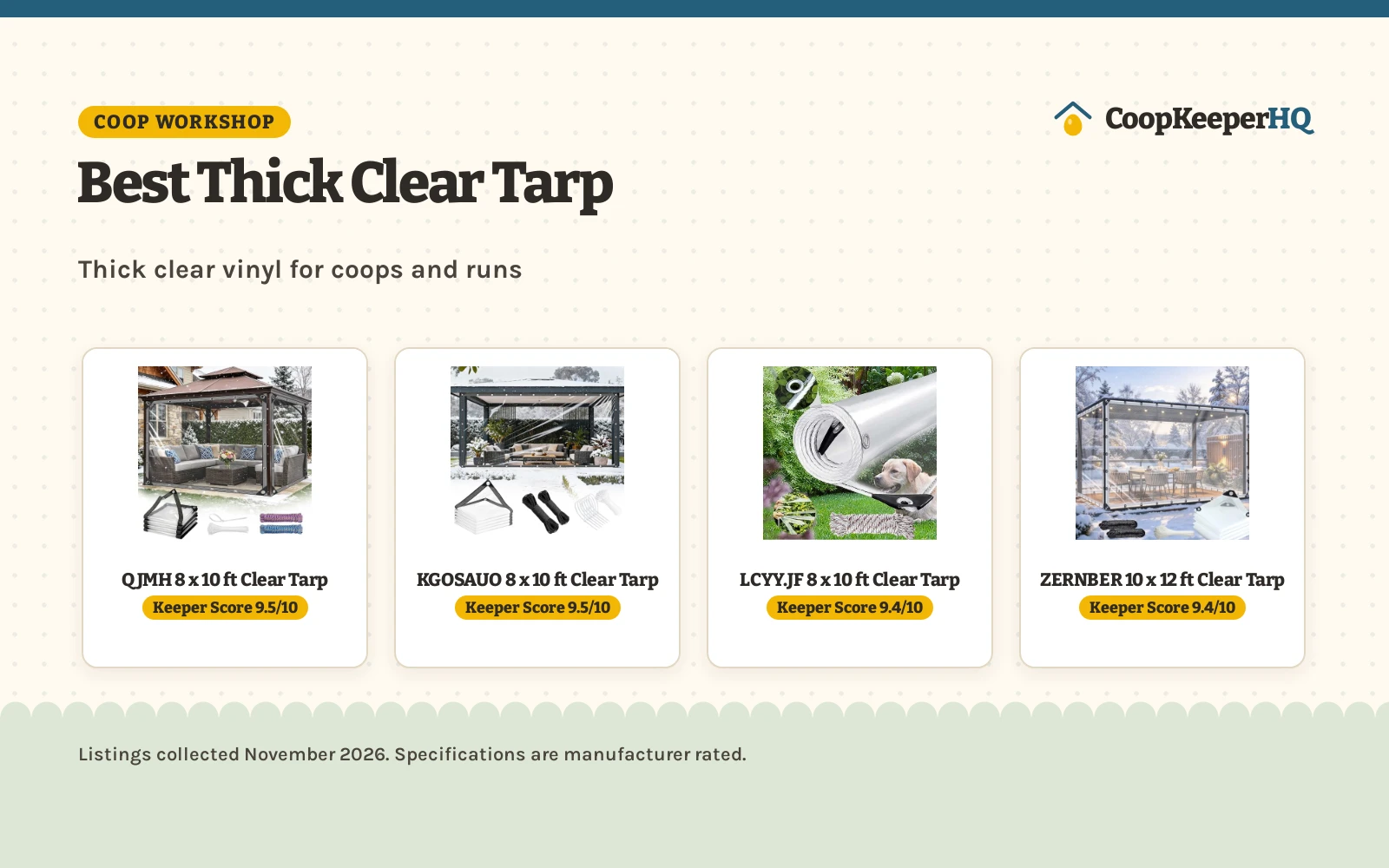
An A-frame is exactly what the name says: two sloped sides meeting at a peak, like the letter A, with triangular ends. The sloped roof sheds rain, the enclosed ends give birds a sheltered corner, and the whole unit sits on skids or wheels so you can move it. A small A-frame like the Phonjoroo measures 47.2 x 23.2 x 17.7 inches, while larger wheeled tractors run 81.5 x 25.6 x 44.1 inches on the Lovinhut and 95 x 32 x 45 inches on the Magazoopet. The A-frame is the classic backyard tractor shape because it needs no curved parts: straight lumber, a few screws and wire make the whole thing. If you are new to chicken tractors, our what is a chicken tractor guide covers the basics.
What a hoop chicken tractor is
A hoop tractor is a tunnel: hoops of pipe, conduit or wire bent into half-circles, joined by a ridge pole and covered with poultry netting, hardware cloth or a tarp. There are no solid ends unless you add them. The style shines in length: the Hogarjal tunnel comes in 79 and 157 inch lengths at 21 inches wide and 32 inches tall, and the WGOHOSE tunnel runs 165 x 24 x 22 inches. That long, low tunnel gives birds a big run of fresh grass for very little material. Hoop tractors cover more ground with less material, which matters when you move the unit daily.
Size and flock: how many birds each style holds
Match the tractor to the flock, not the other way around. Wheeled A-frame tractors in the listings hold small flocks: the Magazoopet at 95 x 32 x 45 inches is listed for 3 to 6 chickens, and the Lovinhut at 81.5 x 25.6 x 44.1 inches is listed for 4 to 6 chickens. Larger fixed coops with runs go bigger, the TIMHAKA at 94.5 x 50 x 46 inches is listed for 4 to 8 chickens and the Joyqinchen at 76.65 x 53.81 x 36.81 inches for 5 to 7, but those are stationary coops, not tractors. Hoop tunnels do not carry bird counts in these listings because they are runs, not coops: a 157-inch Hogarjal tunnel at 21 inches wide covers a long run of fresh grass, which suits a small flock moved daily. For the full picture on space, see our how big should a chicken coop be guide.
Moving them: wheels, skids and folding
You move a tractor every day or two, so the moving system is half the purchase. A-frame tractors often ride on wheels: both the Magazoopet and Lovinhut list wheels, and the TOPOWN kit is a dedicated chicken tractor wheel kit with a lift handle for adding wheels to a home-built frame. Hoop tunnels move differently: the Hogarjal folds down for moving, storage or reconfiguration, and its kit includes a puller for dragging it to fresh ground. In general, a wheeled A-frame rolls easiest on lawns, while a light hoop tunnel drags fine on flat ground but snags on rough pasture. If your ground is uneven, wheels win.
Shelter and weather
The A-frame’s peaked roof is real shelter: rain runs off, and the triangular ends block wind from two directions. Birds can ride out a shower inside. A hoop tunnel is a run, not a house: the Hogarjal kit includes a sun protection net for shade and ventilation, but the open tunnel design means driving rain gets in unless you add a tarp. For a hoop tractor used as full-time housing, you still need a small coop or shelter box at one end for night roosting and laying. For an A-frame, the house is built in, which is why A-frames suit keepers who want one unit that does everything.
Predators and security
Both styles need the same defenses: buried or skirted wire, secure latches and no gaps. The Hogarjal kit includes heavy-duty U-shaped stakes to pin the tunnel down, which matters because a light hoop tunnel can shift in wind or under a determined predator. A-frame tractors sit on a rigid wooden frame, which helps, but their wooden frames give digging predators a corner to work. Whichever style you choose, use hardware cloth rather than chicken wire on the lower panels, stake or skirt the base, and lock birds in the solid section at night.
Build vs buy
A-frames are the easier home build: straight cuts, no bending, and the triangle is naturally rigid. Hoops need a pipe bender or pre-bent hoops, but use less lumber and go up fast once the hoops are made. If you buy instead of build, compare on the figures that matter: footprint in inches, whether wheels are included, and the listed flock size. The Magazoopet and Lovinhut include wheels; the Hogarjal includes stakes, zip ties and a puller. Our best chicken tractor roundup compares current models.
A-frame vs hoop chicken tractor: which should you buy?
Buy an A-frame if you want one unit that houses and runs a small flock, you value a real roof, and you will move it on wheels across a lawn: the 81.5 to 95 inch wheeled tractors listed for 3 to 6 chickens are the sweet spot. Buy a hoop tunnel if you want the most grazing area for the money, you already have a coop for nights, and you move the run often: the 157 and 165 inch tunnels cover far more ground than any A-frame at a similar price. Many keepers end up with both: an A-frame as the mobile coop and a hoop tunnel as the daytime run.
FAQ for the flock
Can a hoop chicken tractor be used as a full-time coop?
Not on its own. A hoop tunnel is a run: it gives grazing space but no solid roosting or laying area. Pair it with a small coop at one end, or choose an A-frame that includes the house.
How often should I move a chicken tractor?
Often enough that the grass recovers: daily in the growing season for small tractors on a small flock. Wheeled A-frames and folding tunnels both move in minutes once you have the routine.
How many chickens fit in a 95-inch tractor?
The Magazoopet at 95 x 32 x 45 inches is listed for 3 to 6 chickens. Longer hoop tunnels like the 157-inch Hogarjal cover more ground but carry no bird count in the listing, since they are runs rather than coops.
Do chicken tractors need wheels?
Not always, but they help. The Magazoopet and Lovinhut include wheels, and the TOPOWN kit adds wheels with a lift handle to a home-built frame. Light hoop tunnels can be dragged or folded instead.
Which style is better for predators?
Neither is automatically safer. Stake hoop tunnels down with the included U-shaped stakes, skirt the base of either style, use hardware cloth on lower panels, and lock birds in the solid section overnight.
More coop guides
Related: our chicken coop vs chicken tractor comparison and meat bird tractor sizing guide.