What Is a Chicken Tractor?
A chicken tractor is a floorless mobile coop that lets backyard poultry forage on fresh grass while staying protected from predators.

On this page
Top picks at a glance
As an Amazon Associate I earn from qualifying purchases.
- 1
 Chicken Coop with Wheels9.6/10View on Amazon
- 2
 Wooden Chicken Coop9.5/10View on Amazon
- 3
 Aivituvin Mobile Chicken Coop with Wheels for 4-6 Chickens9.5/10View on Amazon
- 4
 55ft² Chicken CoopView on Amazon
- 5
 Super Large Chicken CoopView on Amazon
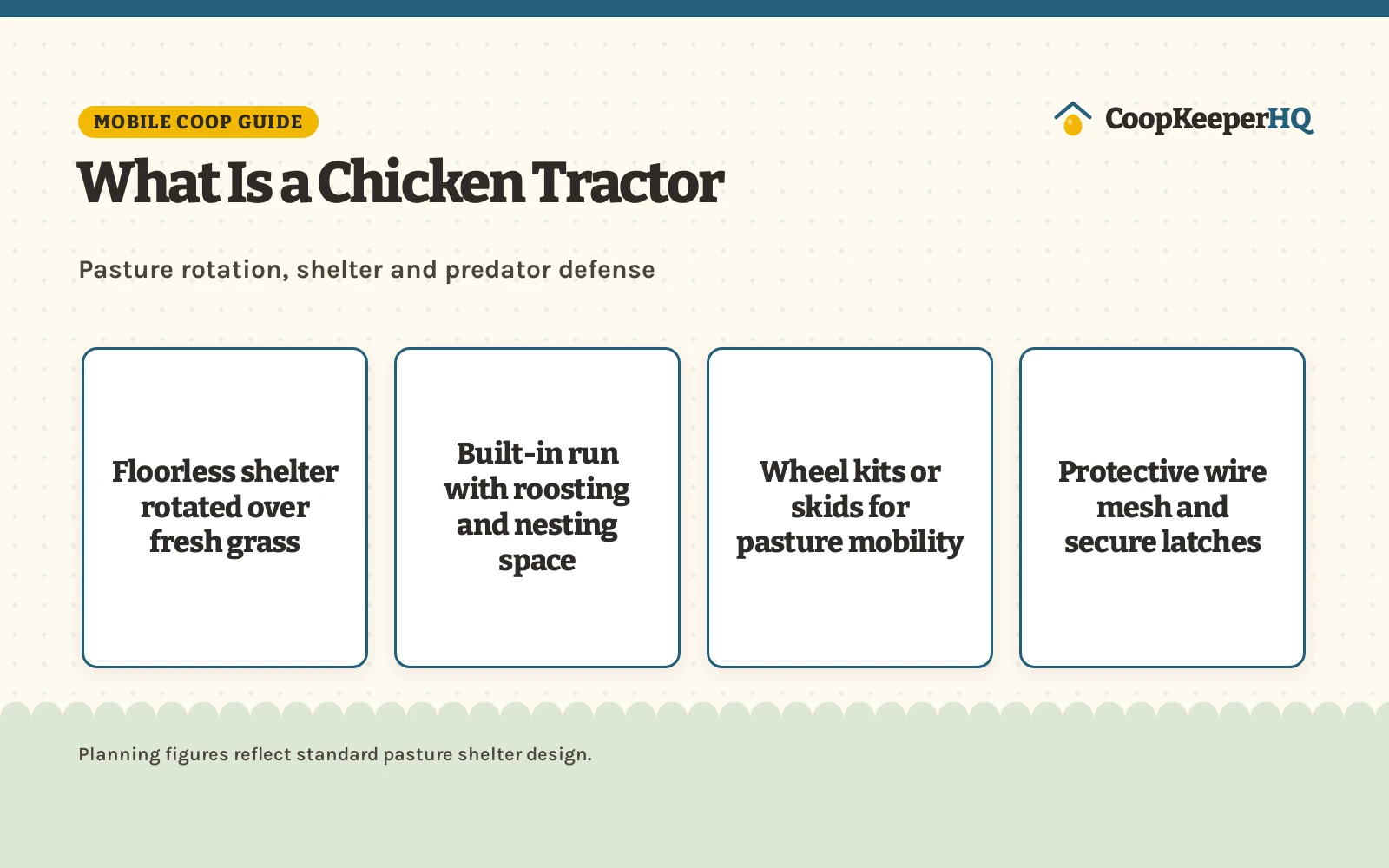
A chicken tractor is a movable poultry coop with an open, floorless run that sits directly on pasture or garden turf. Keepers shift the shelter across the yard on a regular schedule, allowing birds to forage for fresh greens and bugs while keeping them contained and safe from predators. This mobile setup combines the foraging benefits of free-ranging with the security and structure of a traditional enclosed pen.
Other options for the coop
 55ft² Chicken CoopCheck price on Amazon
 Super Large Chicken CoopCheck price on Amazon
CoopKeeperHQ earns a commission if you buy through our links, at no added cost to you. Affiliate disclosure.
What is a chicken tractor: core design and purpose
The term sounds mechanical, but what is a chicken tractor in practical terms? It is an integrated shelter built on a lightweight frame without a permanent floor. The birds sleep, roost, and lay eggs in an enclosed coop section, while spending daylight hours scratching the grass inside an attached wire run. Because the base stays open to the soil, chickens scratch, peck, and fertilize the ground beneath them just like a farm tractor preparing garden beds.
Keepers choose mobile designs to prevent the bare, muddy dirt that often forms inside a stationary run. Moving the coop regularly distributes droppings evenly across the turf, feeding the grass rather than creating concentrated waste. At the same time, the flock receives continuous access to tender vegetation, worms, and insects, which adds variety to their daily feed. Our guide to the best chicken tractor models compares popular designs by their usable interior layout.
Why choose a mobile tractor over a stationary coop?
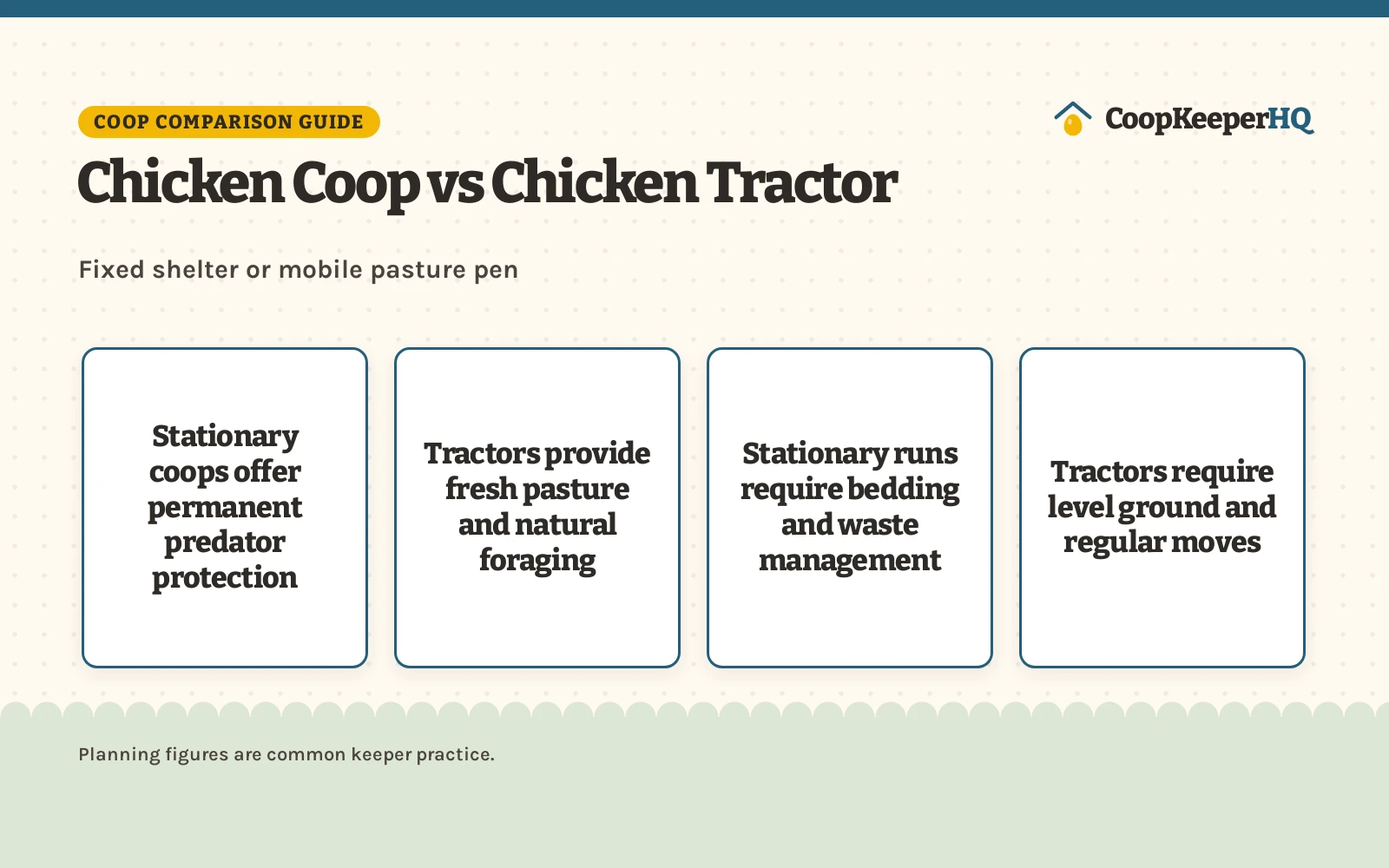
Deciding why a chicken tractor fits a backyard flock comes down to yard management, flock safety, and chore routines. A traditional fixed coop keeps birds in one designated area. Over time, that concentrated traffic strips away vegetation, wears down topsoil, and requires deep bedding management to control odors and moisture. What is chicken tractor management by comparison? It turns poultry into active lawn caretakers, spreading organic matter across fresh ground with each relocation.
A mobile tractor also reduces parasite buildup in the soil. When chickens occupy the exact same run space month after month, droppings accumulate and soil-borne pests can multiply. Shifting the shelter breaks that cycle by letting vacated grass rest, aerate, and regrow. For keepers with garden plots, positioning a mobile coop over harvested vegetable beds clears weeds and grubs before replanting. If you prefer to plan your own build, our chicken coop on wheels plans outline mobile framing principles.
Essential components of a functional mobile shelter
Every reliable chicken tractor balances three functional elements: an elevated or sheltered roosting box, a secure open-bottom run, and a dependable mobility mechanism. The roosting box provides shelter from driving rain, wind, and hot sun. Inside, chickens need roost bars positioned away from drafts and separate nesting compartments lined with clean bedding for egg laying. Our chicken nesting box guide highlights quiet, private layouts that encourage hens to lay inside.
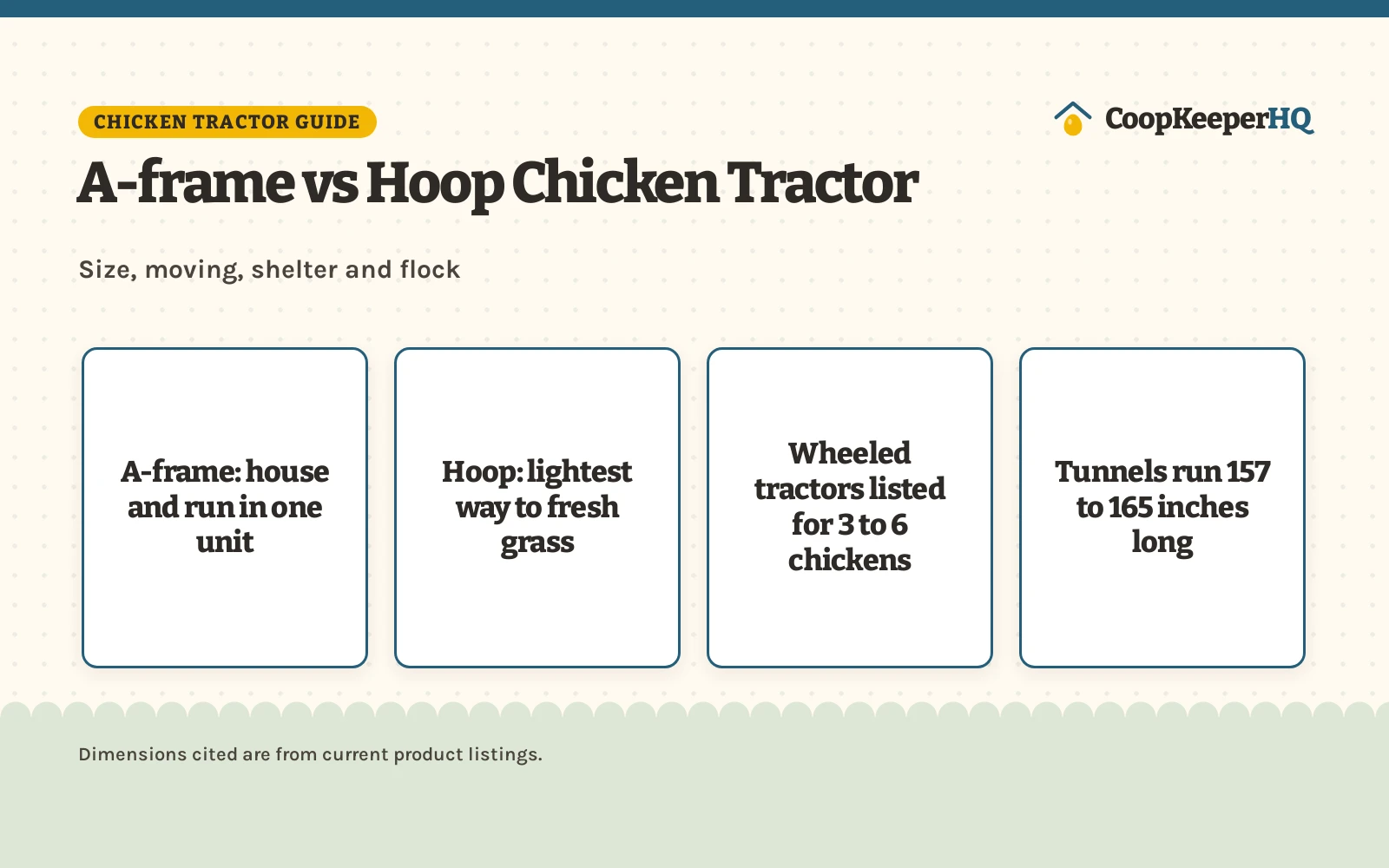
The attached run section relies on a sturdy framework wrapped in protective wire mesh. Commercial models often integrate these sections into a compact, unified structure. For example, GUTINNEEN lists a mobile wooden hen house measuring 80.5 inches long, 21.2 inches wide, and 42.5 inches high. That specific unit incorporates 2 nesting boxes, 2 wheels, and 4 doors to facilitate egg collection and cleanout while housing 2 to 4 chickens. For growers who want temporary run expansions without wood framing, Hogarjal lists a mobile poultry tunnel measuring 157 inches long, 21 inches wide, and 32 inches high that attaches directly to an existing coop door.
Wheel systems and moving mechanisms
Mobility is the defining characteristic of a chicken tractor, and how easily a coop shifts determines whether daily moves feel like a quick chore or an exhausting struggle. Smaller, ultra-light tractors may slide on wooden skids or PVC runners across smooth turf. However, coops with substantial framing, asphalt roofing, and heavy wire mesh require dedicated wheels to lift the lower frame clear of the sod.
Aftermarket wheel kits allow keepers to convert stationary coops or upgrade factory tractors. Wheel hardware must handle rough lawns, mud, and substantial coop weights. For lighter coops, Flehomo lists a wheel kit with 4-inch caster wheels designed to move coops housing 2 to 8 chickens. When moving larger structures, cam levers and pedal lift systems elevate the coop onto rolling tires before transport, then drop the perimeter flush back to the earth for nighttime predator safety. TOPOWN manufactures lever lift systems rated for coops measuring 7ft or less, as well as reinforced kits designed for coops measuring 8ft or wider with a 400 lb load capacity. For heavier wooden coops, GRIND MODE lists a wheel lift kit with 6-inch wheels rated for a maximum load capacity of 500 lb, while Iridesc lists a set of 4 caster wheels rated for loads up to 700 lb. Explore our dedicated roundup of wheels for chicken coop designs for detailed hardware comparisons.
Pasture rotation and lawn maintenance
Successful tractor management depends on consistent pasture rotation. If a mobile coop sits in one spot for too long, the flock will scratch the grass down to bare soil, defeating the purpose of a portable pen. Keepers generally move the shelter as soon as the top vegetation thins and droppings begin to cover the turf surface. Moving onto fresh ground gives the birds clean foraging space while preventing damage to lawn root systems.
The rotation pattern should follow a logical loop around your property. Moving the shelter along parallel strips across a lawn or pasture allows previously grazed sections ample time to recover before the coop returns. During rapid spring growth, grass bounces back quickly, whereas summer heat or dry spells require longer recovery intervals. Keepers should also monitor pasture height, trimming tall weeds if necessary so the mobile frame rolls smoothly without catching on dense brush.
Predator protection on open ground
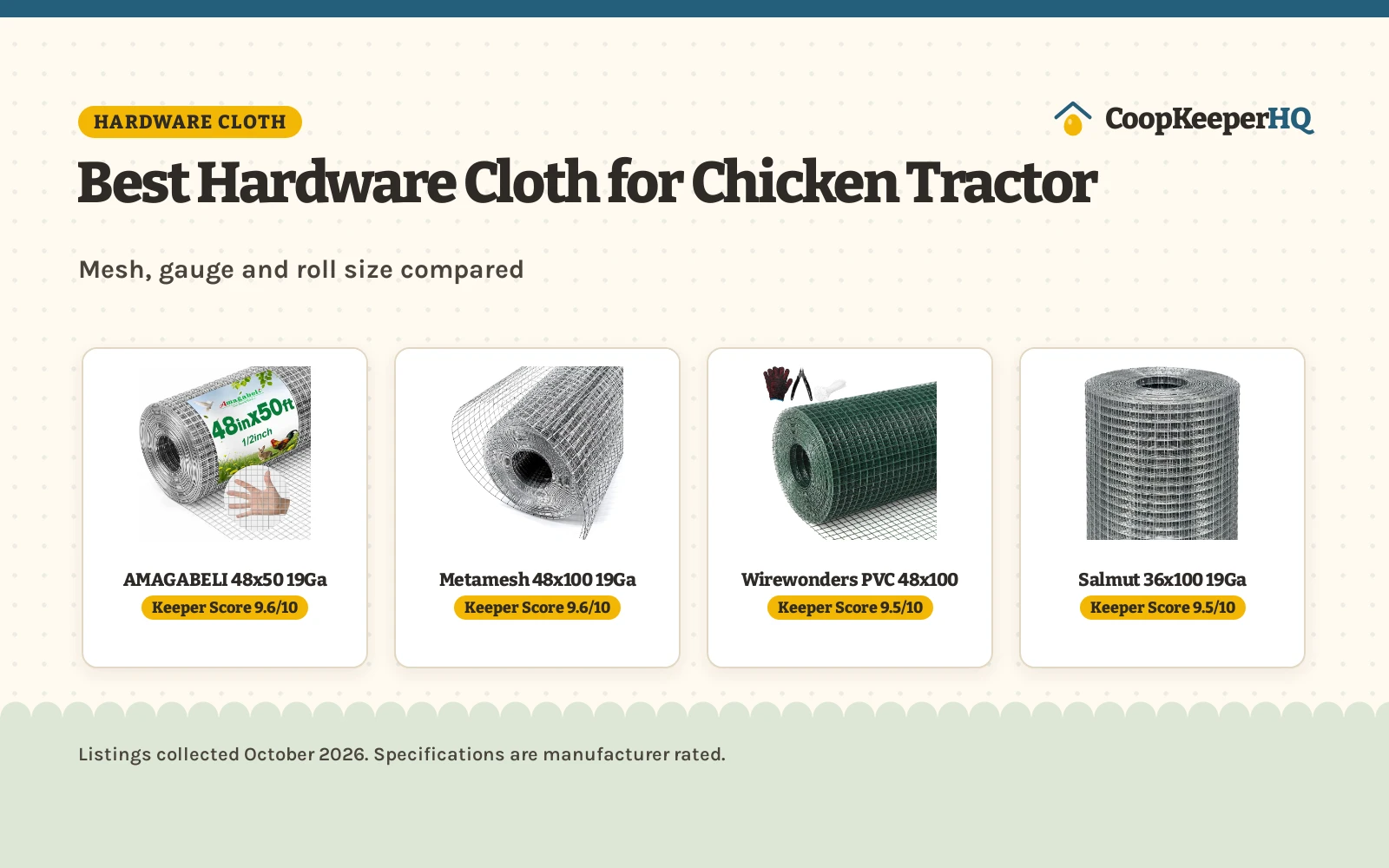
Because a chicken tractor rests directly on top of the soil without a buried apron or solid subfloor, predator defense requires careful planning. Raccoons, foxes, coyotes, and neighborhood dogs can attempt to dig beneath the bottom perimeter, lift the frame, or reach through wire gaps. Sturdy welded wire mesh or hardware cloth is essential across every open wall. Chicken wire is not heavy enough to deter determined predators; our chicken coop with hardware cloth guide reviews heavy wire enclosures built for outdoor security.
Predator safety also depends on how tightly the tractor sits against the lawn. When lowering wheel kits, verify that the bottom rails rest flush against the grass with no gaps or dips underneath. Latch security is equally vital. Raccoons easily manipulate simple barrel bolts, so doors, cleanout hatches, and nesting lids require two-step locking latches or carabiners. For keepers who leave pop doors open between the roost and run during early morning hours, installing an automatic chicken coop door ensures the flock remains locked securely in the elevated roost box overnight.
Weather shelter and seasonal management
Backyard poultry in mobile tractors encounter changing weather conditions more directly than birds inside a sheltered barn. In hot summer weather, open runs need reliable shade to protect birds from heat stress. While solid roofs shed rain over the roosting box, the open run section can become intensely warm under direct sunlight. Adding a breathable shade cloth or fitted run tarp keeps the ground cool and shields the flock from aerial hawks; see our picks in the chicken coop cover guide.
Wind and rain also require thoughtful coop positioning. Orient the closed wall of the roosting box toward prevailing storm winds to prevent rain from blowing into bedding and feed hoppers. Use weatherproof feeders that keep pellets dry during sudden downpours, such as those reviewed in our outdoor chicken feeder guide. In regions with freezing winters, many keepers transition their flock to a sheltered stationary coop or park the tractor in a wind-protected location with deep bedding, as snow accumulation can prevent mobile wheels from rolling across frozen pasture.
Sizing a mobile tractor for your flock
Sizing a chicken tractor requires balancing flock comfort with practical moving weight. A tractor that is too small leads to behavioral pecking, dirty feathers, and overgrazed turf. Conversely, a coop that is excessively large becomes too heavy to pull comfortably across a yard, turning daily moves into a chore. For detailed guidance on calculating interior floor dimensions, read our reference guide on how big should a chicken coop be.
Commercial mobile coops typically focus on small backyard flocks. As noted in manufacturer specifications, the compact GUTINNEEN mobile coop (on Amazon) lists capacity for 2 to 4 chickens within its 80.5-inch footprint, while Flehomo rates its mobile wheel accessories for coops housing 2 to 8 chickens. If you maintain a larger flock, splitting birds between multiple medium tractors is often more manageable than attempting to roll a massive single shelter over uneven turf.
Daily routine with a mobile coop
Operating a chicken tractor establishes a predictable, low-stress routine for both keeper and flock. In the morning, check food and water levels, inspect the flock for active foraging behavior, and open pop doors if they were secured overnight. Morning is also an ideal time to move the tractor to fresh pasture, because the birds eagerly step onto untouched grass and begin scratching for bugs.
Before rolling or pulling the coop, scan the moving path to ensure no garden hoses, rocks, or poultry toes are trapped beneath the advancing bottom rails. Move slowly so the birds walk forward naturally inside the enclosure. At dusk, collect fresh eggs from the nesting boxes, check that feed hoppers remain free of rodents, and confirm that all latches are firmly fastened for the night. If you observe any bird showing lethargy or respiratory symptoms, isolate the bird and consult a licensed poultry veterinarian or your local state agricultural extension office.
A simple chicken tractor checklist
- Ground contact is flush along all lower rails to block predators
- Wheels engage cleanly and lock securely during pasture moves
- Roosting space stays dry, sheltered, and ventilated above draft height
- Latches on doors and nesting boxes require multiple motions to open
- Wire mesh is securely fastened across all open run panels
- Pasture route is level and cleared of debris before each move
Birds, breed size, run time and climate in; coop floor, run space, roost length and nesting boxes out.
Wash your hands after handling birds, eggs or equipment, supervise children around the flock, and check local rules on flock size and roosters before you buy. For sick birds, call a poultry veterinarian or your state extension office. See CDC backyard poultry guidance. Read our Safety Disclaimer.
FAQ for the flock
What are chicken tractors?
Chicken tractors are movable poultry shelters with an integrated coop and an open, floorless run. They allow backyard chickens to graze on fresh grass, forage for insects, and fertilize soil while remaining contained and protected from predators.
How often should you move a chicken tractor?
Most keepers move their chicken tractor daily or every few days, depending on flock size and pasture growth. The goal is to relocate the shelter as soon as the grass thins and before birds scratch the turf down to bare dirt.
Do chicken tractors have floors?
The enclosed roosting and nesting box has a floor to keep bedding dry and clean, but the attached run section is completely floorless. This open-bottom design allows chickens direct contact with the ground for scratching and foraging.
Are chicken tractors safe from predators?
A well-built chicken tractor is safe when constructed with sturdy hardware cloth, predator-proof door latches, and a flush fit against the ground. Keepers often lock birds inside the elevated, fully enclosed roosting box overnight for added security.
Can chickens live in a chicken tractor in winter?
Chickens can use a tractor during mild winter weather if the roosting area is draft-free and dry. However, in regions with heavy snow or severe freezes, keepers often move the flock into a sheltered stationary coop or park the tractor in a wind-protected location.
More coop guides
- Best Chicken Tractor: Mobile Coops Compared by Real Space
- Wheels for Chicken Coop: 5 Heavy-Duty Picks for Mobile Tractors (2026)
- Chicken Coop on Wheels Plans: Mobile Tractor Sizing and Build Guide
See the chicken coop picks and the chicken tractor guides.