Best Electric Fence Tester Under $25 (2026)
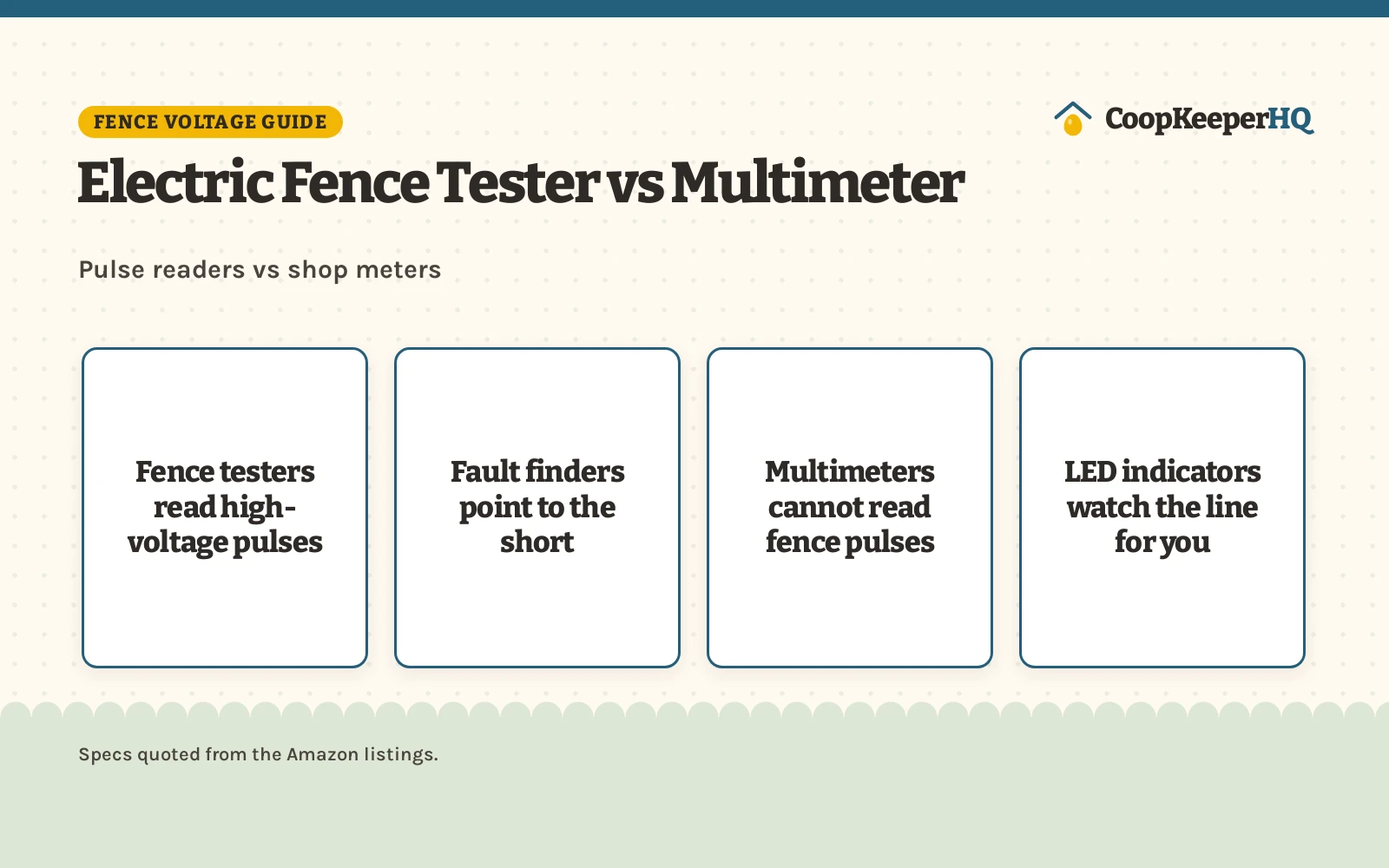
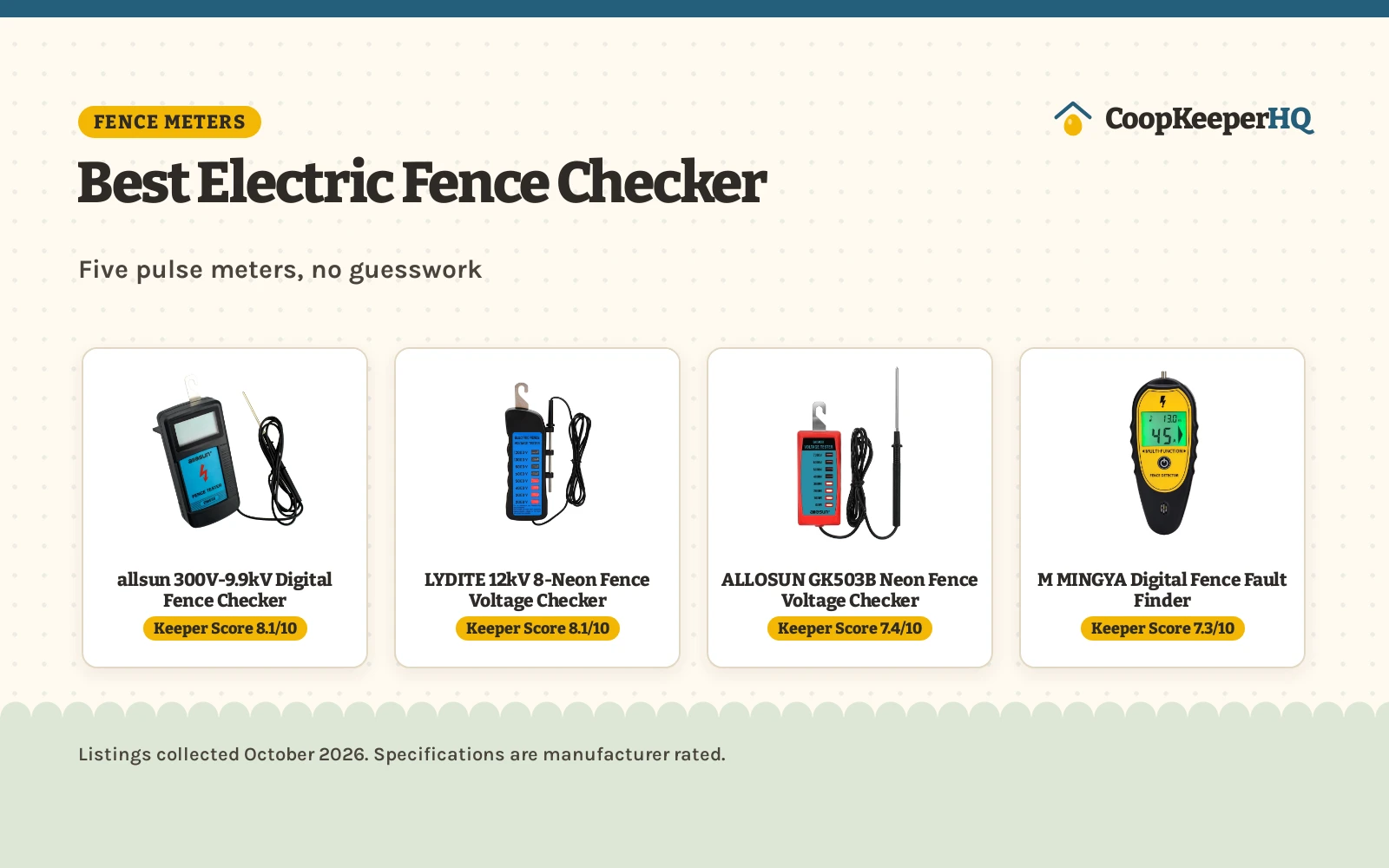
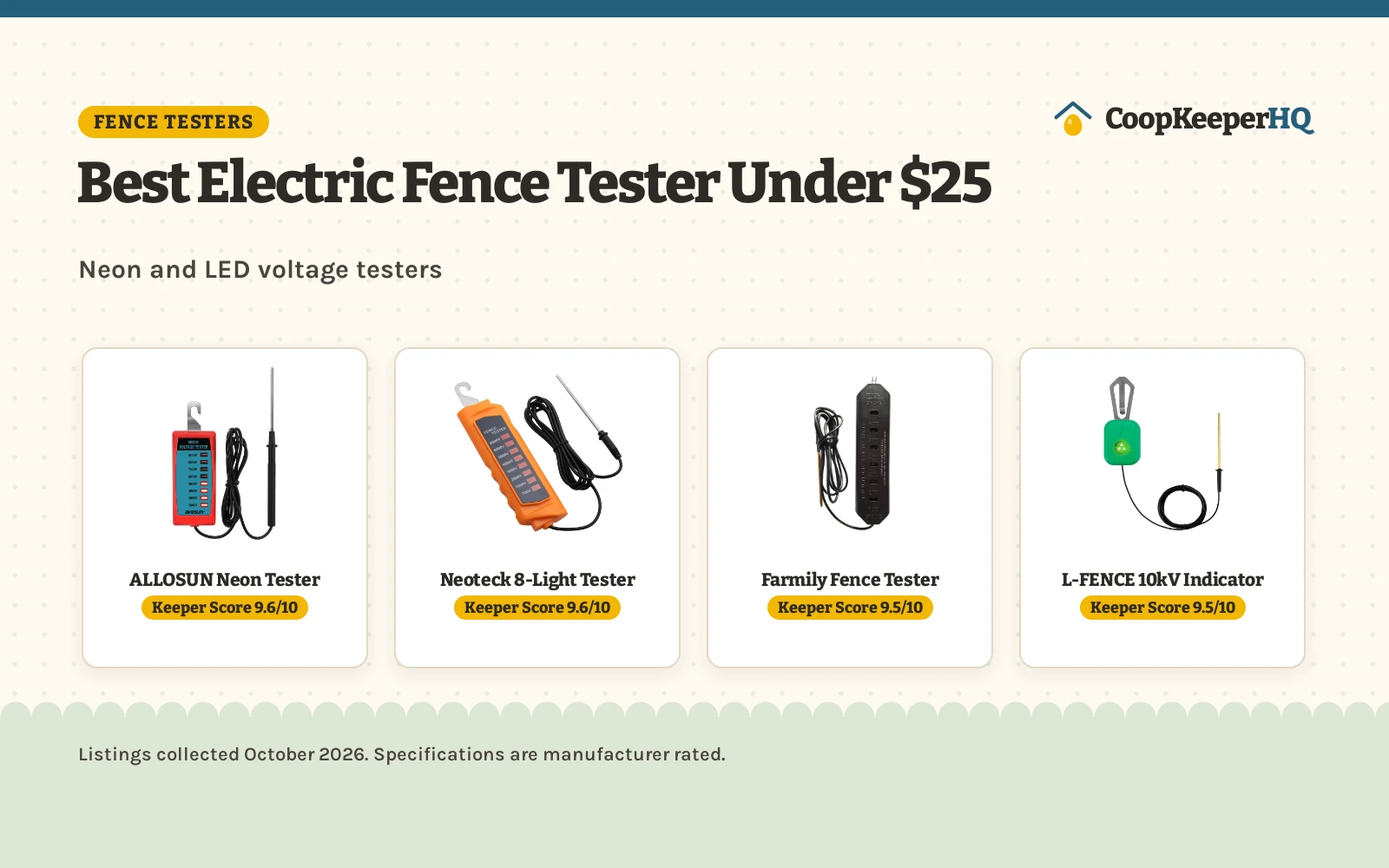
A comparison of 5 electric fence testers under $25 by voltage range, display type, power source, stated certifications and warranty.

On this page
Top picks at a glance
As an Amazon Associate I earn from qualifying purchases.
- 1
 Widest RangeALLOSUN Neon Tester9.6/10View on Amazon
- 2
 Best WarrantyNeoteck 8-Light Tester9.6/10View on Amazon
- 3
 Longest LeadFarmily Fence Tester9.5/10View on Amazon
- 4
 Widest SpanL-FENCE 10kV Indicator9.5/10View on Amazon
- 5
 Night VisibilityL-FENCE LED Indicator9.4/10View on Amazon
The fence charger is ticking, but is the wire actually hot all the way around the run? A fence tester answers that question in seconds, and the best electric fence tester under 25 does it with lights you can read at a glance. We compared 5 neon and LED testers by voltage range, display, power source, stated certifications and warranty.
CoopKeeperHQ earns a commission if you buy through our links, at no added cost to you. Affiliate disclosure.
Quick picks
- Widest Range ALLOSUN Neon Tester: 9,000 V top reading with UL and IEC stated Check price on Amazon
- Best Warranty Neoteck 8-Light Tester: 18 month warranty and 8 neon lights Check price on Amazon
- Longest Lead Farmily Fence Tester: 50 inch wire for walking the fence line Check price on Amazon
- Widest Span L-FENCE 10kV Indicator: 300 V to 10 kV with no battery needed Check price on Amazon
- Night Visibility L-FENCE LED Indicator: LED visible 100 m at night, fence-powered Check price on Amazon
Picks for the flock

ALLOSUN GK503C NEON Electric Fence Voltage Tester
A neon fence tester rated to 9,000 volts by its title and bullets, with UL and IEC certifications stated and a 1 year after-sale warranty.
Who it's for: keepers who want a stated certification and the widest top-end reading here.
Who should skip it: anyone bothered by the title-versus-spec-table mismatch.
The ALLOSUN GK503C is a neon fence tester the title rates to 9Kv max, with bullets reading up to 9,000 volts and neon lamps indicating 2,000 to 9,000 volts. One wrinkle: the spec table lists a measurement range of 600V to 7000V and model GK503B against the title's GK503C, so read the unit you receive. The listing states UL 61010-1 and IEC 61010-2-030, a 1 year after-sale warranty, 0.1 kg weight and pocket-size dimensions of 1.97 x 0.59 x 3.93 inches.
Pros
- 9,000 V top reading per title and bullets
- UL 61010-1 and IEC 61010-2-030 stated
- 1 year after-sale warranty stated
- Pocket size at 0.1 kg
Cons
- Battery powered, unlike the fence-powered picks
- Neon lamps need shading in bright daylight
- Handheld checks only, no continuous monitoring
Neoteck 700-8000V Electric Fence Voltage Tester
A fence-powered neon tester reading 700 to 8,000 volts with 8 indicator lights, an 18 month warranty and a stated cold-climate operating range.
Who it's for: daily patrols in cold climates where the battery-free design pays off.
Who should skip it: anyone who wants a numeric readout, which neon lights do not give.
The Neoteck FT-891 reads 700 to 8,000 volts through 8 neon lights rated for up to 20,000 uses, drawing power from the fence so no batteries are needed. The listing gives an operating environment of 0°C to 50°C at 75% relative humidity and storage of -20°C to 60°C under 85%, a wave-textured ABS grip and pocket carry. Warranty is 18 months, the longest here. The precautions are explicit: verify on a known-voltage fence first, keep your body isolated from the ground, and wear insulated gloves, protective clothing and rubber shoes.
Pros
- 8 neon lights with 20,000-use lifespan
- 18 month warranty, longest here
- No batteries; fence powered
- 0°C to 50°C operating range stated
Cons
- No numeric readout, lights only
- Neon hard to read in bright sun without shading
- No certification stated
- Operating humidity capped at 75%
Farmily Multi Light Electric Fence Voltage Tester
A multi-light tester calibrated from 1,000 to 6,000 volts with a 50 inch wire, stating CE, CSA, ETL, RoHS and UL.
Who it's for: keepers who value stated certifications and a long lead for walking the line.
Who should skip it: anyone needing a stated warranty or readings above 6,000 volts.
The Farmily FAFT1112 uses multiple lights calibrated to glow from 1,000 to 6,000 volts, with a 50 inch wire for reaching along the fence and checking voltage drops between points. It lists CE, CSA, ETL, RoHS and UL in its specifications, weighs 3.2 ounces and measures 7 x 1.7 x 0.4 inches. The spec table oddly lists power source as corded electric, and no warranty term is stated.
Pros
- CE, CSA, ETL, RoHS, UL stated
- 50 inch wire for walking the line
- Lights calibrated 1,000-6,000 V
- 3.2 oz, light in hand
Cons
- No warranty term stated
- Tops out at 6,000 V
- No low-voltage cutoff stated
L-FENCE Electric Fence Tester with LED Indicator
A fence-powered LED indicator spanning 300V to 10kV in a weatherproof, UV-resistant housing with no battery to maintain.
Who it's for: the widest voltage span here with zero upkeep.
Who should skip it: anyone who wants a stated safety certification.
The L-FENCE 10kV indicator reads 300V to 10kV (the listing warns over 10kV may cause damage), clips on the fence with its probe in the ground, and needs no battery. The weatherproof, UV-resistant housing suits permanent outdoor mounting at 2.08 ounces. No certification and no warranty term are stated.
Pros
- 300V-10kV, widest span here
- No battery needed
- Weatherproof and UV-resistant housing
- 2.08 oz
Cons
- No certification stated
- No warranty term stated
- Over 10kV may damage it, per listing
- No visibility distance stated
L-FENCE Electric Fence Tester with LED Indicator
A fence-powered LED indicator that flashes above 2,000V with 100 meter night visibility, built for continuous monitoring.
Who it's for: continuous fence monitoring you can read from the porch at night.
Who should skip it: anyone who needs an actual voltage number rather than a flashing light.
The L-FENCE LED indicator uses 3 high-brightness LED lights powered by the fence, and stops flashing when voltage falls below 2,000V, so a dark indicator is itself the warning. Visibility is stated up to 100 meters at night and 20 meters by day, in a sealed weatherproof, UV-resistant shell at 2.39 ounces and 4.7 x 2.8 x 1.2 inches. No certification and no warranty term are stated.
Pros
- Flashes above 2,000V as a low-voltage alert
- 100 m night visibility stated
- No battery; continuous monitoring
- Weatherproof, UV-resistant sealed shell
Cons
- No certification stated
- No warranty term stated
- No numeric voltage reading
- Daytime visibility only 20 m
Other options for the coop
 Neoteck 2000-12000V Electric Fence Voltage Tester with 8 NeonCheck price on Amazon
 Wireless Electric Fence Voltage TesterCheck price on Amazon
 ALLOSUN GK503B NEON Electric Fence Voltage Tester and FaultCheck price on Amazon
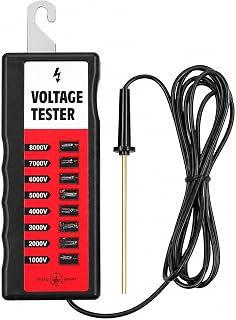 Electric Fence Voltage Tester Neon Lights Farming EquipmentCheck price on Amazon
Specs at a glance
| Model | Keeper Score | Voltage range | Display | Power | Safety stated | Warranty |
|---|---|---|---|---|---|---|
| ALLOSUN Neon Tester | 9.6/10 | Up to 9,000 V | Neon lamp | Battery | UL, IEC | 1 year |
| Neoteck 8-Light Tester | 9.6/10 | 700-8,000 V | 8 neon lights | Fence | Precautions | 18 months |
| Farmily Fence Tester | 9.5/10 | 1,000-6,000 V | Multi-light | Corded (table) | CE, CSA, ETL, UL | Not stated |
| L-FENCE 10kV Indicator | 9.5/10 | 300V-10kV | LED | Fence | Weatherproof | Not stated |
| L-FENCE LED Indicator | 9.4/10 | Above 2,000V flash | 3 LEDs | Fence | Weatherproof | Not stated |
We quote the brand’s rated specs from the product listings (as of 18 October 2026). Voltage figures are the makers’ stated ranges.
Flock fit
ALLOSUN Neon Tester
Neoteck 8-Light Tester
Farmily Fence Tester
L-FENCE 10kV Indicator
L-FENCE LED Indicator
Buying guide: choosing the best electric fence tester under 25
What the voltage ranges mean
The 5 testers cover different spans. The ALLOSUN reads up to 9,000 volts per its title and bullets, though its spec table lists 600V to 7000V, a mismatch worth knowing before you buy. The Neoteck covers 700 to 8,000 volts, the Farmily 1,000 to 6,000 volts, and the L-FENCE 10kV indicator spans 300V to 10kV, with a warning that over 10kV may damage it. The L-FENCE LED indicator takes a different approach: it flashes while voltage is above 2,000V and goes dark below it.
Neon or LED
The ALLOSUN uses NE2-type neon bulbs rather than LEDs, and the Neoteck uses 8 neon indicator lights rated for up to 20,000 uses; both makers note the lights are easier to read when you shade them with your hand in bright sun. The L-FENCE LED indicator uses 3 high-brightness LED lights with stated visibility up to 100 meters at night and 20 meters by day. The Farmily uses multiple lights calibrated to glow from 1,000 to 6,000 volts.
Carry size and daylight readability
The ALLOSUN is small enough to carry in a pocket at 1.97 x 0.59 x 3.93 inches and 0.1 kg, and the Neoteck is described as compact enough for a pocket as well. The Farmily measures 7 x 1.7 x 0.4 inches at 3.2 ounces, the L-FENCE LED indicator 4.7 x 2.8 x 1.2 inches at 2.39 ounces. On readability, the ALLOSUN shows a bright light visible in daylight if you shade the lights with your hand, and the Neoteck gives the same advice for bright sun. The L-FENCE LED indicator is the only one here with a stated night figure: up to 100 meters.
Battery, fence-powered or corded
The ALLOSUN runs on batteries, while the Neoteck and both L-FENCE testers draw their power from the fence itself, so there is nothing to charge or replace. The Farmily’s spec table lists its power source as corded electric, an odd entry for a handheld tester, so check the unit you receive.
Grounding and safe handling
Every tester here grounds through a probe you push into the soil: the ALLOSUN, Neoteck and both L-FENCE models describe exactly that step. The Neoteck goes further with written precautions: verify the tester on a fence of known voltage before use, keep your body isolated from the ground during measurements, and wear insulated gloves, protective clothing and rubber shoes.
Use a charger rated for the length of netting you run, ground it as the manual describes and post warning signs where neighbors or children can reach the fence. Keep grass and weeds off the bottom strands, and never leave netting unpowered, because birds and wildlife can tangle in it. Read our Safety Disclaimer.
Fitting It to Your Flock
- Daily walk of a small run: the pocket-size Neoteck or ALLOSUN rides in a pocket for quick checks on the morning round.
- Long perimeter: the Farmily’s 50 inch wire reaches along the fence without stretching.
- Night rounds: the L-FENCE LED indicator stays clipped on the fence and shows up to 100 meters at night.
- Cold-climate coops: the Neoteck lists an operating range of 0°C to 50°C.
- Widest charger range: the L-FENCE 10kV indicator covers 300V to 10kV with no battery to maintain.
FAQ for the flock
How do I use an electric fence tester?
Push the ground probe into the soil, then touch or clip the tester to a hot wire. The ALLOSUN connects to one hot wire with its probe in the ground; the Neoteck hangs its top metal ring on the wire with the probe in the ground; the L-FENCE models clip onto the fence the same way.
What voltage should my poultry fence read?
The listings do not state a target for poultry fences. Across this group the testers cover 300V to 10kV, and the L-FENCE LED indicator treats anything below 2,000V as too low by going dark, which is a practical low-voltage signal whatever your charger.
Do fence testers need batteries?
Only the ALLOSUN here runs on batteries. The Neoteck and both L-FENCE testers draw power from the fence itself, and the Farmily’s spec table lists corded electric power.
Can I leave a tester clipped on the fence?
The L-FENCE LED indicator is built for it: continuous monitoring with no reset, clipped anywhere on the fence, flashing with each pulse while voltage stays above 2,000V.
How do I find where the fence is weak?
Check voltage at several points along the line and look for the drop. The ALLOSUN is described as revealing weak sections through line indication, and the Farmily’s bullets describe measuring voltage between points to find where the line is underperforming.
How the Coop Score came out
The Keeper Score weighs performance (range, display, features), build, value, safety and warranty. Safety points go only to what the listing states: certifications, weatherproof housings and stated usage precautions. The Farmily states CE, CSA, ETL, RoHS and UL, and the ALLOSUN states UL 61010-1 and IEC 61010-2-030, so they lead on safety; the 2 L-FENCE testers state no certification and earn points only for their weatherproof housings. See How We Pick for the weights.
| Product | Keeper Score | Perf. /35 | Build /25 | Value /25 | Safety /10 | Warranty /5 |
|---|---|---|---|---|---|---|
| ALLOSUN Neon Tester | 9.6 | 30 | 20 | 20 | 8 | 3 |
| Neoteck 8-Light Tester | 9.6 | 29 | 21 | 20 | 5 | 3 |
| Farmily Fence Tester | 9.5 | 26 | 20 | 20 | 8 | 0 |
| L-FENCE 10kV Indicator | 9.5 | 28 | 19 | 21 | 3 | 0 |
| L-FENCE LED Indicator | 9.4 | 26 | 19 | 21 | 3 | 0 |
A product’s weighted total becomes its score on a scale capped at 9.8 and floored at 9.2, in a straight line.
More coop guides
- Best Electric Fence Checker (2026): 5 Top Voltage Meters
- Best Solar Electric Fence Charger for Chickens: 4 Top Netting Energizers
- How to Predator Proof a Chicken Coop and Run
- Step-in vs T-post for Poultry Netting: Which One Should You Buy?
- Briidea Electric Fence Energizer Review: Pros, Cons & Who It’s For
See every chicken run and fencing guide.