Chain Link vs Welded Wire Chicken Run: Which Should You Build?
Chain link vs welded wire chicken run: small-mesh welded wire keeps predators out while chain link suits big perimeters, with mesh figures from the listings.

On this page
Top picks at a glance
As an Amazon Associate I earn from qualifying purchases.
- 1
 Goldshire 48x72in Adjustable Galvanized Chain Link Fence Gate9.7/10View on Amazon
- 2
 WEYHDDTL 304 Stainless Steel Hardware Cloth 1/4 Inch 16 In x9.5/10View on Amazon
- 3
 10.5inch Chain Link Residential Fence TiesView on Amazon
- 4
 10 inch 100-Pack Chain Link Fence TiesView on Amazon
- 5
 100pcs 8-1/4" Chain Link Fence Wire Ties 9 Gauge Heavy DutyView on Amazon
- 6
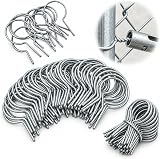 EZ Twist Chain Link Fence TiesView on Amazon
- 7
 1-3/8" x 1-3/8" Kennel Gate LatchView on Amazon
Chain link vs welded wire chicken run comes down to what you are keeping out. Welded wire with small openings, like the 1/2 inch hardware cloth in the listings, keeps out small predators and is the safer wall for a chicken run. Chain link is stronger and cheaper per foot for big perimeters, but its larger openings let weasels, rats and snakes through unless you reinforce it. The listings here are mesh rolls and fasteners, not full run panels, so the figures below come from those: a 24 inch by 25 foot roll of 1/2 inch 19 gauge hardware cloth, a 24 inch by 50 foot roll of 2 by 3 inch 16 gauge welded wire, and two kinds of fence ties.
Other options for the coop
 10.5inch Chain Link Residential Fence TiesCheck price on Amazon
 10 inch 100-Pack Chain Link Fence TiesCheck price on Amazon
 100pcs 8-1/4" Chain Link Fence Wire Ties 9 Gauge Heavy DutyCheck price on Amazon
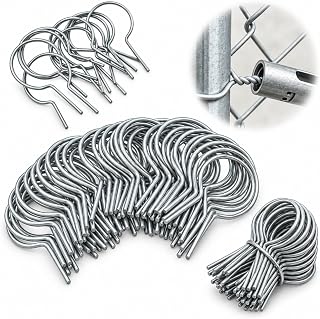 EZ Twist Chain Link Fence TiesCheck price on Amazon
 1-3/8" x 1-3/8" Kennel Gate LatchCheck price on Amazon
CoopKeeperHQ earns a commission if you buy through our links, at no added cost to you. Affiliate disclosure.
Chain link vs welded wire chicken run: the short version
- Welded wire: wires welded at each crossing into a fixed grid. The DWALE roll is 1/2 inch mesh in 19 gauge, galvanized inside and PVC coated outside; the SOTTORICH roll is 2 by 3 inch mesh in 16 gauge, black PVC coated. Rigid, holds its shape, and the small-mesh version is the predator-proof choice.
- Chain link: wire woven into a diamond pattern. Flexible and strong for its weight, good for large dog-kennel style runs, but the openings are big enough for small predators and for chickens to stick their heads through.
- The rule: use small-mesh welded wire where predators press against the run, and reserve chain link for large outer perimeters, backed with hardware cloth where it matters.
What welded wire gives you
The two mesh rolls show the range. The DWALE hardware cloth is 24 inches by 25 feet of 1/2 inch mesh in 19 gauge, galvanized inside and vinyl coated outside, weighing 10.17 pounds. Its bullets state that 19 gauge is stronger than regular 23 gauge, which is the maker’s claim for the heavier wire. The SOTTORICH welded wire is 24 inches by 50 feet of 2 by 3 inch mesh in 16 gauge, black PVC coated, sold as 100 square feet. Both are PVC coated for corrosion resistance, which matters on a run that lives outdoors year round.
The mesh size is the decision. 1/2 inch openings are small enough to cover squirrels, per the DWALE listing, and shut out the small predators that slip through bigger mesh; 2 by 3 inch openings are fine for keeping chickens in and dogs out, which matches the SOTTORICH listing’s garden and poultry netting uses, but they admit anything smaller than a chicken. For the run walls themselves, the 1/2 inch roll is the one to buy.
What chain link gives you
Chain link’s advantage is strength over distance: a woven diamond mesh that flexes instead of breaking, which is why it shows up on kennels and large runs. No chain link fabric is listed here, only the fasteners for it, so there are no chain link figures to cite. Its weakness for chickens is the opening size: the same flex that makes it tough leaves gaps that small predators exploit, and raccoons can reach through to grab birds pressed against the wire. If you build with chain link, plan on a hardware cloth skirt or liner on the lower walls.
Fastening it together
Mesh is only as good as its fasteners. The Aiwaiufu ties are 10.5 inch hook ties sold in a 100 pack for connecting mesh to posts and top rails, but the listing contradicts itself three ways on the wire: 12.5 gauge in the title, 12 gauge in the bullets and 13 gauge in the spec table, which also says galvanized steel in one row and aluminum in another. Treat the gauge as unstated and the material as uncertain until the maker clarifies.
The Sinlon ties are cleaner: a 100 pack of 11.8 inch 304 stainless steel zip ties with a stated 198 pound tensile rating, self-locking ball closure and corrosion resistance, listed for chain link panels, welded wire mesh, coops and cages. Stainless ties will not rust out the way plain wire ties do.
Wash your hands after handling birds, eggs or equipment, supervise children around the flock, and check local rules on flock size and roosters before you buy. For sick birds, call a poultry veterinarian or your state extension office. See CDC backyard poultry guidance. Read our Safety Disclaimer.
Whatever wire you choose: bury or skirt the bottom against diggers, cover the top against hawks, and check the fasteners every season. A run is only predator resistant when the wire, the fasteners and the ground line all hold.
How much mesh to buy
Both mesh rolls are 24 inches tall, so plan the run walls in 24-inch bands: one roll height covers 2 feet of wall, and two stacked rolls cover 4 feet. The math per roll is simple: 24 inches is 2 feet, so the DWALE 25ft roll covers 2 times 25, or 50 square feet, and the SOTTORICH 50ft roll covers 2 times 50, or 100 square feet, which its listing states. Measure the run perimeter, multiply by the wall height, and divide by the roll coverage to get the roll count, rounding up.
Buy the mesh by the job the wall does. The 1/2 inch DWALE roll is the wall mesh: small openings, 19 gauge, 10.17 pounds per roll. The 2 by 3 inch SOTTORICH roll suits the top of the run or a garden fence, where keeping chickens in matters more than keeping small predators out. For fasteners, both tie listings sell 100 packs; the Sinlon stainless ties carry a 198 pound tensile rating, so one pack goes a long way when ties are spaced closely along posts and rails.
FAQ for the flock
Is chain link safe for chickens?
As an outer fence, yes; as the only wall, it has gaps. Small predators pass through chain link openings, and raccoons reach through them. Back the lower walls with 1/2 inch welded wire hardware cloth if you use chain link.
What mesh size keeps predators out?
The listings give two answers: 1/2 inch hardware cloth in 19 gauge; the DWALE listing notes the 1/2 inch opening is small enough to cover squirrels, and 2 by 3 inch welded wire in 16 gauge, which suits garden fencing and keeping chickens in but admits small predators. Choose by the predator, not the chicken.
Does welded wire rust?
Both mesh rolls here are PVC coated over galvanized wire for corrosion resistance, which is the protection to look for. The Sinlon stainless ties add rust-proof fastening. Uncoated wire rusts; coated wire lasts.
How do I attach mesh to posts?
With ties: the Aiwaiufu 10.5 inch hook ties or the Sinlon 11.8 inch stainless zip ties with their 198 pound rating, both sold in 100 packs. Space them closely along posts and rails so the mesh cannot be pushed aside.
Can I mix chain link and welded wire?
Yes, and it is a common build: chain link for the large frame and strength, 1/2 inch welded wire on the lower walls and around the base where predators work. Fasten the two layers together so nothing slips between them.
More coop guides
- Hardware Cloth vs Chicken Wire: Which Keeps Predators Out?
- How to Predator Proof a Chicken Coop and Run
- Cheap Predator Proof Chicken Run: 5 Budget Backyard Picks (2026)
- Chicken Run Size Calculator: How Much Space Do Chickens Need?
See the chicken run and fencing picks and the predator proofing guide.