Chicken Brooder Size: Space Guide for Backyard Chicks
Learn how chicken brooder size affects chick comfort, heat regulation, feeding space and daily care as your backyard flock grows.

On this page
Top picks at a glance
As an Amazon Associate I earn from qualifying purchases.
- 1
 Brooder Heater for Chicks9.5/10View on Amazon
- 2
 Kculehtlla Chicken Brooder Pen with Integrated Waterproof9.5/10View on Amazon
- 3
 Brooder Box for Chick9.4/10View on Amazon
- 4
 Brooder for ChicksView on Amazon
- 5
 K&H Brooder PlateView on Amazon
- 6
 Chick Brooder Heater Plate with Digital Temperature ControlView on Amazon
- 7
 Chicken Brooder Box 10.6 cu ftView on Amazon
- 8
 Tetuga Brooder Heat Plate 12 X 16” Chick Heating Plate WarmView on Amazon
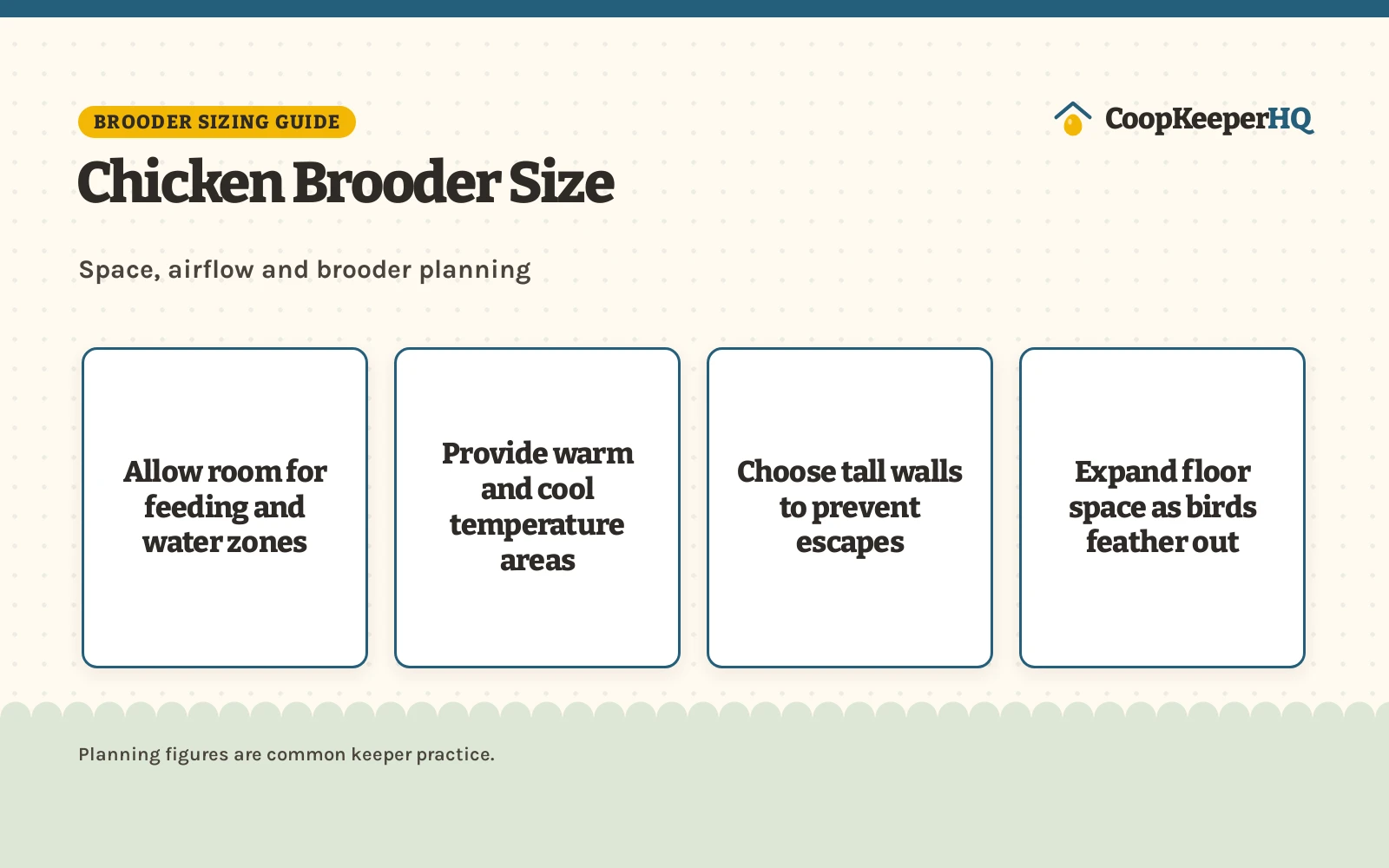
Preparing a nursery for newly arrived chicks is one of the most exciting routines in backyard poultry keeping. Getting your chicken brooder size right requires providing adequate floor area for comfortable resting, clean feeding and watering stations, and room to move away from direct heat. Because chicks grow rapidly during early brooding, chicken brooder size must accommodate flock expansion rather than just the first days after hatch.
Other options for the coop
 Brooder for ChicksCheck price on Amazon
 K&H Brooder PlateCheck price on Amazon
 NUGRIART Brooder Heater for ChicksCheck price on Amazon
 Chick Brooder Heater Plate with Digital Temperature ControlCheck price on Amazon
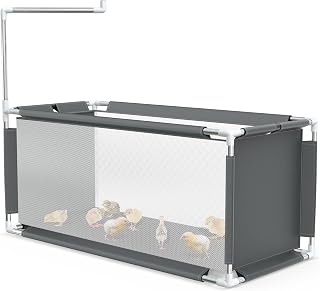 Chicken Brooder Box 10.6 cu ftCheck price on Amazon
 Tetuga Brooder Heat Plate 12 X 16” Chick Heating Plate WarmCheck price on Amazon
CoopKeeperHQ earns a commission if you buy through our links, at no added cost to you. Affiliate disclosure.
Chicken brooder size: how space requirements expand as chicks grow
When baby chicks arrive from the hatchery or incubator, they cluster together beneath their heat source for warmth. Even in the earliest days, however, chicks require enough floor area to step away from direct heat to drink, feed, and cool down. As healthy chicks grow, wing feathers emerge, activity levels increase, and birds begin fluttering, running, and scratching in the bedding.
If the brooding area remains too confined, problems quickly multiply. Overcrowded brooders accumulate droppings faster than bedding can absorb moisture, leading to wet floors, soiled fluff, and ammonia odors. Restricted floor space also triggers behavioral friction, causing chicks to peck at each other or crowd around feeding dishes. Planning for expansion from the start ensures your flock enjoys clean, dry floor conditions and plenty of room until they are fully feathered and ready to move to the coop.
Creating distinct warm and cool temperature zones
One of the most critical aspects of brooder dimensions is allowing sufficient floor span to establish a thermal gradient. Baby chicks cannot regulate their internal body temperature and depend entirely on external heat to stay comfortable. A proper brooding layout features a concentrated warm zone directly under the heat source, surrounded by cooler ambient areas where birds can feed, drink, and explore.
In a cramped container, the entire floor area heats up, leaving chicks with no retreat when they feel uncomfortably warm. Conversely, a spacious brooder allows birds to self-regulate naturally. When chicks feel chilly, they rest quietly beneath the heat source. Once warmed, they move outward into the cooler perimeter to peck at crumble and sip fresh water. Watching chick distribution provides immediate feedback: birds huddled tightly directly under the heat signal a need for more warmth, while birds pressed against the outer walls indicate that the brooder is uncomfortably hot.
Allowing floor room for feeders, waterers and roosts
Brooder floor calculations must account for more than just standing birds. Essential brooding equipment consumes significant floor real estate. Every setup requires dedicated feeding dishes and clean waterers, positioned safely outside the primary warming zone so heat does not cause water evaporation or feed spoilage.
As birds develop, adding low practice perches encourages natural roosting behavior and strengthens leg muscles. If the brooder is too small, these accessories crowd the floor, forcing birds to walk through their water or sleep on their feeding troughs. Providing generous perimeter space keeps feeding stations clean and gives every chick unhindered access to fresh water without being pushed aside by flock mates. For recommendations on brooder layout equipment, our chick feeders guide and baby chick waterers comparison highlight practical hardware options.
Wall height and preventing early brooder escapes
Horizontal floor dimensions are only part of proper brooder planning; vertical enclosure height is equally vital. In the early days, low cardboard borders or short tote walls may block floor drafts. Yet as wing feathers develop, energetic chicks quickly learn to hop onto feeder tops and flutter over the rim.
Escaped chicks face serious risks of chilling, getting lost, or encountering household hazards and family pets. Brooders with generous wall height prevent unexpected leaps. Even better, enclosures equipped with zippered mesh covers or firm wire lids provide dependable containment while preserving overhead visibility and airflow. If using an open-top box, draping hardware cloth across the top helps keep growing birds inside their designated quarters.
Ventilation and moisture management
Fresh air circulation is just as vital as warmth. Growing chicks produce continuous droppings and exhale moisture throughout the day and night. If an enclosure lacks adequate ventilation, humidity builds rapidly, creating damp bedding that harbors bacteria and generates eye-stinging ammonia fumes.
Proper brooder construction balances draft prevention at floor level with generous air exchange above. Breathable mesh panels, side air vents, or open wire tops allow humid, stale air to rise and escape freely. Never seal a brooder tightly with a solid plastic lid or non-breathable tarp in an attempt to hold warmth. Maintaining dry, loose bedding alongside open ventilation keeps the brooder atmosphere fresh and pleasant for both the birds and the keeper. For flooring material comparisons, see our guide on brooder flooring.
Comparing stated brooder dimensions and manufacturer ratings
When shopping for prefabricated enclosures or brooder kits, manufacturer listings provide concrete dimensions and claimed flock capacities. However, keepers should evaluate maker ratings with caution, as stated capacities often reflect newly hatched chicks rather than birds approaching full feathering.
Manufacturer claims vary significantly across different styles and materials. For example, Proshine lists a wooden brooder box measuring 18.9 x 11.8 x 12.6 inches that it rates for about 10 chicks, equipped with a 50W heating lamp. Proshine also lists a wooden brooder measuring 32 x 16 x 16 inches that the maker states accommodates up to 30 chicks, though that floor footprint becomes very crowded as birds grow. Similarly, Silanit lists a wooden brooder measuring 15.74 x 11.81 x 11.81 inches with a 50W heating lamp and 2 feeders. For keepers looking at metal construction, Kinchoix lists an alloy steel brooder measuring 32 x 16 x 16 inches with a listed weight of 44.4 pounds.
Fabric and pop-up playpens present a different set of dimensions. LavviTech lists a pop-up brooder measuring 45 x 45 x 20.5 inches crafted from 420D Oxford cloth, which the maker rates to hold up to 20 chicks. Pawaboo lists a portable playpen opening to 52 x 15 inches with 190T polyester taffeta and 3 included ground stakes. Pawaboo also lists an expandable enclosure measuring 82.7 x 47.2 x 19.7 inches that can be unzipped into 2 separate pens or connected together. In starter kits, Kerty lists a 45 x 20 x 20 inch pop-up brooder pen paired with an 11.8 x 11.8 inch brooder heater plate adjustable from 50°F to 158°F and a 12-hole trough feeder. When reviewing these options, our brooder for 15 chicks overview helps keepers weigh capacity claims against real backyard space needs.
Choosing safer heat sources over heat lamps
Providing warmth is mandatory in every chick brooder, but the type of heating appliance you install directly influences your space layout and safety. Traditional hanging heat lamps with infrared bulbs represent a serious fire hazard in backyard coops and brooders. Clamped heat lamps can easily be knocked loose by flapping birds, active pets, or bumped cords, falling into dry, flammable bedding with disastrous results. Furthermore, high-wattage bulbs illuminate the brooder continuously day and night, disrupting natural sleeping rhythms and encouraging aggressive pecking behavior.
Radiant heat plates offer a substantially safer heating alternative. These flat panels warm chicks through direct contact and gentle downward radiant warmth, closely mimicking how a mother hen shelters her brood. Chicks scurry underneath when they need warming, then emerge into the surrounding cool zone to feed and explore. Because radiant heating plates operate at much lower surface temperatures and lack fragile glass bulbs, fire risk is dramatically minimized. For detailed comparisons of heating methods, see our heat plate vs heat lamp comparison and our brooder heater plate guide.
Electrical safety around brooders and cords
Brooders rely on electrical equipment to supply consistent warmth, making electrical safety an essential consideration for every keeper. Power cords must be routed carefully along the exterior frame and fastened well away from curious beaks and scratchy feet. Curious chicks will readily peck at exposed wiring, while energetic dust bathing kicks up fine debris that can settle into plugs and outlets.
Always plug brooding heaters into an electrical outlet protected by a ground-fault circuit interrupter (GFCI). A GFCI outlet cuts power immediately if moisture intrusion or a wiring fault occurs, protecting both your birds and your home. Keep cords elevated off damp floors, inspect cords routinely for any sign of wear or heat damage, and avoid running extension cords across high-traffic pathways. If you notice any electrical cords showing signs of chafing or loose connections, replace the equipment immediately.
Daily brooder routine and maintenance
A simple daily routine keeps the brooding area healthy and helps you recognize when your flock is outgrowing its space. Begin each morning by inspecting the flock: alert chicks should move freely, explore the bedding, and gather around the feeder. Check the waterer to clean out any kicked-up shavings, rinse the reservoir, and replenish with fresh, lukewarm water. Top off the crumble feeder to ensure continuous nourishment.
Throughout the day, observe how your birds distribute themselves across the floor. If chicks cluster tightly against outer pen walls or pant with open beaks, the enclosure is retaining too much heat. If they pile on top of one another directly beneath the heater and chirp distress calls, they need more warmth. Scoop out soiled bedding patches daily and add clean, dry shavings to keep footing fresh. If you observe any bird showing signs of lethargy or unusual weakness, consult your state extension office or a poultry vet rather than attempting home remedies.
A simple brooder sizing checklist
- Floor space accommodates feeding stations, water founts and warm resting zones
- Thermal gradient allows chicks to move freely between warm and cool areas
- Enclosure walls or covered tops prevent growing chicks from fluttering out
- Ventilation openings exchange moisture and ammonia without creating floor drafts
- Heating equipment leaves room for a distinct cool zone without overheating the floor
- Power cords are routed outside the pen and connected to a GFCI outlet
For guidance on setting up your brooding hardware, see our brooder design guide.
Birds, breed size, run time and climate in; coop floor, run space, roost length and nesting boxes out.
Heat lamps are a common cause of coop and barn fires. If you use one, secure it with more than the clamp (a chain or wire to a fixed point), keep it well away from bedding, walls and cardboard, and plug it into an outlet or a cord rated for the load. Radiant heat plates run cooler and remove most of that risk. Check chicks often in the first days: huddling under the heat means too cold, spreading to the edges means too warm. Read our Safety Disclaimer.
FAQ for the flock
How much space do chicks need in a brooder?
Space requirements expand rapidly as chicks grow. Newly hatched chicks stay close together near the heat source, but quickly need enough floor space to walk, exercise their wings, and reach feed and water without crowding. Rather than keeping birds in cramped quarters, keepers should provide ample floor area or choose an expandable enclosure so birds can move away from heat when resting.
What happens if a chicken brooder is too small?
An undersized brooder causes overcrowding, which leads to damp bedding, dirty plumage, aggressive feather picking, and competition around the feeder and waterer. It also prevents chicks from escaping excess warmth, increasing the risk of overheating.
How tall should the walls of a chicken brooder be?
Brooder walls must be tall enough to contain active chicks as they grow wing feathers and begin hopping and fluttering. Enclosures with firm mesh tops or zippered covers provide dependable containment while maintaining necessary airflow.
Should feed and water be kept under the heat source?
Feeders and waterers belong along the cooler perimeter of the brooder, away from direct heat. Placing water near heat causes rapid evaporation and elevated humidity, while warm feed can spoil faster. Keeping water separated from the warming zone also encourages chicks to move between temperature zones.
Can you brood chicks outdoors or in an unheated coop?
Brooders can be set up in a draft-free shed, garage, or sheltered coop provided the ambient conditions allow the heat source to maintain adequate warmth. For unheated spaces, draft guards or solid lower walls help block cold floor breezes, while open tops maintain necessary air exchange. When uncertain about local weather conditions or flock comfort, consult your state extension office or a poultry vet.
More coop guides
- Best Brooder Heater Plate (2026): 5 Top Picks Compared
- Chicken Feeder for Chicks (2026): 5 Top Brooder Picks
- Best Flooring for Chick Brooder (2026)
See the brooder picks and the coop supply guides.