Best Chick Brooder Design (2026)
A practical guide to chick brooder design, covering safe radiant heat plates, draft-free ventilation, easy-clean bedding, and proper space for raising healthy chicks.

On this page
Top picks at a glance
As an Amazon Associate I earn from qualifying purchases.
- 1
 Brinsea Ecoglow Safety 600 Chick or Duckling Brooder9.7/10View on Amazon
- 2
 Tetuga Brooder Box for Chick Starter Kit with 10x 12” Brooder9.6/10View on Amazon
- 3
 RentACoop Big Red Barn Chick Brooder Set with Heating Plate9.6/10View on Amazon
- 4
 2 Pack Quail WatererView on Amazon
- 5
 2 Pack Quail Water FeederView on Amazon
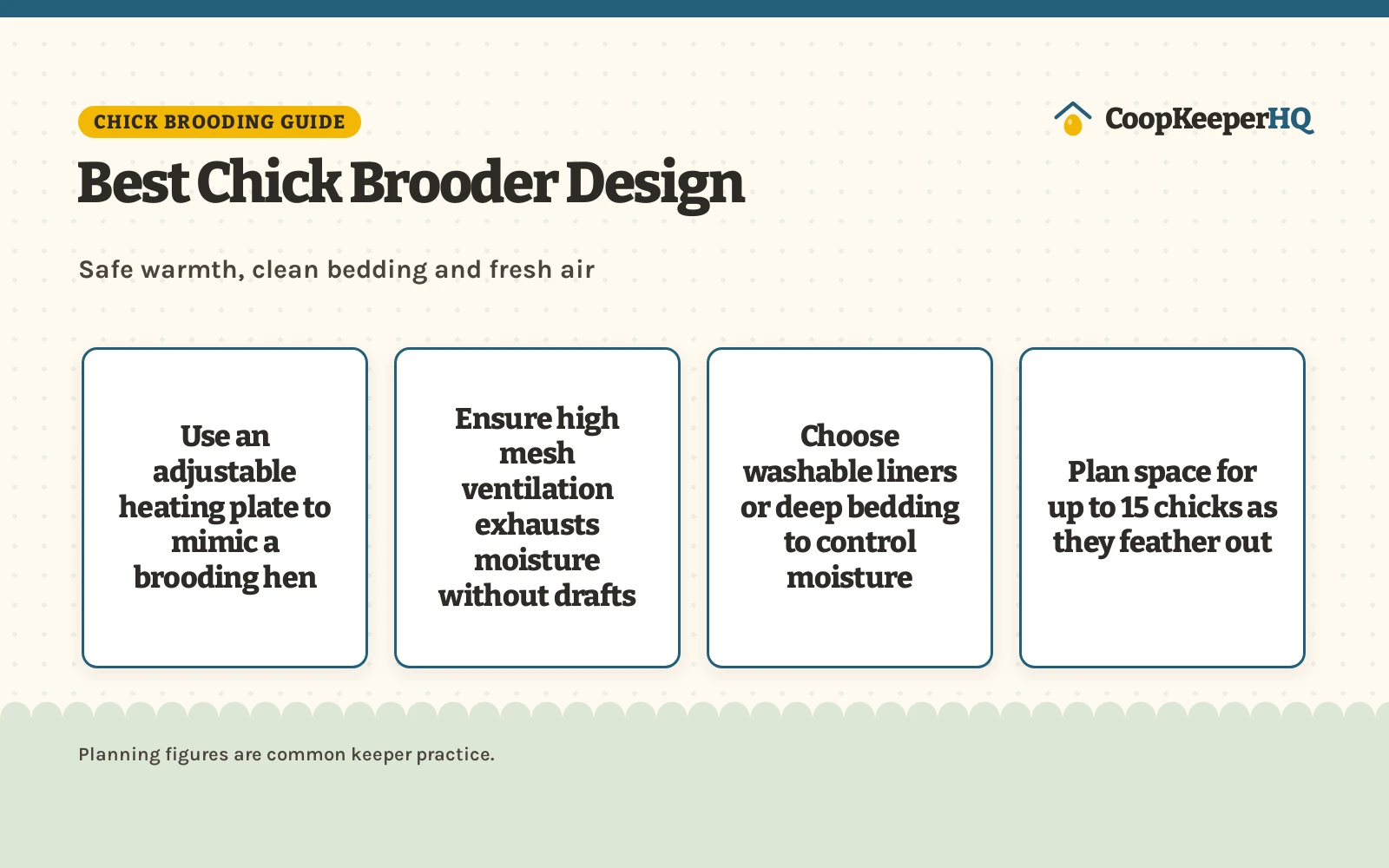
Every spring, heading out to the coop to collect eggs and check on the flock comes with the excitement of preparing for a new batch of fluffy peeping chicks. The best chick brooder design creates a safe, draft-free enclosure that pairs an adjustable radiant heat plate with breathable mesh ventilation and an easy-to-clean floor. This setup gives baby poultry a warm brooding zone that mimics a mother hen while leaving cooler space for feeding, drinking, and moving around.
Other options for the coop
 2 Pack Quail WatererCheck price on Amazon
 2 Pack Quail Water FeederCheck price on Amazon
CoopKeeperHQ earns a commission if you buy through our links, at no added cost to you. Affiliate disclosure.
Best chick brooder design: the thermal gradient
The central principle of chick brooding is establishing a thermal gradient. Newly hatched poultry cannot regulate their internal body temperature and depend entirely on an external warmth source. Rather than heating the entire pen uniformly, an effective layout pairs a warm resting zone with an adjacent cooler area where birds feed, drink, and exercise.
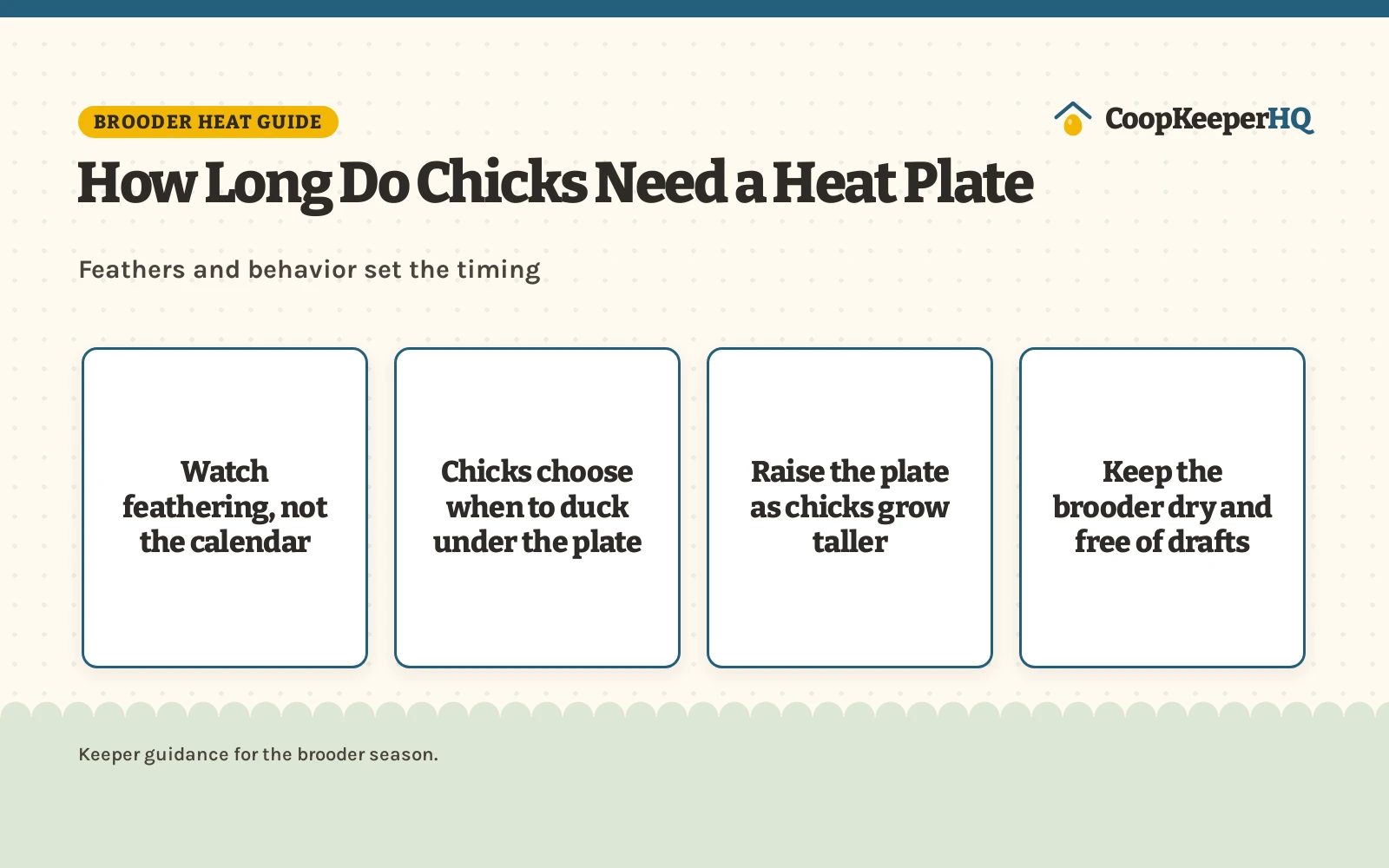
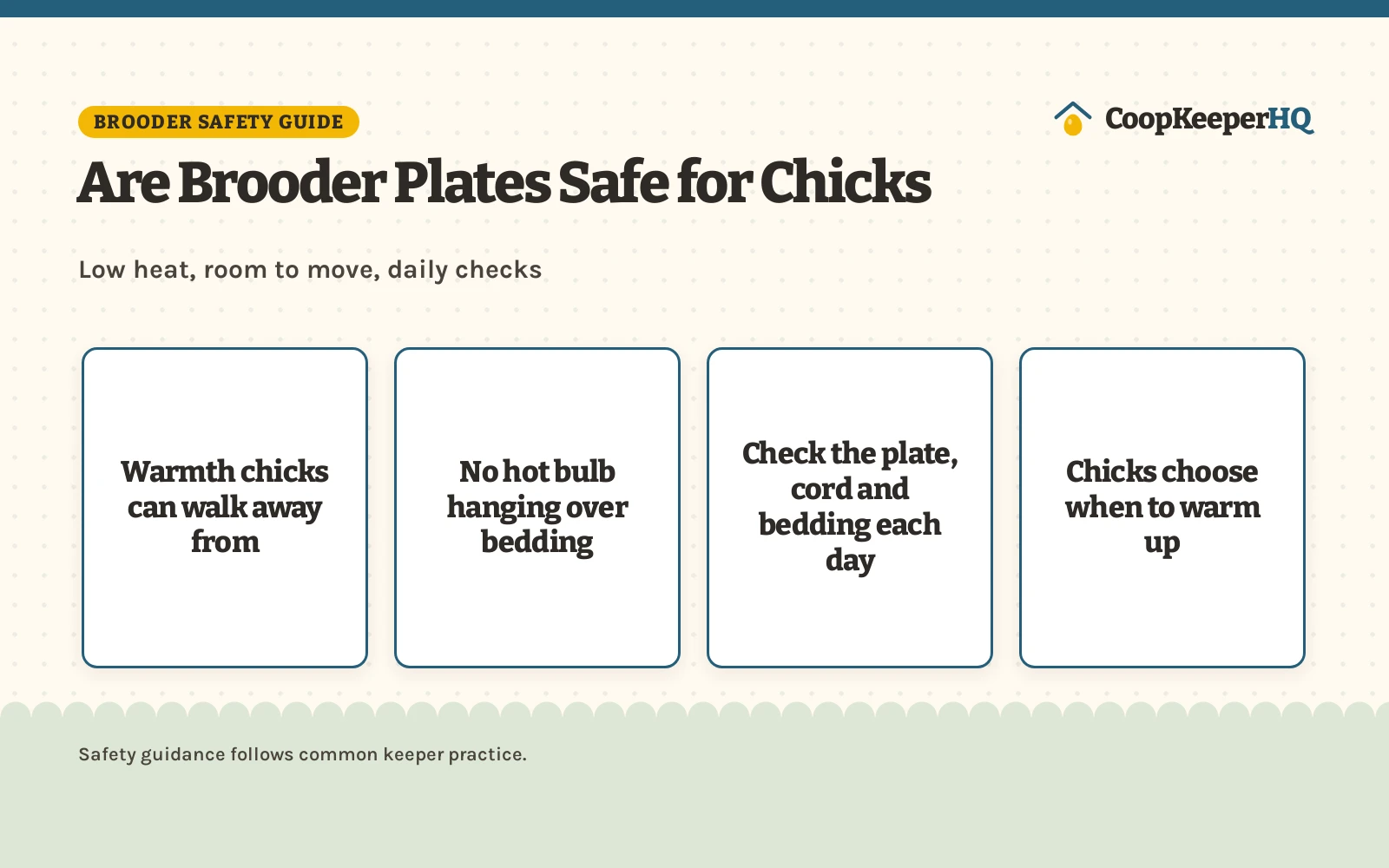
Radiant heating plates excel at creating this balance. Unlike heat lamps that illuminate the pen constantly and pose fire hazards near dry bedding, a heating plate radiates warmth downward. Chicks duck underneath to warm their backs, mimicking how they nestle under a mother hen. Our brooder heat plate guide reviews top models, while our heat plate vs heat lamp comparison explains the safety advantages in detail.
Heater listings provide varied temperature ranges. Kerty lists an adjustable heating plate with a manual setting range of 50°F to 158°F and a digital display covering 32°F to 210°F on an 11.8 by 11.8 inch plate. HAYOHRT lists a fir wood brooder that includes a 10 by 10 inch heating plate providing warmth from 0℉ to 115℉. By comparison, Proshine lists a 50W heating lamp providing 0 to 122℉ inside an 18.9 by 11.8 by 12.6 inch box, and Cyzarize lists a 110V 50W heating lamp with preheating in 5 seconds and a 0 to 120˚F range. An adjustable radiant plate keeps chicks warm without overheating the wider living space.
Enclosure materials and structural layout
Backyard keepers have several material options for brooder enclosures. The walls should contain active chicks, block floor drafts, and deter household pets. Our guide on what is a brooder box outlines the main styles.
Pop-up fabric pens offer lightweight portability and fold flat between brooding seasons. LavviTech lists a pop-up pen made from 420D Oxford cloth measuring 45 by 45 by 20.5 inches that unfolds in 3 seconds. Pawaboo lists a waterproof 190T polyester taffeta enclosure measuring 82.7 by 47.2 by 19.7 inches that can split into 2 separate brooder pens joined by zippers. TharroCotte lists a hexagonal oxford cloth pen with a 45 inch diameter, while VavoPaw lists an octagonal polyester design measuring 38.98 by 19.29 by 17.32 inches with a 4.5 inch raised frame.
Rigid enclosures provide durable boundaries. HAYOHRT lists a natural fir wood brooder measuring 31.5 by 15.7 by 15.7 inches, and IKILEOGY lists a wooden starter box measuring 20 by 16 by 18 inches with clear acrylic panels. For all-metal construction, Kinchoix lists a heavy-gauge alloy steel brooder measuring 32 by 16 by 16 inches that will not warp or absorb odors.
Draft-free ventilation and airflow control
Fresh air circulation keeps growing poultry healthy. Chicks produce moisture and droppings that quickly lead to ammonia buildup in stagnant air. However, direct floor drafts chill young birds rapidly, causing them to crowd into corners. A well-planned brooder exhausts damp air from the top while keeping lower walls solid.
Enclosures use varied ventilation features to balance warmth and air exchange. VavoPaw lists breathable mesh panels that maintain airflow while containing birds. TharroCotte lists dual ventilation doors to adjust airflow according to room conditions. Kinchoix lists fixed vents paired with an adjustable sliding top panel so keepers can regulate airflow without opening the entire lid.
Brooder floor design and bedding management
Managing droppings and dampness is essential for chick vitality. Our guide to flooring for a chick brooder explores absorbent options.
Raised wire floors allow droppings to fall into a catch pan. IKILEOGY lists a 0.6 centimeter metal mesh drawer with 5 disposable liners so droppings fall away from resting chicks. Kinchoix lists a slide-out deep waste tray designed for cleaning in 30 seconds. For similar setups, see our brooder with a tray overview.
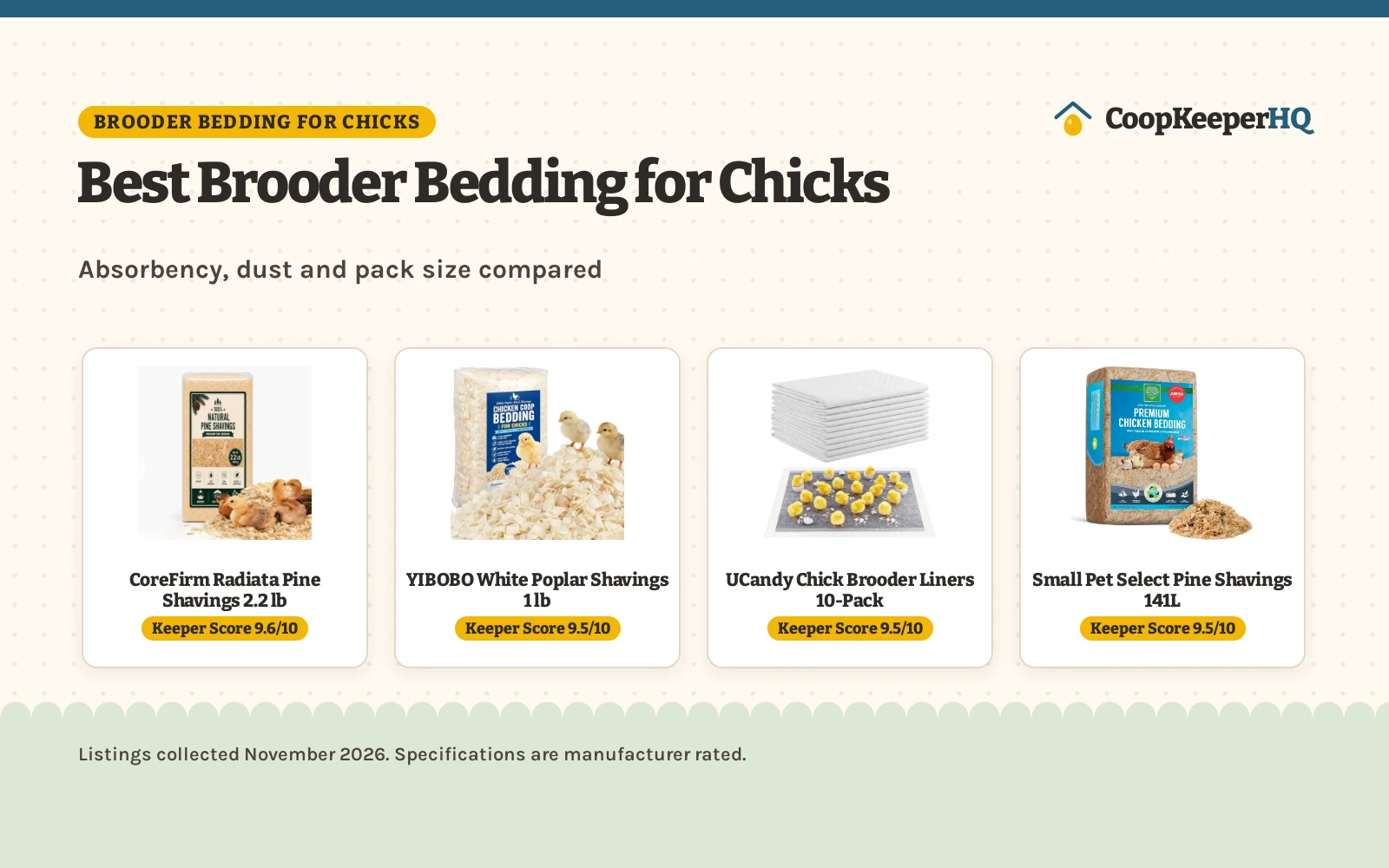
Solid floors rely on washable pads or deep pine shavings. LavviTech includes a washable oxford cloth bottom pad, and Pawaboo features a 190T waterproof taffeta bottom. When using loose litter, choose dry kiln-dried pine shavings. Avoid cedar shavings because aromatic oils irritate poultry airways, and avoid slick plastic liners that cause leg slips.
Feeder and waterer placement
Chicks scratch constantly, kicking bedding into water and feed if dishes sit at floor level. Position drinkers in the cooler zone of the pen, away from the heat plate, to prevent water evaporation from raising room humidity.
Kerty includes an anti-drowning waterer and a 12-hole trough chick feeder in its kit. The trough design reduces feed flicking and stops birds from walking across their feed. For dedicated hardware, explore our reviews of the waterer for baby chicks and the chicken feeder for chicks. Elevating drinkers on a firm block keeps shavings out of the basin.
Roosting perches and flock sizing
Chicks begin fluttering small wing feathers and hopping atop equipment early in development. Kerty includes a chick perch to encourage early roosting balance and leg exercise. Adding a dedicated chick perch gives birds clean roosting space and reduces floor crowding.
Floor space must accommodate rapid growth. Proshine lists its brooder for up to 10 chicks. TharroCotte lists its pen for up to 15 baby chicks. HAYOHRT states its 31.5 by 15.7 by 15.7 inch wooden box accommodates 12 to 15 chicks, while VavoPaw rates its pen for 10 to 15 baby chicks. LavviTech lists its 45 by 45 inch circular pen for up to 20 chicks. Check our chick brooders category for additional capacity options to avoid overcrowding.
Safe electrical setup and temperature monitoring
Route all heater cables through dedicated upper openings so power cords remain clear of sharp edges and curious beaks. Always connect brooder heating gear to an outlet protected by a ground-fault circuit interrupter.
Monitoring tools help track brooding conditions. Proshine includes 2 kinds of thermometers, including a stick-on display with humidity, and IKILEOGY includes an internal thermometer. Our guide to the thermometer for chick brooder compares digital options. Observing chick behavior remains the most dependable guide: comfortable chicks disperse evenly across the pen and peep softly, while chilled birds crowd tightly under heat and overheated birds pant in distant corners.
Daily brooding rhythm and checklist
A consistent morning and evening routine maintains a healthy brooding environment. In the morning, clean and refill the waterer, top off feed, and confirm all chicks are alert and active. In the afternoon, remove damp litter around the drinker. In the evening, check that chicks settle quietly beneath the heating plate and fasten top covers against household pets. If a chick appears lethargic or weak, consult a poultry vet or your state extension office for guidance.
A practical brooder checklist includes:
- Enclosure walls high enough to prevent flutter escapes
- Adjustable radiant heat plate establishing a distinct warm zone
- High-level mesh vents exhausting moisture without floor drafts
- Solid waterproof floor or pull-out tray for rapid sanitizing
- Anti-drowning water fount placed in the cooler zone
- Covered trough feeder minimizing feed waste and contamination
- Low perch supporting early roosting and exercise
- GFCI protected outlet with power cords fastened safely away from birds
Birds, breed size, run time and climate in; coop floor, run space, roost length and nesting boxes out.
Heat lamps are a common cause of coop and barn fires. If you use one, secure it with more than the clamp (a chain or wire to a fixed point), keep it well away from bedding, walls and cardboard, and plug it into an outlet or a cord rated for the load. Radiant heat plates run cooler and remove most of that risk. Check chicks often in the first days: huddling under the heat means too cold, spreading to the edges means too warm. Read our Safety Disclaimer.
FAQ for the flock
What is the best chick brooder?
The best chick brooder is a draft-free enclosure paired with an adjustable radiant heat plate, breathable ventilation, and an easy-to-clean floor. Radiant heat plates provide safe, consistent contact warmth while allowing the rest of the pen to stay cooler, which helps chicks feather out naturally without the fire hazard of a traditional heat lamp.
How long do baby chicks need a brooder?
Baby chicks need a brooder until they have grown their full adult feathers and can regulate their own body temperature. This transition also depends on whether outdoor coop and run temperatures are warm and dry. Keepers in cooler climates often maintain brooding shelter longer than keepers in warm regions. Check with your state extension office or a poultry vet for timing tailored to your specific breed and local conditions.
How warm does a chick brooder need to be?
A chick brooder should provide a warm microclimate beneath a heat source alongside a distinctly cooler area for feeding and exercise. While heating plates provide adjustable surface heat that chicks nestle against, the overall room should stay comfortable and well ventilated. Observing chick posture is the surest guide: comfortable chicks spread out calmly, while chilled birds bunch together and overheated birds pant in corners.
What is a baby chick brooder?
A baby chick brooder is a dedicated indoor or sheltered nursery enclosure designed to protect newly hatched poultry. It supplies supplemental warmth, dry bedding, clean water, starter feed, and protection from drafts, pests, and household pets during the vulnerable weeks before birds move into the permanent chicken coop.
How to keep a chick brooder clean?
Keep a chick brooder clean by checking the floor daily and removing damp bedding around the waterer immediately. Designs with pull-out waste drawers or washable waterproof pads can be rinsed and dried promptly. Elevating the waterer slightly and using enclosed trough feeders stops chicks from scratching soiled bedding into their food and drink.
More coop guides
- Best Brooder Heat Plate: Safer Heat for Chicks
- Heat Plate vs Heat Lamp for Chicks: Which Is Safer?
- Chicken Brooder with Tray: 5 Top Picks Compared (2026)
See the chick brooder picks and the coop supply guides.