Fence Stretcher vs Come Along: Which One Should You Buy?
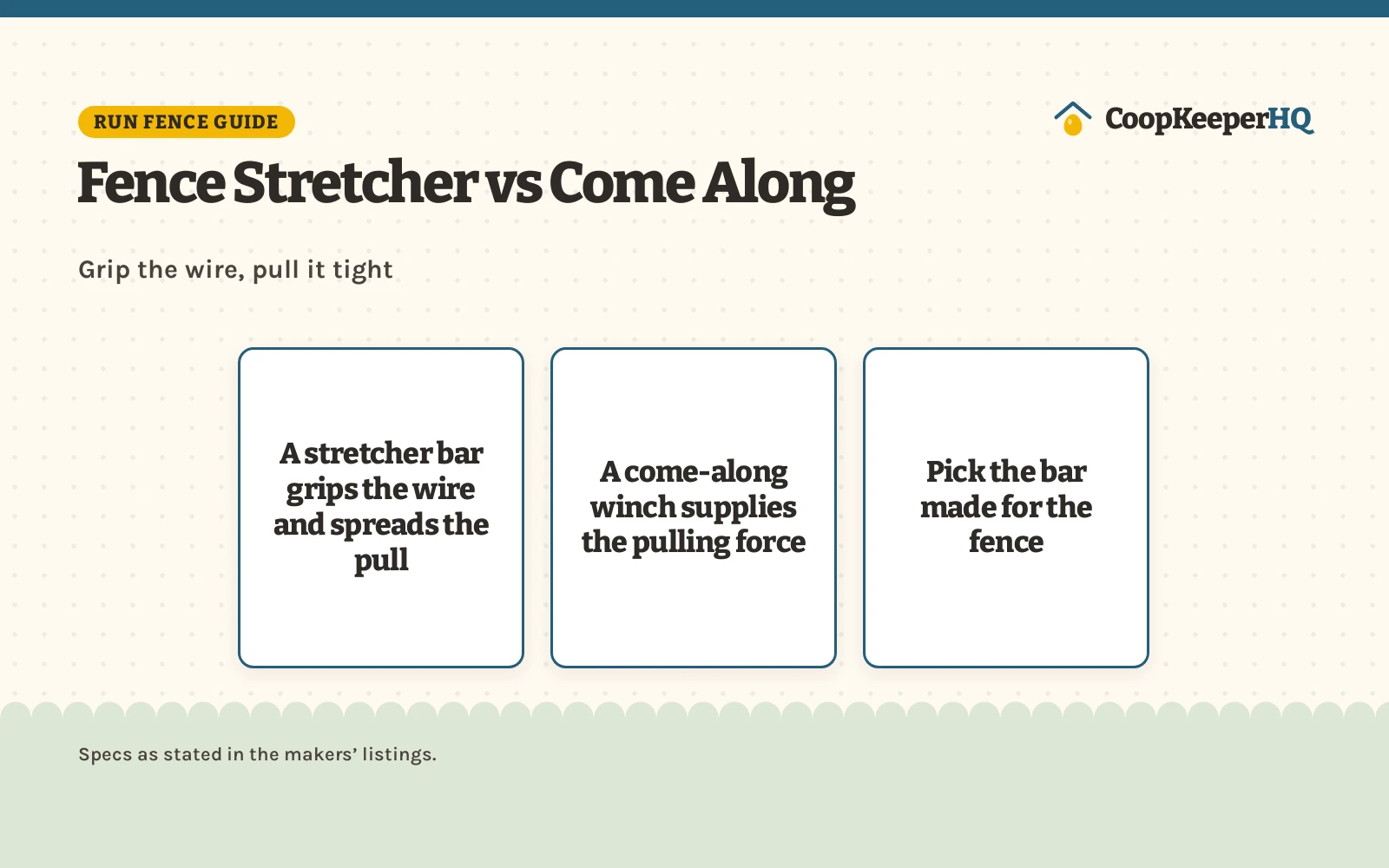
A stretcher bar grips the wire and spreads the pull, while a come-along winch supplies the force, and the pair puts a run fence up tight.

On this page
Top picks at a glance
As an Amazon Associate I earn from qualifying purchases.
- 1
 Chintooler 4ft Woven Wire Fence Stretcher Bar with 5 Wedges9.5/10View on Amazon
- 2
 AOPEC 4ft Woven Wire Fence Stretcher Bar with 5 Wedges9.5/10View on Amazon
- 3
 Krysolad 4ft Woven Wire Fence Stretcher Bar with 5 Wedges9.5/10View on Amazon
- 4
 GoldenrodView on Amazon
- 5
 Saddlebag Solutions Backcountry Fence StretcherView on Amazon
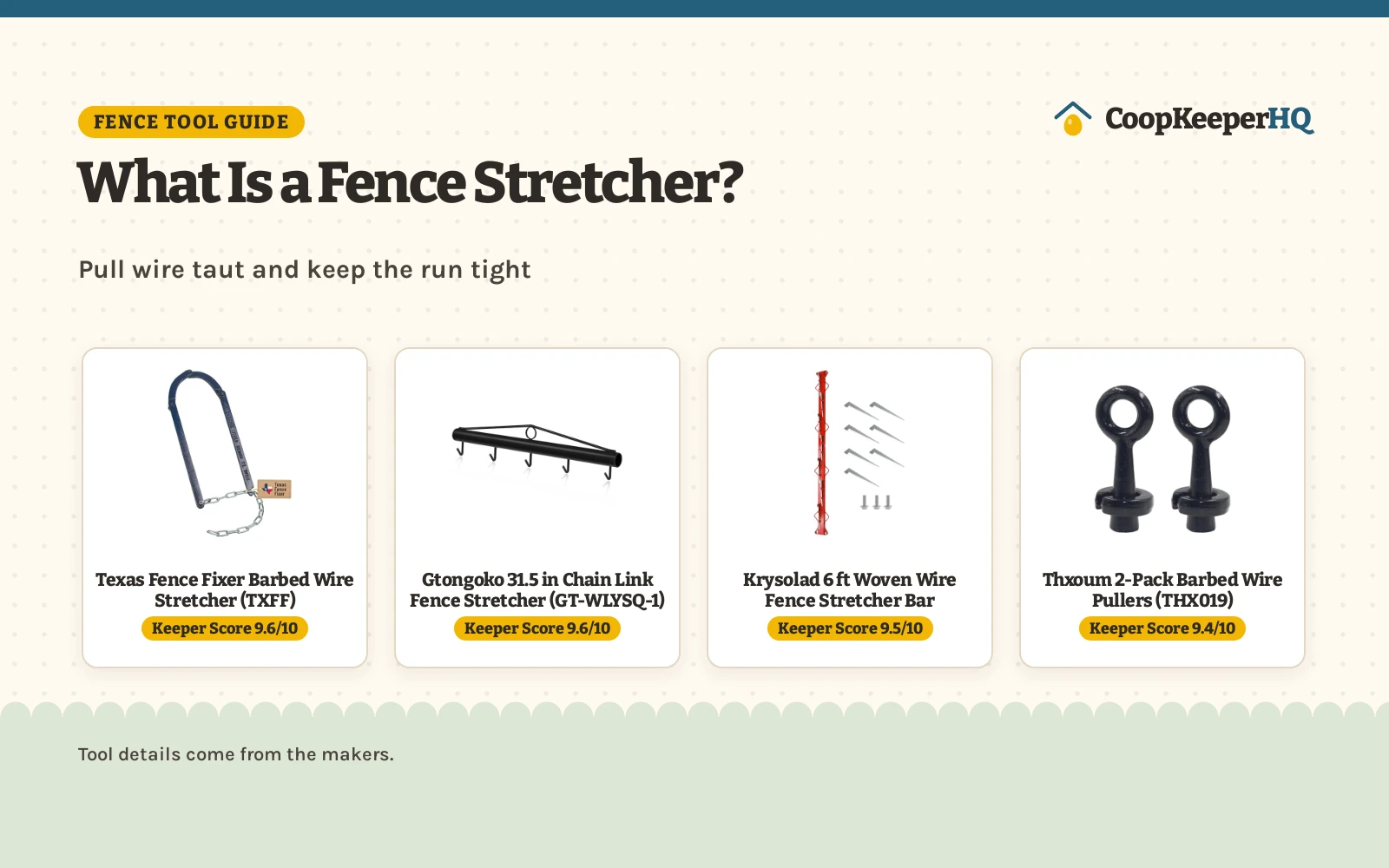
A fence stretcher and a come-along are partners, not rivals: the stretcher bar grips the wire and spreads the pull, while the come-along winch supplies the force that draws the fence tight. This guide to fence stretcher vs come along covers stretcher bars only, since no come-along winch is among the gear listed here, and it ends with a plain answer on which tool to buy for a run fence.
Other options for the coop
 GoldenrodCheck price on Amazon
 Saddlebag Solutions Backcountry Fence StretcherCheck price on Amazon
A sagging run fence lets chickens wander and lets trouble in, so the wire needs to come up tight and stay tight. Between them, the bars below cover woven wire, chain link, barbed wire and welded wire, and each one suits a different fence height and job, from a garden barrier to a ranch boundary.
CoopKeeperHQ earns a commission if you buy through our links, at no added cost to you. Affiliate disclosure.
Fence stretcher vs come along: how each tool works
A stretcher bar is a long bar with hooks or wedges that grip the fence fabric along a stretch, so the pull spreads across the wire instead of yanking at one spot. A come-along is a hand winch with a ratchet and cable that takes up slack a little at a time and holds the tension while the wire is fastened. On a run fence, bar and winch often work as a pair: the bar holds the wire, and the winch pulls the bar. Neither tool replaces the other, and a fence job that needs bar and winch together is the normal case, not a sign of the wrong purchase.
The difference shows in what each tool touches. The bar touches the wire itself, gripping a length of it so the strain stays even, while the winch pulls the bar and does the slow work of drawing everything tight. A keeper who buys only a winch still needs something to grip the wire, and a keeper who buys only a bar still needs something to pull with.
Stretcher bars for a run fence
Krysolad 6ft Woven Wire Fence Stretcher Bar with 7 Wedges. The bar measures 6ft and carries 7 wedges in a staggered layout, with a double-sided hook that grips the wire. The maker lists high-quality steel with a rust-proof treatment, and the bar suits farms, pastures and garden barriers, as well as urban security fences and zoo fences. The wedges sit in a vertically staggered pattern, which the maker states gives maximum grip and stability while the bar straightens woven netting.
AOPEC 5ft Woven Wire Fence Stretcher Bar with 6 Wedges. The bar measures 5ft and carries 6 wedges spaced along its length, with dual side handles for the pull. The maker lists heavy-duty carbon steel with a red powder coating against rust, corrosion and weather damage, and the bright red coating also makes the bar easy to spot outdoors. The bar is sized for 5ft wire fences, gripping woven wire, chain link or barbed wire, and it suits farms, ranches, security barriers, zoos and DIY projects.
Gtongoko Chain Link Fence Stretcher Tool. The tool measures 31.5 inches and carries 5 hooks, made from galvanized steel for farm and ranch fencing. The maker states it works with a come-along winch or ratchet puller for controlled tension, and it suits chain link fabric and welded wire on farm boundaries, livestock areas and ranch properties. It is built for farmers, ranch operators and fencing professionals, and it also suits small DIY fence jobs with a simple hook, pull and secure operation.
How the wedges and hooks hold the wire
The grip is the whole point of a stretcher bar. Wedges bite into the mesh and spread the load, so the wire comes up straight instead of puckering at the pull point. The Krysolad bar uses 7 wedges and the AOPEC bar uses 6 wedges, each set in a staggered layout that the makers state improves grip and stability. The Gtongoko tool uses 5 hooks instead of wedges, which suits chain link fabric and welded wire, where a hook can catch the mesh cleanly.
Handles matter as much as the grip. The AOPEC bar has dual side handles, giving a comfortable and secure hold while the bar is pulled and moved into place, and the Krysolad bar uses a double-sided hook design, which the maker states gives strong grip and stretching force for high-tension fence nets.
Setting up a pull on a run fence
The job follows a simple order: hook, pull and secure. Hook the bar onto the wire so the wedges or hooks catch the mesh along a stretch, then pull with a come-along winch or ratchet puller until the wire runs straight and tight, then fasten the wire to the posts while the tension holds. The Gtongoko maker describes exactly this hook, pull and secure operation for small DIY fence jobs, and the same order serves a longer run.
For longer fences or heavier mesh the maker advises proper support, and gloves belong on the hands that handle sharp wire edges. The bar should stay hooked until the fastening is done, since a slipped bar leaves the fence wavy, and a wavy fence sags again.
Matching the bar to the fence
Each bar is made for the fence the maker states. The 6ft Krysolad bar suits taller woven wire, the 5ft AOPEC bar is sized for 5ft wire fences, and the 31.5-inch Gtongoko tool suits chain link and welded wire work where a shorter bar is easier to handle.
Material and coating decide how the bar ages outdoors. The Krysolad bar is steel with a rust-proof treatment, the AOPEC bar is carbon steel with a red powder coating, and the Gtongoko tool is galvanized steel. The red coating on the AOPEC bar also adds visibility, so the tool is less likely to be left behind in the grass.
Which one should you buy?
Buy the stretcher bar made for the fence: the 6ft Krysolad bar for taller woven wire, the 5ft AOPEC bar for 5ft fences, and the 31.5-inch Gtongoko tool for chain link and welded wire. Then pair the bar with a come-along winch or ratchet puller, since the bar grips the wire and the winch supplies the pull. The choice is not one tool or the other: a run fence goes up tight when the bar and the winch work together, and the bars in this guide cover the common run fence jobs between them.
Wash your hands after handling birds, eggs or equipment, supervise children around the flock, and check local rules on flock size and roosters before you buy. For sick birds, call a poultry veterinarian or your state extension office. See CDC backyard poultry guidance. Read our Safety Disclaimer.
FAQ for the flock
Can a fence stretcher bar work without a come-along?
The bar grips the wire and spreads the pull, but the tension has to come from a pulling tool, and the Gtongoko listing names a come-along winch or ratchet puller for that job. The pair is the usual setup for a run fence.
What fence types do these stretcher bars suit?
Woven wire, chain link, barbed wire and welded wire. The Krysolad bar is made for woven wire, the AOPEC bar grips woven wire, chain link and barbed wire, and the Gtongoko tool suits chain link fabric and welded wire.
How do I pick a bar length?
Go by the fence the maker states the bar for: a 6ft bar for taller woven wire, a 5ft bar for 5ft fences, and the 31.5-inch tool for chain link work.
What should I wear when tensioning a fence?
Wear gloves when handling sharp wire edges, as the Gtongoko maker advises, and use proper support on longer fences or heavier mesh.
Does a stretcher bar suit a small run fence?
Yes. The bars suit farms, ranches and garden barriers, and the Gtongoko tool is made for small DIY fence jobs with a simple hook, pull and secure operation.
More coop guides
- Chain Link vs Welded Wire Chicken Run: Which Should You Build?
- Chicken Wire vs Welded Wire: Which One Should You Buy?
- Field Fence vs Poultry Netting: Which One Should You Buy?
- Bolt Cutters vs Wire Cutters for Fencing: Which One Should You Buy?
- T Post vs Wood Post: Which One Should You Buy?
- Galvanized vs Stainless Fence Staples: Which One Should You Buy?
See the chain link vs welded wire comparison and the field fence vs poultry netting guide when planning the run fence.