Gravity Waterer vs Poultry Nipples: Which One Should You Buy?
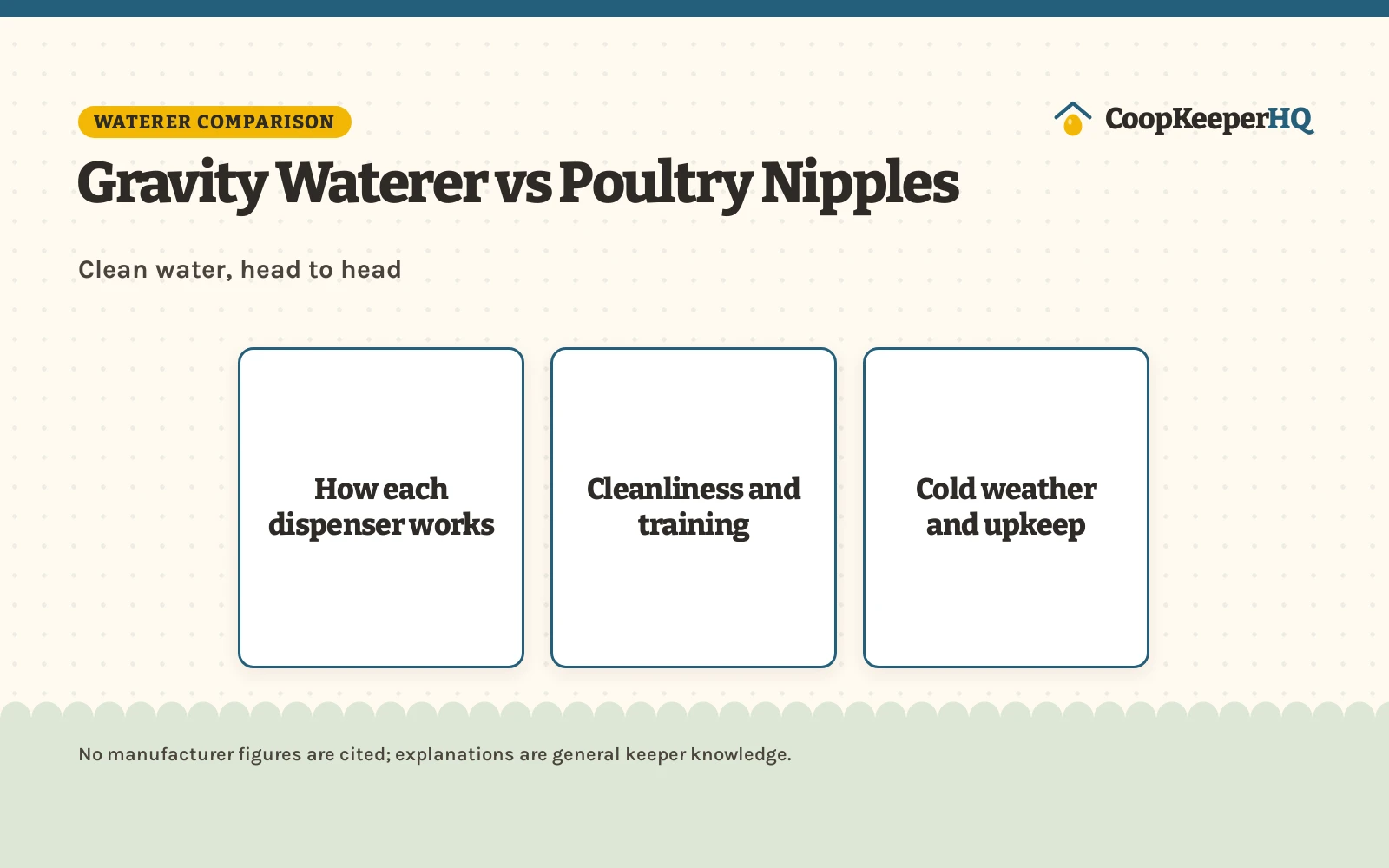
Gravity waterers and poultry nipples compared by cleanliness, training, freezing and upkeep, so you can pick the right dispenser for your flock.

On this page
Top picks at a glance
As an Amazon Associate I earn from qualifying purchases.
- 1
 Enhon 2-in-1 Quail Feeder and Waterer9.6/10View on Amazon
- 2
 Farm Innovators HB-60P Heated Poultry Waterer DrinkerView on Amazon
- 3
 Little Giant® Plastic Dome WatererView on Amazon
- 4
 FARM-TUFF Galvanized Poultry WatererView on Amazon
- 5
 Omlet Insulated Chicken WatererView on Amazon
- 6
 Little Giant® Plastic Poultry WatererView on Amazon
- 7
 15 Pack Horizontal Chicken Waterer NipplesView on Amazon
Morning water duty is the same every day: haul, fill, scrub. The gravity waterer vs poultry nipples choice comes down to this: nipples keep drinking water cleaner with less scrubbing, while gravity waterers are simpler to set up and easier for chicks and ducks. Pick nipples for adult chickens in a run you want to keep tidy; pick gravity for brooders, ducks and anyone who wants the simplest setup.
Other options for the coop
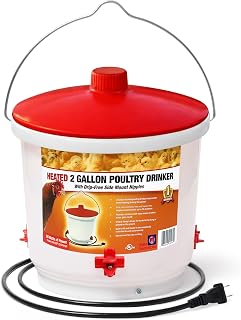 Farm Innovators HB-60P Heated Poultry Waterer DrinkerCheck price on Amazon
 Little Giant® Plastic Dome WatererCheck price on Amazon
 FARM-TUFF Galvanized Poultry WatererCheck price on Amazon
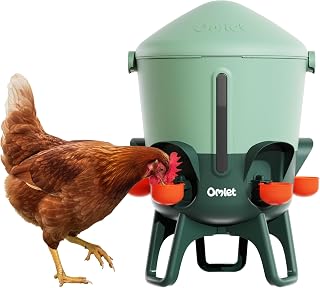 Omlet Insulated Chicken WatererCheck price on Amazon
 Little Giant® Plastic Poultry WatererCheck price on Amazon
 15 Pack Horizontal Chicken Waterer NipplesCheck price on Amazon
CoopKeeperHQ earns a commission if you buy through our links, at no added cost to you. Affiliate disclosure.
How a gravity waterer works
A gravity waterer is a reservoir with a trough or pan at the bottom. Water flows down as the birds drink, so the trough stays full with no hose or power. You fill it, carry it out and set it down. Most keepers hang them or set them on a stand to keep bedding out of the trough.
How poultry nipples work
A poultry nipple is a small valve the bird pecks to release a drop of water. Nipples mount on the bottom or side of a bucket, barrel or pipe run, and water stays sealed inside until a beak triggers the valve. The bucket or line hangs above the bedding, so nothing sits open to collect dirt.
Cleanliness: open trough vs sealed line
This is where nipples win. An open trough collects bedding, droppings and dust all day, so it needs scrubbing on a steady rhythm. A sealed nipple line keeps water away from all of that, and the only part the bird touches is the valve. If your run is dusty or your flock kicks bedding everywhere, nipples cut the dirtiest chore down to size. For more on open versus nipple setups, see open waterer vs nipple waterer.
Training the flock onto nipples
Chickens learn nipples fast: tap the valve so a drop hangs on the tip, and curiosity does the rest. Most birds figure it out the same day. Chicks can learn too, but very young chicks do better with an open waterer they cannot miss, so many keepers start chicks on a gravity waterer and switch them over as they grow. Ducks are a different story: they need open water to rinse their nostrils, so nipples alone do not suit them. See nipple drinkers for chickens for setup ideas.
Cold weather: freezing is the real challenge
Both systems freeze in a hard cold snap. A gravity waterer turns into a solid block; a nipple line freezes at the valves before the reservoir does. Heated bases and heated lines exist for both, and our heated vs unheated chicken waterer comparison covers the options. Whichever you run, check water on the coldest mornings and have a backup plan for a power outage.
Maintenance and daily chores
A gravity waterer asks for refilling and scrubbing on a regular rhythm; algae and slime love a warm trough in summer. A nipple setup asks for less scrubbing but more watching: check that every valve drips when pecked, flush the bucket or line now and then, and look for leaks at the fittings. Hanging either type keeps bedding out and backs dry. For bucket builds, see chicken water nipples for PVC pipe and best automatic chicken waterer.
Gravity waterer vs poultry nipples: which should you buy
Buy nipples if your flock is adult chickens and you want cleaner water with less scrubbing. Buy gravity if you brood chicks, keep ducks, or want the simplest thing that works with no learning curve. Plenty of keepers run both: nipples in the run for daily drinking and a gravity waterer in the brooder or duck pen.
Wash your hands after handling birds, eggs or equipment, supervise children around the flock, and check local rules on flock size and roosters before you buy. For sick birds, call a poultry veterinarian or your state extension office. See CDC backyard poultry guidance. Read our Safety Disclaimer.
Sizing the system to your flock
Size the water supply to how often you want to refill, not to the number of birds alone. A gravity waterer with a generous reservoir lets you skip a day of hauling; a small one chains you to the morning routine. With nipples, the question is access rather than volume: mount enough nipples along the line or bucket so every bird can drink without waiting, and spread them across more than one spot if the flock has a pecking order problem. Birds low in the order drink last, and one cluster of nipples lets the bosses guard them.
Heat, algae and the summer trough
Summer is where the two systems diverge most. An open trough in the sun grows algae and slime fast, and warm water draws more insects; keepers who run gravity waterers end up scrubbing on a tight rhythm through the hot months. A sealed nipple line barely notices the heat, since sunlight never reaches the water inside. Whatever you run, put the water in the shade: a trough under a roof overhang or a tree stays cleaner and cooler than one baking in the open, and birds drink more when the water is cool.
Running both systems together
Many keepers do not choose at all. Nipples in the run handle daily drinking with minimal scrubbing, while a gravity waterer in the brooder serves chicks too young to learn valves, and another open drinker serves the duck pen. Ducks need open water to rinse their nostrils, so a nipple-only setup never suits a mixed flock. Separate systems also give you a backup: if a valve sticks or a trough cracks, the flock still has water while you fix it.
Absence is the other reason to keep more than one water source. Time away is easy with a full gravity reservoir and a working nipple line, because a failure in one still leaves the other. Check both before you leave: scrub the trough, confirm every nipple drips when pecked, and make sure the reservoir is full. Redundancy is the cheapest insurance a flock can have.
FAQ for the flock
Can chicks use poultry nipples?
They can learn, but an open waterer is safer for very young chicks that must find water without fail. Many keepers start chicks on gravity water and move them to nipples as they grow.
Do nipples work for ducks?
Not as the only water source. Ducks need open water to rinse their nostrils and condition their bills, so give ducks a gravity waterer or another open drinker alongside or instead of nipples.
Will a nipple waterer freeze in winter?
Yes, the valves freeze before the reservoir does. Heated options exist for both systems; see the heated waterer comparison linked above.
How often should I clean a gravity waterer?
Often enough that the trough never grows slime: in warm weather that means a frequent rhythm, in cool weather less. If the water looks or smells off, you waited too long.
Can I turn a bucket into a nipple waterer?
Yes. Drill holes in the bottom or lower side of a food-safe bucket, thread in poultry nipples and hang the bucket above the bedding. Check every valve for drips after install.
More coop guides
- Open Waterer vs Nipple Waterer: Which Suits Your Flock?
- Nipple vs Cup Chicken Waterer: Which Stays Cleaner?
- Best Automatic Chicken Waterer: Hose-Fed and Float Picks
- Chicken Waterer Ideas: Clean Water Setups for Your Coop and Run
- Best Chicken Waterer System (2026): 4 Automatic Pipeline Kits
- Heated vs Unheated Chicken Waterer: Which One Should You Buy?
See the feeder and waterer guides and the coop supply guides.