Hemp Bedding vs Straw: Which One Should You Buy?
Hemp bedding absorbs up to 4x its weight with low dust, while straw composts faster but mats when wet. Here is how to pick the right one for your coop floor and nesting boxes.

On this page
Top picks at a glance
As an Amazon Associate I earn from qualifying purchases.
- 1
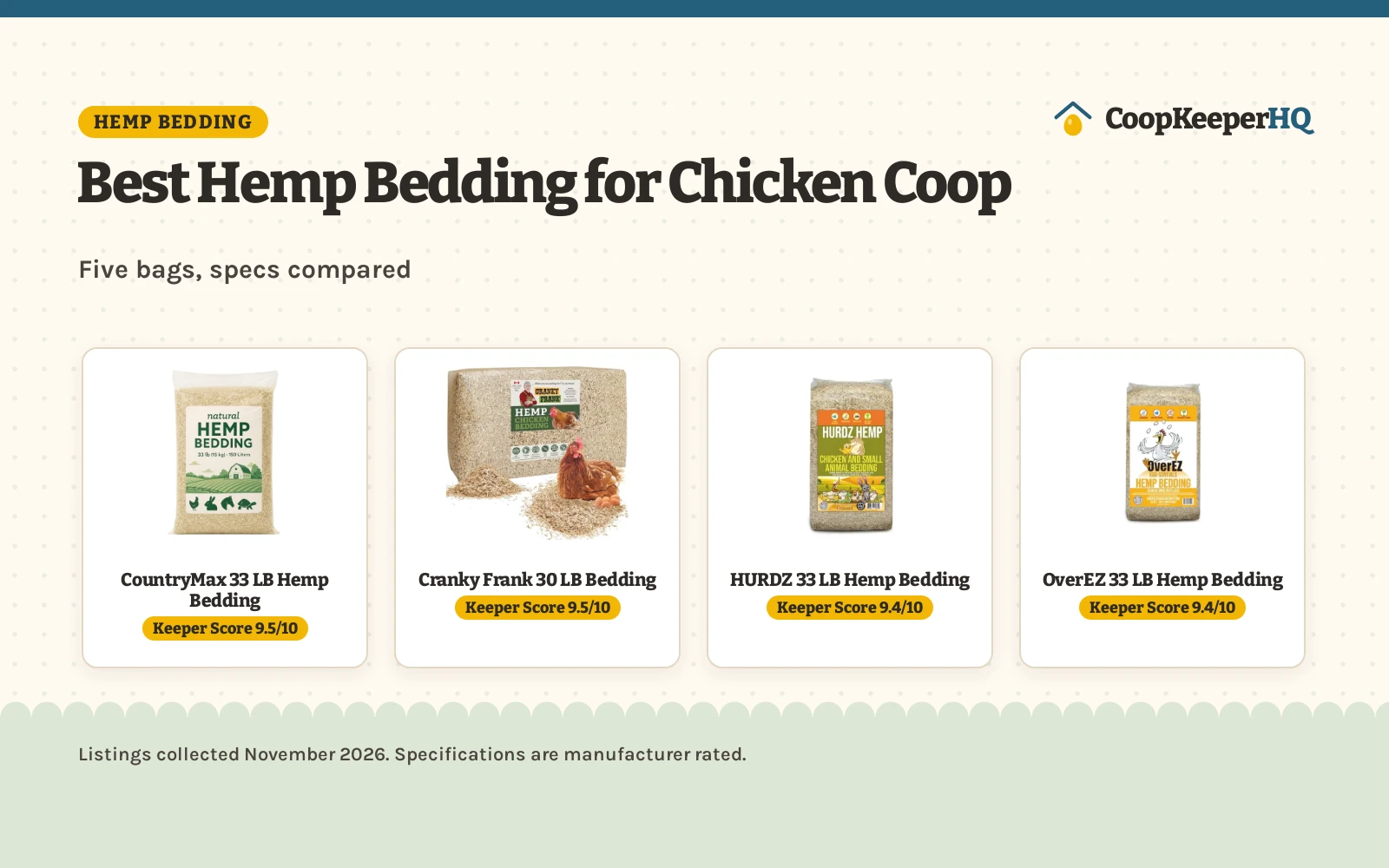
 CountryMax 33 LB Hemp Bedding9.5/10View on Amazon
- 2
 HealthiStraw FarmStraw Coarse Cut Wheat Straw Bedding9.6/10View on Amazon
- 3
 Cranky Frank Hemp Chicken Bedding9.5/10View on Amazon
- 4
 Small Pet Select Hemp HURD Chicken Coop BeddingView on Amazon
- 5
 [33lbs] OverEZ Hemp Chicken BeddingView on Amazon
- 6
 Cozy CoopView on Amazon
- 7
 Hemp Bedding for Chickens & Small AnimalsView on Amazon
- 8
 Hemp BeddingView on Amazon
- 9
 Aubiose Hemp Bedding for Horses 22lbView on Amazon
If your coop floor stays damp, smells of ammonia or needs topping up every other day, the bedding is usually the problem. Hemp bedding vs straw comes down to this: hemp bedding is the more absorbent, lower-dust material, with one listing stating it absorbs up to 4x its weight in moisture, while straw is the familiar, compost-friendly option that mats down when wet and asks for more turning. Choose hemp bedding for the coop floor, nesting boxes and brooders where absorbency and low dust matter most; keep straw for runs or for keepers with a cheap local supply and time to manage it.
Other options for the coop
 Small Pet Select Hemp HURD Chicken Coop BeddingCheck price on Amazon
 [33lbs] OverEZ Hemp Chicken BeddingCheck price on Amazon
 Cozy CoopCheck price on Amazon
 Hemp Bedding for Chickens & Small AnimalsCheck price on Amazon
 Hemp BeddingCheck price on Amazon
 Aubiose Hemp Bedding for Horses 22lbCheck price on Amazon
CoopKeeperHQ earns a commission if you buy through our links, at no added cost to you. Affiliate disclosure.
Hemp Bedding vs Straw: The Quick Answer
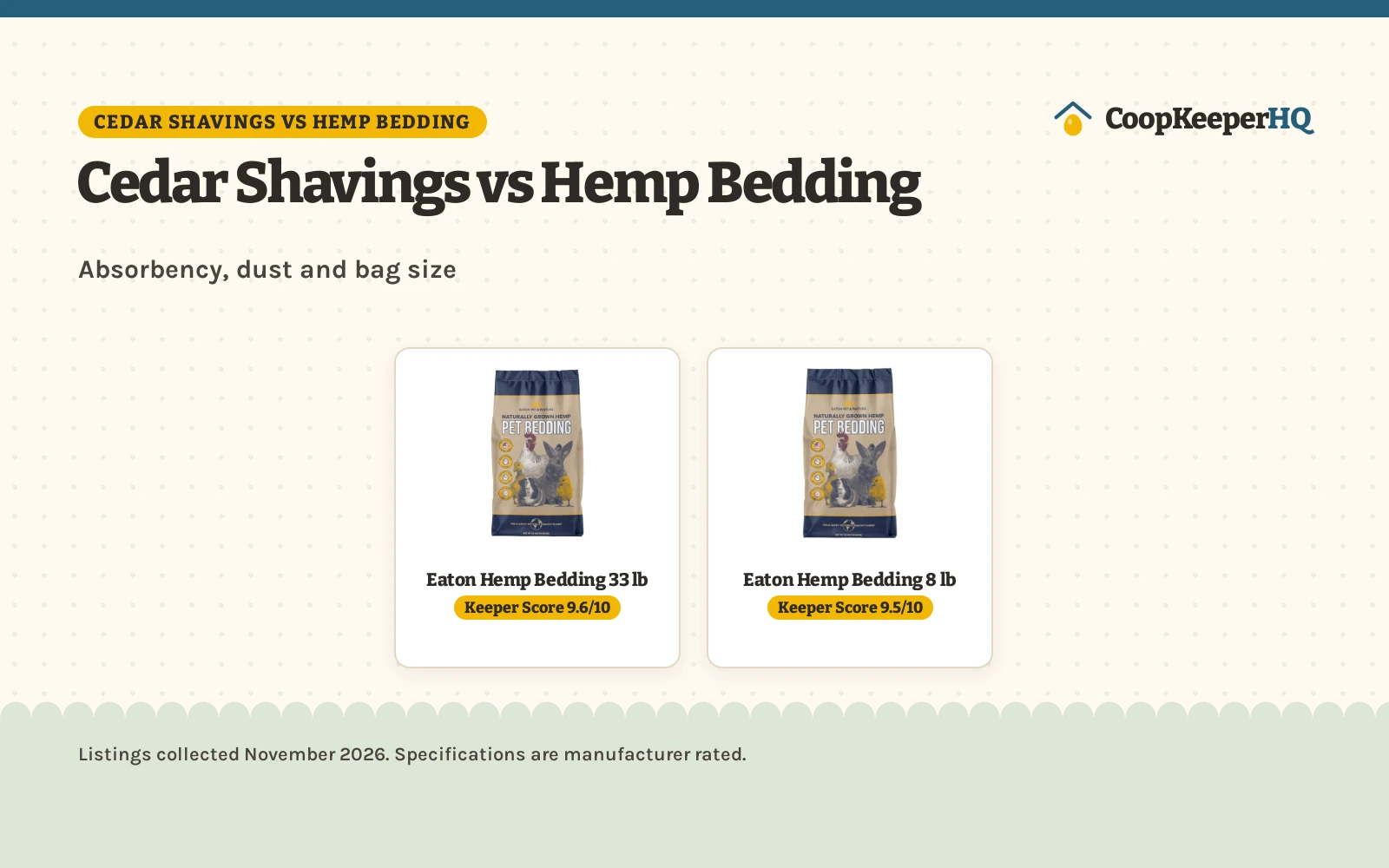
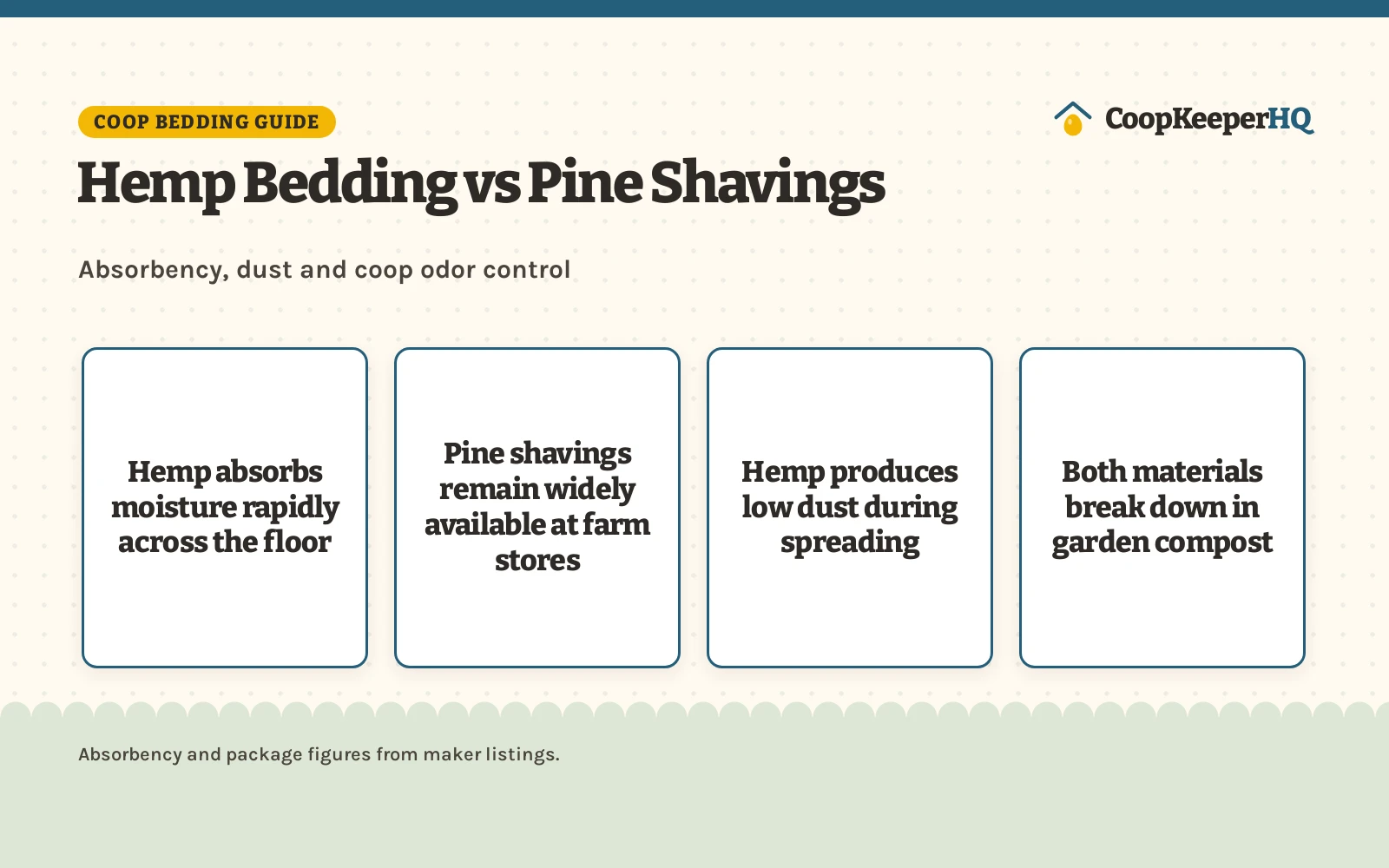
Hemp bedding wins on moisture control. The Eaton Pet and Pasture 8 lb listing states hemp hurd bedding absorbs 4x its weight in moisture and offers up to 2x the absorbency of pine shavings, and the Small Pet Select listing states absorbency up to 400% of its weight in moisture. Straw cannot match those stated figures, and no straw listing gives an absorbency figure at all. What straw gives you instead is a material that breaks down fast in the compost pile and is easy to find from local farms. The trade is simple: hemp bedding manages moisture with less work, and straw asks for more of your time in exchange for a faster trip to the garden.
What hemp bedding brings to the coop
Hemp bedding is made from the soft inner core of the hemp stalk, called the hurd, and every listing here leans on the same three selling points: high absorbency, low dust and soft cushioning. The Eaton Pet and Pasture listings come in an 8 lb bag and a 33 lb bag that measures 27″L x 19″W x 16″H, while Small Pet Select sells a jumbo 36 lb bundle made of two 18 lb bags in a 26 x 18 x 17 in box. If you spread a deep layer and want fewer clean-outs, those large bags are the practical sizes for a coop floor; the 8 lb bag suits nesting boxes and brooders.
Low dust is the other stated strength. Eaton describes low-dust hemp as kinder for animals with sensitive airways, and Small Pet Select lists low dust as a fit for animals with respiratory issues. In a coop with high vents and a lot of morning chore dust, a low-dust bedding keeps the air you both breathe a little cleaner. Do note one listing gap: the Eaton 8 lb title says 8 lb, but the spec table lists an item weight of 6.3 pounds. Trust the title and bullets over the spec table when they clash, and check the bag label before comparing sizes.
What straw brings to the coop
Straw is the stalk left over after grain harvest, and keepers have used it for generations because it is simple, soft to the touch and quick to break down. Spread it in nesting boxes and the hens settle in happily; add it to the run and it gives them something to scratch through. No straw listing gives stated figures, so there is no number to compare against the 4x and 400% claims above, and everything here comes from general keeper practice rather than a listing.
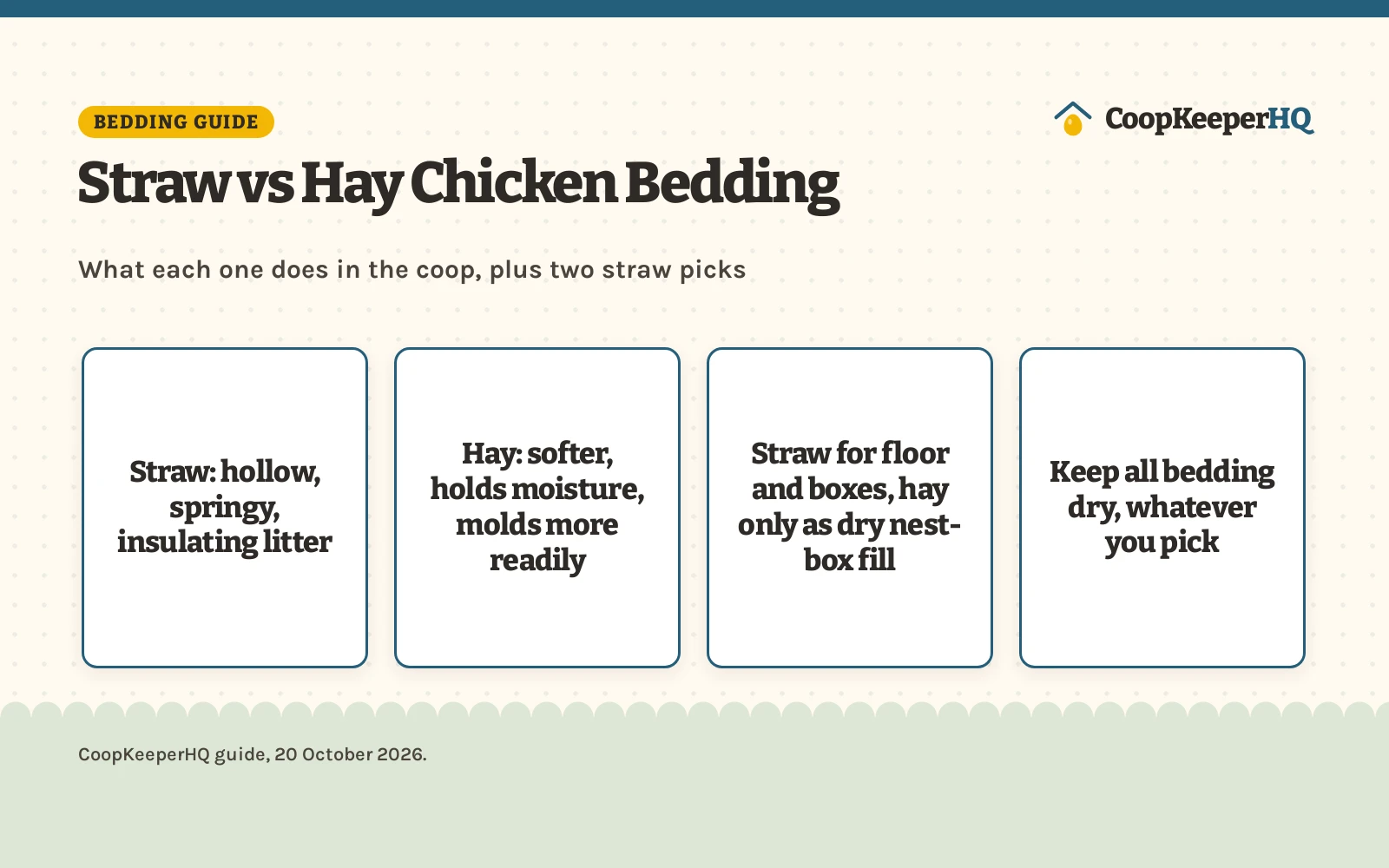
Straw has real limits in a coop. It mats down when wet, and a matted layer traps moisture instead of wicking it away, so you end up turning it or replacing it more often. Damp straw also feeds mold and ammonia, which is why keepers who run deep litter over winter usually reach for wood shavings or hemp instead. See our straw for chicken coop bedding picks if you want a straw-first setup done well.
Head-to-head: absorbency, dust and upkeep
On absorbency the listings give hemp bedding a clear edge: 4x its weight in moisture and up to 2x the absorbency of pine shavings, both stated in the Eaton listings, and 400% of its weight in the Small Pet Select listing. Straw has no stated figure, and in practice keepers describe it as the faster-matting of the two. On dust, hemp bedding is listed as low-dust across all four listings, while straw is known for carrying more field dust into the coop. On upkeep, that difference plays out at the floor: hemp bedding holds moisture between routine changes, while straw wants more frequent turning or topping up to stay dry. Ventilation still matters with either choice, and our chicken coop ventilation guide explains how high vents carry moisture out.
Cost and composting
Straw breaks down fast in a compost pile, which is exactly what gardeners want. Hemp bedding’s stated absorbency means a bag of the right size, like the 33 lb or 36 lb listings above, can stretch further between changes, but your compost pile will wait longer on hemp: the same absorbency that keeps the coop dry makes hemp slower to rot down than straw. If your goal is bedding that becomes garden soil fast, straw is the friendlier input; if your goal is a drier coop with fewer clean-outs, hemp bedding earns its bag. Compare more materials in our chicken coop bedding guide.
Wash your hands after handling birds, eggs or equipment, supervise children around the flock, and check local rules on flock size and roosters before you buy. For sick birds, call a poultry veterinarian or your state extension office. See CDC backyard poultry guidance. Read our Safety Disclaimer.
FAQ for the flock
Is hemp bedding better than straw for chicken coops?
For the coop floor and nesting boxes, yes: the listings state hemp absorbs up to 4x its weight with low dust, while straw mats when wet and needs more turning. Straw still suits keepers with a cheap local supply who do not mind frequent clean-outs.
Does hemp bedding really absorb more than pine shavings?
That is the makers’ claim, not a coop measurement: Eaton states up to 2x the absorbency of pine shavings, and Small Pet Select states absorbency up to 400% of its weight. No straw listing in the data gives a comparable figure.
Can I use hemp bedding in the deep litter method?
Yes. Hemp bedding’s stated low dust and high absorbency make it a strong fit for deep litter, which is why our deep litter bedding picks lean toward hemp and shavings over straw.
Is hemp bedding dusty for chicks in a brooder?
The listings describe hemp bedding as low-dust and suitable for brooder areas, and the 8 lb bag size works for a brooder floor. Change damp spots promptly so chicks stay dry.
Which bedding composts faster, hemp or straw?
Straw. Its loose stalks break down quickly in a compost pile, while the absorbent hurd in hemp bedding resists rotting a bit longer. If the compost pile is the priority, straw is the easier input.
How does hemp bedding compare with pine shavings?
See our hemp bedding vs pine shavings comparison, which lines up the stated absorbency figures for those two materials side by side.
More coop guides
- Straw for Chicken Coop Bedding: 5 Top Picks Compared (2026)
- Best Chicken Coop Bedding for Deep Litter (2026): 4 Top Picks
- Hemp Bedding vs Pine Shavings: Which One Should You Buy?
- Pine Shavings vs Straw: Which One Should You Buy?
- Best Chicken Coop Bedding: Shavings, Hemp and Sand
- Sand vs Pine Shavings: Which One Should You Buy?
See the chicken coop bedding picks and the coop supply guides.