How Much Is Wire Mesh: What a Roll Costs for a Chicken Run
Wire mesh is priced by roll width, length, mesh opening and gauge, so match the roll to the run and the mesh to the animals it must keep out.

On this page
Top picks at a glance
As an Amazon Associate I earn from qualifying purchases.
- 1
 SANZEUS PVC Coated Welded Wire Mesh 16GA 48 in x 100 ft9.6/10View on Amazon
- 2
 Hardware Cloth 1/2 inch 72 x 100 ft 19 Gauge Chicken Wire9.6/10View on Amazon
- 3
 Land Guard 19 Gauge Hardware Cloth9.5/10View on Amazon
A gap in the run fence shows up at chore time, when a hen slips through to the garden beds and the wire along the bottom edge hangs loose. The fix starts with a fresh roll, and the question every keeper asks is the same: how much is wire mesh, and what makes one roll cost more than another. The answer sits in the roll itself, in its width, its length, its mesh opening and its wire gauge.
CoopKeeperHQ earns a commission if you buy through our links, at no added cost to you. Affiliate disclosure.
How much is wire mesh: what sets the cost
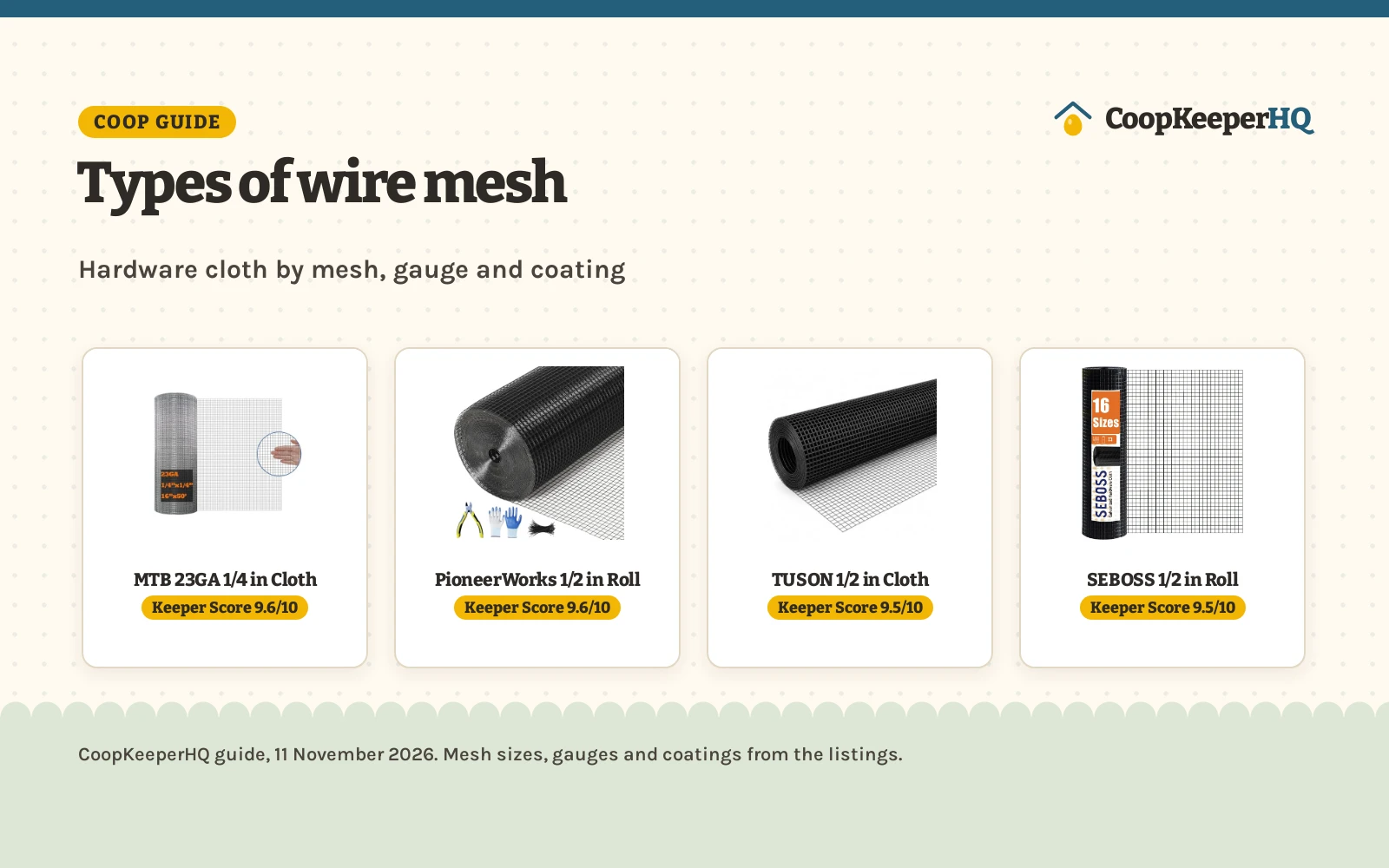
How much is wire mesh? A roll is priced by width, length, mesh opening and wire gauge, so compare rolls by those figures before comparing anything else. The reference rolls in this guide show the range: a 48 in by 50 ft roll with a 1 in mesh opening and 19 gauge wire, and a 16 in by 50 ft roll with a 1/2 in mesh opening and 19 gauge wire. Both are galvanized welded wire, and both are sold as poultry netting for coops and runs.
Width and length set how much area a roll covers. A 48 in wide roll suits a full run wall, while a 16 in wide roll suits a low strip, a window opening or a patch along the bottom of a fence. Both reference rolls run 50 ft long, so the length is the same and the width is what changes the coverage.
Mesh opening: 1 inch or 1/2 inch
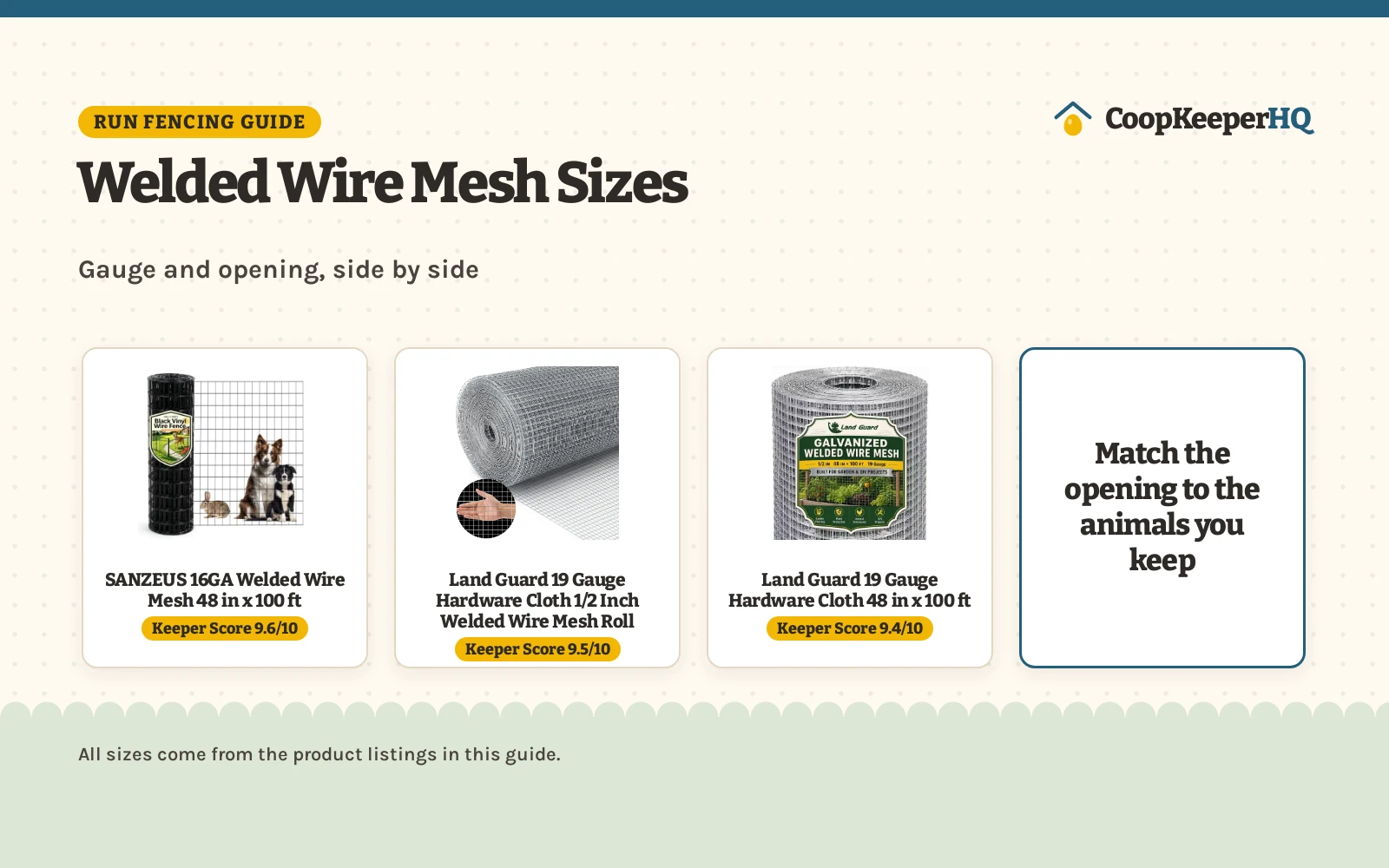
The mesh opening decides what stays out. A 1 in opening gives secure containment with visibility and airflow, and suits a run where the main job is keeping the flock in and larger animals out. A 1/2 in opening is denser, and the maker lists it as blocking rabbits, snakes, squirrels and rats, which makes it the pick for garden beds, raised beds and runs where small animals gnaw and slip through.
Our hardware cloth guide explains the difference between mesh types, and the chain link fence gauge chart shows how gauge numbers work across fence wire.
Gauge: what 19 gauge means
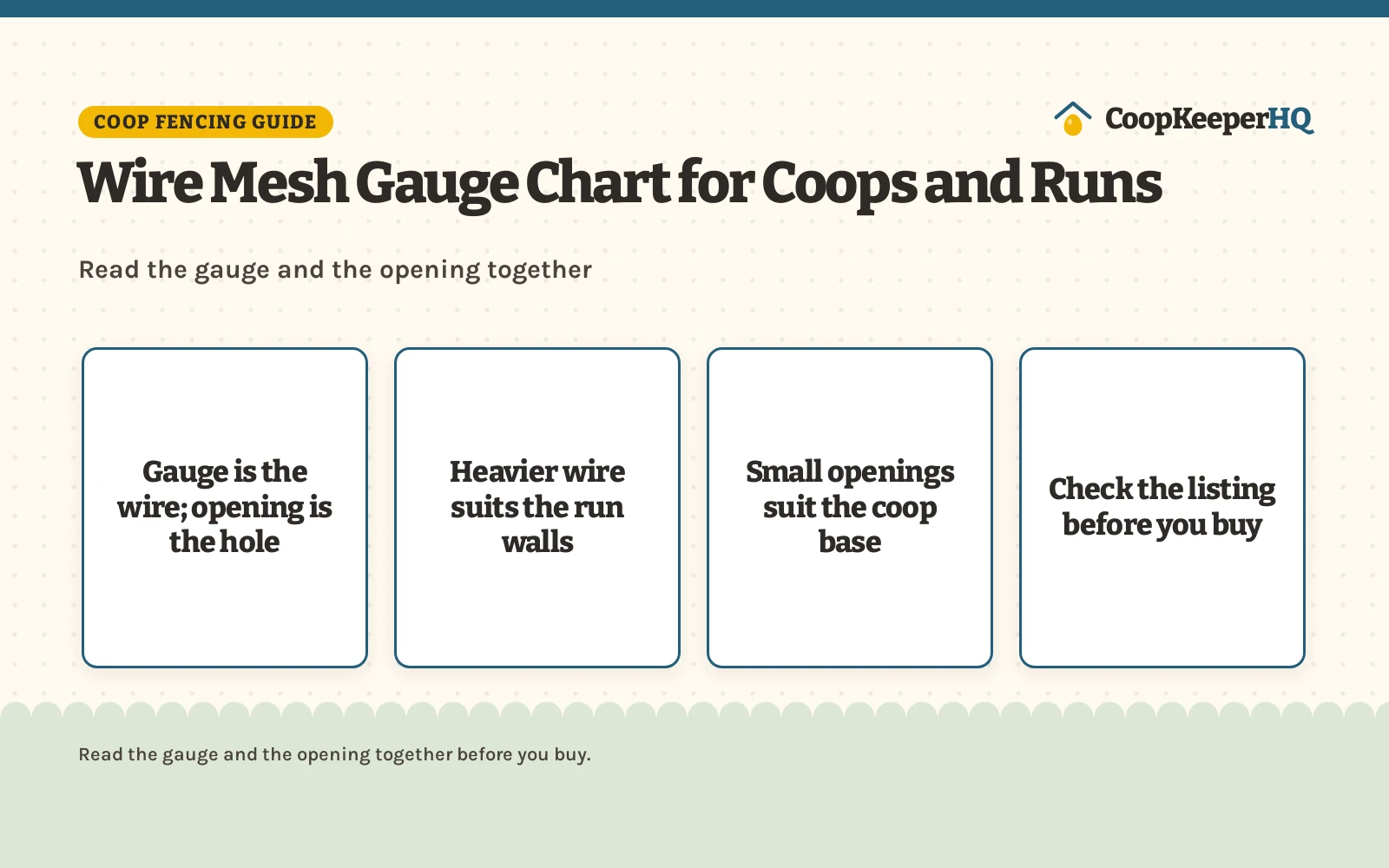
Gauge is the thickness of the wire, and both reference rolls use 19 gauge wire. Real gauge matters more than the number on its own: a listing warns that some 19 gauge mesh uses thinner wire to lower cost, and points to weight as the check, with its roll weighing 10.8 lbs against a thin 7.7 lbs listing. The listing says a heavier roll of the same size is stronger, more durable and less likely to bend or break.
Galvanized coating adds the weather protection. The 48 in by 50 ft roll uses galvanized welded wire for corrosion and rust resistance, and the 16 in by 50 ft roll uses hot-dip galvanized steel with a dense coating on seams and vulnerable areas. That coating is what lets the mesh sit outdoors in wet weather and keep its strength.
Cutting, joining and fitting a roll
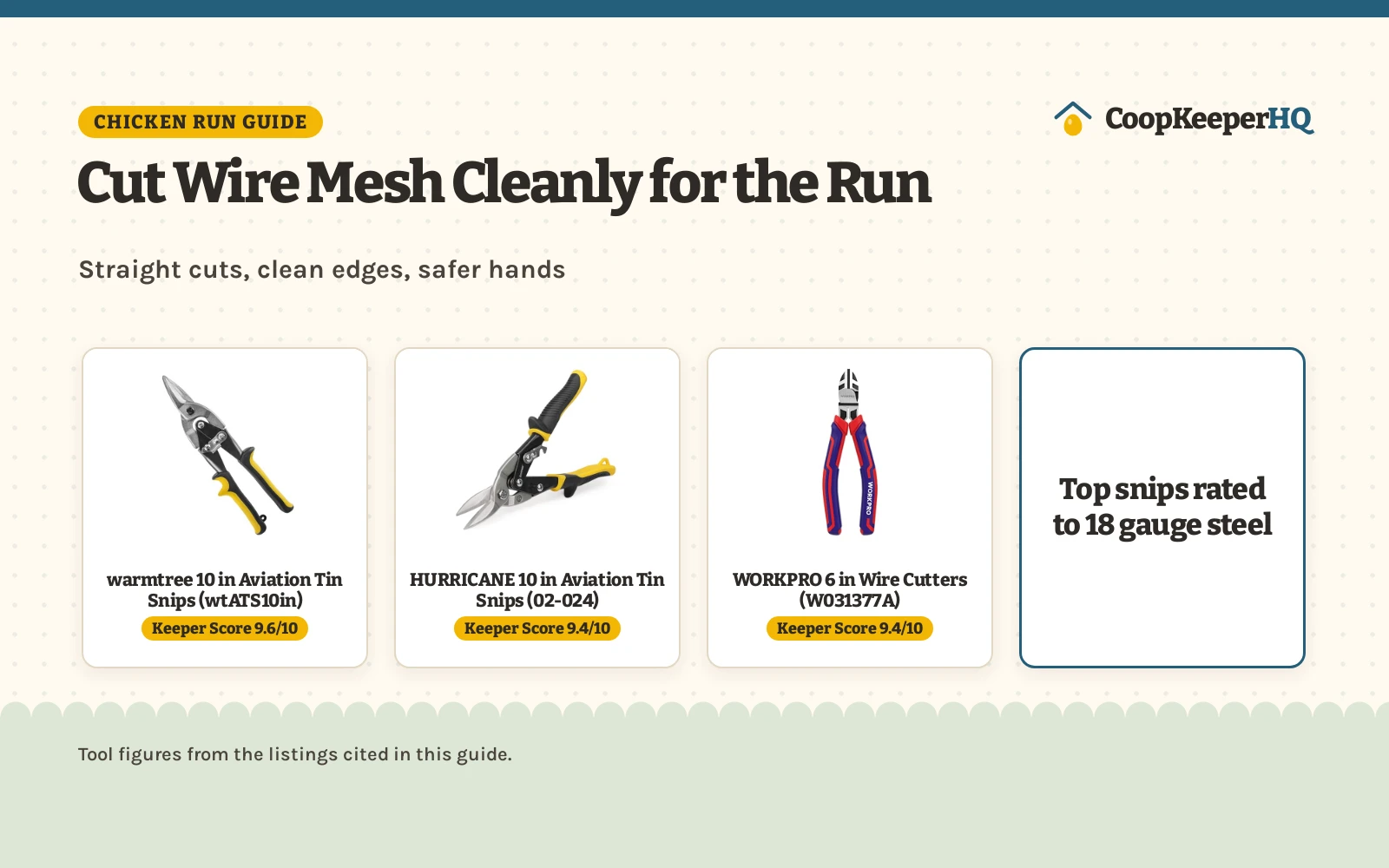
Wire mesh cuts to size with wire cutters, and rolls splice together when a larger coverage area is needed, so a run longer than one roll is no problem. The 48 in by 50 ft roll ships with a pair of gloves and wire cutters for the job, which matters because the cut edge stays sharp after the cut. Bend the mesh to fit the shape of the run, and check the size and specifications before buying so the roll matches the opening it must cover.
For the run itself, see our chicken run set up guide, and for taller walls, how tall a chicken run should be.
Birds, breed size, run time and climate in; coop floor, run space, roost length and nesting boxes out.
Wash your hands after handling birds, eggs or equipment, supervise children around the flock, and check local rules on flock size and roosters before you buy. For sick birds, call a poultry veterinarian or your state extension office. See CDC backyard poultry guidance. Read our Safety Disclaimer.
FAQ for the flock
How much wire mesh do I need for a chicken run?
Measure the walls of the run, then match a roll to the longest wall. A 48 in by 50 ft roll covers a wall up to 48 in high and 50 ft long without a join, while a 16 in by 50 ft roll suits low strips and patches. Rolls splice together, so a run longer than 50 ft takes extra rolls, joined together.
What gauge wire mesh should I use for a chicken coop?
Both reference rolls in this guide use 19 gauge galvanized wire, which suits coops and runs. Check the weight of the roll as well as the gauge number, since the listing says a heavier roll of the same size is stronger: the reference 19 gauge roll weighs 10.8 lbs, against a thin 7.7 lbs listing.
Is 1-inch mesh or 1/2-inch mesh better for a chicken run?
It depends on what must stay out. A 1 in opening gives secure containment with visibility and airflow, and a 1/2 in opening is listed as blocking rabbits, snakes, squirrels and rats. Use the denser mesh where small animals gnaw and slip through, and the wider mesh where the job is keeping the flock in.
Does galvanized wire mesh last outdoors?
Galvanized wire resists corrosion and rust, and hot-dip galvanized mesh keeps its coating even in wet weather. The reference rolls are made to sit outdoors around coops, runs and garden beds, and a listing notes the mesh can even be buried underground and last for many years.
Can I join rolls of wire mesh together?
Yes. Rolls splice together for seamless expansion when a larger coverage area is needed, so measure the run and join rolls together. Cut with wire cutters, and wear gloves, since the cut edge stays sharp.
What size roll should I buy?
Start with the width the job needs: a 48 in wide roll for a full run wall, or a 16 in wide roll for a low strip, a window opening or a patch. Both reference rolls run 50 ft long, so pick the width and let the length follow.
More coop guides
- What Is Hardware Cloth? Wire Mesh Guide for Chicken Coops
- Chicken Wire Fence Cost: What to Expect
- How Much Is Chain Link Fence by the Foot
- Chain Link Fence Gauge Chart: What the Numbers Mean for a Chicken Run
- Best Hardware Cloth Under 100 (2026): 5 Coop and Run Picks
- Cheap Chicken Wire: 5 Budget Picks for Runs and Coops (2026)
- Best 1/4 Inch Chicken Wire Under $50: 5 Rolls (2026)
- Best Coated Hardware Cloth 1/2 Inch Under 80 (2026): 5 Picks Compared
- Chicken Run Set Up: A Step-by-Step Guide
- Best Chicken Wire Run (2026): 5 Picks for Flocks and Gardens
- How Tall Should a Chicken Run Be? A Practical Guide for Backyard Flocks
- Best Welded Wire Fence 5 Ft X 100 Ft (2026): 5 Rolls for Runs
See the chicken runs and fencing picks and the best chicken wire run guide.