Wire Mesh Gauge Chart for Coops and Runs
A wire mesh gauge chart sets the gauge of the wire beside the size of the opening, so the mesh you buy suits the run walls and the coop base.

On this page
Top picks at a glance
As an Amazon Associate I earn from qualifying purchases.
- 1
 Hardware Cloth 1/2 inch 72 x 100 ft 19 Gauge Chicken Wire9.6/10View on Amazon
- 2
 Land Guard 19 Gauge Hardware Cloth9.5/10View on Amazon
- 3
 SEBOSS Hardware Cloth 1/2 in 48 x 100 ft 19 Gauge Black Vinyl9.5/10View on Amazon
- 4
 1/4 inch Hardware Cloth Wire Mesh 24’’x100’ 23-Gauge Hot-dipView on Amazon
- 5
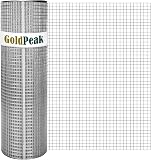 GoldPeak 19 Gauge Hardware Cloth Chicken Wire Fencing 1/2View on Amazon
- 6
 ReePlan 19-Gauge Galvanized Hardware ClothView on Amazon
- 7
 Hardware Cloth 1/4 inch 23 Gauge Small Size 304 StainlessView on Amazon
- 8
 Black Hardware Cloth 48''x100' 1/4 Inch 23 Gauge Vinyl CoatedView on Amazon
- 9Black Hardware Cloth 48''x50' 1/2 Inch 19 Gauge Vinyl CoatedView on Amazon
Morning chores bring you to the run fence with a roll of mesh in hand and a gap to cover before the flock comes out. A wire mesh gauge chart is the sheet that turns the markings printed on that roll into a choice you can trust: it sets the gauge of the wire beside the size of the opening, so you can see what the mesh will hold back. Read the chart before you buy, and the fence you build keeps its shape through the season.
Other options for the coop
 1/4 inch Hardware Cloth Wire Mesh 24’’x100’ 23-Gauge Hot-dipCheck price on Amazon
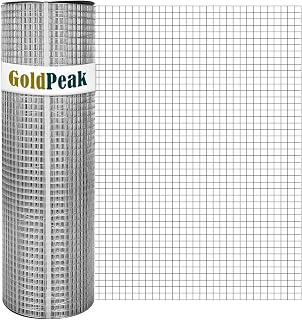 GoldPeak 19 Gauge Hardware Cloth Chicken Wire Fencing 1/2Check price on Amazon
 ReePlan 19-Gauge Galvanized Hardware ClothCheck price on Amazon
 Hardware Cloth 1/4 inch 23 Gauge Small Size 304 StainlessCheck price on Amazon
 Black Hardware Cloth 48''x100' 1/4 Inch 23 Gauge Vinyl CoatedCheck price on Amazon
- Black Hardware Cloth 48''x50' 1/2 Inch 19 Gauge Vinyl CoatedCheck price on Amazon
CoopKeeperHQ earns a commission if you buy through our links, at no added cost to you. Affiliate disclosure.
Wire mesh gauge chart: how to read the gauge
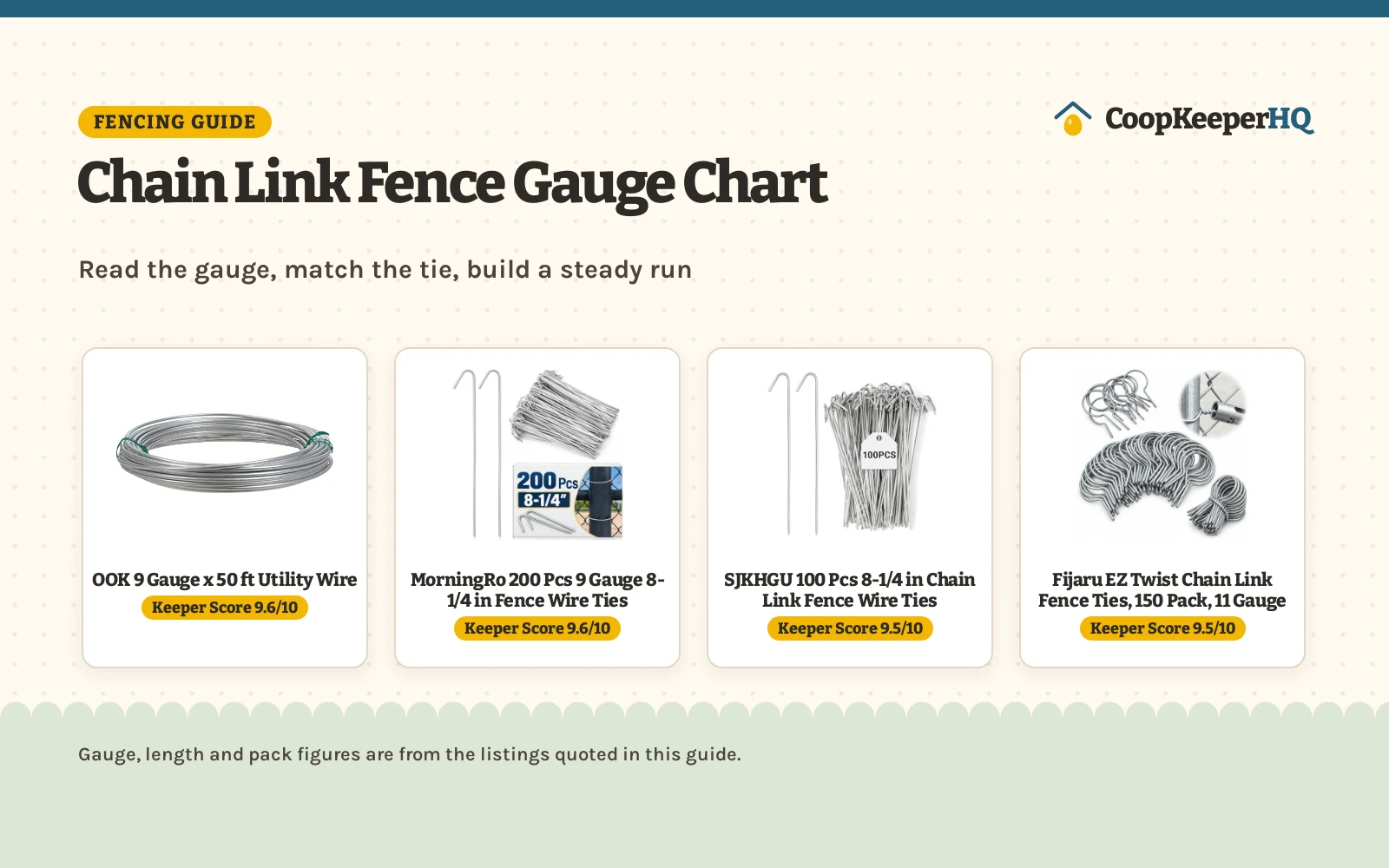
Gauge is the thickness of the wire itself, and the chart lists it beside the opening so you can read them together. A lower gauge number means thicker wire, and a higher gauge number means thinner wire, so the number runs the opposite way from what a newcomer expects. Rolls can share an opening size and still differ in gauge, and the heavier wire resists bending and chewing better than the lighter wire.
Hardware cloth is welded wire with square openings, and chicken wire is twisted wire with hexagonal openings. The welded mesh holds its shape when it is cut and fastened, while twisted wire can stretch and sag. The types of chicken wire guide compares the mesh kinds side by side.
The opening matters as much as the gauge
The opening is the hole between the wires, and it decides what can pass through the fence. Small openings keep out small animals, while wide openings let paws and beaks reach through to the birds inside. Raccoons can reach through a wide opening and pull at a bird, and rats and snakes slip through gaps that look small to a keeper.
Small openings suit the lower walls of a run and the base of the coop, where digging and grabbing animals work the fence. Wider openings suit the upper walls, where the mesh mainly needs to hold the flock in and turn away larger animals. The predator proof hardware cloth guide shows rolls made for the run.
Reading the label on the roll
The label on a roll of mesh names the gauge and the opening, and the chart turns those markings into a choice. Look for a label that lists the gauge and the opening together, and pass over a roll that hides a column. A roll that names the coating as well tells you how the wire will hold up outdoors.
How to use the chart at the store
Start with the gauge column and the opening column, and check that the roll you hold lists a figure in each. If a listing gives an opening without a gauge, or a gauge without an opening, the chart cannot do its job, so pick a roll that lists the gauge and the opening together. Match the mesh to the spot it will cover: the coop base, the run walls, the vents or the apron laid flat on the ground around the run to stop digging.
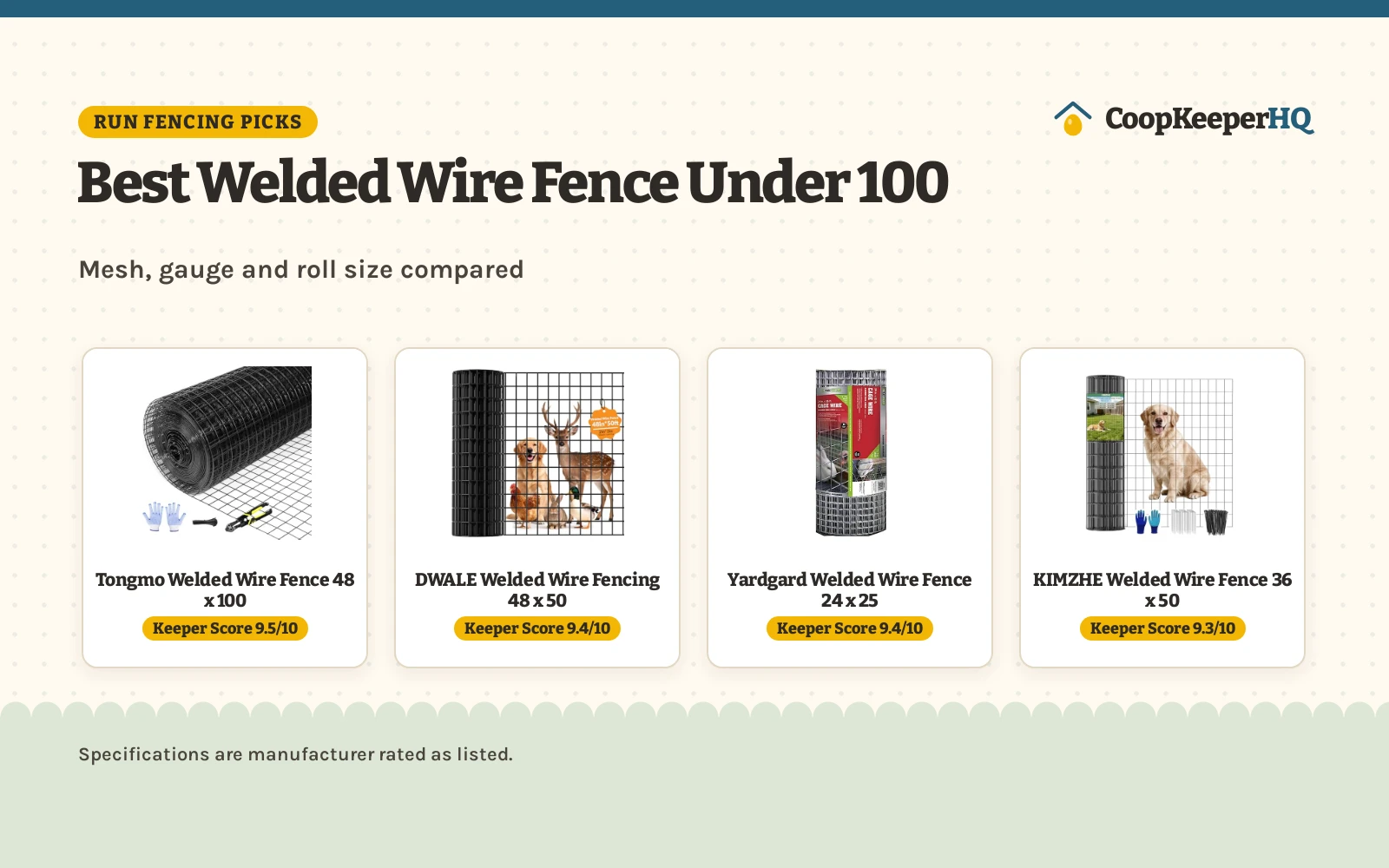
Galvanized coating resists rust on mesh that lives outdoors, and welded mesh keeps its openings square when it is cut to fit a frame. Cut the mesh with room to overlap the frame, fasten it tight along the edges, and check the corners where gaps open up. The expanded metal vs hardware cloth comparison covers mesh kinds that hold their shape.
Where each kind of mesh belongs
Hardware cloth with small openings belongs on the coop base and the lower run walls, where the fence meets the ground and the animals that dig and chew. Chicken wire suits pens where the job is keeping birds in a yard, not keeping predators out. Vents and windows take small openings with sturdy wire, since a gap there lets small animals straight into the coop.
An apron of mesh laid flat on the ground around the run stops a digging animal from getting under the fence, and it needs wire heavy enough to hold its shape when it is pinned flat. The bird netting vs chicken wire guide explains where light mesh falls short.
Galvanized coating and rust
Mesh that lives outdoors needs a coating that resists rust, and galvanized wire carries a zinc coat that does the job. Cut ends and scratched spots lose that coat, so check the coating where the mesh is cut and where it rubs the frame. Mesh kept dry under a roof lasts longer than mesh left in damp bedding, and a quick look at the wire each season shows rust before it spreads.
Rust weakens the wire from the outside in, and a rusted spot breaks under a push that sound wire would hold. When you see rust, plan a patch of fresh mesh over the weak spot and fasten the edges tight, so the run stays sound while you plan a wider repair.
Common mistakes
- Buying by the opening and ignoring the gauge
- Using chicken wire where hardware cloth belongs
- Leaving gaps at the corners and along the ground line
- Skipping the apron around the run
- Fastening mesh loose so it sags between posts
Birds, breed size, run time and climate in; coop floor, run space, roost length and nesting boxes out.
Use a charger rated for the length of netting you run, ground it as the manual describes and post warning signs where neighbors or children can reach the fence. Keep grass and weeds off the bottom strands, and never leave netting unpowered, because birds and wildlife can tangle in it. Read our Safety Disclaimer.
FAQ for the flock
What does gauge mean on wire mesh?
Gauge is the thickness of the wire. A wire mesh gauge chart lists the gauge beside the opening size, so you can read them together and see what a roll will do. A lower gauge number means thicker wire, and a higher gauge number means thinner wire.
What is the difference between hardware cloth and chicken wire?
Hardware cloth is welded wire with square openings that holds its shape when cut, while chicken wire is twisted wire with hexagonal openings that can stretch. Hardware cloth suits the coop and run where predators press the fence, and chicken wire suits a pen where the job is keeping birds in the yard. The types of chicken wire guide compares the mesh kinds.
Which mesh should I use for the lower walls of a run?
Use hardware cloth with small openings and heavier wire on the lower walls, where digging and grabbing animals work the fence. The mesh there takes the hardest wear, so the wire needs to hold its shape and the openings need to stay small. Wider mesh can serve the upper walls, where the job is holding the flock in.
Do I need a gauge chart if the listing already names the mesh?
The chart helps when a listing gives an opening without a gauge, or a gauge without an opening. A roll that lists the gauge and the opening together lets you compare it with the mesh you already have and with the spot it will cover. When the listing leaves a column blank, ask the seller or pick a roll that lists the gauge and the opening.
How do I fasten mesh so it stays tight?
Pull the mesh taut across the frame and fasten it along the edges with staples or screws and washers, then check the corners where gaps open up. Fencing pliers help bend the wire around posts and trim the ends clean. The staples vs nails for chicken wire guide and the how to use fencing pliers guide cover the fastening.
More coop guides
- Types of Chicken Wire: Which One to Buy
- Best Predator Proof Chicken Coop Fencing Hardware Cloth (2026): 5 Rolls for the Run
- Expanded Metal vs Hardware Cloth: Which One Should You Buy?
- Bird Netting vs Chicken Wire: Which One Should You Buy?
- Staples vs Nails for Chicken Wire: Which One Should You Buy?
- Best Chicken Wire Run (2026): 5 Picks for Flocks and Gardens
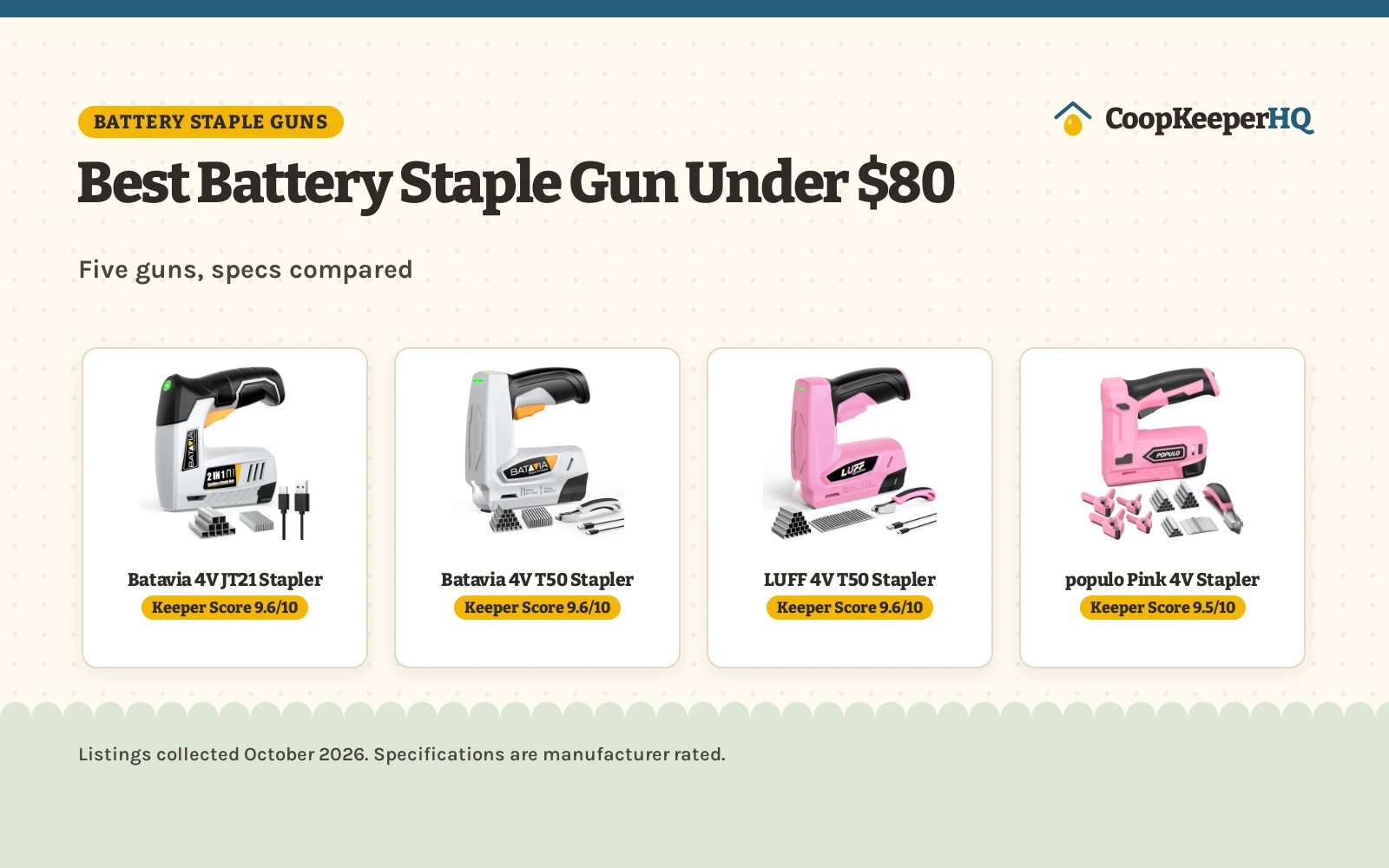
- Types of Staple Guns: Which One Fits Wire Fencing
- How to Use Fencing Pliers
See the chicken runs and fencing picks and the coop supply guides.