How to Hang a Heat Lamp for Chicks
A steady clamp, a backup support and clear space around the bulb keep a brooder heat lamp where it belongs.

On this page
Top picks at a glance
As an Amazon Associate I earn from qualifying purchases.
- 1
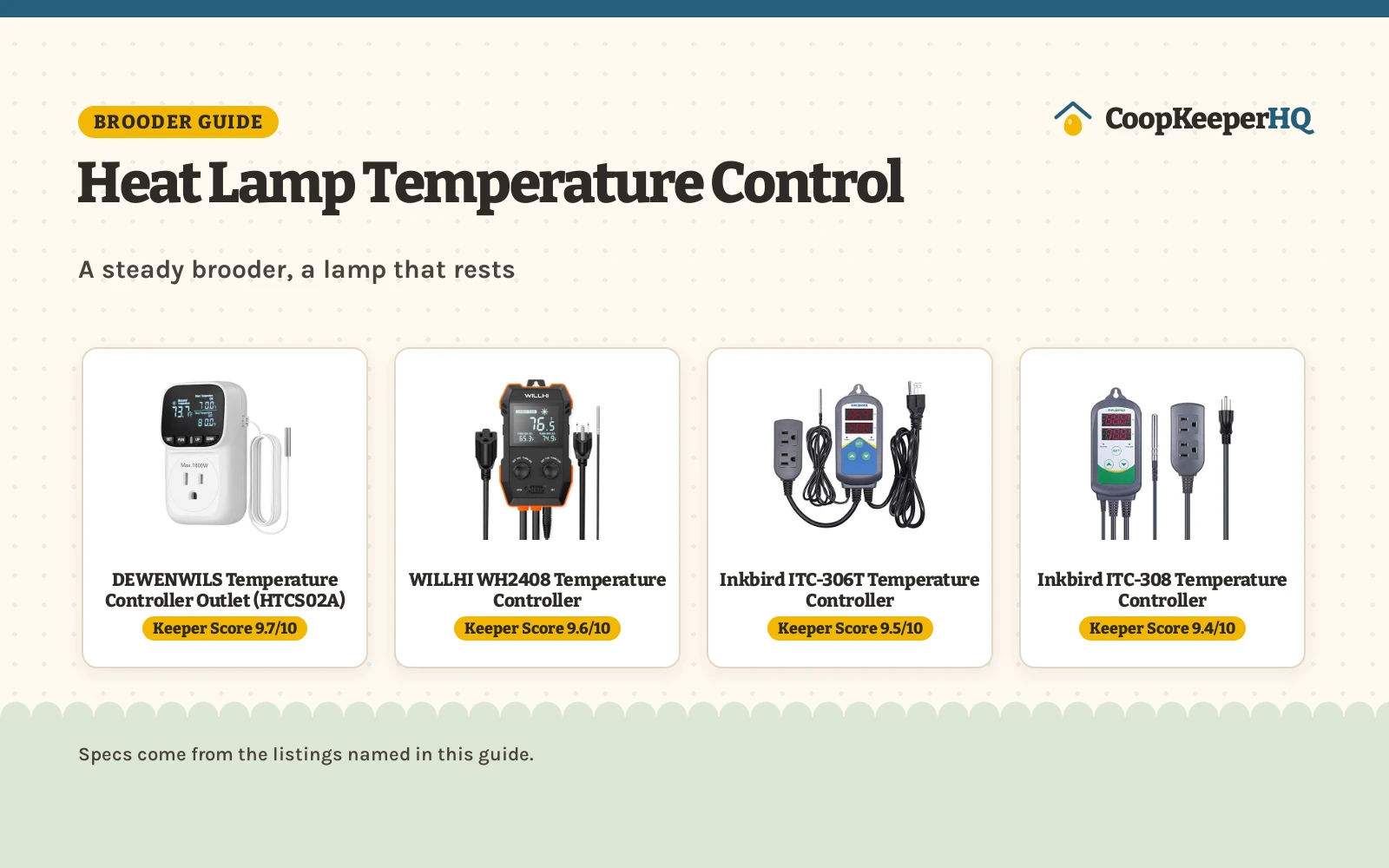
 DEWENWILS Temperature Controller Outlet9.7/10View on Amazon
- 2
 Satco S4999 250W BR40 Heat Lamp Bulb9.7/10View on Amazon
- 3
 RentACoop 12x12” Adjustable Heating Plate with Hard9.6/10View on Amazon
- 4
 Mounting Spring Clips for Reptile Habitat Lighting TerrariumView on Amazon
- 5
 Upgraded Mounting Spring Clips for Reptile Habitat LightingView on Amazon
- 6
 DEWENWILS Temperature Controller Outlet 2 PackView on Amazon
- 7
 Chicken Coop Heater Inside Coop with Remote ControlView on Amazon
- 8
 PETNF Chicken Coop Heater 140 Watts Radiant Heat ChickenView on Amazon
- 9
 RentACoop 10x10” Adjustable Heating Plate with FoldableView on Amazon
A box of day-old chicks needs warmth from the moment it arrives, and the lamp that gives it has to hang steady and safe. Learning how to hang a heat lamp starts with a clamp lamp that fits the bulb, a firm edge to grip, and a backup support so a slip never drops a hot bulb into the bedding. Get those parts right and the chicks get steady warmth with the lamp held well clear of everything that could catch.
Other options for the coop
 Mounting Spring Clips for Reptile Habitat Lighting TerrariumCheck price on Amazon
 Upgraded Mounting Spring Clips for Reptile Habitat LightingCheck price on Amazon
 DEWENWILS Temperature Controller Outlet 2 PackCheck price on Amazon
 Chicken Coop Heater Inside Coop with Remote ControlCheck price on Amazon
 PETNF Chicken Coop Heater 140 Watts Radiant Heat ChickenCheck price on Amazon
 RentACoop 10x10” Adjustable Heating Plate with FoldableCheck price on Amazon
CoopKeeperHQ earns a commission if you buy through our links, at no added cost to you. Affiliate disclosure.
How to hang a heat lamp: choose a clamp lamp that fits the bulb
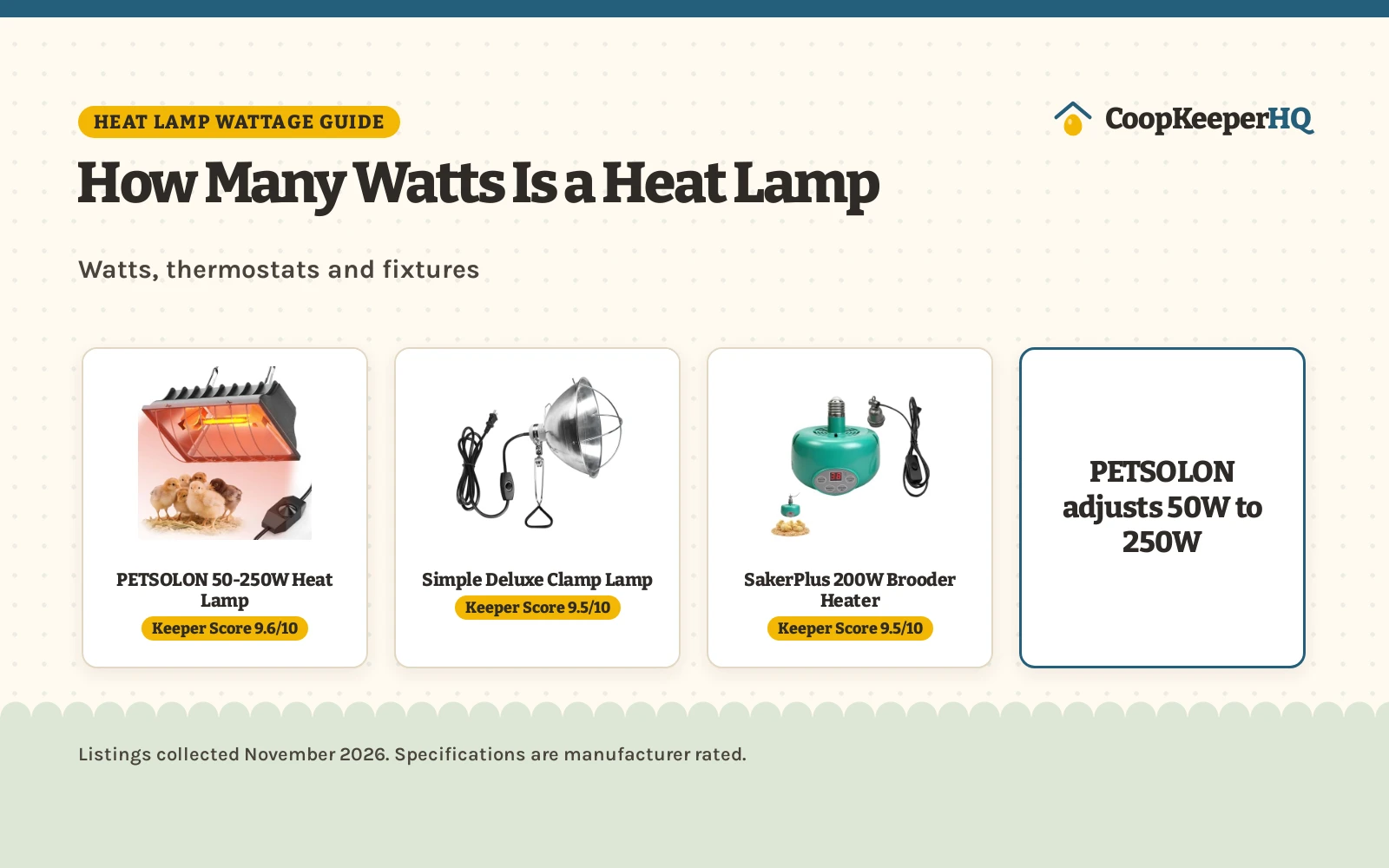
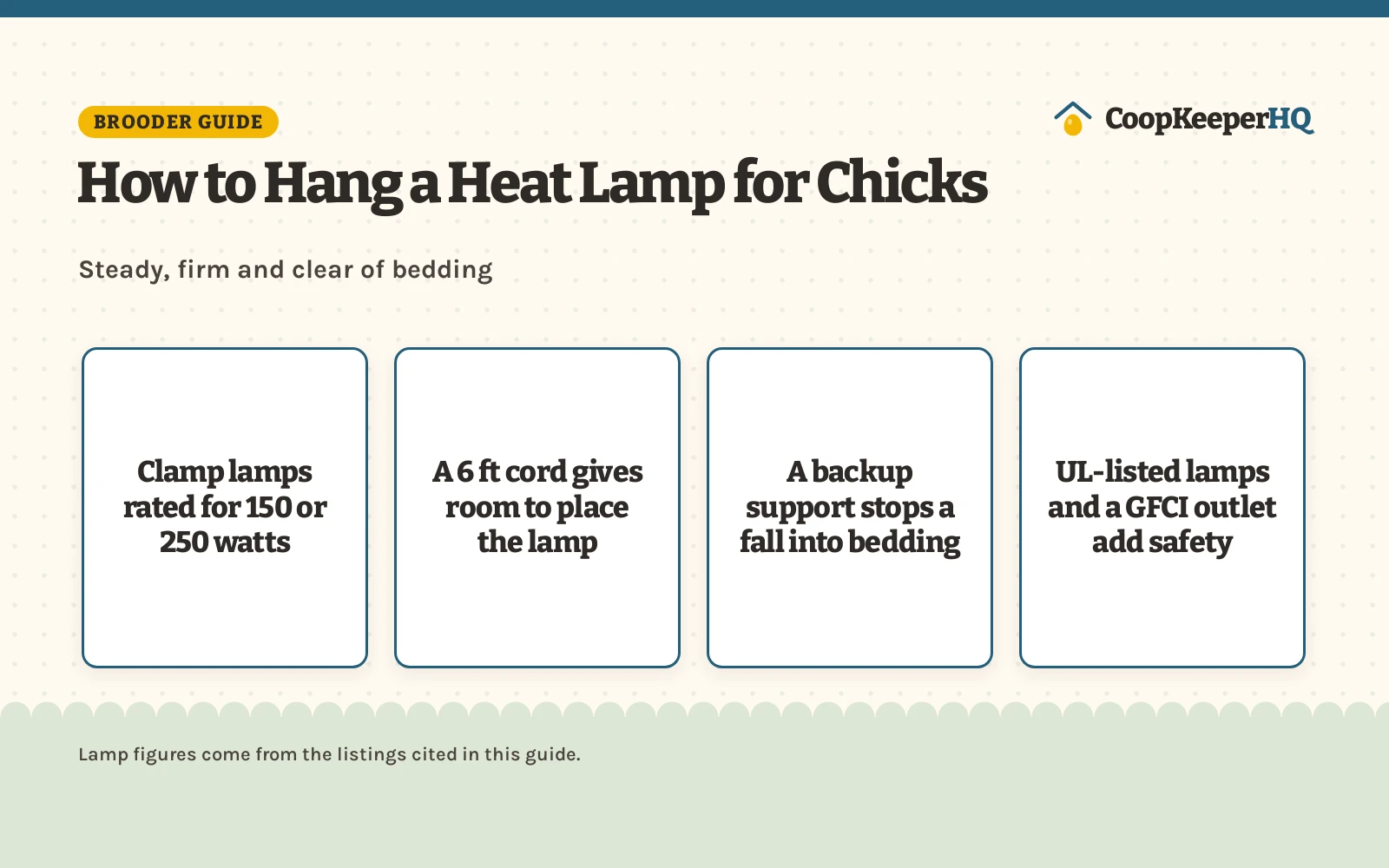
Start with the lamp, not the bulb. A clamp lamp is a reflector shade with a spring clamp, a socket and a cord, and the rating on the lamp sets the largest bulb it can carry. The VIVOSUN clamp lamp (on Amazon) lists an 8.5 inch aluminum reflector, an E26 socket, a 6 ft cord and a rating of up to 150 watts, with UL listing on the lamp. The GREATIDE clamp lamp (on Amazon) lists the same shape: an 8.5 inch reflector, an E26 socket, a 6 ft cord and a 150 watt rating, also UL listed. For a larger dome, the Fluker’s Repta-Clamp (on Amazon) lists a 10 inch dome rated for 250 watts, and the Simple Deluxe clamp lamp (on Amazon) lists a 10.5 inch aluminum reflector with a bulb guard and a 250 watt E26 socket on a 6 ft cord. Pick a lamp rated for the bulb planned for the brooder, and never fit a bulb above the rating on the lamp. The wattage guide explains the ratings in more detail, and the Woods clamp lamp review shows what to look for in a clamp lamp.
Hang the lamp from a backup support, not the clamp alone
A spring clamp grips the edge of the brooder, and that grip is the part that fails when it fails. Clamp the lamp to a firm, flat edge, then add a backup support: a chain or a wire from the lamp to a fixed point above the brooder, so the lamp stays up if the clamp slips. Spring clips made for lamp domes add another hold: the MEETOOT lamp holder (on Amazon) fits 5.5 inch and 8.5 inch lampshades and hangs a heating lamp from a hook, and the haizusai clip kit fits 5.5 inch and 8.5 inch domes, with each clip rated for loads up to 3.3 pounds and steel brackets that withstand heat up to 302 degrees Fahrenheit. Set the backup support before the lamp goes on, and give the lamp a firm tug after it hangs to check that the clamp and the backup hold.
Aim the lamp and read the chicks
Aim the lamp at a corner of the brooder, not the middle, so the chicks can move in and out of the warm patch. The VIVOSUN lamp lists a ball joint that turns 360 degrees, which lets the reflector point where it is needed without moving the clamp. Watch the chicks after the lamp is on: chicks that crowd tight under the lamp want more warmth, and chicks that spread to the far corners and stay away from the lamp want less. Adjust the aim or raise the lamp a little at a time until the chicks spread out and move freely between the warm patch and the cooler side. The brooder temperature guide explains how to read the chicks in more detail.
Keep the bulb clear of bedding and cords
A hot bulb and dry bedding do not mix, so the lamp needs clear space on every side. Keep the bulb clear of bedding, cloth, feed bags and the brooder walls, and keep the cord out of reach of beaks and away from water. A bulb guard helps: the Simple Deluxe lamp lists a metal guard that protects the bulb. Run the cord to a GFCI outlet, and keep the cord off the floor where it can be stepped on or chewed. Check the cord and the clamp each day, and look for scorch marks on the shade or the bedding before the lamp goes back on.
A heat plate is the safer choice for many brooders
A heat lamp works, and a heat plate works with less fire risk. A heat plate warms the chicks as they rest underneath it, with no hot bulb hanging over bedding, and the site guide on heating pads and heat lamps for chicks compares a pad that warms from below with a lamp. A ceramic heat emitter is another option that gives heat without light, covered in the ceramic heat emitter guide. Keepers who already own a clamp lamp can still use it with care, and keepers setting up a brooder from scratch often find a plate simpler to live with. When the lamp stays, the backup support and the clear space around the bulb are the parts that matter most.
A simple hanging checklist
- The lamp rating matches the bulb wattage
- The clamp grips a firm edge and sits tight
- A backup support holds the lamp if the clamp slips
- The bulb clears bedding, walls and cords
- The cord runs to a GFCI outlet, clear of beaks
- Chicks can move in and out of the warm patch
Birds, breed size, run time and climate in; coop floor, run space, roost length and nesting boxes out.
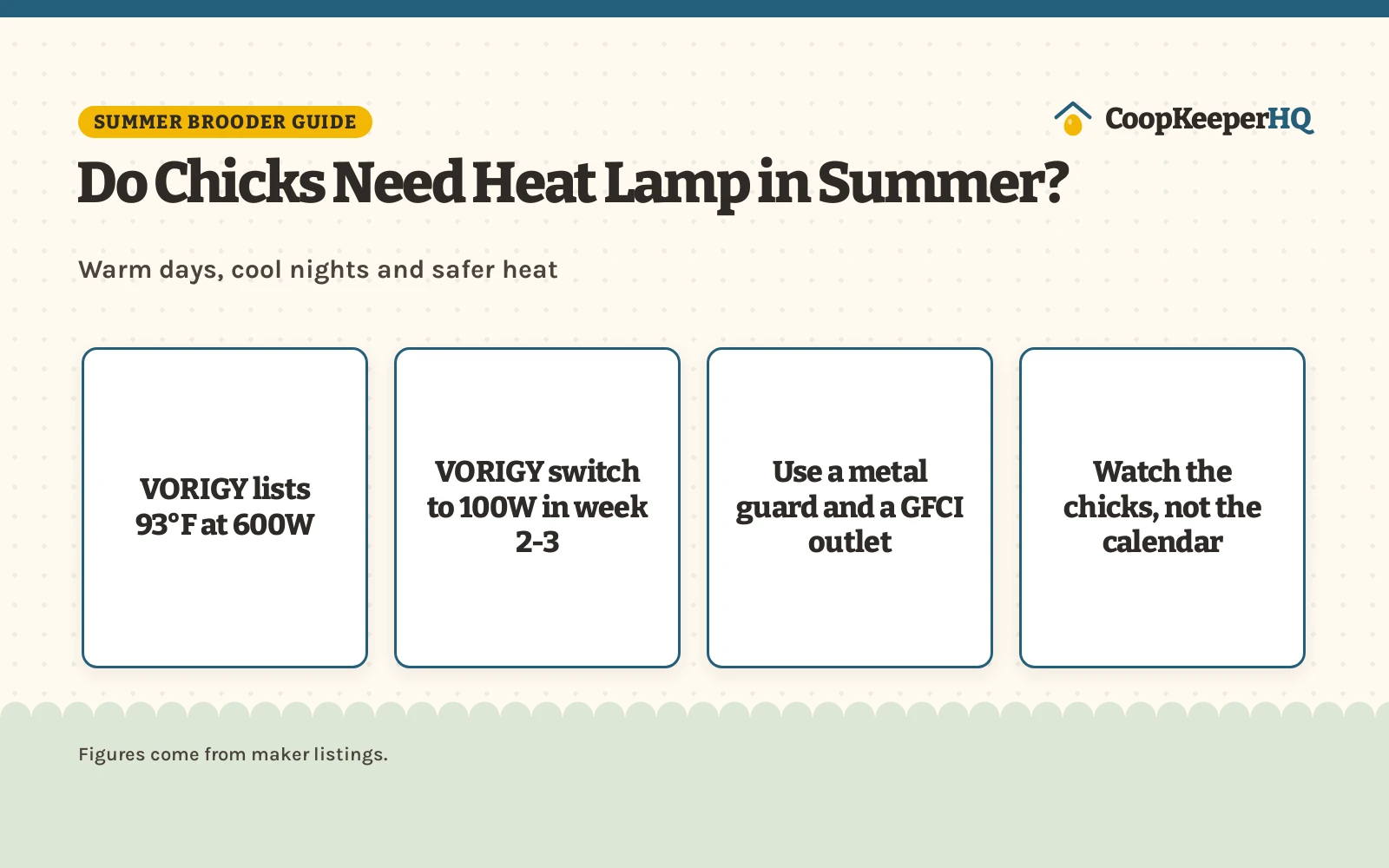
Heat lamps are a common cause of coop and barn fires. If you use one, secure it with more than the clamp (a chain or wire to a fixed point), keep it well away from bedding, walls and cardboard, and plug it into an outlet or a cord rated for the load. Radiant heat plates run cooler and remove most of that risk. Check chicks often in the first days: huddling under the heat means too cold, spreading to the edges means too warm. Read our Safety Disclaimer.
FAQ for the flock
What wattage bulb should a brooder heat lamp use?
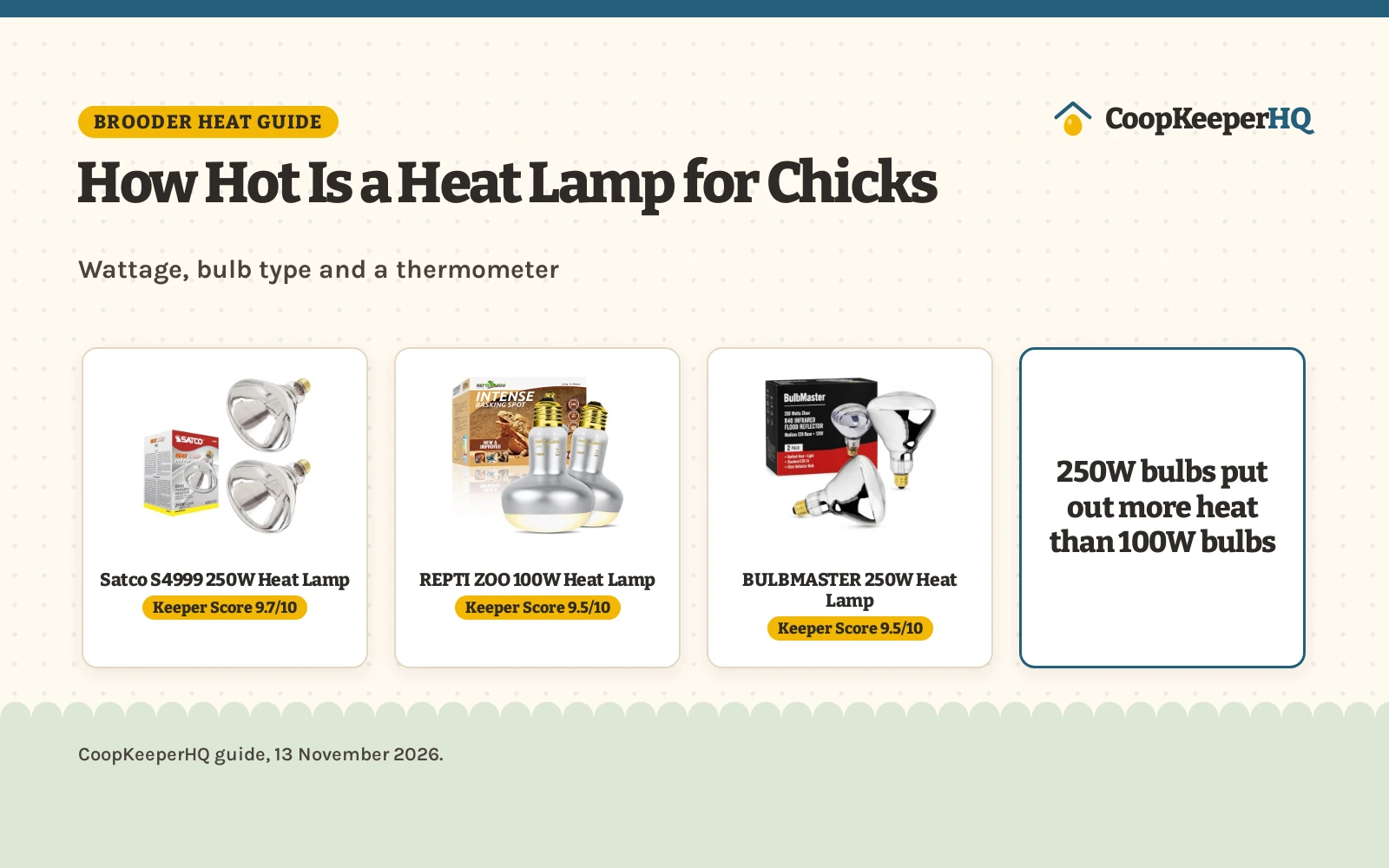
Use a bulb at or below the rating on the lamp. The clamp lamps in the listings are rated for 150 watts or 250 watts, so a bulb above the lamp rating is the wrong bulb for that lamp. A lamp rated for 250 watts can carry a bulb up to that rating, and a lamp rated for 150 watts needs a bulb at or below 150 watts. Match the bulb to what the brooder needs, and pick a lamp rated for that bulb.
How high should a heat lamp hang above chicks?
Hang it so the warm patch covers part of the brooder floor and the chicks can move away from it. Watch the chicks rather than measuring: chicks that huddle tight under the lamp want the lamp lower, and chicks that stay at the far edges want it higher. Move the lamp a little at a time and let the chicks settle before moving it again.
Can a heat lamp stay on all night?
Yes, chicks need steady warmth through the night, and the lamp stays on around the clock in the early days. That is why the backup support matters: the lamp must hold through the night with no keeper watching it. Check the clamp, the backup support and the cord before dark, and look the brooder over at the start of each day.
Is a heat lamp or a heat plate better for chicks?
A heat plate carries less fire risk, since it has no hot bulb hanging over bedding. A heat lamp works well when it hangs from a firm clamp with a backup support and clear space around the bulb. Keepers who want the simplest setup often pick a plate, and keepers who already own a clamp lamp can use it with the safety steps in this guide.
What to do if the clamp slips?
Let the backup support hold the lamp, switch the lamp off and let the bulb cool before touching it. Re-seat the clamp on a firm, flat edge, and check the backup support before switching the lamp back on. If the clamp will not grip, replace it: spring clips rated for loads up to 3.3 pounds per clip can add a hold on a 5.5 inch or 8.5 inch dome.
More coop guides
- Best Ceramic Heat Emitter for Brooder (2026): 4 Picks Compared
- Ceramic Heat Emitter vs Heat Lamp: Which One Should You Buy?
- Red Heat Lamp vs Clear Heat Lamp: Which One Should You Buy?
- Chicken Coop Heater vs Heat Lamp: Which One Should You Buy?
- Best Heat Lamp for Turkey Poults (2026): 5 Compared
- Pawaboo Large Chick Brooder Review: Pros, Cons and Who It Suits
See the chick brooder picks and the red heat lamp bulb guide.