Red Heat Lamp vs Clear Heat Lamp: Which One Should You Buy?
A practical guide comparing red and clear brooder bulbs for backyard chicks, covering sleep habits, pecking risks and safer heat alternatives.

On this page
Top picks at a glance
As an Amazon Associate I earn from qualifying purchases.
- 1
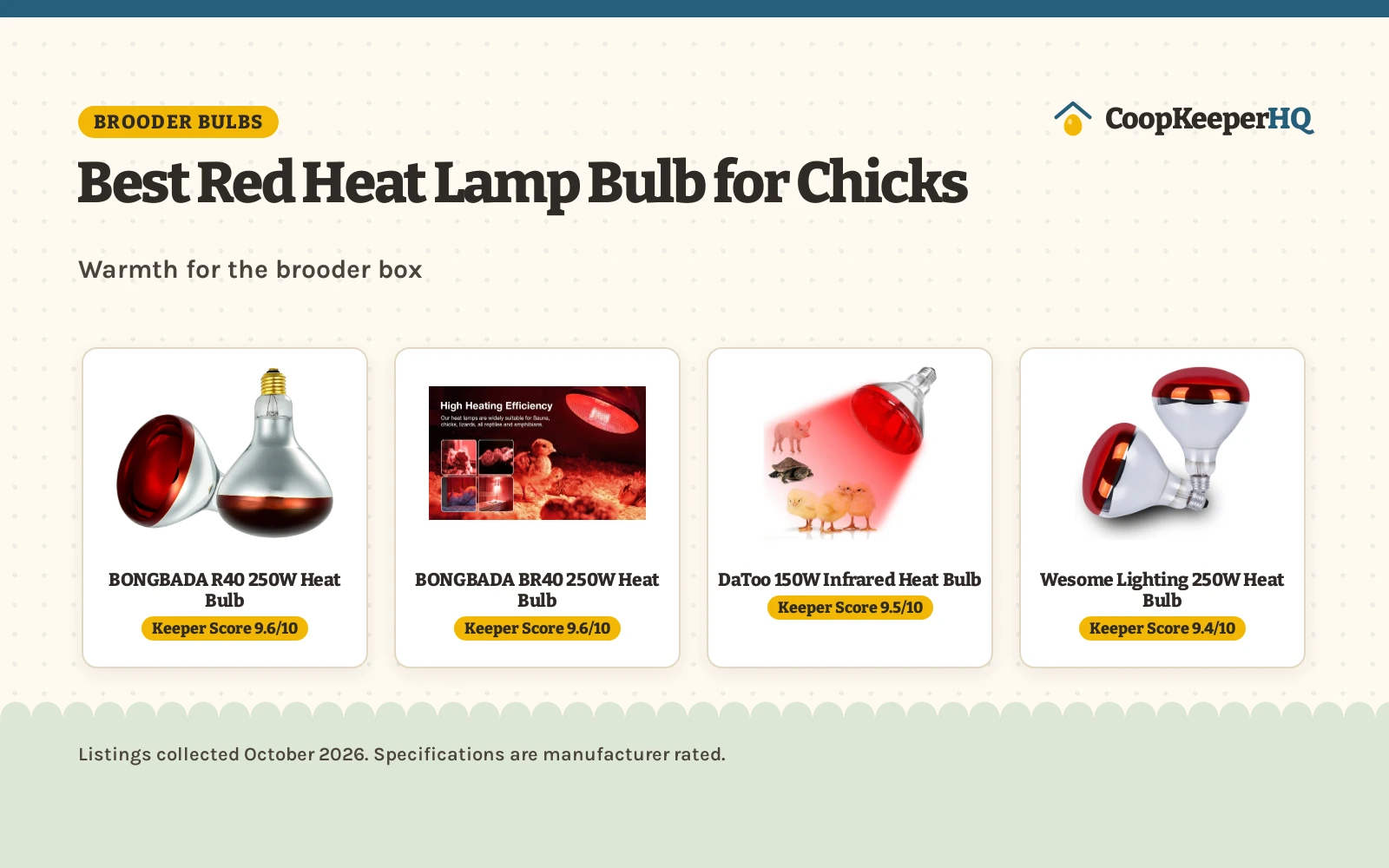
 BONGBADA Heat Lamp Bulb R40 250 Watt 2 Pack Painted Red9.6/10View on Amazon
- 2
 REPTI ZOO 2 Pack Infrared Heat LampView on Amazon
- 3
 2 Pack Infrared Heat LampView on Amazon
- 4
 Rhimp Infrared-Light-Red-Heat-lampView on Amazon
- 5
 275W Infrared Red Light Therapy Heat Lamp with RemovableView on Amazon
- 6
 Chicken Coop Heater for WinterView on Amazon
- 7
 Wooden Chick Brooder Box with Heat Lamp and ThermometerView on Amazon
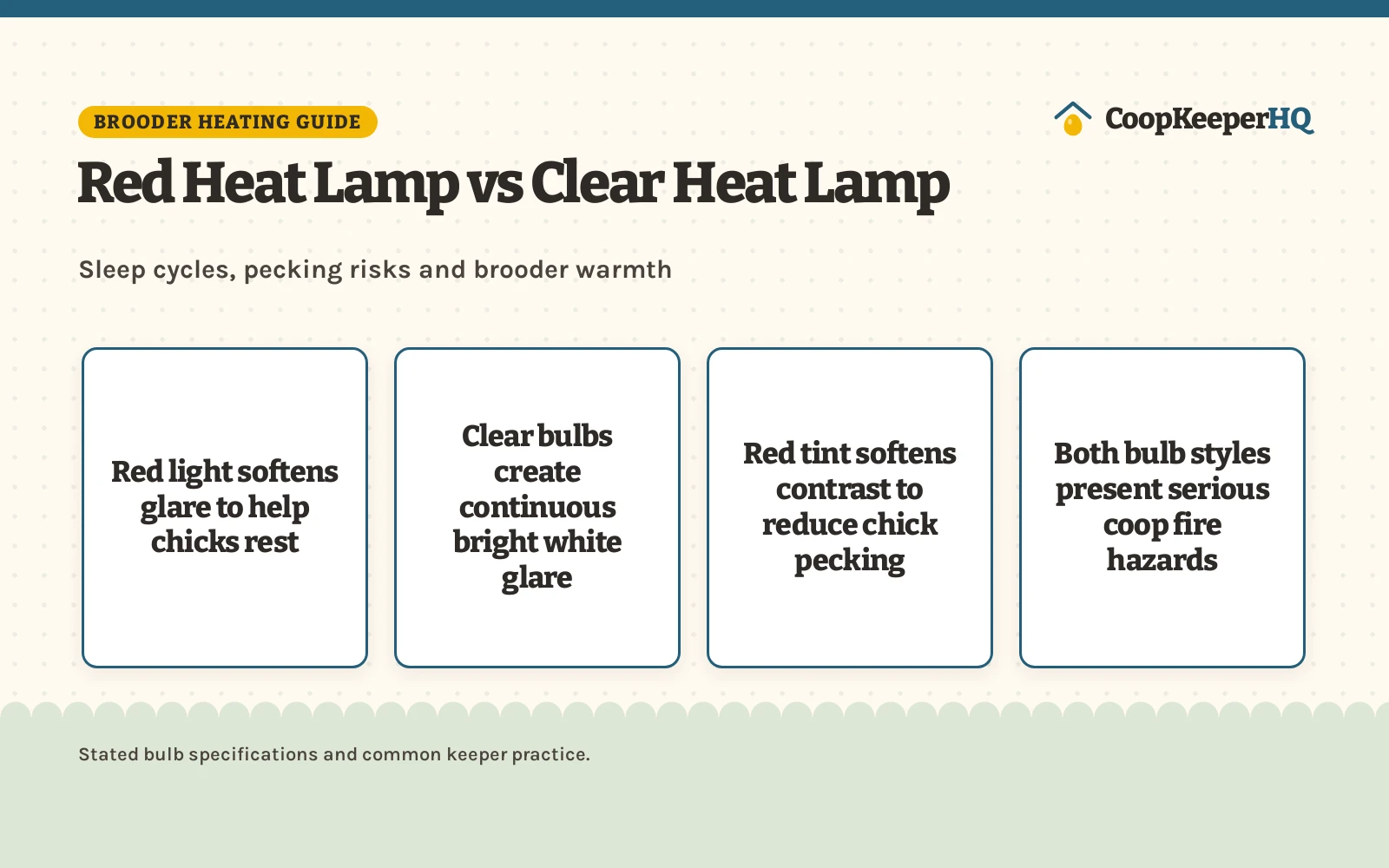
Setting up a chick brooder before your shipment arrives is an exciting chore of the season, but choosing the right warmth source can feel confusing. When choosing between a red heat lamp vs clear heat lamp for your brooder, the red heat lamp is the better choice for your flock because its tinted glow warms without flooding the box with bright white glare, allowing your chicks to rest more comfortably and discouraging aggressive pecking. Clear heat lamps produce harsh, continuous daylight that keeps chicks awake around the clock and increases stress, though both overhead incandescent styles bring serious fire hazards compared to modern radiant heating plates.
Other options for the coop
 REPTI ZOO 2 Pack Infrared Heat LampCheck price on Amazon
 2 Pack Infrared Heat LampCheck price on Amazon
 Rhimp Infrared-Light-Red-Heat-lampCheck price on Amazon
 275W Infrared Red Light Therapy Heat Lamp with RemovableCheck price on Amazon
 Chicken Coop Heater for WinterCheck price on Amazon
 Wooden Chick Brooder Box with Heat Lamp and ThermometerCheck price on Amazon
CoopKeeperHQ earns a commission if you buy through our links, at no added cost to you. Affiliate disclosure.
Red heat lamp vs clear heat lamp: how they compare in the brooder
Warmth is essential because young chicks cannot regulate their body temperatures during early life. While both bulb options produce radiant infrared warmth from incandescent filaments, the glass color creates fundamentally different brooder environments.
A clear heat lamp puts out intense white illumination alongside heat, flooding the brooder constantly. In contrast, a red heat lamp filters out harsh visible glare while letting infrared warmth pass through, creating a muted hue that helps birds settle and rest. If you are planning your layout, our guide to the requirements for a chick brooder outlines the essentials to prepare before birds arrive.
The impact on chick sleep and circadian rhythm
Young chicks alternate frequently between feeding and resting. Clear heat lamps emit continuous white light because the bulb must run uninterrupted to maintain temperature. That unending glare eliminates day and night cues, leaving chicks overstimulated and prone to restless chirping.
Red heat lamps provide a softer environment. The tinted glass filters out bright visible wavelengths that drive activity, casting a subdued glow that lets chicks tuck their heads and rest while warmth continues reaching the floor. While not total darkness, it avoids the relentless glare of clear bulbs.
Pecking, stress and flock behavior
Chicks explore by pecking at anything distinct on the brooder floor. Under clear bulbs, bright white light sharply illuminates every detail, making bare skin, emerging pinfeathers, and blood specks stand out. That contrast can trigger repeated pecking and severe flock damage.
Red heat lamps help reduce this behavior through color filtration. Under red illumination, blood spots and pink skin blend into the background light rather than catching the eye. Pairing a red lamp with dedicated brooder gear like a chicken feeder for chicks and a clean waterer for baby chicks keeps the flock calm and orderly.
Stated specifications, wattage and bulb build
Checking manufacturer specifications highlights differences in power draw, bulb size, and rated service life. High-output heat bulbs from brands such as BULBMASTER, LUCKY HERP, and Jugbuy are rated at 250 watts for larger brooders, while spot bulbs from REPTI ZOO and REPTI MATE draw 100 watts for smaller enclosures. BULBMASTER, REPTI ZOO, and LUCKY HERP specify 120 volts, while Jugbuy lists an operating range of 110 to 130 volts.
Bulb dimensions and lifespan also vary. Jugbuy and BULBMASTER state a bulb diameter of 4.92 inches with standard E26 screw bases. BULBMASTER lists an average lifespan of 6000 hours, whereas REPTI ZOO lists 2000 to 3000 hours. Manufacturers also note cautions: LUCKY HERP specifies using ceramic holders and maintaining a clearance of more than 50cm from the heated surface.
Fire hazards and safety in dry brooder bedding
Both red and clear styles carry severe fire hazards. High-wattage incandescent bulbs, such as the 250 watts models from BULBMASTER and LUCKY HERP, generate surface temperatures hot enough to scorch dust and ignite dry wood shavings. Slipped spring clamps and cords bumped by flapping chicks are common causes of brooder fires.
If you use a heat lamp, hang the fixture firmly with steel chain or wire rather than relying on spring clamps, and use porcelain ceramic sockets rated for heat. Connect gear to an approved GFCI outlet to guard against electrical faults. For safer heating choices, see our heat plate vs heat lamp comparison.
Reading chick behavior without guessing
Observing how chicks distribute themselves across the floor reveals whether brooder temperature is balanced without guesswork.
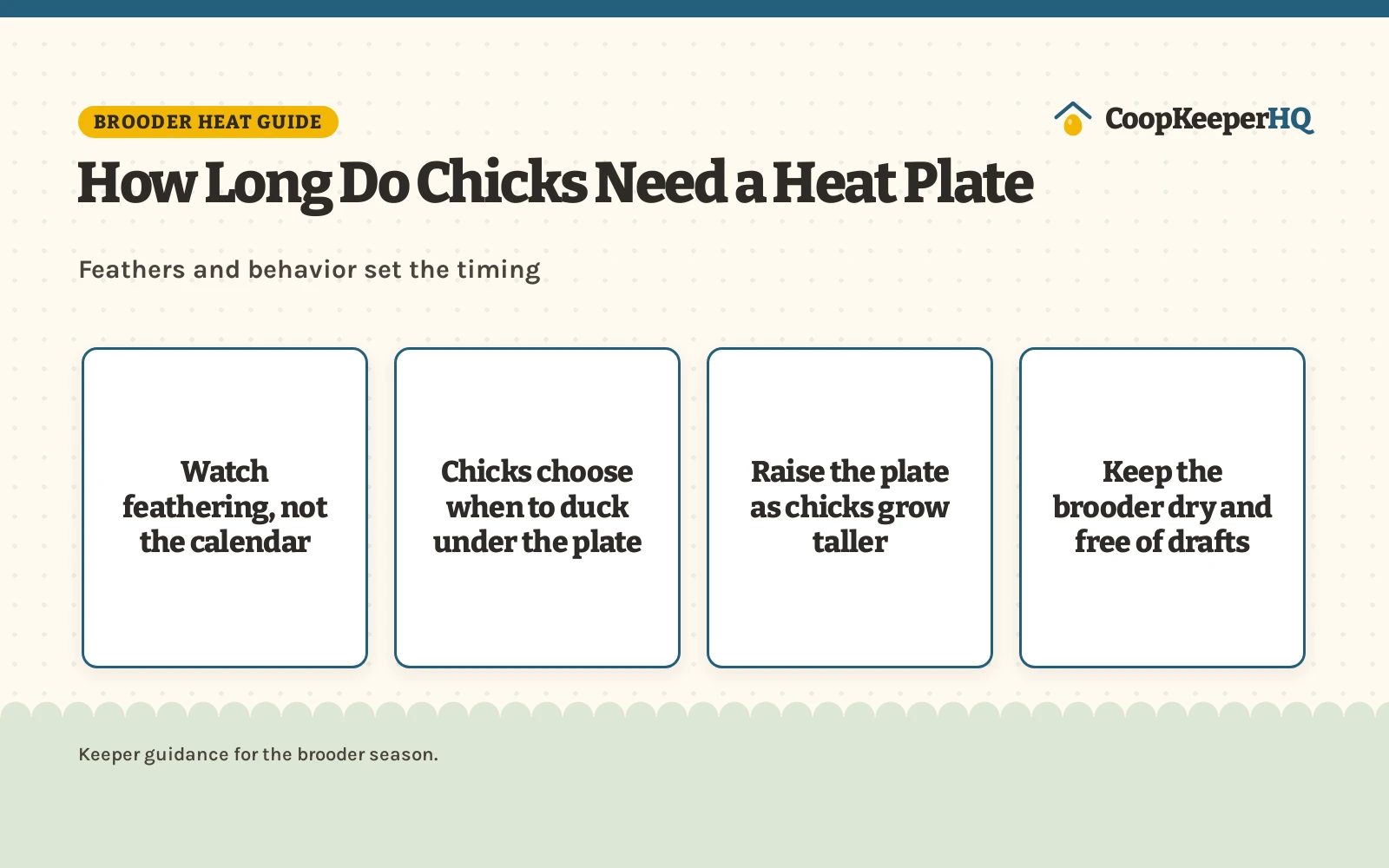
When chicks are cold, they crowd tightly beneath the lamp in a dense, peeping pile. If this occurs, adjust fixture height within safe clearance limits or block room drafts. When overheated, chicks flee toward the outer walls, panting with open beaks and wings held out; in that situation, raise the lamp higher. When comfortable, chicks spread evenly across the pen, feeding, drinking, and resting throughout the warm zone. Our chicken brooder size guide helps ensure your pen offers enough room for chicks to regulate their comfort.
Safer alternatives to overhead heat lamps
Because of fire hazards associated with overhead incandescent bulbs, many keepers replace heat lamps with radiant brooder heating plates. A plate sits on adjustable legs over the bedding, letting chicks warm their backs directly against the radiant underside.
Heating plates operate in darkness at night, draw far less electricity than heat bulbs, and stay below temperatures that ignite pine shavings. Our best brooder heat plate guide reviews top models, while our brooder heater vs heat lamp breakdown details how they compare over a brooding season.
Daily brooder routine for backyard keepers
A simple daily routine keeps the brooding pen safe and clean. In the morning, confirm suspension chains remain firmly anchored, clear shavings from the water font, and verify chicks move freely between warm and cool areas.
During evening chores, top off feed, scoop out damp bedding under the waterer, and add fresh dry shavings. Observe your chicks to confirm they rest comfortably and temperatures remain stable. If a bird appears unwell, contact a local poultry veterinarian or your state extension office for guidance.
A simple brooder safety checklist
- Choose red bulbs over clear bulbs to reduce glare and pecking hazards
- Hang heat fixtures with steel chains or wire rather than spring clamps
- Use porcelain ceramic sockets rated for high temperatures
- Connect heating gear to a protected GFCI outlet
- Observe chick distribution across the floor to evaluate warmth
- Ensure the pen has ample space for chicks to move away from heat
- Keep bedding dry and clean to prevent chilling
Browse our chicken keeping supplies list to see which brooding supplies are essential.
Birds, breed size, run time and climate in; coop floor, run space, roost length and nesting boxes out.
Heat lamps are a common cause of coop and barn fires. If you use one, secure it with more than the clamp (a chain or wire to a fixed point), keep it well away from bedding, walls and cardboard, and plug it into an outlet or a cord rated for the load. Radiant heat plates run cooler and remove most of that risk. Check chicks often in the first days: huddling under the heat means too cold, spreading to the edges means too warm. Read our Safety Disclaimer.
FAQ for the flock
Can baby chicks sleep under a clear heat lamp?
Chicks sleep under clear bulbs when exhausted, but the bright white glare disrupts resting patterns. Continuous light causes restlessness and stress compared to brooding under a red bulb or a dark heating plate.
Why do keepers choose a red heat lamp over a clear heat lamp?
A red heat lamp provides a muted glow that helps chicks rest. The red tint also blends the appearance of blood and skin irritation into the background light, discouraging feather pecking and cannibalism.
Are heat lamps safe to use in a coop or brooder?
Heat lamps carry severe fire hazards around dry bedding and dust, and experienced keepers advise against using them in a coop. In brooders, they require ceramic sockets, chain suspension, and GFCI outlets, though heating plates are far safer.
What should I use instead of a heat lamp for chicks?
Radiant brooder heat plates are the recommended alternative. They warm chicks from below without intense surface temperatures, eliminate open bulb fire risks, use less electricity, and operate in darkness at night.
How can I tell if my chicks are warm enough under the lamp?
Watch chick distribution. Cold chicks huddle in a tight pile under the bulb; overheated chicks scatter to corners panting. Comfortable chicks spread out evenly across the brooder floor, resting, feeding, and drinking contentedly.
More coop guides
- Heat Plate vs Heat Lamp for Chicks: Which Is Safer?
- Brooder Heater vs Heat Lamp: Which One Should You Buy?
- Best Brooder Heat Plate: Safer Heat for Chicks
- Requirements for a Chick Brooder: Setup, Heat and Sizing Guide (2026)
See the brooder picks and the coop supply guides.