Chicken Coop Heater vs Heat Lamp: Which One Should You Buy?
A practical comparison of radiant flat panels and heat lamps covering fire risks, surface temperatures, energy use and safer winter coop warmth.

On this page
Top picks at a glance
As an Amazon Associate I earn from qualifying purchases.
- 1
 Smart Chicken Coop Heater9.7/10View on Amazon
- 2
 ATHCOHT 400W Heat Lamp for Chickens with Carbon Fiber Bulb9.7/10View on Amazon
- 3
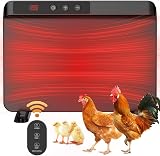 HOPOCO Smart Chicken Coop Heater with Efficient ThermostatView on Amazon
- 4
 H&G lifestyles Chicken Coop HeaterView on Amazon
- 5
 Foandbevi Large Chicken Coop Heater for WinterView on Amazon
- 6
 Smart Chicken Coop Heater Coop Radiant Heat Panel Built-inView on Amazon
- 7
 Fanspex 600W Hanging Heater for Poultry Chicken Coop PetView on Amazon
- 8
 PETNF Chicken Coop Heater 140 Watts Radiant Heat ChickenView on Amazon
When you head out to the coop on a frosty evening to shut the pop door, checking on your hens huddled together on the roost, it is natural to wonder whether they need extra warmth to get through the night. Deciding between a chicken coop heater vs heat lamp comes down to a clear conclusion: a flat radiant chicken coop heater is far safer, while traditional heat lamps should never be used inside an active coop. Heat lamps create an extreme fire risk when hung above dry pine shavings, cobwebs and fluttering wings. A radiant panel heater warms birds resting beside it without exposing the flock to incandescent bulbs or dangerous surface temperatures. If your birds need gentle supplemental warmth during severe cold snaps, a flat radiant panel is the sensible choice.
Other options for the coop
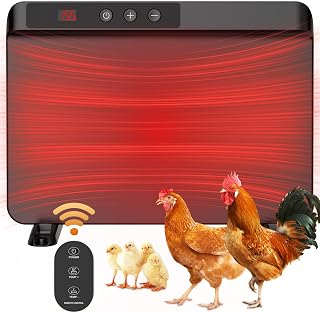 HOPOCO Smart Chicken Coop Heater with Efficient ThermostatCheck price on Amazon
 H&G lifestyles Chicken Coop HeaterCheck price on Amazon
 Foandbevi Large Chicken Coop Heater for WinterCheck price on Amazon
 Smart Chicken Coop Heater Coop Radiant Heat Panel Built-inCheck price on Amazon
 Fanspex 600W Hanging Heater for Poultry Chicken Coop PetCheck price on Amazon
 PETNF Chicken Coop Heater 140 Watts Radiant Heat ChickenCheck price on Amazon
CoopKeeperHQ earns a commission if you buy through our links, at no added cost to you. Affiliate disclosure.
Chicken coop heater vs heat lamp: the direct comparison
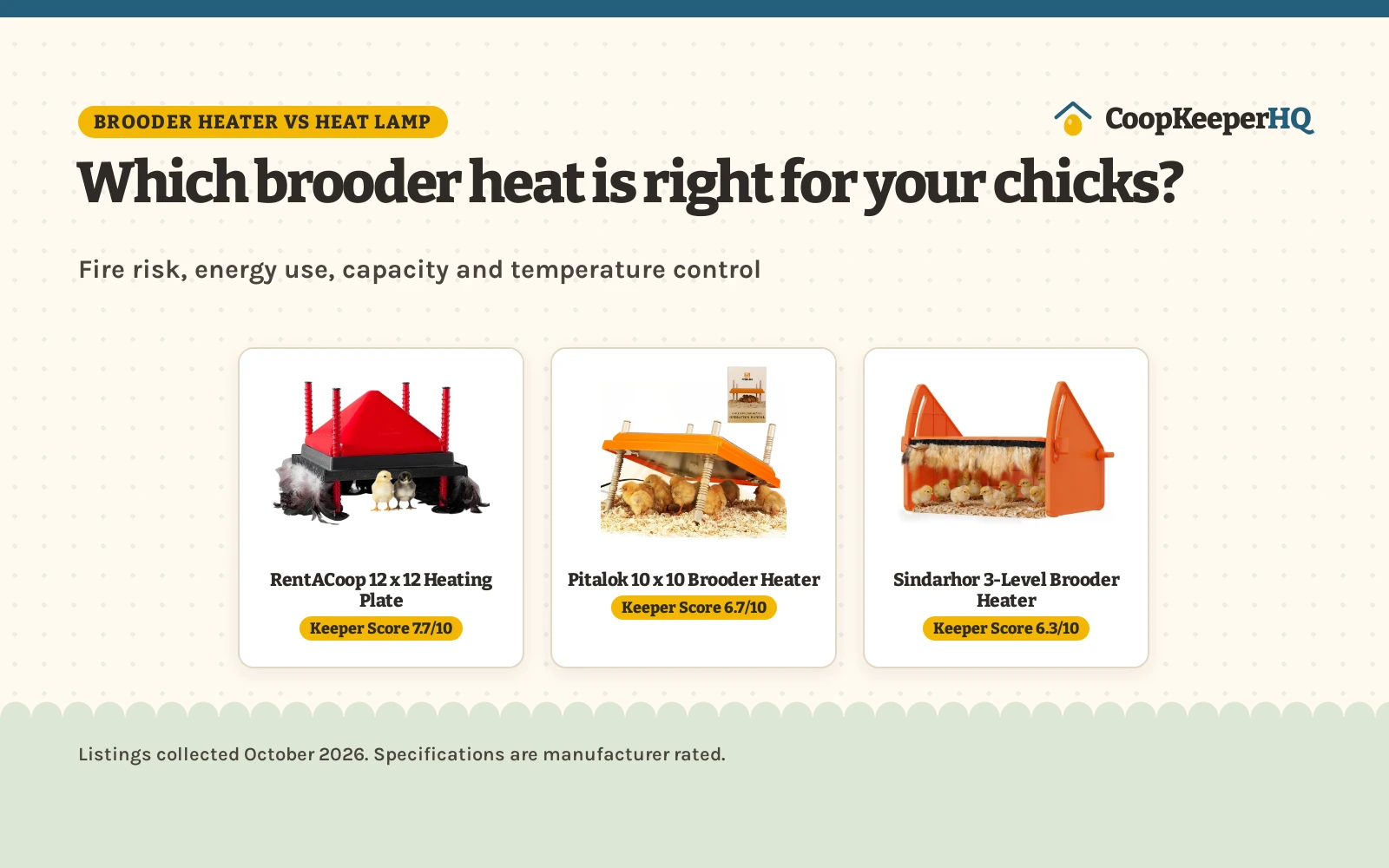
The core difference between these heating options lies in how they produce and distribute warmth. A heat lamp relies on a high-intensity bulb to push intense thermal radiation across open space. In a drafty outbuilding, that heat quickly rises to the rafters and dissipates, leaving the floor cold while creating a dangerously hot zone directly beneath the fixture. In our heat plate vs heat lamp comparison for brooding chicks, this intense directional heat is already a concern, but inside a crowded winter coop with adult birds, it becomes a severe hazard.
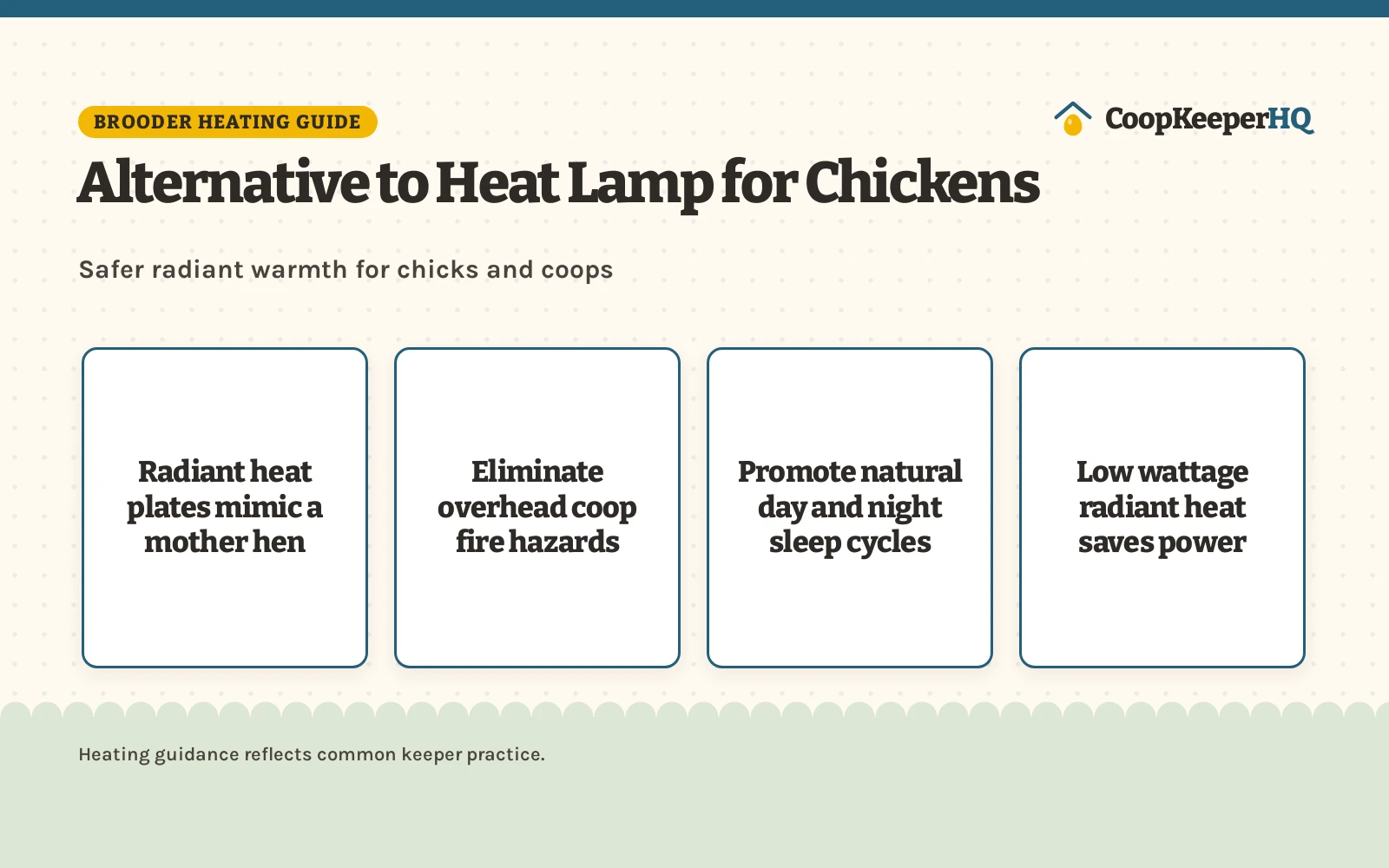
A flat radiant chicken coop heater works on an entirely different principle. Rather than attempting to warm the drafty air inside a ventilated coop, the panel delivers gentle radiant warmth directly to objects and birds resting nearby. Chickens can approach the panel when they feel chilled and step away when comfortable. Because flat panels operate at modest wattage and moderate surface temperatures, they provide localized relief without creating the hazardous hot spots common to suspended bulbs.
Why heat lamps create severe coop fire hazards
Every winter, coop fires caused by heat lamps destroy structures and claim backyard flocks. The environment inside a chicken coop is inherently dusty, filled with dry dander, fine down feathers, loose straw and pine shavings. Hanging heat lamps frequently rely on basic wire clamps or thin hanging chains that can slip or dislodge when startled hens fly up toward roost bars. If a hot bulb drops into dry floor litter, ignition can occur within seconds.
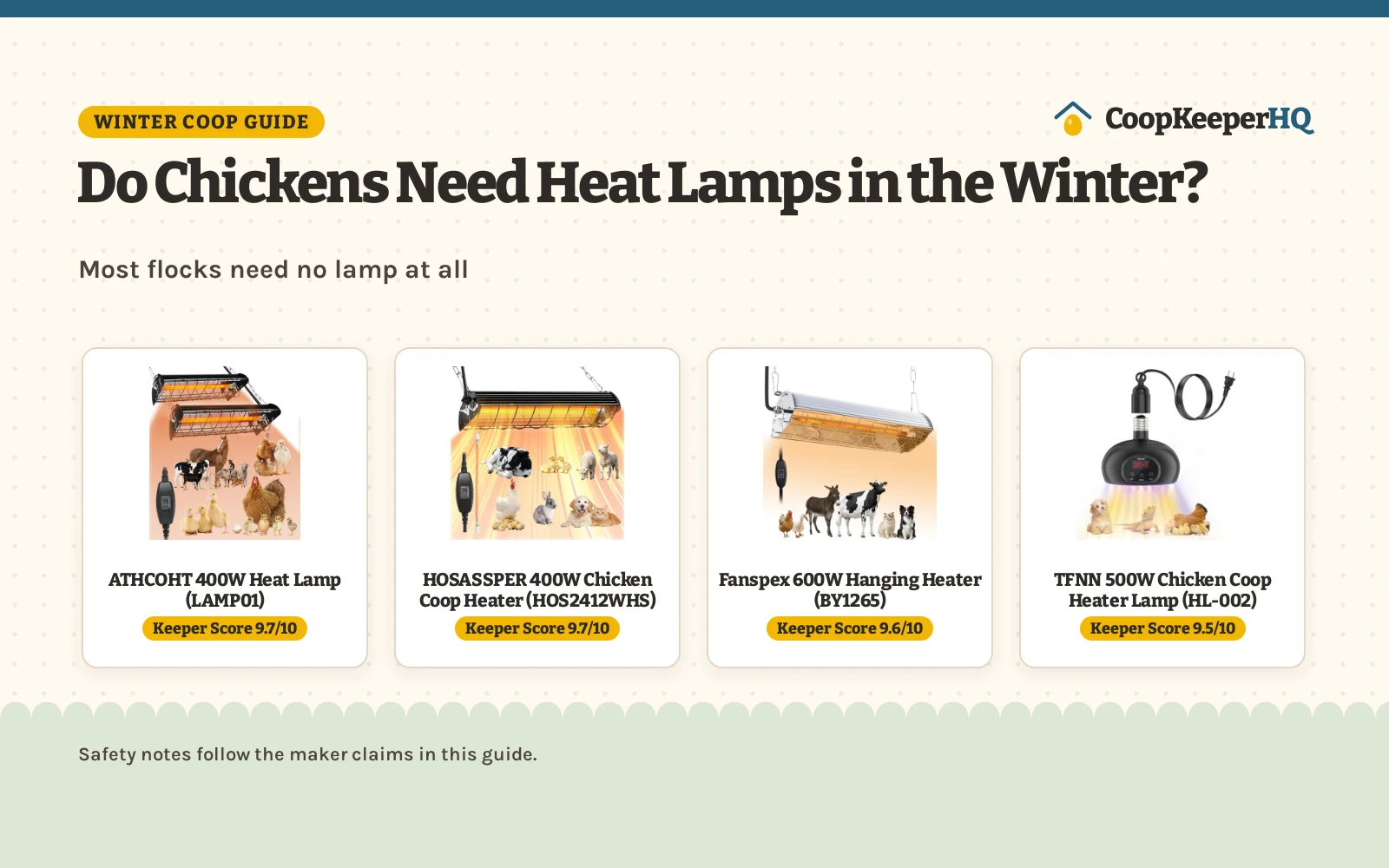
The extreme operating temperatures of heat lamps explain this danger. For instance, a hanging heat lamp from VORIGY lists a maximum surface temperature of 257°F and operates at 600W or 100W, compared to standard 250W heat lamps. When glass bulbs reach temperatures capable of warming up to 100 chicks, any contact with dried bedding or floating dust presents immediate danger. Even heavy-duty models like the ATHCOHT lamp, which lists dual settings of 200W and 400W along with a carbon fiber bulb rated for up to 12,000 hours and 1.5 years of warranty, still concentrate substantial heat in an environment where birds flutter. Water splashes from drinkers can also shatter hot bulb glass, showering the floor with sparks and sharp fragments.
How radiant flat panel heaters provide safer warmth
Flat radiant heaters are engineered specifically to eliminate open-element fire hazards in livestock enclosures. Instead of an exposed glass globe, these heaters use encased heating elements sealed behind solid metal or composite housings. The heat is steady, mild and evenly distributed across the entire surface of the board.
Energy consumption is also drastically lower. While traditional heat lamps draw substantial power, radiant panels run efficiently. For example, the Foandbevi radiant heater draws 150W and uses graphene mica heating components rated to withstand temperatures exceeding 392°F. Panels from HOPOCO and TIMEBAL draw 200W, delivering focused warmth with minimal electrical strain. The HOPOCO panel provides an adjustable temperature range between 122°F and 191°F, reaching a maximum temperature of up to 191°F, and features a built-in anti-tilt shut-off if the unit tilts or falls to 180 degrees. Similarly, the TIMEBAL panel offers an adjustable heating range of 70°F to 191°F. The H&G lifestyles panel automatically controls heating temperature to 75 degrees Celsius or 167℉, includes a 10-foot wire length, and provides radiant heat up to 15 inches away. Our best chicken coop heater guide reviews several panel designs suitable for backyard shelters.
Thermostats, timers and automatic safety controls
A major benefit of modern radiant panels is integrated temperature management. Choosing a chicken coop heater with thermostat controls prevents the coop from becoming excessively warm during mild spells while ensuring warmth turns on during freezing nights. Uncontrolled heat lamps run continuously at full output unless unplugged manually, wasting power and overheating birds that already wear natural down coats.
Many radiant panels incorporate digital thermostats and automatic shut-off timers. The Foandbevi panel features a timing control range of 1 to 23 hours, with 0 for always on, and a default heat setting of 95°F within an adjustable thermostat range between 59°F and 176°F. Advanced panels from HOPOCO and TIMEBAL include internal memory that automatically retains temperature settings and operating modes after power interruptions. When winter storms cause brief outages, these heaters resume operation at the intended setting as soon as current returns.
Solar chicken coop heater and off-grid options
Keepers who manage coops far from household electrical outlets often search for a solar chicken coop heater or investigate whether a chicken coop heater solar setup can run through the winter. Producing heat electrically requires immense energy. Even a modest 150W panel or 200W radiant board draws steady power that quickly drains compact batteries. During cloudy winter days with short daylight hours, standard solar panels cannot generate enough electricity to charge a battery bank and power heating overnight.
For the same physical reason, finding a dependable battery powered heater for chicken coop structures is impractical. Portable battery packs capable of sustaining heat output for hours are bulky and expensive. If you are looking for a heater for chicken coop without electric wiring, the safest approach is to avoid supplemental heating devices altogether. Instead, rely on proven structural insulation: pack deep layers of dry bedding onto the floor, seal drafty wall cracks at roost level, and wrap external run walls with windbreaks to help the birds conserve their natural body warmth.
Do adult chickens actually need supplemental heat?
Most backyard keepers are surprised by how well cold-hardy chicken breeds tolerate winter temperatures without any artificial heating. Chickens maintain a high resting body temperature and wear an insulating coat of overlapping feathers. At night, birds huddle closely along roost bars, tucking their heads under wings and settling their breast feathers over their feet to stay comfortable.
Adding artificial heat can sometimes do more harm than good. When a coop is heated artificially, chickens fail to acclimate naturally to cold weather. If a winter blizzard knocks out power and the heater shuts off abruptly, non-acclimated birds can suffer from the sudden temperature drop. Supplemental heat should be reserved for sudden, extreme deep freezes or elderly, ailing flock members. Under normal conditions, adult birds thrive if you keep their environment dry and draft-free. For a thorough walkthrough of flock winterization, see our guide on how to keep chickens warm in winter. Ensuring access to clean water using a heated chicken waterer or a heated base for chicken waterer is far more critical than warming the coop air. When flock health questions arise, consult a qualified poultry vet or your local state extension office rather than guessing.
Safe installation and outdoor electrical rules
If you choose to install a radiant flat panel, proper placement is essential for both flock safety and efficiency. Fasten the panel firmly to an interior coop wall beside the roosting area at bird height, or stand it on included base feet where litter will not bury it. Avoid placing heaters inside enclosed nesting boxes, which should remain dark, quiet and unheated for egg laying.
All electrical devices used in outbuildings must connect to an exterior outlet protected by a Ground Fault Circuit Interrupter (GFCI). Keep power cords elevated and fastened along wall studs with heavy-duty clips so curious chickens cannot peck through the insulation. Inspect cords regularly for signs of wear. Complement safe heating by installing an automatic chicken coop door, which closes the predator-proof entrance at twilight to block cold ground drafts while leaving high gable vents open for ventilation. Managing the coop floor with clean materials from our chicken coop bedding guide ensures the structure stays dry and insulated throughout the snowy months.
Winter coop heating checklist
- Never use hanging heat lamps with exposed incandescent bulbs inside an active coop
- Choose a flat radiant panel with moderate surface temperatures if supplemental heat is required
- Select a model with an internal thermostat to prevent coop overheating and conserve power
- Mount radiant panels securely against a wall at roost level away from loose litter piles
- Plug all outdoor equipment into a dedicated GFCI outlet and fasten cords away from beaks
- Keep vents high on coop walls open continuously to exhaust humidity and prevent moisture buildup
- Maintain deep, dry coop bedding and provide unfrozen drinking water every day
Birds, breed size, run time and climate in; coop floor, run space, roost length and nesting boxes out.
Wash your hands after handling birds, eggs or equipment, supervise children around the flock, and check local rules on flock size and roosters before you buy. For sick birds, call a poultry veterinarian or your state extension office. See CDC backyard poultry guidance. Read our Safety Disclaimer.
FAQ for the flock
Which is safer for winter warming, a chicken coop heater or a heat lamp?
A flat radiant chicken coop heater is far safer than a heat lamp. Heat lamps feature fragile glass bulbs and glowing elements that reach severe surface temperatures, presenting an extreme fire risk when surrounded by dry bedding and flapping birds. A radiant flat panel warms resting birds through gentle surface heat without open bulbs or combustible hotspots.
Can you run a solar chicken coop heater or a battery powered heater?
Running a continuous electric heating panel on solar power or standalone batteries during winter is rarely practical. Generating heat requires substantial wattage that quickly exhausts small batteries, especially during short winter days with limited sunlight. Keepers without electrical hookups achieve better results by using deep bedding, windbreaks and draft-free coop construction.
What makes a chicken coop heater with thermostat controls helpful?
A heater equipped with an integrated thermostat maintains gentle background warmth while automatically cutting power when ambient temperatures rise. This prevents the coop from becoming stuffy and overheated, lowers utility consumption and ensures your flock stays comfortable without manual adjustments throughout fluctuating weather.
How do you keep chickens warm in a coop without electric power?
Healthy chickens stay warm through natural body heat and down feathers. You can support them without electricity by closing drafts at roost height, keeping upper ventilation open to remove moisture, spreading thick layers of dry wood shavings on the floor, and giving birds wide wooden roosts so their bodies cover their toes.
Where should a flat radiant chicken coop heater be installed?
Mount the panel securely against a sturdy coop wall adjacent to the roosting bar, positioning it at bird height so hens can lean near the radiant warmth as desired. Do not place heating panels directly inside nest boxes, and ensure the unit is positioned safely above floor litter to keep dry shavings from accumulating against the surface.
More coop guides
- How to Keep Chickens Warm in Winter Without Overheating the Coop
- Best Chicken Coop Heater: Safer Panels for Winter
- Heat Plate vs Heat Lamp for Chicks: Which Is Safer?
See the chicken coop picks and the coop supply guides.