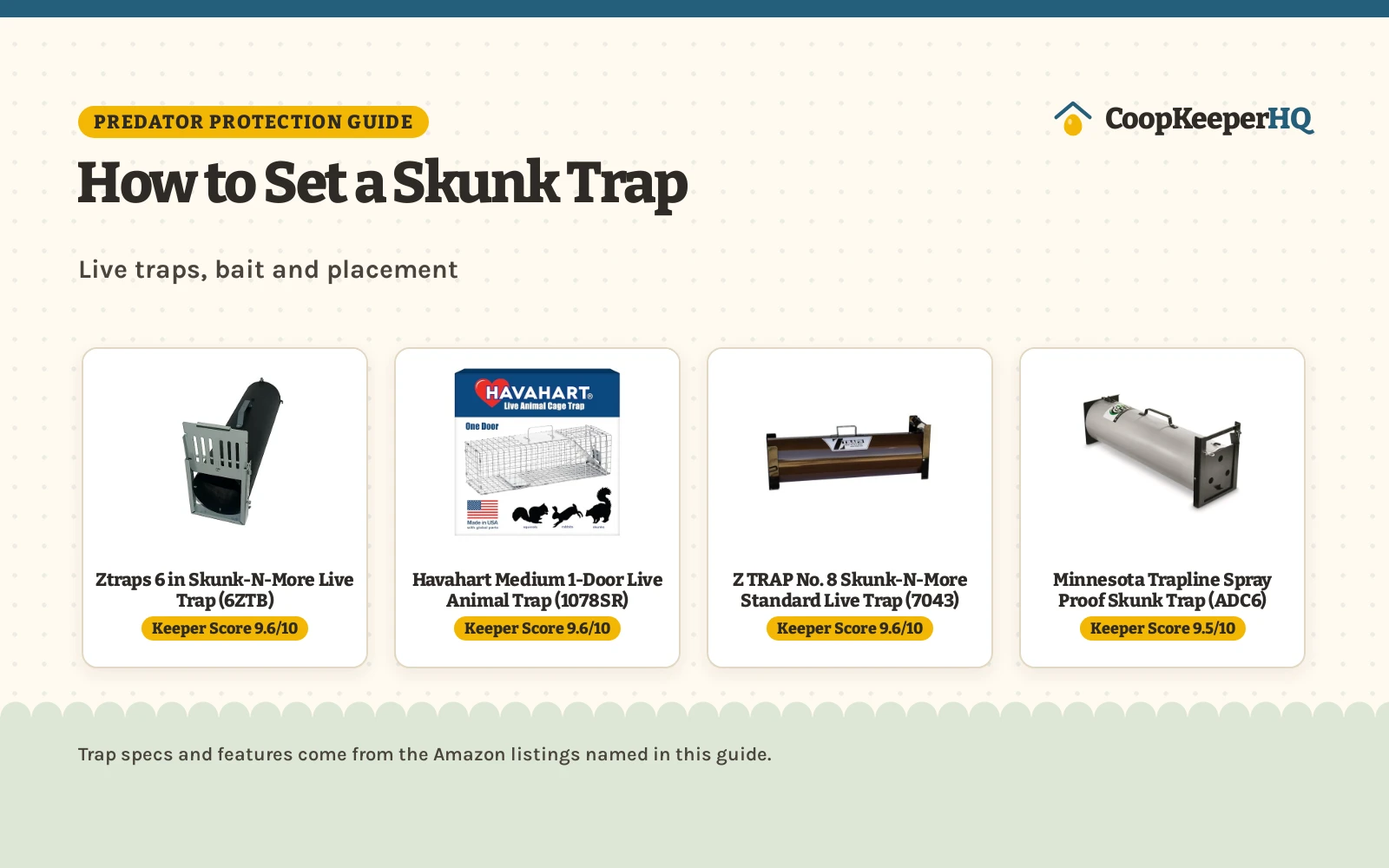
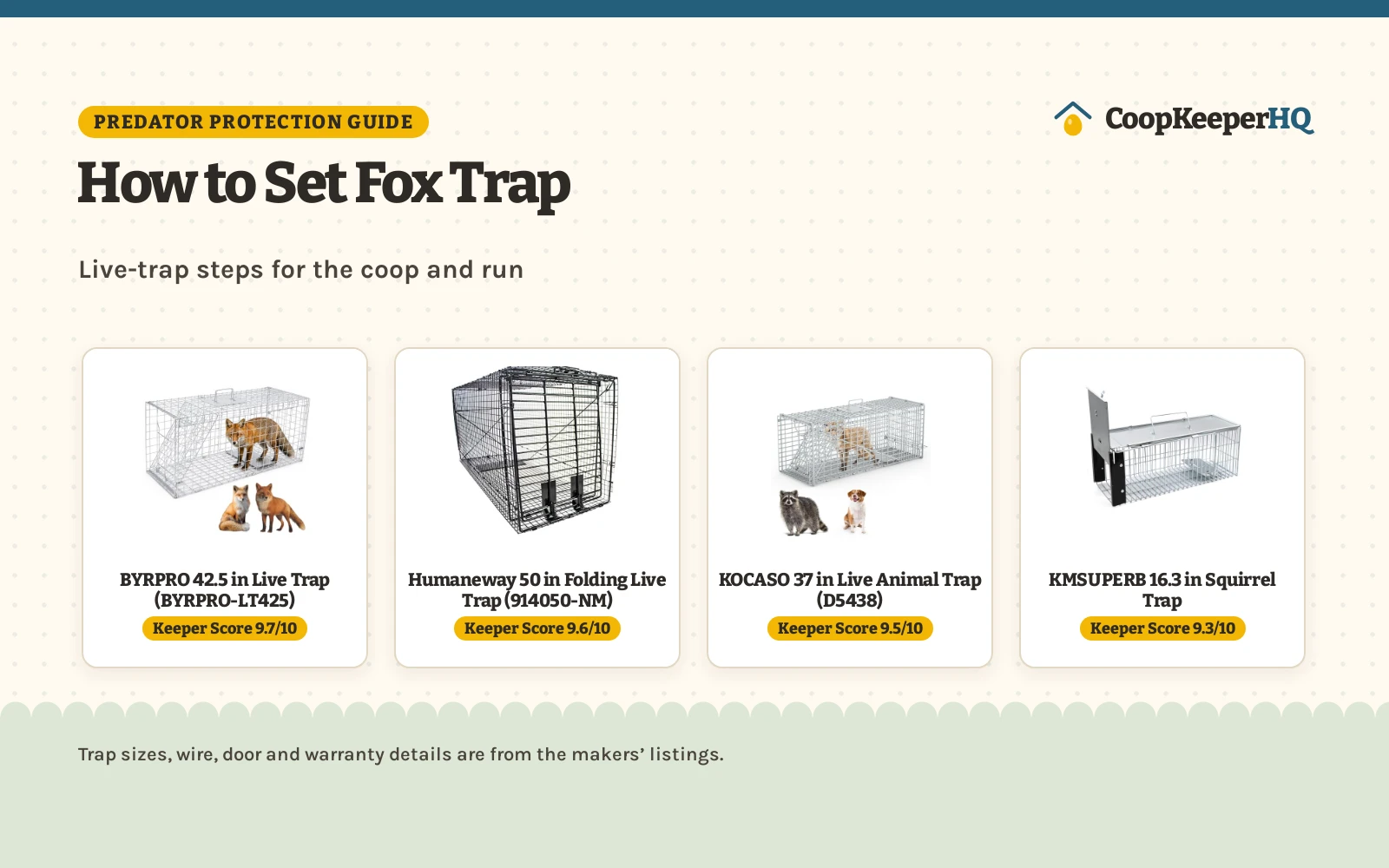
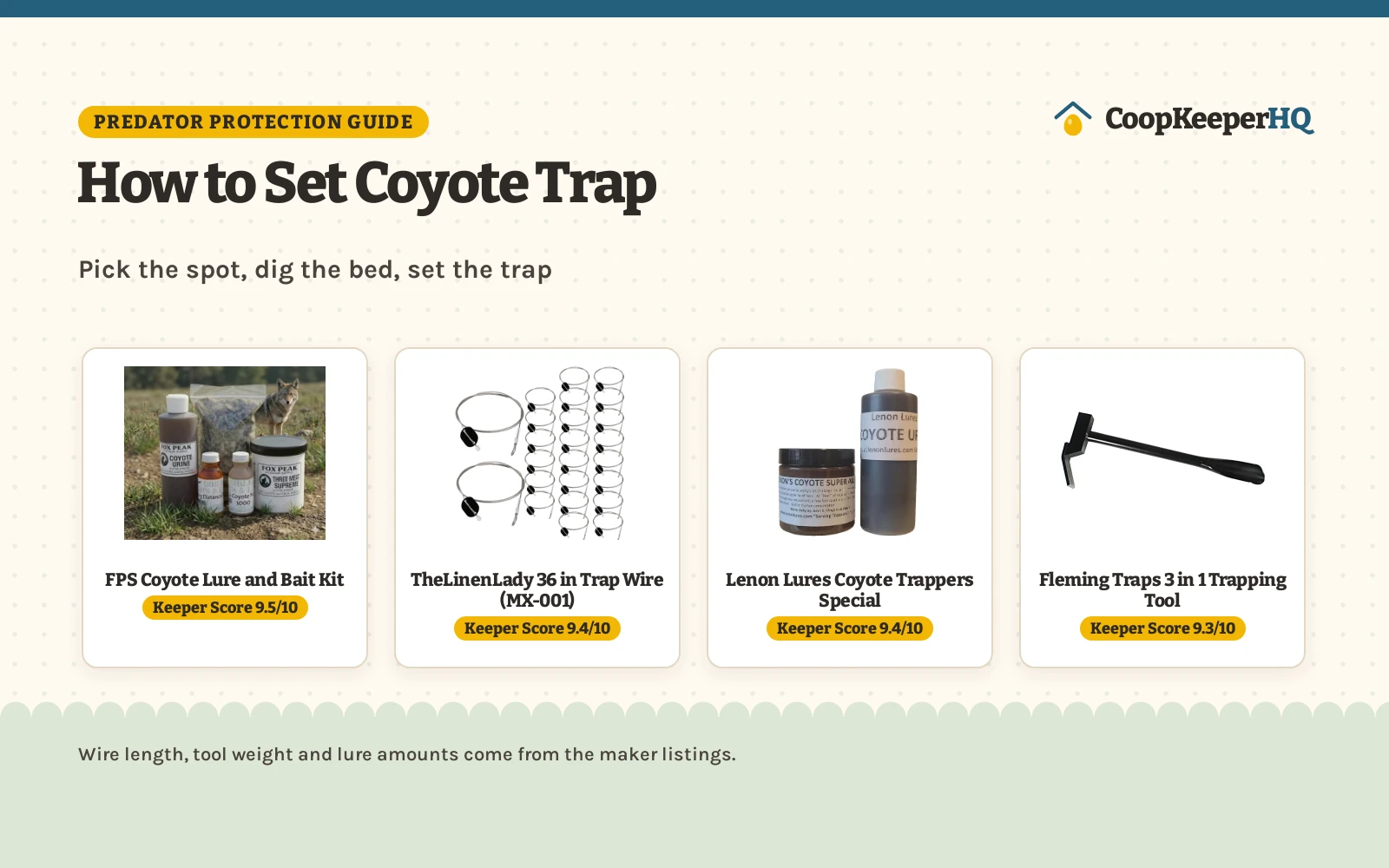
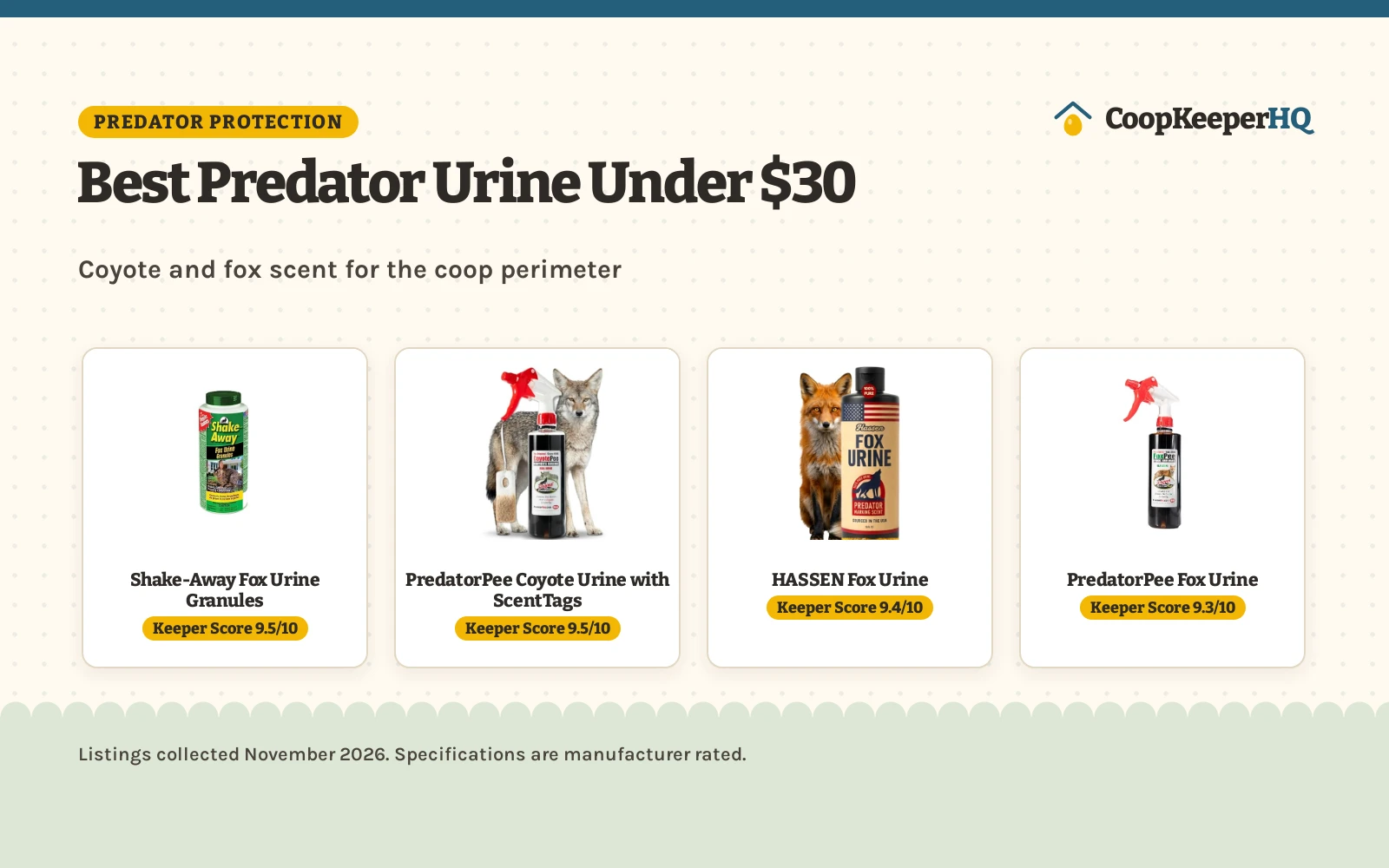
How to Set a Small Animal Trap
A live trap set along a run wall with the right bait and a clear trigger plate catches the animal raiding the coop without harming the flock.

On this page
Top picks at a glance
As an Amazon Associate I earn from qualifying purchases.
- 1
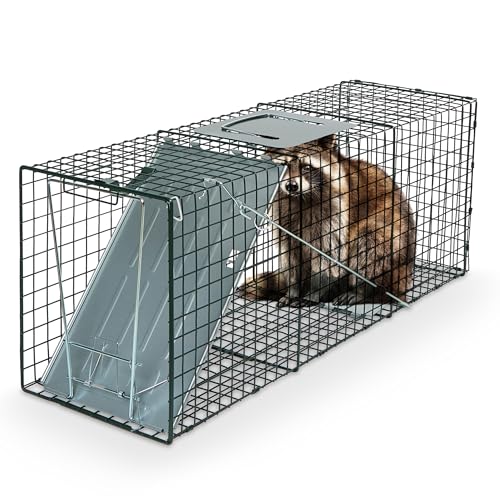 Humane Way Sentinel 32 Inch Live Animal Trap9.5/10View on Amazon
- 2
 Anyhall Humane Live Squirrel Cage Trap9.4/10View on Amazon
Something has been at the feed again, or eggs are missing from the nest boxes, and the run fence shows a gap where a small animal slipped through. Learning how to set a small animal trap gives the keeper a humane way to catch the visitor and move it away from the flock. Pick a live trap sized for the animal, set it along the wall where the animal travels, bait behind the trigger plate and check local rules before setting the trap.
Other options for the coop
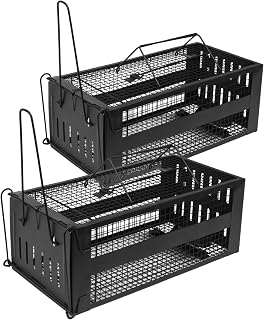 SZHLUX 2-Pack Rat TrapCheck price on Amazon
 2 Pack Humane Small Animal Spring Cage TrapCheck price on Amazon
 Humane Large Animal Trap Black 51.2 x 17.7 x 19.7 inch EasyCheck price on Amazon
 Havahart Large 2 Door Humane Catch and Release Live AnimalCheck price on Amazon
 Toriexon 48 inch Armadillo TrapCheck price on Amazon
 Animal Trap Cage Pigeon Chicken Squirrel Chipmunk OutsideCheck price on Amazon
CoopKeeperHQ earns a commission if you buy through our links, at no added cost to you. Affiliate disclosure.
How to set a small animal trap: pick the right size
Size comes before bait and placement. A trap that is too small will not hold the animal, and a trap that is too large may not trip for a light animal. Match the trap to the animal raiding the coop, using the dimensions the listing states.
The Anyhall listing measures 17 x 7 x 7 inches and suits squirrels, weasels and other similar-sized animals. The same listing warns that mice and little chipmunks are too light to trip the pedal and may escape through the mesh hole, which measures 1 x 1 inches, and that big cats and other large animals will not fit inside. The ARELAX listing measures 24 x 7.16 x 8.26 inches and suits rabbits, squirrels, muskrats and minks. The Humaneway Sentinel 32 (on Amazon) listing measures 32 x 10.5 x 12.5 inches and suits raccoons, feral cats, groundhogs and opossums. Pick the smallest trap that fits the animal named on the listing, and keep the flock in mind: a trap big enough for a raccoon is big enough for a hen, so place it where the flock does not roam.
Check local rules before you set a trap
Trapping rules change from town to town and from state to state. Some animals are protected, some areas forbid relocation, and some areas ask keepers to call animal control instead of trapping. Check local, HOA and state rules before setting a trap, and follow what they say about the animal in the trap. A keeper who catches a protected animal should call the local animal control office or the state wildlife office for the next step. Never set a trap on land that belongs to someone else, and never set a trap where children or pets roam. Keep the trap away from the coop door and the run paths the flock uses, so a hen does not wander in.
Where to place the trap
Animals travel along edges, not across open ground. Set the trap against a wall, a fence or the outside of the run, near the gap in the fence or the spot where feed has gone missing. Put it on flat ground so it sits steady, and tuck it into cover where the animal feels safe to enter. The ARELAX listing notes a powder-coated finish that helps reduce glare and visibility outdoors, and a low-profile design that blends into the yard. Leave the door end clear so the animal can walk straight in, and keep the trigger end away from the run fence so a hen cannot reach the bait through the wire. If the trap rocks or tilts, move it to flatter ground and try again.
How to bait the trap
Bait goes behind the trigger plate, not in front of it. The animal should step fully onto the plate to reach the food, and that step is what closes the door. The ARELAX listing describes an enlarged trigger plate and bait placement that makes it hard for animals to reach in from behind to grab the food, so the animal must walk in and stand on the plate. For squirrels, peanut butter, sunflower seeds and apple slices are common baits. For rabbits, leafy greens and apple slices are common baits. Smear or wedge the bait in place so the animal works at it instead of snatching it and leaving. Use fresh bait, and change it when it dries out or goes stale.
How to set the trigger
Open the trap on flat ground and read the maker instructions for the model in hand. The Anyhall listing states a non-foldable design that arrives fully assembled, so the keeper just opens it and uses it. The Humaneway Sentinel 32 listing states one-step setup with no assembly required. The ARELAX listing states a folding design, so unfold it and open the frame fully before setting the trigger. Lift the door and set the trigger so the door stays open, and press the trigger plate gently to confirm it releases. Keep fingers clear of the door while setting the trigger: the Anyhall listing states that the door closes instantly when the pedal is triggered. Set the trap, step back and leave the area quiet so the animal comes in on its own.
Check the trap and handle the catch
A set trap needs regular checks. Look in on every visit to the coop, and check it through the day so a caught animal does not sit in sun or rain any longer than needed. Wear gloves when handling a trap with an animal inside, and keep the trap low and steady while moving it. Cover the trap with a cloth while carrying it: the dark calms the animal and keeps fingers away from the mesh. Move the animal only where local rules allow relocation, and let it go well away from the coop and the neighboring yards. Wash hands after handling the trap, and clean the trap before storing it. The ARELAX listing states the trap folds flat for storage on a garage shelf or in a car trunk.
A simple trap-setting checklist
- Local rules checked, and the animal is legal to trap and relocate
- Trap size matched to the animal on the listing
- Trap set on flat ground along a wall or fence
- Bait placed behind the trigger plate
- Trigger plate moves freely and the door closes
- Trap checked on every visit to the coop
- Gloves and a cloth ready for handling the catch
Wash your hands after handling birds, eggs or equipment, supervise children around the flock, and check local rules on flock size and roosters before you buy. For sick birds, call a poultry veterinarian or your state extension office. See CDC backyard poultry guidance. Read our Safety Disclaimer.
FAQ for the flock
What size trap suits a squirrel?
The Anyhall listing measures 17 x 7 x 7 inches for squirrels, weasels and similar-sized animals, and the ARELAX listing measures 24 x 7.16 x 8.26 inches for squirrels, rabbits, muskrats and minks. Pick the size that matches the animal on the listing, and remember that mice and little chipmunks are too light to trip the pedal on the Anyhall trap (on Amazon).
Where should a live trap be placed?
Set it against a wall, a fence or the outside of the run, near the gap or the spot where feed has gone missing. Put it on flat ground in cover, with the door end clear so the animal can walk straight in, and keep it away from the coop door and the run paths the flock uses.
What bait works in a small animal trap?
Peanut butter, sunflower seeds and apple slices are common baits for squirrels, and leafy greens and apple slices are common baits for rabbits. Place the bait behind the trigger plate so the animal steps fully onto the plate to reach it.
Can a caught animal be relocated?
It depends on local rules. Some areas allow relocation and some forbid it, so check local, HOA and state rules before setting the trap. Where relocation is not allowed, call the local animal control office or the state wildlife office for the next step.
How can chickens be kept out of the trap?
Place the trap where the flock does not roam, away from the coop door and the run paths. Set the trap after the flock is shut in for the night, and check it early in the morning before letting the birds out. A trap sized for a raccoon is big enough for a hen, so placement matters more than size.
More coop guides
- How to Set Coyote Trap for Predator Protection
- Best Way to Trap a Raccoon Around Your Coop
- What Size Trap for Coyote: A Guide for Predator Control
- Best Fox Traps (2026): 5 Live Traps for the Coop and Run
- Best Raccoon Trap Under $50 (2026)
- How to Setup Electric Fence for Predator Protection
- Best Predator Proof Chicken Coop: Picks With Real Hardware
- Do Scarecrows Actually Work Against Predators
See the predator protection guides and the hardware cloth guide for the run.