How to Setup Electric Fence for Predator Protection
Plan the line, match the energizer to the fence length, set posts and insulators, drive the ground stake in moist soil and switch on the pulse.

On this page
Top picks at a glance
As an Amazon Associate I earn from qualifying purchases.
- 1
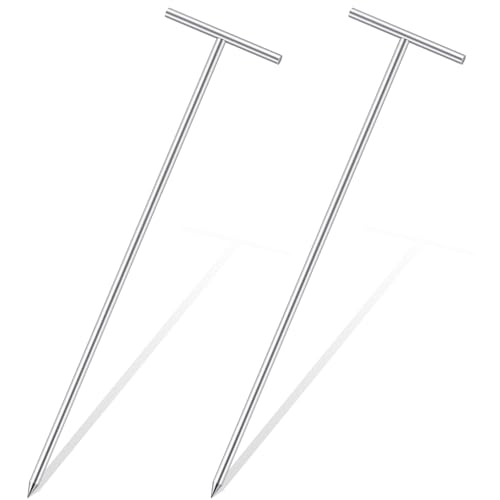 Zonon 36 Inch 2 Pack T-Handle Ground Rod for Electric Fence9.5/10View on Amazon
- 2
 Pet & Livestock HQ Electric Fence Poultry Netting 48 in x 1649.5/10View on Amazon
- 3
 48 in x 164 ft Portable Chicken Fence Kit9.5/10View on Amazon
- 4
 25 Pcs Black Tube Electric Fence Insulators for Square &View on Amazon
- 5
 Patriot PE2 Electric Fence EnergizerView on Amazon
- 6
 Briidea 2-Mile Electric Fence Energizer for Preventing WildView on Amazon
- 7
 Zareba Standard T-Post Insulators for Electric FenceView on Amazon
- 8
 ALLOSUN GK503B NEON Electric Fence Voltage Tester and FaultView on Amazon
- 9
 Toriexon Metal Fence Posts 4 FT BlackView on Amazon
A raccoon at the run fence after dark is the reason many keepers add a hot wire. How to setup electric fence comes down to a clear fence line, sturdy posts, wire held clear of the ground on insulators, a ground stake in damp soil and an energizer matched to the length of fence. Get those parts right and the fence gives a short pulse that teaches night visitors to stay clear of the flock.
Other options for the coop
 25 Pcs Black Tube Electric Fence Insulators for Square &Check price on Amazon
 Patriot PE2 Electric Fence EnergizerCheck price on Amazon
 Briidea 2-Mile Electric Fence Energizer for Preventing WildCheck price on Amazon
 Zareba Standard T-Post Insulators for Electric FenceCheck price on Amazon
 ALLOSUN GK503B NEON Electric Fence Voltage Tester and FaultCheck price on Amazon
 Toriexon Metal Fence Posts 4 FT BlackCheck price on Amazon
CoopKeeperHQ earns a commission if you buy through our links, at no added cost to you. Affiliate disclosure.
How to setup electric fence: plan the line first
Walk the line before you buy anything. Clear grass and brush where the wire will run, because plants touching the wire drain the pulse. Mark where the fence turns, where the gate goes and where the energizer will sit, close to power or in a spot a solar panel can see the sky. Check local, HOA and state rules before you build. The predator protection guides cover the animals a hot wire is meant to turn away, so you can plan the line around the visitors your run actually gets.
Pick an energizer that fits the fence length
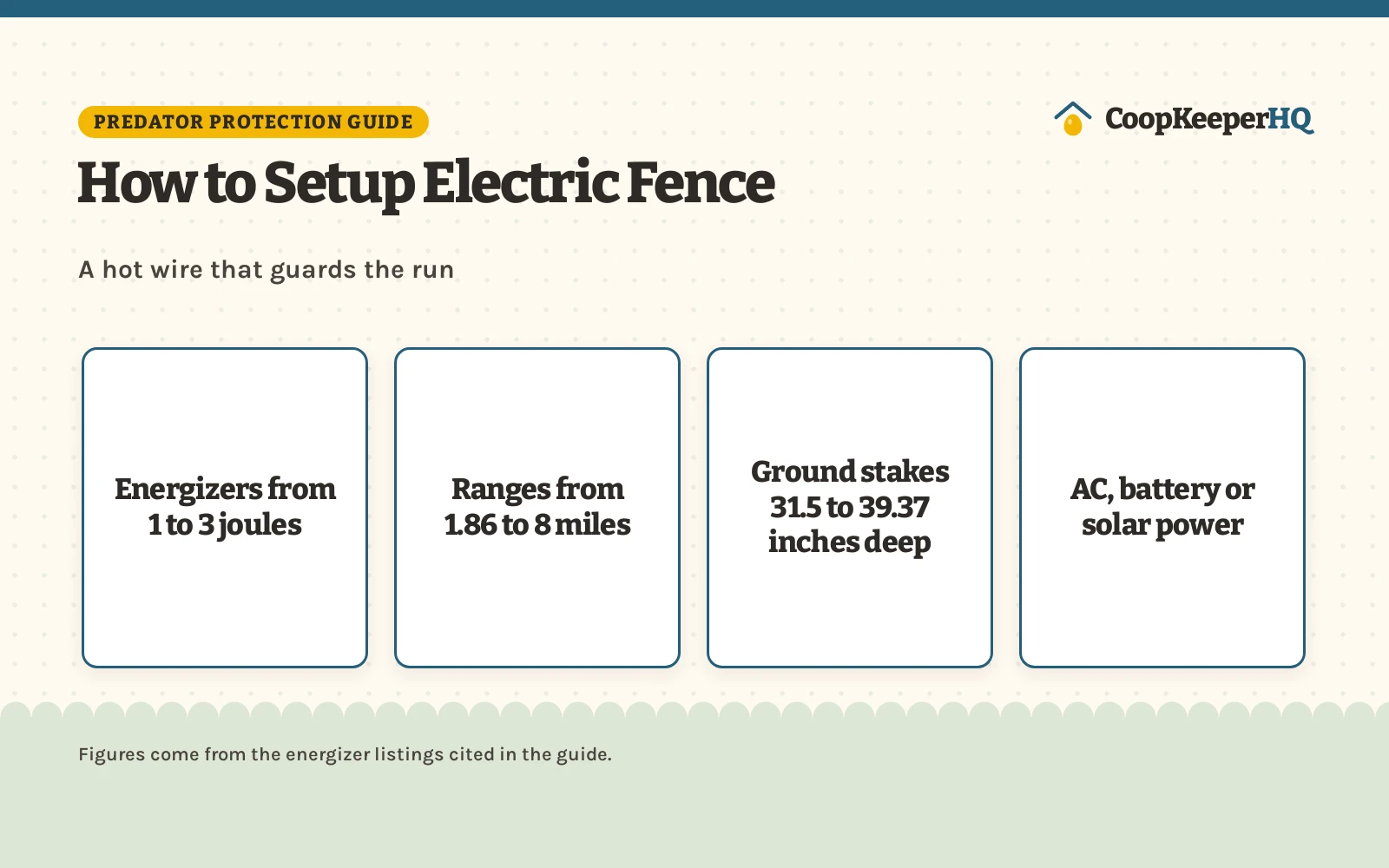
The energizer, also called a fence charger, sends the pulse down the wire. Match its output to the length of fence you plan to run. The listings cited here span a useful range: a VEVOR 1 joule unit lists 10kV and a 1.86 mile range, a VEVOR 3 joule unit lists 12kV in its bullets, though its title says 10kV, with the same 1.86 mile range, a NEHRTIOM 2.0 joule kit lists up to 12 kV and up to a 6.2 mile range, and a HIBUMFX unit lists up to 12 kV and up to an 8 mile range at 2 joules. The VEVOR listings state 1 pulse per second, so the shock is a brief pulse rather than a steady current. The electric fence charger for a hobby farm guide compares chargers for small holdings, and the solar fence charger for cloudy weather guide covers solar power where the sky stays grey.
Set posts and insulators
Posts hold the wire at the height where a predator meets it, and insulators keep the pulse in the wire instead of leaking into the post. Wood posts take screw-in ring insulators, and the screw-in electric fence insulator guide compares ring picks for wood posts. Step-in posts suit a quick line that you move with the seasons. Set posts firm and straight, keep the wire taut, and keep insulators clean and dry so the pulse stays on the wire. The types of wire fence guide covers the wire side of the run fence, and the how deep post for fence guide covers setting run posts that stay straight.
Drive the ground stake
The ground stake is half the circuit: the pulse runs from the energizer through the wire, through the animal, through the soil and back to the stake. The VEVOR listings place the grounding stake on moist ground for better conductivity and give a recommended depth of 31.5-39.37 inches (80-100 cm) for copper or iron stakes. Drive the stake where the soil stays damp, keep the connection tight, and check it after dry spells, since dry soil carries the pulse poorly. The ground rod for electric fence guide covers rod picks for the job.
Hang the wire
Polywire and aluminum wire are the common choices for a run fence. The NEHRTIOM kit (on Amazon) includes 656 FT (200m) of polywire with 50 ring insulators, while the HIBUMFX kits include 2 x 250ft spools of 17 gauge aluminum wire with a stated tensile strength of 38,000 PSI and a breaking load of 90 lbs. Hang the wire with a little slack for wind and frost, keep it clear of grass and brush, and join lengths with proper connectors rather than knots that loosen. The polywire vs electric fence wire comparison explains the trade-offs, and the electric fence wire guide compares spools for the coop.
Connect power and switch on
Energizers in the listings take AC, a DC battery or solar power, so pick the source that fits the spot. The NEHRTIOM kit lists an AC adapter at 100-240V, a 12V lead-acid battery, or solar power with the panel and battery sold separately. The HIBUMFX kits list an AC 100V-240V to DC 12V adapter and a power tank with a DC 12V output for spots far from AC power. The VEVOR listings add a DC battery option with an external lithium battery. On the NEHRTIOM kit, press the power button on the main unit before use. On the VEVOR units, watch the work light flash as the unit pulses. Read the output on the display where the unit has one: the NEHRTIOM kit shows output voltage in kV and input voltage in V on an LCD digital display, and the HIBUMFX P4 lists an LED display of output voltage. Run outdoor electrical gear from a GFCI outlet and keep cords off the ground and out of reach of beaks.
Mind the electrics and the weather
A fence charger lives outside, so weather protection matters. The VEVOR listings state IP65 and give temperature ranges of -4 to 122°F (-20 to 50°C) on the 1 joule unit and -40°F to 131°F (-40°C to +55°C) on the 3 joule unit, while the NEHRTIOM kit lists -20°C to +50°C and recommends a weatherproof enclosure for added protection. The HIBUMFX kits list a UL listed power adaptor, with UL and CUL listed on the adapter, and include a rainproof box. Check cords for chew marks, keep connections dry and shaded where you can, and look over the line after storms, since a fallen branch on the wire drains the pulse.
A simple setup checklist
- Line walked and cleared, energizer spot chosen
- Local, HOA and state rules checked
- Posts set firm with insulators fitted
- Ground stake driven in moist soil
- Wire hung clear of grass and brush
- Power connected, LED flashing with the pulse
Wash your hands after handling birds, eggs or equipment, supervise children around the flock, and check local rules on flock size and roosters before you buy. For sick birds, call a poultry veterinarian or your state extension office. See CDC backyard poultry guidance. Read our Safety Disclaimer.
FAQ for the flock
How much fence can an energizer cover?
It depends on the unit. The listings cited here range from a 1.86 mile range on the VEVOR units to up to 6.2 miles on the NEHRTIOM kit and up to 8 miles on the HIBUMFX units. Match the range to the length of fence you plan to run, and remember that vegetation touching the wire shortens the working range.
What powers an electric fence energizer?
The listings offer AC power, a DC battery or solar power. The NEHRTIOM kit lists an AC adapter at 100-240V, a 12V lead-acid battery, or solar power, and the VEVOR listings add AC, a DC battery with an external lithium battery, and solar power. Pick the source that fits where the energizer sits.
How deep should the ground stake go?
The VEVOR listings give a recommended depth of 31.5-39.37 inches (80-100 cm) for copper or iron stakes, and place the stake on moist ground for better conductivity. Drive it where the soil stays damp and keep the connection tight.
Can an electric fence run in rain and snow?
The VEVOR listings state IP65 with temperature ranges of -4 to 122°F (-20 to 50°C) and -40°F to 131°F (-40°C to +55°C), and the NEHRTIOM kit lists -20°C to +50°C with stable performance in heavy rain, snow, high heat and freezing cold. Keep the energizer sheltered where you can and check the line after storms.
Should local rules be checked before building?
Yes. Check local, HOA and state rules before you build, since rules vary by place. The guide keeps to the build itself; your local office can confirm what applies at your address.
More coop guides
- Best Screw-in Electric Fence Insulator (2026): 4 Ring Picks for Wood Posts
- Best Solar Fence Charger for Cloudy Weather (2026): 5 Picks Compared
- Polywire vs Electric Fence Wire: Which One Should You Buy?
- Best Electric Fence Charger for Hobby Farm (2026)
- Best Ground Rod for Electric Fence (2026)
- How Deep Post for Fence: Setting Run Posts That Stay Straight
- Types of Wire Fence for Chicken Runs
- Best Predator Proof Chicken Coop Fencing Hardware Cloth (2026): 5 Rolls for the Run
- Predator Deterrent Light vs Owl Decoy: Which One Should You Buy?
- Do Scarecrows Actually Work Against Predators
- Best T Fence Posts for Poultry Netting (2026): 4 Compared
See the predator protection guides and the chicken runs and fencing guides.