Chicken Tunnel vs Chicken Run: Which One Should You Buy?
A chicken tunnel is a portable mesh corridor for daytime ranging; a chicken run is a larger fenced area. Compare length, materials, predator protection and setup before choosing.

On this page
Top picks at a glance
As an Amazon Associate I earn from qualifying purchases.
- 1
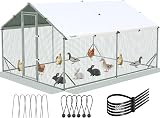 Quictent Large Metal Chicken Coop Run for 20+ Poultry w/Side9.7/10View on Amazon
- 2
 Quictent 18x9x6.6ft Large Metal Chicken Coop Run With9.7/10View on Amazon
- 3
 Sino Luban Walk-in Chicken Run9.7/10View on Amazon
- 4
 Heavy Duty Chicken TunnelView on Amazon
- 5
 Foldable Chicken TunnelView on Amazon
- 6
 Petsfit Outdoor Chicken Coop with Run for 4-6 ChickensView on Amazon
- 7
 GOJOOASIS 40" Wooden Chicken Run Coop Outdoor Hen HouseView on Amazon
- 8
 55ft² Extra Large Chicken Coop with RunView on Amazon
- 9
 Trixie Natura Chicken Outdoor Run with Mesh-Covered TopView on Amazon
A chicken tunnel is a long, portable mesh corridor that gives your flock a safe path to range, while a chicken run is a larger fenced area where the birds spend the day outdoors. The question of chicken tunnel vs chicken run comes down to how your flock uses the yard: tunnels move the birds to fresh grass, runs give them one bigger home base.
Other options for the coop
 Heavy Duty Chicken TunnelCheck price on Amazon
 Foldable Chicken TunnelCheck price on Amazon
 Petsfit Outdoor Chicken Coop with Run for 4-6 ChickensCheck price on Amazon
 GOJOOASIS 40" Wooden Chicken Run Coop Outdoor Hen HouseCheck price on Amazon
 55ft² Extra Large Chicken Coop with RunCheck price on Amazon
 Trixie Natura Chicken Outdoor Run with Mesh-Covered TopCheck price on Amazon
CoopKeeperHQ earns a commission if you buy through our links, at no added cost to you. Affiliate disclosure.
Chicken tunnel vs chicken run: the short answer
Choose a tunnel when you want to move the flock around the yard or connect the coop to a garden without letting the birds loose. Choose a run when you want one fixed, roomy outdoor space attached to the coop. Many keepers end up with both: a run for daily life and a tunnel for ranging.
How they differ
A tunnel is narrow and long by design: the listings here show 21 to 24 inch widths with lengths from 142 to 165 inches, built to fold or connect in sections. A run is a wider fenced area, often square or rectangular, that stays in one place. Tunnels are daytime tools; the coop is where the flock roosts at night.
The gear: four tunnels we looked at
In order of how well each listing fits a working flock, the WGOHOSE metal tunnel leads: a rust-resistant metal frame with 90-degree corner connections, small-aperture panels the listing says block dogs, hawks, coyotes and foxes, plus 2 doors, 16 ground anchors and 30 zip ties in the box, with 85 square feet stated. Next, the heavier Hogarjal kit at 12.26 pounds: a 157-inch foldable frame with an integrated sun protection net, a removable zipper door, U-shaped stakes, green zip ties, a stake puller and scissors, all in one box. The lighter Hogarjal kit at 10.19 pounds is the same 157 by 21 by 32 inch tunnel in a lighter package. Note that the Hogarjal titles print 315 and 393 inches, but the bullets and spec tables state a 157-inch frame, which is the figure to trust. Last, the Zovida accordion tunnel: plastic-coated steel pipes with 11 mm support poles and no assembly, but the bullets state 23.6 by 33.8 inches while the title and spec table state 21 by 32, so read the listing carefully before you buy.
What to check before you buy
Length decides where the tunnel goes: a 157-inch tunnel spans a garden bed, while a 165-inch one reaches further along a fence. Frame material decides how it weathers: steel-reinforced plastic and plastic-coated steel pipes both claim rust resistance, while the WGOHOSE title claims rust-resistant metal without naming the treatment. Netting decides predator protection: the WGOHOSE lists small-aperture panels and the Zovida lists tear-resistant mesh with small openings; check the mesh against the predators in your area. Anchors decide whether it stays put: U-shaped stakes or ground anchors beat zip ties alone on windy days. And check the door: a removable zipper door connects to the coop, while drawstring ends suit quick access.
Weight, doors and what ships in the box
Weight decides how often you will actually move the tunnel. The Zovida lists 4.81 pounds and unfolds with no assembly, so shifting it every few days is a one-person job. The two Hogarjal kits list 10.19 and 12.26 pounds with a foldable steel-reinforced plastic frame, still portable but more of a lift. The WGOHOSE kit lists 33.85 pounds of metal panels, the heaviest of the four, so plan the layout before you splice it together, since you will not want to drag it daily.
Doors decide how the birds get in and out. The WGOHOSE box includes 2 doors for its straight and curved sections. The Hogarjal kits include a removable zipper door that attaches to the coop door for a safe passage. The Zovida skips doors entirely and uses drawstring openings on both ends for quick access. Match the door to the job: a zipper door for a coop connection, drawstrings for quick garden access.
Finally, check what ships in the box. The WGOHOSE kit is the fullest: 2 straight tunnels, 1 curved tunnel, 2 doors, 16 ground anchors and 30 zip ties. The Hogarjal kits are true all-in-one boxes with U-shaped stakes, green zip ties, a stake puller and scissors. The Zovida lists only an instruction manual in the box, so bring your own stakes. And if you keep rabbits or ducks as well as chickens, note the WGOHOSE and Zovida listings name those species too.
Setting up a tunnel
Unfold the tunnel where you want it, then stake it down before the birds go in. The Hogarjal kits set up with the included stakes and ties and no tools; the Zovida unfolds like an accordion with no assembly at all. The WGOHOSE tunnel splices from straight and curved sections, so lay out the path first and add the 90-degree corner where the tunnel turns. Move the tunnel every few days so the grass recovers and the ground inside stays fresh.
Daytime use only
The listings describe daytime use: ranging, playpens and garden access. A tunnel has no roosts, no nest boxes and no solid walls against night predators, so the flock goes back to the coop at dusk. Treat the tunnel as an extension of the run, not a second coop.
Chicken wire keeps chickens in but does not keep raccoons, dogs or foxes out. Use 1/2 inch hardware cloth on openings, bury or apron it at the base, close the coop at dusk and use two-step latches that raccoons cannot open. Read our Safety Disclaimer.
FAQ for the flock
Can a chicken tunnel replace a chicken run?
No. A tunnel is a daytime ranging tool; the flock still needs a coop with roosts for the night and a run or yard for daily life. Use the tunnel to give them fresh grass without free-ranging.
Will a tunnel keep predators out?
The WGOHOSE listing states small-aperture panels that block dogs, hawks, coyotes and foxes, and the Zovida listing states tear-resistant mesh with small openings. Stakes or ground anchors keep the tunnel from lifting, and a determined digger can still get under any tunnel, so supervise ranging when predators are active.
How do I connect a tunnel to my coop?
The Hogarjal kits include a removable zipper door that attaches to the coop door for a safe passage. The Zovida tunnel has drawstring openings on both ends for quick access. Line the tunnel opening up with the pop door and stake both ends.
Can I make a tunnel longer?
The Hogarjal listings say multiple units connect side by side for a longer run, and the WGOHOSE tunnel is modular with a 90-degree corner for layouts around the yard. Buy the same brand and size so the sections join cleanly.
Do tunnels work in a vegetable garden?
The listings point to gardens as a leading use. Both the Hogarjal and Zovida listings describe running tunnels around garden beds so chickens scratch and range without damaging plants. The WGOHOSE listing says the same about yards and fences. Move the tunnel when the ground is worked over.
More coop guides
- Chicken Tunnel Ideas: Backyard Layouts, Sizing and Setup Guide
- Chicken Run Size Calculator: How Much Space Do Chickens Need?
- Best Chicken Run Flooring: Sand, Wood Chips and More
- Hardware Cloth vs Chicken Wire: Which Keeps Predators Out?
- How to Predator Proof a Chicken Coop and Run
- Best Chicken Coop With Run: Combos With Room to Scratch
See the chicken run and fencing guides and the predator protection guides.